

Knee Replacement in Turkey: Cost Factors and Quote Guide
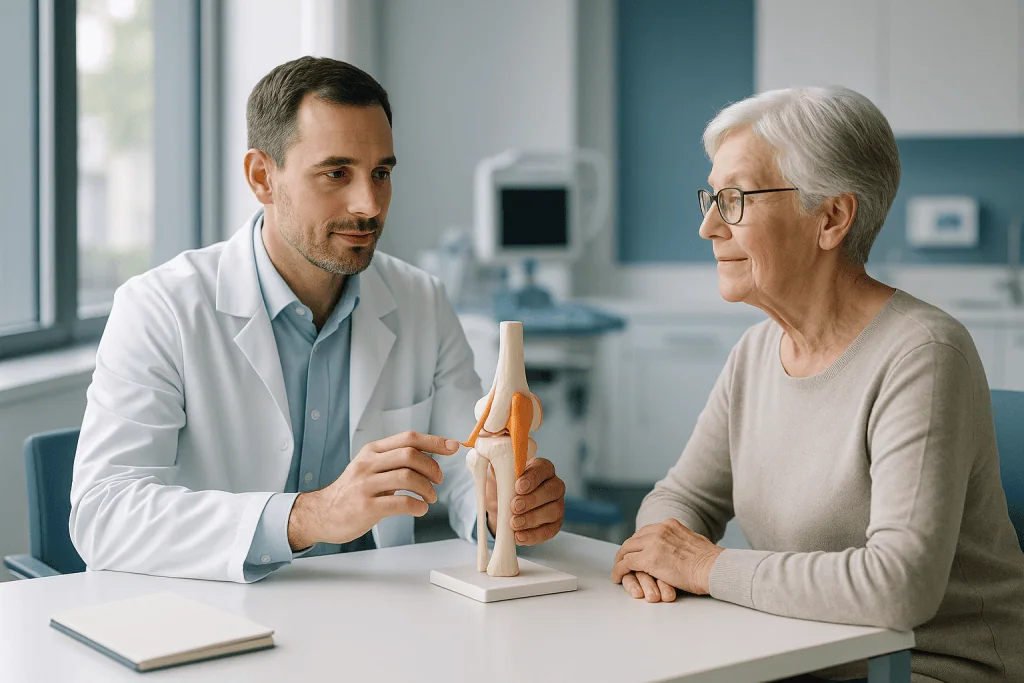
There is no single price for knee replacement in Turkey. Your quote depends on whether the operation is total or partial, primary or revision, one knee or both, the implant selected, the expected hospital stay, and your general health. A reliable figure only exists after a medical review of your records, which is why serious hospitals quote individually rather than publishing a flat rate.
Perhaps you have been told your knee is bone-on-bone, and now you are weighing up surgery abroad, what the operation involves, how long you would need to stay, what a quote actually covers, and whether the flight home is realistic. Those are the right questions to ask before you commit to anything.
This guide covers knee replacement in Turkey from both angles that matter to an international patient: the medicine and the money. It explains who the operation may suit, what happens before, during and after surgery, and then breaks down, factor by factor, what shapes the quote you receive, what packages usually include, and what they often leave out. It contains no price figures, because an honest figure only exists after your case has been reviewed.
At a glance
- Procedure type: Major orthopaedic surgery replacing damaged surfaces of the knee joint with artificial components
- Purpose: To reduce chronic knee pain and improve mobility when non-surgical treatment no longer helps enough
- Anaesthesia: Usually spinal or general, depending on your health and the surgical plan
- Hospital stay: Commonly several days, guided by pain control, wound condition and mobility milestones
- Estimated recovery: Initial recovery over weeks; strength and function continue improving over months
- Quote basis: Individual, shaped by procedure type, implant, stay length, tests and your general health
- Suitable department: Orthopaedics and Traumatology, with anaesthesia and rehabilitation support
- International patient support: Interpreters, transfers, accommodation guidance, care coordination and remote follow-up
Knee replacement prices in Turkey vs the UK and US
Measured ranges from our quarterly price ledger: the data behind the Turkey Medical Price Index. UK and US columns are typical private, self-pay ranges.
| Procedure | Turkey guide range | UK typical | US typical | Saving vs UK / US* |
|---|---|---|---|---|
| Total knee replacement | €7,800–€16,250 | £11,000–£17,000 | $30,000–$50,000 | 27% / 67% |
| Partial knee replacement | €4,550–€10,400 | £9,000–£14,000 | $20,000–$45,000 | 44% / 75% |
| Bilateral knee replacement | €17,550–€24,700 | £22,000–£30,000 | $30,000–$75,000 | 31% / 56% |
Ranges come from the Turkey Medical Price Index (Q3 2026 edition): Turkey figures are published guide ranges for international patients at JCI-accredited Acibadem hospitals; UK and US figures are representative private, self-pay ranges compiled from published price lists. *Savings compare range midpoints at £1 = €1.17 and $1 = €0.92. Every figure is indicative: your own quote is confirmed only after the medical team reviews your records.
What is knee replacement?
Knee replacement, or knee arthroplasty, treats severe joint damage by removing worn joint surfaces and replacing them with artificial components. It is most often considered for advanced osteoarthritis, inflammatory arthritis, previous injury or long-term degeneration. For most people researching knee replacement in Turkey, the aim is practical rather than cosmetic: walking, stairs, standing up and sleeping with less pain.
There are two broad forms. A total knee replacement resurfaces most of the joint. A partial replacement treats only one compartment when the rest of the knee is still healthy enough. Which approach fits you depends on your symptoms, examination, imaging, age and activity level, and, as you will see later, it is also one of the main variables behind your quote.
The result depends on more than the operation itself. Rehabilitation, muscle strengthening and realistic expectations all shape how the knee performs afterwards.
When is it recommended?
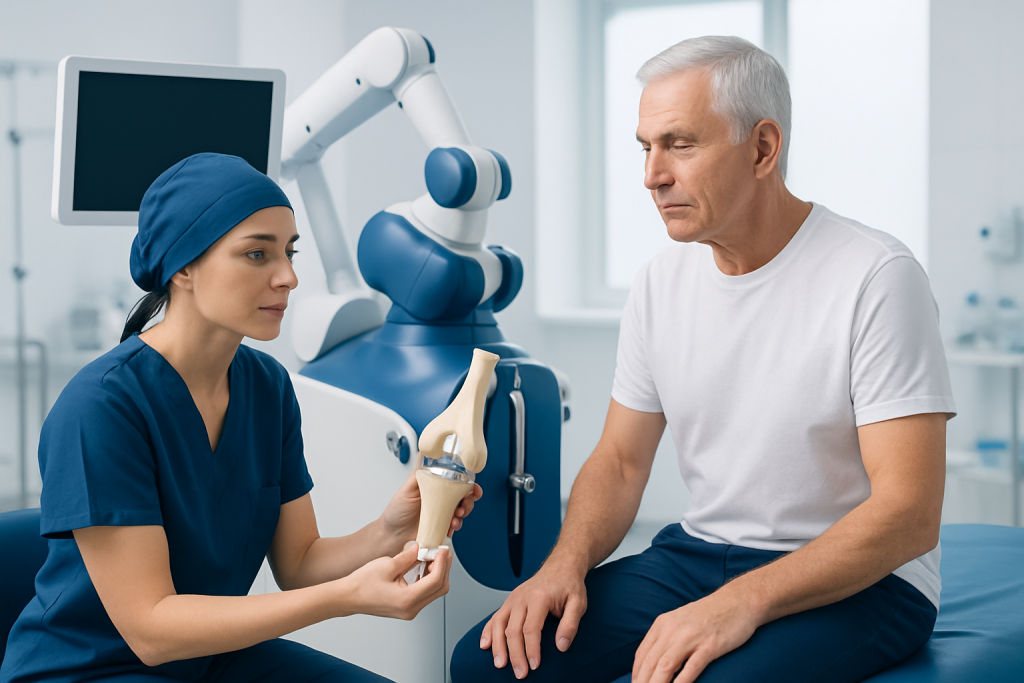
Surgery is usually discussed when pain and stiffness have become persistent and limiting, when walking, stairs, sleep or activities that matter to you are no longer manageable, and when medication, injections, physiotherapy, weight management or supportive devices no longer provide enough relief.
An orthopaedic specialist weighs your symptoms against imaging. Common findings behind a recommendation include severe cartilage loss, deformity, reduced range of motion, painful bone-on-bone contact or instability that makes walking unsafe. The decision is individual: some people with dramatic X-ray changes cope well without surgery, while others with more modest imaging are severely limited day to day. Surgery is rarely the first step, and a careful surgeon will say so.
Who is a good candidate?
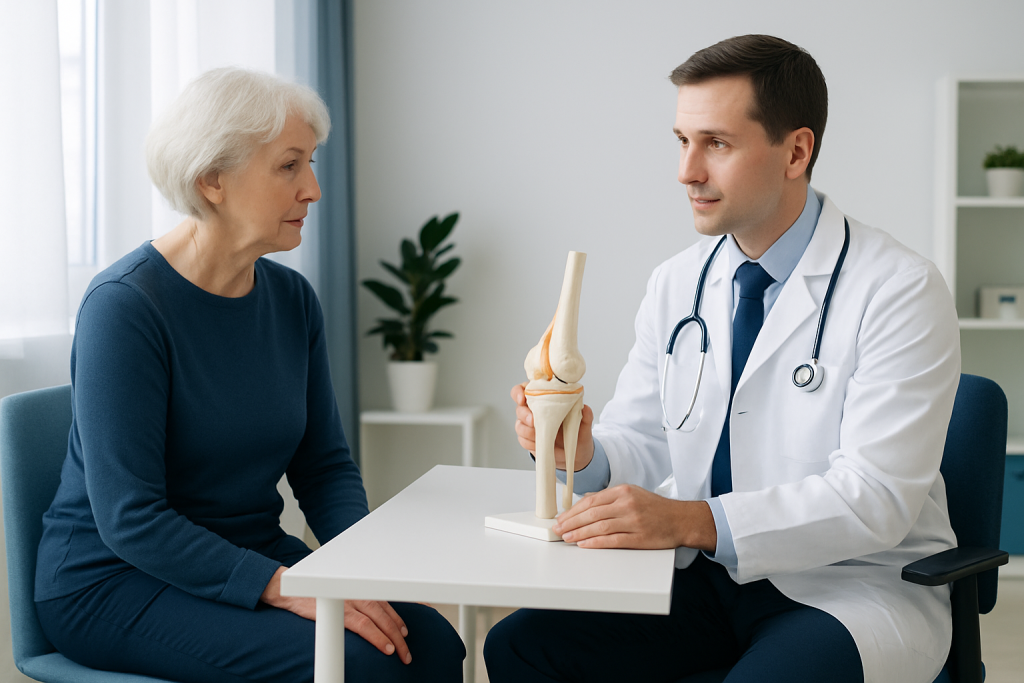
Candidates typically have documented joint damage, ongoing pain or stiffness that limits daily life despite conservative treatment, realistic expectations and a willingness to work through physiotherapy afterwards.
General health matters as much as the knee itself. Heart disease, diabetes, obesity, circulation problems, lung conditions or a history of blood clots do not automatically rule out surgery, but they influence planning, anaesthesia choices and how long you stay in hospital, which, in turn, influences the quote. Smoking, active infections or poorly controlled chronic conditions may mean the team advises optimisation before an operation date is set.
International patients are commonly assessed first through records and imaging. That remote review is useful for planning, but final suitability is only confirmed after in-person examination.
Treatment options
Knee replacement is not one identical operation. The options include:
- Total knee replacement: when damage affects most or all of the joint.
- Partial knee replacement: when disease is limited to one compartment and the remaining structures are sound.
- Bilateral replacement, simultaneous or staged: when both knees are affected: the choice between one operation or two depends on your health and rehabilitation capacity.
- Revision knee replacement: when a previous implant has worn, loosened or become unstable. Revision surgery is more complex, and this shows in both the surgical plan and the cost structure.
- Robotic-assisted knee replacement: a technique in which robotic guidance supports the surgeon’s planning and bone preparation. Whether it suits your case is a clinical decision, and it is one of the technology choices that can affect a quote.
Sometimes evaluation shows that surgery should wait, or that continued non-surgical management, further imaging or a more limited procedure is the better route. A trustworthy assessment can end in “not yet”: that is a feature of good care, not a failure of it.
Online evaluation before travel
Before you plan flights, a remote pre-assessment usually takes place. You are typically asked to provide your medical history, current symptoms, medication list, details of prior surgery and recent imaging such as X-rays or MRI. The orthopaedic team uses this to judge whether replacement looks suitable, what tests will be needed on arrival, and whether anything, uncontrolled medical conditions, active dental or urinary infections, blood-thinning treatment, needs attention before a date is fixed.
This review also makes a meaningful quote possible. A figure offered without seeing your imaging and history is an estimate at best. What the remote review cannot do is replace examination: the plan is confirmed only after your surgeon has assessed you in person, and quotes are normally worded to reflect that.
Before the operation
Pre-operative preparation includes a detailed orthopaedic consultation, blood tests, imaging review and an anaesthesia assessment. Depending on your age and history, cardiology or internal medicine review may be added. The team will also discuss your pain pattern, walking ability, prior treatments and rehabilitation goals.
Some medicines, particularly those affecting bleeding or immunity, may need adjusting before surgery. That decision belongs entirely to your treating doctors, who will give you specific instructions as part of the plan. Chronic conditions such as diabetes or high blood pressure should be as well controlled as possible beforehand, which is one reason honest hospitals ask so many questions before quoting.
What happens during the operation
On the day, you are admitted, checked by nursing staff and seen by the anaesthesia and surgical teams. Anaesthesia is commonly spinal, sometimes with sedation, or general where more appropriate.
The surgeon opens the knee, removes the damaged joint surfaces and fits artificial components shaped to restore alignment and movement, checking soft-tissue balance and stability as the work proceeds. Operating time varies with the procedure, total, partial, primary or revision, one knee or both.
Afterwards you are monitored in recovery before returning to your room. Pain management, circulation support and early movement begin from the first day; physiotherapy often starts early, with supervised standing and walking.
Hospital stay and discharge
Expect a stay of several days. Discharge is driven by milestones rather than the calendar: stable vital signs, controlled pain, a healthy wound, safe transfers in and out of bed, short supported walks and a clear grasp of your home exercises. Bilateral and revision cases often need longer, and extra inpatient nights are one of the classic points where a real bill can diverge from a package price, so ask how they are handled in your quote.
Before discharge you receive guidance on wound care, movement, clot-prevention measures, medication and follow-up timing. For international patients, the team also considers when travel is reasonable and what support you may need in your accommodation.
Recovery timeline
Recovery is gradual and rarely linear. Pain, swelling, stiffness and fatigue are normal early on; physiotherapy is the engine of progress. Your pace depends on age, health, muscle condition, weight, whether one or both knees were treated, and how consistently you follow rehabilitation advice.
| Timeframe | What to expect |
|---|---|
| First 24 hours | Monitoring, pain control, often assisted standing or first steps, and basic exercises as advised. |
| First week | Swelling, stiffness and tiredness are common. Supported walking continues, with wound care and medication as instructed. |
| Weeks 2–4 | Walking distance and confidence build gradually. A walking aid and regular physiotherapy usually continue. |
| Months 1–3 | Mobility and strength keep improving. Daily tasks become easier, though swelling and stiffness may still come and go. |
| Final result | Comfort and function mature over several months and vary by patient and rehabilitation effort. |
In the early months, sudden twisting on the operated leg, high-impact exercise and lifting beyond your surgeon’s advice are best avoided; pushing too hard too soon tends to slow recovery, not speed it. Plan your stay so that surgery, early rehabilitation and a first review all happen before onward travel: our guides on the recovery timeline and aftercare and flying after knee or hip replacement cover this stage in detail. Travel timing itself is a decision for your treating physician, not the airline schedule.
Risks and possible complications
Like any major operation, knee replacement carries risks alongside its potential benefits. General surgical risks include bleeding, infection, blood clots, anaesthesia-related problems and wound-healing issues. Procedure-specific risks include reduced range of motion, persistent pain, instability, nerve or vessel injury, and implant loosening or wear over time; some patients need further treatment or revision surgery later.
Careful pre-operative assessment, infection-control practice and coordinated follow-up support safer surgery, but no operation is free of risk, and no responsible hospital will tell you otherwise. Your surgeon will set out the risks in relation to your own health, imaging and plan before you decide, treat that conversation as part of what you are paying for.
Results and expectations
For many patients, knee replacement meaningfully reduces pain and makes walking and daily tasks easier. Even so, a replaced knee may always feel somewhat different from a natural one, and stiffness, warmth or swelling can persist for a while during rehabilitation. The goal is functional improvement and pain relief, not perfection, and heavy-impact activities may remain discouraged to protect the implant.
Outcomes vary with pre-existing deformity, muscle condition, weight, prior surgery and commitment to physiotherapy. Anyone promising you a specific result before examining you is telling you what you want to hear.
What shapes the cost of knee replacement in Turkey
Now the part this guide exists for. There is no standard price, and this page will not pretend there is. What we can do is show you exactly which levers move a quote up or down, so you can read any offer, from any hospital, with clear eyes.
The procedure itself
Total versus partial, primary versus revision, one knee versus both: these are the biggest variables. Revision surgery generally involves longer operating time, more complex implants and a longer stay. Bilateral surgery changes theatre time, implant count and rehabilitation needs, whether done in one sitting or staged.
The implant
Implant systems differ in design, materials and fixation method, and the choice is clinical, matched to your anatomy, bone quality and age, rather than a menu you pick from. Because the implant is a significant part of any orthopaedic quote, it is worth understanding how it is itemised; our guide to implant and device costs in Turkish treatment quotes explains what to look for.
Your general health
Patients with significant medical conditions may need broader pre-operative assessment, additional specialist reviews or longer inpatient monitoring. None of this is padding; it is the cost of doing your case safely, and it is why two patients having the “same” operation can receive different quotes.
Length of stay and rehabilitation
Extra nights, extended physiotherapy, assistive equipment, additional imaging or blood products all affect the final plan. How a quote treats slower-than-expected recovery is one of the most revealing questions you can ask.
Technology and team
Choices such as robotic assistance, where clinically appropriate, can change the figure. So can the composition of the team involved in your care.
What a quote usually includes, and what it may not
Packages for international patients typically cover the core hospital services: the surgeon’s fee, anaesthesia, operating theatre, the implant, standard inpatient care and routine tests directly related to the planned treatment, often with coordination services such as interpreting and transfers.
Items that vary between offers, and where surprises live, commonly include:
- Flights, hotel accommodation and companion expenses
- Extra inpatient nights if recovery is slower than planned
- Extended rehabilitation beyond the standard programme
- Treatment for unrelated medical conditions discovered during assessment
- Additional procedures found necessary after in-person evaluation
- Medication and equipment for the period after discharge
A serious quote states which of these it covers, in writing. A vague one leaves them out and lets you assume.
How to read and compare quotes
The cheapest headline figure is not automatically the cheapest treatment. When comparing offers for knee replacement in Turkey, compare like with like: the same procedure type, the same implant class, the same number of inpatient nights, the same handling of complications and extra nights. Ask each hospital the same questions and put the answers side by side.
Two of our guides walk through this in detail: how final cost quotes are calculated and how to compare quotes without missing hidden costs. The short version: a quote is only as good as the medical review behind it and the exclusions written into it.
Travel planning for international patients
Plan the trip around medical safety, not flight prices. You need time in Turkey for in-person assessment, surgery, early rehabilitation and a first follow-up review before your doctor considers onward travel. Bring your passport, medical records, imaging, medication list and details of previous operations. Comfortable clothing, slip-resistant shoes and a companion for the days after discharge make a genuine difference. Budget for accommodation flexibility, because discharge dates follow recovery milestones, not bookings.
Why choose Acibadem
Acibadem is a healthcare group in Turkey whose hospitals bring together orthopaedic surgeons, anaesthesiologists, physiotherapists, nursing teams, radiology and, where needed, internal medicine and cardiology, so that surgery, recovery and discharge planning are handled as one process rather than separate steps.
For international patients, the support around the operation matters as much as the operation: interpreter services, transfer and accommodation coordination, and remote follow-up planning after you return home. Quotes are prepared individually after medical review, with the inclusions and exclusions set out so you can judge them properly.
Medical review and disclaimer
This guide has been medically reviewed by the Acibadem International medical team. It provides general information about knee replacement in Turkey, including cost structure and practical planning for international patients.
It does not replace a consultation, examination, imaging review or individualised medical advice. Treatment recommendations, recovery expectations and travel timing vary from person to person, and your suitability for knee replacement can only be confirmed by a physician after proper evaluation.
Step by step
- Initial contact. You contact the international patient team and describe your knee symptoms, goals and preferred timing.
- Medical record submission. You send knee X-rays or MRI, previous reports, medication details and a brief history.
- Preliminary medical review. The orthopaedic team assesses whether replacement looks suitable and what further information is needed.
- Treatment plan and quotation. You receive a preliminary recommendation and a personalised quote based on the information available, with inclusions stated.
- Travel planning. Timing, documents, transfers and accommodation guidance are arranged for you and any companion.
- Arrival and admission. You are met, transferred and supported through admission.
- In-person consultation. Your surgeon examines you, reviews imaging, confirms the diagnosis and explains the plan, alternatives and expected recovery.
- Pre-operative tests. Required tests and anaesthesia assessment are completed; specialist reviews are added if needed.
- Surgery. The knee replacement is performed under the confirmed plan.
- Hospital stay. Monitoring, pain control, wound care and early physiotherapy continue until discharge criteria are met.
- First review and travel clearance. Your wound, mobility and progress are checked, and your physician advises when travel is appropriate.
- Remote follow-up. After returning home, remote contact supports updates and questions, alongside local medical care where needed.
Your checklist
- Passport and travel documents
- Recent knee X-rays, MRI or other relevant imaging
- Previous orthopaedic reports and operation notes, if any
- Full medical history, including chronic conditions
- Current medication list, including blood thinners and supplements
- Known allergies to medicines, dressings or metals
- List of previous surgeries and hospitalisations
- Description of your current symptoms and mobility limits
- Recent blood tests or cardiac evaluations, if available
- Details of prior injections, physiotherapy or other knee treatments
- Written copies of any quotes you are comparing, with inclusions listed
Key takeaways
- Knee replacement is considered when pain, stiffness and documented joint damage limit daily life despite other treatment.
- There is no standard price: the quote follows the procedure type, implant, stay length, tests and your general health.
- A reliable quote requires a medical review first: a figure without one is a guess.
- Compare offers on inclusions and exclusions, not headline figures, and get everything in writing.
- Plan enough time in Turkey for surgery, early rehabilitation and a first review before onward travel.
Frequently asked questions
How much is a knee replacement in Turkey?
There is no single figure, and any page publishing one is simplifying. The cost depends on whether the operation is total or partial, primary or revision, one knee or both, the implant system used, the length of hospital stay and your general health. A meaningful quote is prepared individually after your records and imaging have been reviewed, and it should state exactly what is included.
Where is the best country to get a knee replacement?
There is no objectively “best” country. What matters is the specific hospital and team: how thoroughly they assess you before quoting, how they handle rehabilitation and complications, and how clearly they communicate. Turkey is a major destination for orthopaedic surgery, but judge each provider on its own process rather than on national reputation alone.
What can you never do again after knee surgery?
Few things are absolutely forbidden, but heavy-impact activities, running on hard surfaces, jumping sports, repeated deep twisting under load, are often discouraged long term to protect the implant. Walking, swimming, cycling and similar lower-impact activities are commonly encouraged. Your own limits depend on your surgery and recovery, and your surgeon will define them for you.
Who is the best knee replacement surgeon?
No honest answer to that question exists, and lists claiming one are marketing. More useful questions: does the team perform this surgery routinely, is the assessment thorough before any commitment, are risks explained plainly, and is rehabilitation built into the plan? A surgeon working within an experienced multidisciplinary team matters more than any individual name.
How long should I stay in Turkey for knee replacement?
Long enough for in-person assessment, surgery, early recovery in hospital, initial rehabilitation and a first follow-up review. The exact duration depends on whether one or both knees are treated, your health and how your mobility progresses. Your treating physician confirms when onward travel is reasonable, build flexibility into your bookings.
Is it safe to fly home after knee replacement?
Timing is a medical decision based on your recovery, mobility, wound condition and clot risk, not a fixed number of days. Flying too soon is not advisable for some patients. Your team will advise on timing and on precautions for the journey, such as movement during the flight.
What affects the quote most?
The procedure type carries the most weight: revision and bilateral surgery cost more to deliver than a straightforward primary replacement of one knee. After that, the implant system, the expected hospital stay, pre-operative testing and any additional specialist care your health requires. Exclusions matter too: a lean quote with many exclusions can end up costing more than a fuller one.
Can a knee replacement fail or need revision later?
Yes, it can. Implants may wear, loosen or become unstable over time, and infection or injury can also lead to further surgery. This does not happen to everyone, and no implant behaves identically in every patient. Regular follow-up and joint-friendly habits support long-term function, but no one can promise a lifetime result.
See also: hip replacement costs, flying after knee replacement, and all cost & payment guides.
Add us as a Preferred Source to see more of our trusted health content across Google Search, AI Overviews and Discover.

Update history
- PublishedJune 22, 2026
- Medical review approvedSeptember 13, 2026
- Last content updateSeptember 12, 2026
References2
- Knee replacement: NHS nhs.uk
- Knee Replacement: MedlinePlus medlineplus.gov
More Patient Guides

HoLEP in Turkey: How It Compares With TURP and What Recovery Involves
HoLEP in Turkey treats enlarged prostate tissue with laser enucleation; learn how it compares with TURP, recovery, travel and follow-up.

Porcelain Veneers in Turkey: Who Is Suitable and How Many Visits Are Needed?
Porcelain veneers in Turkey can enhance tooth shape and colour in two visits for suitable patients after a personalised dental assessment.

How to Prepare for a Sedation Procedure in Turkey
Prepare safely for a sedation procedure in Turkey with guidance on fasting, medicines, travel, recovery and follow-up.

Treatment Delays in Turkey: What Happens If Tests or Recovery Change Your Schedule
Treatment delays in Turkey can happen if tests or recovery change your plan. Learn how to manage appointments, travel, accommodation and follow-up.