

Implant and Medical Device Costs in Turkish Treatment Quotes

Implant and medical device costs in Turkish treatment quotes may be included in the total, listed separately or given as an estimate, because the final device often depends on examination findings. Ask in writing whether the device is included, which brand or category the price assumes, what could change the amount, and how currency, deposits and refunds are handled before you travel.
You have a quote in your hand, and one question keeps coming back: does that price actually include the implant? It is a fair question, and the honest answer is: sometimes yes, sometimes no, and sometimes partly. When your treatment plan involves an implant, prosthesis or specialist medical device, the quote usually contains several cost layers beyond the device itself, and hospitals group those layers in different ways.
This guide explains how implant and medical device costs in Turkish treatment quotes are typically structured, which details to pin down in writing, and how to plan payment without unpleasant surprises. It deliberately contains no price figures, because a number quoted for another patient tells you very little about your own plan. What it gives you instead is a way to read any quote clearly.
At a glance
- Best for: Patients comparing treatment quotes that include implants, prostheses or specialist medical devices
- Key question: Is the device cost included, estimated, optional or billed separately, and is that stated in writing?
- Details that matter: Brand, model, material, device category, quantity assumptions, and what happens if the plan changes after examination
- Payment planning: Confirm currency, quote validity, deposit rules and refund conditions before you book flights
- After treatment: Keep implant cards, device labels and discharge reports, future care at home depends on them
How implant and medical device costs appear in Turkish treatment quotes
When your treatment involves an implant or device, the quoted price is rarely one simple line. The device sits alongside operating theatre time, imaging, laboratory tests, anaesthesia, specialist fees, the hospital stay, medications and follow-up appointments. How these items are grouped varies by hospital, by department and by treatment plan, in Turkey as in most countries. Two quotes for the same procedure can look very different on paper and still describe similar care.
You may see device-related wording such as implant, prosthesis, stent, lens, plate, screw, pacemaker, valve, mesh, catheter, port, neurostimulator or custom-made device. Some of these are standard stock items that a hospital keeps on the shelf. Others depend on your measurements, your imaging results or a decision the surgeon can only make during the procedure itself. That is the main reason implant and medical device costs in Turkish treatment quotes often appear as an estimated range rather than a fixed figure: the hospital is being accurate, not evasive.
A clear quote should let you separate three things: what is confirmed now, what may change after your in-person examination, and what would require your approval before an extra charge is added. If you cannot tell which is which, the quote is not yet ready to compare, ask the issuing hospital to mark each device-related line as fixed, estimated or conditional.
Common device cost categories in Turkish quotes
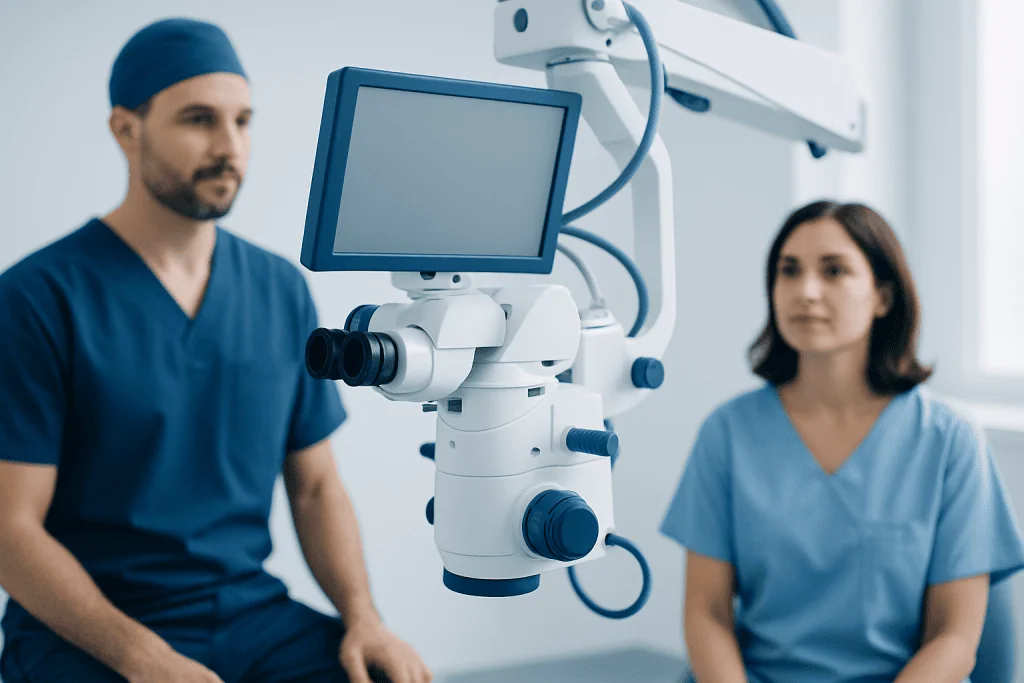
Device costs can sit in different places on a Turkish quote. In some packages, the implant is folded into a single treatment fee. In others, it is listed separately because the final model, size or quantity can only be confirmed after consultation, tests or intraoperative findings. Neither format is automatically better or worse. What matters is that you know precisely what the quoted amount covers, and what it assumes.
The cost categories you are most likely to encounter include:
- The device itselfthe implant, prosthesis, lens, stent or hardware, sometimes described by brand and model, sometimes only by category.
- Procurement and preparationhospital handling of the device, sterilisation and any special-order arrangements for imported or custom items.
- Disposable surgical materialssingle-use instruments, drapes, sutures and consumables tied to the device placement.
- Imaging or navigation supportintraoperative imaging, surgical navigation or measurement systems used to position the device.
- Professional feesthe clinical work of placing, programming or fitting the device, which may be quoted with or separately from the surgeon’s fee.
If more than one device may be needed, several dental implants, multiple screws and plates, a pair of lenses: the quote should state whether the number is fixed, estimated or dependent on findings during treatment. Practical questions worth asking in plain terms:
- Is the implant or device included in the quoted total?
- If included, which brand, model, material or category does the price assume?
- If not included, what range is expected, and what does that range depend on?
- Could the number, size or type of device change during treatment?
- Will I be asked to approve any significant cost change before it is billed?
Brand, model, material and quality: what to ask
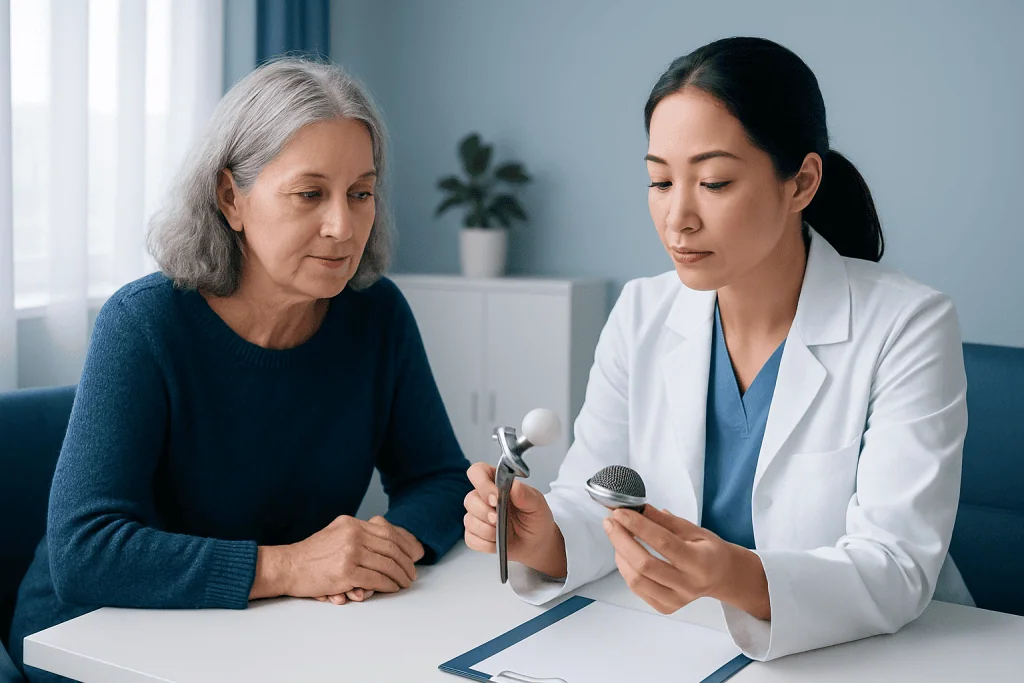
The most confusing part of a device quote is often the gap between a generic description and a specific product. A quote might say “orthopaedic implant”, “intraocular lens” or “cardiac device” without telling you the brand, model, material, country of manufacture or particular features. Those details can affect cost, availability, delivery time for special orders and the documentation you receive afterwards.
It is entirely reasonable to ask what device is planned and whether clinically suitable alternatives exist. Sometimes a doctor recommends one specific model because of your anatomy, diagnosis, previous surgery or compatibility with a device you already have. In other cases several approved options are available, and the medical team can explain why one is preferred for your situation. Either answer is useful, what you want to avoid is a quote where the device is simply a blank.
Be careful not to choose a device by price alone. A lower cost does not automatically mean poor quality, and a higher cost does not automatically mean a better fit for your body or your plan. Which device suits you is a clinical decision, made by the treating specialist with your input. The stronger questions are practical ones: how does the recommendation fit my treatment plan, what identification documents will I receive, and does the device carry the regulatory approval and traceability information my doctor at home will want to see?
Package price, estimate or staged quote?
A Turkish treatment quote generally takes one of three forms. A package price bundles predictable services into one amount: it is worth reading what a Turkish medical treatment package usually includes before assuming a device sits inside one. An estimate is based on the records you sent from home and may be revised. A staged quotation covers consultation and diagnostics first, then updates once you have been examined in person.
Implants and devices are the single most common reason a quote stays partly open. Final decisions may hinge on updated scans, precise measurements, supplier stock or what the surgeon finds during the procedure. A quote that says “the exact implant size will be confirmed after new imaging” is not unreliable: it is honest. What you need is a clear boundary between the confirmed part and the conditional part, in writing.
Timing matters too. Quotes have a shelf life, particularly where imported devices are involved, because supplier prices and stock change. If your travel date is weeks away, check how long medical quotes remain valid in Turkey and ask whether the device element of your quote is protected until your admission date or may be updated when you arrive.
So how much does medical treatment cost in Turkey?
There is no single answer, and any page that gives you one number is simplifying. The total depends on the procedure, the hospital, the specialist team, the length of stay, the diagnostics needed before treatment, and, when a device is involved, the class, brand and quantity of that device. Two patients having the “same” operation can receive genuinely different quotes because their anatomy, history and device requirements differ.
What you can do is understand the structure of a quote well enough to see what drives your total. Device class is often the largest variable: a standard stock item, an imported model and a custom-manufactured device each carry different procurement paths and different refund rules. Length of stay is the second common variable, and pre-treatment diagnostics the third. For a broader breakdown of how totals are built, see the guide on how much medical treatment costs in Turkey, which explains the components without pretending one figure fits everyone.
Be sceptical of headline totals in advertising, especially for implant-heavy treatments such as dental work. A total that looks low may exclude the device, the imaging, the follow-up or the second stage of a two-stage procedure. The question is never “what is the number?” but “what does the number contain?”, and implant and medical device costs in Turkish treatment quotes are exactly where the differences hide.
Currency, deposits, payment timing and refunds
International quotes in Turkey may be issued in EUR, USD, GBP or TRY, depending on hospital policy and the type of service. Imported devices are sensitive to supplier pricing, exchange rates and stock availability, so always confirm the currency of your quote and how long the device price holds. If the hospital cannot protect the device price until your treatment date, ask how and when any revision would be communicated to you.
Ask when each payment falls due. Some hospitals request a deposit to confirm operating time or to order a special device; other amounts may be payable on arrival, before admission, before the procedure or at discharge. The timing matters in practice, because international bank transfers, card limits and payment approvals can take longer than you expect, and you do not want to be resolving a transfer delay the evening before surgery.
Refund rules deserve particular attention when a device is custom-ordered, personalised or opened for use. If treatment is postponed, cancelled or changed for medical reasons, the refund position may depend on whether the device has already been purchased or prepared: a custom prosthesis ordered to your measurements is not the same, financially, as a stock item still sealed on the shelf. Get the cancellation and refund conditions for the device element in writing before you pay a deposit.
Documentation to request before and after treatment
Good paperwork protects you during travel, recovery and future care at home. Before treatment, request a written quote in a language you understand, with the device assumptions stated explicitly: type, category or model, assumed quantity, and what happens if any of those change. If the quote is based on records you sent from home, confirm the hospital received your complete imaging, reports, medication list and details of previous surgery or existing implants: an estimate is only as good as the file behind it.
After treatment, ask what device records you will receive. Depending on the device, this may include an implant card, product label, model and batch or serial numbers, an operative summary, a discharge report, imaging results and follow-up instructions. Keep digital and printed copies together with your passport and medical records. These documents matter for airport security, future imaging, later dental or surgical procedures and long-term monitoring: the guide on flying home with medical implants or prostheses after treatment covers the travel side in detail.
If you will continue care in your home country, ask what your local doctor will need. Interpreters and international patient coordinators can help you check that you understand every document before you leave Turkey, which is far easier than requesting clarification from abroad afterwards.
Comparing quotes like for like
Quotes from different hospitals or countries are hard to compare because each groups costs differently. One includes the hospital stay but excludes the implant; another includes the device but excludes additional imaging; a third is an estimate that will change after consultation. A lower total on paper may not be lower once the exclusions are added back in. The practical fix is a like-for-like checklist, and the guide on comparing medical quotes from different hospitals in Turkey walks through the method step by step.
For each quote, confirm the same items: the diagnosis the quote is based on, the recommended procedure, the hospital stay, the device details and quantity assumptions, included tests and medications, companion arrangements, transfers where relevant, and the follow-up plan. Then ask each hospital to state its exclusions and conditional charges explicitly. If a quote resists that level of clarity, treat the resistance itself as information, and read how to spot hidden costs in medical travel quotes for Turkey before you commit to anything.
Step by step
- Send complete medical records first. Share recent reports, imaging files, laboratory results, your medication list and details of previous surgery or existing implanted devices. The more complete your file, the more realistic the device-related estimate can be.
- Ask whether the device is included. Never assume the implant is covered by the total. Ask for a written answer stating whether it is included, estimated separately or to be confirmed after examination.
- Request brand, model or category details. If the exact product is not yet known, ask which type or quality category the price assumes, and whether alternatives may be discussed with the specialist if clinically appropriate.
- Clarify what could change the price. Ask which circumstances could increase the total, an additional implant, a different device size, a longer stay, extra imaging, and request that significant changes are explained to you before billing wherever possible.
- Confirm currency and quote validity. Check the currency, how long the quote is valid and whether imported device prices can be revised. This matters most when your treatment date is not immediate.
- Review payment and refund rules. Ask when payments fall due and which methods are accepted. If a custom or special-order device is involved, confirm in writing what happens if treatment is postponed or cancelled.
- Keep every device document after treatment. Before leaving Turkey, collect your discharge report and any implant or device identification documents. Store them with your travel papers and share them with your doctor at home.
Your checklist
- Written quote in English or a language you understand
- Explicit note on whether the implant or device is included
- Brand, model, material or device category, where available
- Assumed number of devices, or an explanation of possible variation
- List of included hospital services, tests, medications and follow-up
- Currency, quote validity period and payment schedule
- Deposit, cancellation and refund conditions, especially for custom devices
- Interpreter support arranged for finance and consent discussions
- Post-treatment device documents, implant card or product details
- A named contact person for questions before and after travel
Key takeaways
- Implant and medical device costs may be included, separate or estimated, depending on the treatment plan: the format matters less than knowing which applies to you.
- Ask for the brand, model, material or device category whenever it is available, and for the assumption behind the price when it is not.
- A quote is only comparable once you know what is included, excluded and conditional.
- Imported and custom devices carry their own currency, timing and refund rules, confirm them before paying a deposit.
- Keep every device document after treatment; your future care at home depends on it.
Frequently asked questions
Are implant and medical device costs usually included in Turkish treatment quotes?
Sometimes they are included, sometimes listed separately. It depends on the hospital, the treatment type and whether the exact device can be selected before your in-person examination. Always ask for written confirmation rather than assuming the device is covered by the headline total.
How much does medical treatment cost in Turkey?
There is no single figure. The total depends on the procedure, the hospital, the length of stay, the diagnostics required and, where relevant, the class and quantity of any device. The useful approach is to obtain a written quote based on your own records and to check what it includes, excludes and treats as conditional before comparing it with anything else.
Why can the final device cost change after I arrive in Turkey?
The medical team may need updated imaging, measurements or examination findings before confirming the exact device. In some procedures, the number, size or type of implant is decided based on clinical findings during treatment. Ask in advance which parts of your quote are fixed and which are estimates.
Should I choose the cheapest device option?
Price should not be the deciding factor for a medical device. The treating specialist weighs your diagnosis, anatomy, safety, compatibility and follow-up needs. Where alternatives exist, ask the doctor to explain the practical differences in plain language before any decision is made.
Can I request a specific implant brand?
You can ask whether a specific brand is available and clinically suitable, particularly if your doctor at home has suggested one. Availability depends on supplier stock, hospital procurement rules and your medical needs, and the treating specialist confirms whether the requested option is appropriate for you.
What documents should I receive after an implant or device procedure?
Depending on the device, you may receive an implant card, product label, model and serial information, an operative summary, a discharge report and follow-up instructions. Ask before discharge so copies can be prepared in time, and keep these records for future care, airport checks and consultations at home.
How do I compare two quotes if one includes the implant and one does not?
Build a side-by-side list of what each quote contains: device, hospital stay, tests, anaesthesia, specialist fees, medications, follow-up and possible extras. Then ask each hospital to state its exclusions and conditional charges in writing. Comparing only the headline totals is the most common mistake international patients make.
What happens to the device cost if my treatment is postponed or cancelled?
It depends on the device. A sealed stock item is usually straightforward; a custom-manufactured or special-order device may already have been purchased or personalised, which changes the refund position. Ask for the cancellation and refund conditions covering the device element in writing before paying any deposit.
Add us as a Preferred Source to see more of our trusted health content across Google Search, AI Overviews and Discover.

Update history
- PublishedJune 16, 2026
- Medical review approvedSeptember 13, 2026
- Last content updateSeptember 12, 2026
References1
- CDC Travelers' Health: Medical Tourism wwwnc.cdc.gov
More Patient Guides

Private MRI, CT and Check-Up Costs in Turkey: How Scans Are Priced
How private MRI, CT, PET-CT and full check-up packages are priced in Turkey, modality, region, contrast, reporting, and what a…

Cataract Surgery Cost in Turkey: Per-Eye Prices and Lens Options
Cataract surgery in Turkey is priced per eye and the lens decides the quote. Biometry, both eyes on one trip, and what…

Lip Filler Cost in Turkey: Per-ml Prices Explained
Lip filler in Turkey is priced per millilitre with licensed hyaluronic acid brands and physician injectors. Volume, product, dissolving, safety and what…

Botox Cost in Turkey: Per-Area and Per-Unit Prices
How Botox is priced in Turkey, per area or per unit, brand, physician injectors, medical indications, and what a serious…