

Knee Replacement in Turkey: Treatment Guide
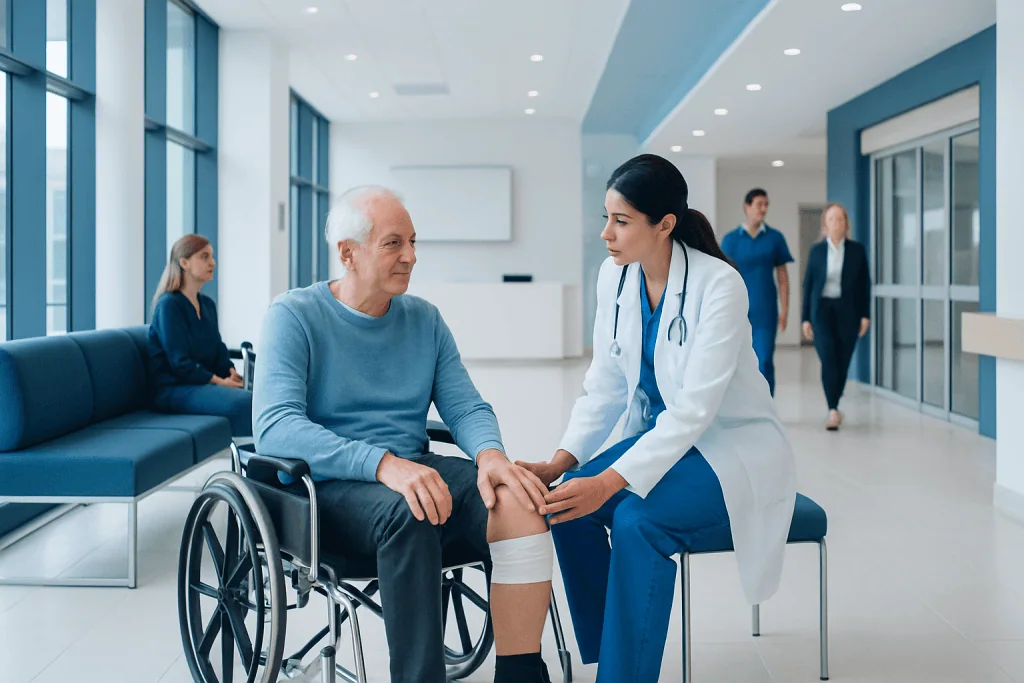
Knee replacement in Turkey follows the same clinical pathway as anywhere else: assessment, imaging, surgery, early physiotherapy and follow-up. As an international patient, you should plan time for consultation and tests on arrival, a hospital stay of a few days, early rehabilitation and a first control visit before flying home. Suitability, technique and timing are confirmed only after an in-person orthopaedic examination.
Two questions come up first when you consider knee replacement in Turkey: how long will you need to stay, and when will you be walking again? This guide answers both honestly, and covers the rest of the practical picture, who the operation suits, the types of surgery, what happens in hospital, what recovery genuinely looks like, how travel is timed and how quotes are structured. Use it to prepare sharper questions for your orthopaedic consultation, so the appointment is spent on your case rather than on basics.
At a glance
- Procedure type: Orthopaedic joint replacement surgery (knee arthroplasty)
- Purpose: To relieve severe knee pain, improve stability and restore mobility when conservative treatment no longer gives enough relief
- Anaesthesia: Usually spinal, epidural or general, decided after an anaesthesiology assessment
- Hospital stay: Commonly a few days, depending on your health, mobility and your surgeon’s assessment
- Recovery: Walking with support begins early; structured rehabilitation continues for weeks to months
- Return to daily life: Light daily activities are usually resumed gradually over several weeks, with individual guidance
- Final result timeline: Strength, comfort and confidence typically keep improving for 6–12 months
- Department: Orthopaedics and Traumatology, supported by anaesthesiology, physiotherapy and rehabilitation
- International patient support: Coordination, interpreters, transfers, accommodation guidance and remote follow-up
What is knee replacement?
Knee replacement, formally knee arthroplastyis an operation in which worn or damaged joint surfaces are removed and replaced with artificial components. The components create a smoother, more stable surface so the knee can move with less pain. Depending on the pattern of damage, the surgeon may replace the whole joint or only one affected compartment.
The most common reason is advanced osteoarthritis, where cartilage has worn away and bone rubs against bone. It may also be considered for rheumatoid arthritis, post-traumatic arthritis, severe deformity or previous injury that has permanently changed the joint. Be clear about the goal: the operation does not create a new natural knee. It aims to reduce pain, improve function and let you move more safely and comfortably.
Knee replacement in Turkey follows the same clinical logic as anywhere else. What changes for an international patient is the journey around the surgery: record review before travel, in-person assessment after arrival, the operation itself, early rehabilitation in hospital and remote follow-up once you are home. At Acibadem, that pathway is planned by orthopaedic specialists with input from anaesthesiology and physiotherapy where needed.
When is it recommended?
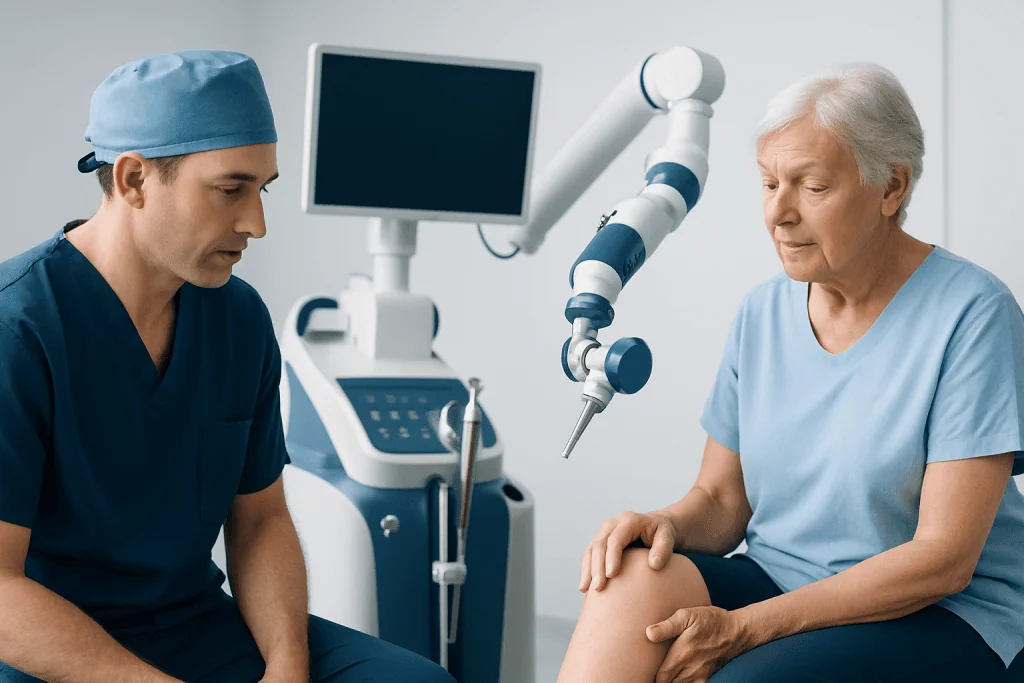
Surgery is usually discussed when pain and stiffness significantly limit daily life and non-surgical options are no longer working. Those options typically include weight management, activity modification, physiotherapy, walking aids, anti-inflammatory medication where appropriate, injections or bracing. A surgeon will generally recommend replacement only when the joint damage is advanced and matches the symptoms you describe.
Typical triggers for the conversation include pain when walking short distances, difficulty with stairs, night pain, progressive bowing or knock-knee deformity, recurrent swelling, instability, and a gradual shrinking of daily life, avoiding travel, social occasions or household tasks because the knee cannot be trusted.
The decision is always individual. Imaging alone does not decide it: some people have severe-looking X-rays with manageable symptoms, while others with more modest images are significantly disabled. A surgeon weighs your pain pattern, range of motion, limb alignment, general health, expectations and readiness for rehabilitation before recommending anything.
Who is a good candidate?
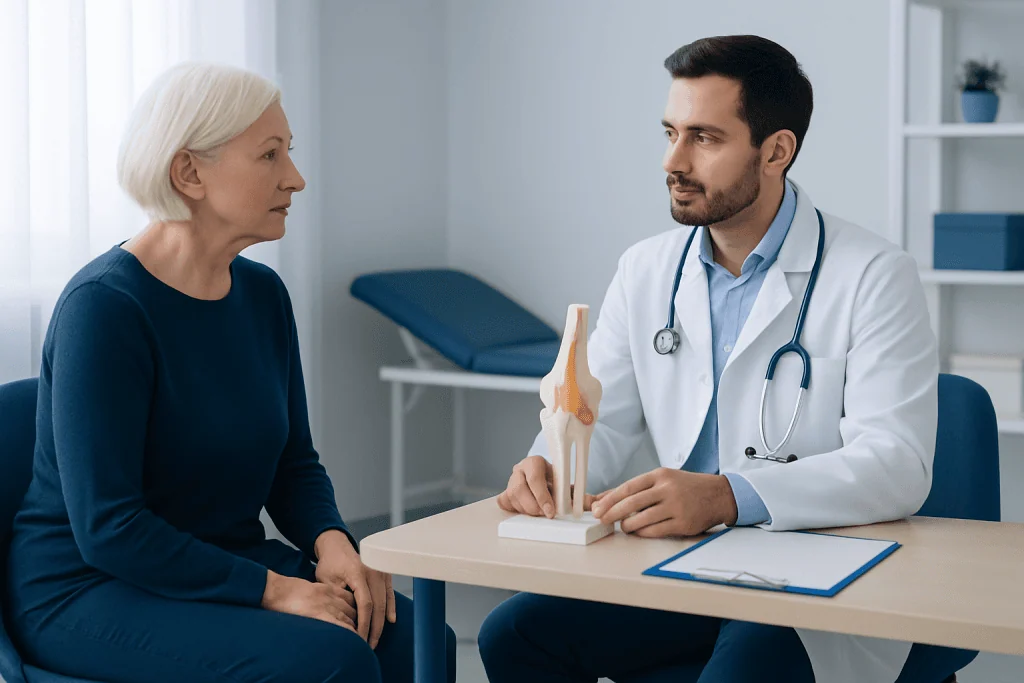
A good candidate typically has advanced joint damage, persistent pain and reduced function despite appropriate non-surgical care. You need to be medically fit enough for anaesthesia and surgery, and, just as importantly, willing to work at physiotherapy afterwards. Recovery is a process you participate in, not something done to you.
The orthopaedic team reviews age, weight, bone quality, muscle strength, walking ability, medical conditions, medications and any previous knee surgery. Conditions such as diabetes, heart disease, vascular disease, kidney problems, immune disorders or a history of blood clots do not automatically rule surgery out, but they may require extra preparation and specialist clearance first.
Surgery may be postponed or declined where there is active infection anywhere in the body, uncontrolled medical illness, severe skin problems around the knee, or where the expected benefit does not outweigh the risk. In some cases the recommendation is to optimise general health, treating a dental or skin infection, improving blood sugar control, before setting a date.
Types of knee replacement
There is no single standard operation. The three main options are total, partial and revision knee replacement. Total replacement resurfaces the main damaged areas of the joint and is used when arthritis affects more than one compartment. Partial replacement may be an option when damage is confined to one compartment and the ligaments, alignment and remaining cartilage are suitable.
Revision replacement means exchanging or correcting a previous implant because of loosening, wear, instability, infection, fracture, stiffness or persistent pain. It is usually more complex than a first-time operation and may need special implants, bone reconstruction and a longer rehabilitation plan, so it deserves careful evaluation by an experienced team.
Implants may be fixed with bone cement or, in selected cases, designed for bone ingrowth without cement. Your surgeon may also discuss implant design, bearing surface, kneecap resurfacing and alignment philosophy, and whether computer-assisted or robotic-assisted knee replacement is relevant to your anatomy. These technologies can support precision in selected patients, but they do not replace surgical judgement or rehabilitation.
Ask directly why a particular implant and technique are proposed for you, what the alternatives are and what limitations may remain afterwards. A good surgeon will answer plainly.
Evaluation before travel
For international patients, a preliminary remote review usually comes first. The orthopaedic team looks at medical history, current symptoms, previous treatments, the medication list and recent knee X-rays or MRI scans where available. In some cases, video showing walking pattern, alignment and range of motion adds useful information.
The purpose is to judge whether knee replacement may be appropriate, what additional tests are likely after arrival, and how long the stay should realistically be. A remote review has firm limits: it cannot replace a physical examination, updated imaging or an anaesthesia assessment, so no plan is final until you have been seen in person. Complex cases, previous surgery, suspected infection, severe deformity, revision needs, usually require more documentation before a plan is confirmed.
Before the operation
Preparation starts with a detailed orthopaedic assessment: movement, stability, alignment, skin condition, walking pattern and the severity of joint damage on imaging. Depending on your age and history, blood tests, urine tests, heart evaluation or chest imaging may follow.
Medication review matters particularly. Blood thinners, diabetes medication, steroids, supplements, pain medicines and allergies all need to be on the table. Decisions about continuing, pausing or adjusting any medicine belong to your surgeon and anaesthetist, never make those changes on your own.
You may be asked to optimise certain factors first, such as blood sugar, blood pressure, dental infections, skin wounds or smoking. It also pays to prepare your home for your return: remove trip hazards, arrange help with shopping and transport, and plan a workable sleeping and bathroom setup if stairs are difficult. Physiotherapy education often begins before surgery, learning to use a walker or crutches and to get in and out of bed safely makes the first days afterwards far less daunting.
What happens during surgery
On the day, your identity, consent, planned side and medical details are checked carefully. The anaesthesiology team confirms the plan, spinal, epidural or general anaesthesia, sometimes combined with regional pain-control techniques. Preventive measures against infection and blood clots are set according to your individual risk.
The surgeon makes an incision over the knee, removes the damaged cartilage and bone surfaces, and shapes the bone to fit the implant components. These are positioned to restore alignment, stability and movement, with a plastic spacer between the metal components to allow smooth motion. Once movement and stability are checked, the incision is closed and dressed.
You then move to a recovery area where blood pressure, breathing, pain and leg circulation are monitored. Operating time varies with anatomy, with whether the procedure is total, partial or revision, and with any additional correction needed, so treat any fixed figure you read online with caution.
Hospital stay and discharge
After surgery the focus is pain control, safe movement, wound monitoring and prevention of complications. Nurses and physiotherapists help you begin gentle exercises and, when it is medically appropriate, stand and walk with support. Early movement is encouraged because it helps circulation, confidence and joint function.
Before discharge you receive detailed instructions covering wound care, medication, clot prevention, permitted activities, sleeping positions and walking aids. Those instructions also list the specific warning signs your team wants reported and name who to reach: that document, written for your case, is the one to keep and follow, not a general web page.
Discharge depends on your overall condition, mobility, pain control, wound status and ability to manage basic activities with support. The aim is to leave hospital safely, not quickly at any cost. International patients usually have a first control visit before travel clearance, so the incision and walking progress can be checked before the journey home.
Recovery timeline
Recovery is gradual and varies between people. Some discomfort, swelling, bruising and stiffness are expected early on; improvement comes with consistent exercise, walking practice and time. The table below shows a typical shape: your own plan will be personalised, and our recovery timeline and aftercare guide covers each phase in more depth.
| Timeframe | What to expect |
|---|---|
| First 24 hours | Monitoring in hospital, pain control, circulation checks and simple ankle and leg exercises. Standing or walking with support may begin when safe. |
| First week | Walking with a walker or crutches, practising stairs if needed, managing swelling, continuing exercises and following wound-care instructions. |
| Weeks 2–4 | Gradual gains in mobility and confidence. Many patients reduce walking support as advised and increase light daily activities. |
| Months 1–3 | Strength, bending, walking distance and balance usually keep improving. Some swelling or stiffness after activity is still normal. |
| Final result | Comfort, strength and confidence often continue developing over 6–12 months, depending on health, rehabilitation and the knee’s condition before surgery. |
Recovery is not a race. Better and harder days are normal, especially after stepping up activity. What matters most is following the rehabilitation programme and keeping follow-up appointments.
What to avoid afterwards
Avoid overloading the new joint before your muscles and balance have recovered: running, jumping, sudden twisting, forceful kneeling, heavy loads and demanding sport all wait until your surgeon clears them. Low-impact activity is usually the preferred route back.
Do not soak the wound in a bath, pool or the sea until your doctor confirms it is safe, and do not apply creams, powders or herbal products to the incision unless prescribed. Sutures or staples are removed by professionals, not at home.
Avoid long periods of sitting without moving your legs, especially during travel: your team will advise on movement, hydration, compression where recommended and clot prevention. Driving waits until you have adequate strength, reaction time, pain control and your surgeon’s approval.
Risks and possible complications
Knee replacement is a commonly performed operation, but like all major surgery it carries risk. Potential complications include infection, bleeding, blood clots in the leg, pulmonary embolism, anaesthesia-related problems, wound-healing issues, nerve or blood vessel injury, fracture, stiffness, instability, implant loosening or wear, and persistent pain. Some complications need additional treatment or, less commonly, further surgery.
Certain factors raise risk: poorly controlled diabetes, smoking, obesity, immune suppression, vascular disease, previous knee surgery, active infection or very limited mobility before the operation. Part of good preparation is identifying these and reducing them where possible before proceeding.
Discussing risk does not mean complications are expected. It means you can make an informed decision and understand why preoperative assessment, infection-prevention protocols, early mobilisation and structured follow-up are built into the pathway.
Results and realistic expectations
The expected benefits are reduced pain, better walking ability, improved alignment and greater independence. Many patients find standing, walking, stairs and low-impact activities more comfortable after recovery. Results vary with the knee’s condition before surgery, muscle strength, general health and how thoroughly rehabilitation is followed.
A replaced knee can feel different from a natural one. Clicking, mild numbness around the incision, stiffness after sitting and weather-related discomfort are all reported. Kneeling may remain uncomfortable for some people, and high-impact sport is usually discouraged to protect the implant.
Implants are designed for long-term use, but they are not permanent for every patient. Wear, loosening, infection, injury or changes in bone quality can sometimes lead to revision surgery later. Long-term follow-up recommendations, including whether periodic imaging is worthwhile, come from your surgeon.
Planning your travel
A trip for knee replacement in Turkey needs enough time for arrival, consultation, preoperative tests, surgery, the hospital stay, early physiotherapy, a first control visit and travel clearance. The exact schedule depends on medical findings, theatre availability, your recovery speed and any extra specialist evaluations. Do not book an inflexible return flight before the treatment plan is confirmed.
The flight home deserves its own planning, because prolonged sitting can increase swelling and clot risk. Timing, in-flight movement, seat choice and airport assistance are all decided with your surgeon: our guide on flying after knee or hip replacement surgery explains what that conversation covers.
Acibadem’s international patient services coordinate airport transfers, interpreter support, accommodation guidance and appointment scheduling, and companions can be briefed on visiting arrangements and how to help during early recovery.
How cost is structured
You will not find a price on this page, because an honest figure cannot exist before a surgeon has reviewed your case. What can be explained is the structure. The cost of a knee replacement in Turkey depends on whether the operation is total, partial or revision; the implant type; the complexity of any deformity; length of hospital stay; anaesthesia needs; preoperative tests; specialist consultations; rehabilitation requirements; and any additional conditions that need managing. Revision and complex cases generally require more resources than straightforward first-time surgery.
A package quotation for an international patient typically covers surgeon and operating theatre services, anaesthesia, standard preoperative tests, the hospital room and nursing care, routine medications during admission, early physiotherapy and the initial postoperative control. Items commonly outside a package include flights, hotel stays, companion expenses, extended hospitalisation, extra imaging, treatment of unrelated conditions, complications, rehabilitation beyond the agreed plan and long-term medication after discharge.
Compare offers on substance, not headline figures: what exactly is included, what is excluded, what could change the plan, and how implant quality, hospital standards and follow-up are handled. Our cost factors and quote guide breaks this down line by line.
Medical review and disclaimer
This guide has been reviewed by the Acibadem International medical team. It provides general information for international patients considering this operation and is intended to help you prepare for a medical consultation.
It does not replace a personal examination, diagnosis or treatment plan from a qualified physician. Suitability for knee replacement depends on your symptoms, imaging, physical examination, medical history, anaesthesia assessment and rehabilitation capacity. Every patient is different, and recovery timelines and risks vary. Always follow the advice of your treating doctor.
Step by step
- Preliminary review. The journey typically begins with a remote review of medical history, symptoms, medication details and recent X-rays or MRI reports.
- Initial assessment. An orthopaedic team considers whether knee replacement may be appropriate and which additional tests are likely to be needed after arrival.
- Plan and quotation. A preliminary plan sets out the proposed evaluation, likely procedure type, expected hospital stay, travel duration and included services, all subject to in-person confirmation.
- Travel coordination. International patient services arrange appointment dates, transfers, interpreter support and accommodation guidance for the patient and any companion.
- Arrival and consultation. The surgeon examines the knee, reviews imaging, discusses expectations and confirms whether surgery is the right option.
- Preoperative tests. Blood tests, imaging, anaesthesia assessment and any specialist consultations confirm fitness for surgery.
- Surgery. The replacement is performed under the anaesthesia plan chosen for the individual case, with careful preparation and monitoring.
- Hospital recovery. Nursing care, pain control, wound checks, early walking and physiotherapy guidance follow the operation.
- First control and clearance. The surgeon checks the incision, mobility and overall recovery, then issues discharge instructions, medication guidance and travel advice when the patient is ready.
- Remote follow-up. After the journey home, progress updates and local reports can be reviewed through the international coordination team according to the agreed follow-up plan.
Your checklist
- Valid passport and travel documents
- Full medical history, including chronic illnesses and previous hospitalisations
- Current medication list, including blood thinners, supplements and pain medicines
- Known allergies to medications, latex, food or materials
- Details of previous knee surgeries, injections or injuries
- Recent knee X-rays, MRI or CT scans and reports if available
- Recent blood tests, heart tests or specialist reports if you have medical conditions
- A clear description of current symptoms, walking distance, stair difficulty and pain pattern
- Information about smoking, diabetes control, blood clot history or infections
- Contact details for your local doctor or physiotherapist
- Your questions about implants, recovery, travel clearance and rehabilitation
Key takeaways
- Knee replacement is considered when advanced arthritis or joint damage causes persistent pain and reduced mobility despite proper non-surgical care.
- Plan enough time in Turkey for evaluation, surgery, early physiotherapy, a first control visit and travel clearance, and keep return flights flexible until the plan is confirmed.
- Early walking and committed physiotherapy are central to recovery; progress depends on general health, muscle strength and rehabilitation as much as the operation itself.
- Infection, blood clots, stiffness, implant wear and persistent pain are real risks worth discussing openly with your surgeon.
- Implant choice, technique, anaesthesia and travel timing all vary by patient, nothing is final until an in-person examination.
Frequently asked questions
How much is a knee replacement in Turkey?
There is no honest single figure. The cost depends on whether the surgery is total, partial or revision, the implant selected, case complexity, hospital stay, tests, anaesthesia and rehabilitation needs. A written quotation prepared after medical review should state clearly what is included and excluded: that document, not a headline price, is what to compare.
Where is the best country to get a knee replacement?
There is no objectively best country. What matters is the surgical team’s experience with your type of case, hospital standards, implant availability, rehabilitation support, follow-up arrangements and how well you tolerate travel. Judge specific hospitals and surgeons on those criteria rather than choosing by country alone.
What can you never do again after knee replacement?
Most surgeons discourage high-impact activities such as running and jumping sports long term, to protect the implant. Kneeling remains uncomfortable for some people, though not for everyone. Walking, swimming, cycling and similar low-impact activities are usually encouraged once cleared. Your own limits depend on your knee, your implant and your surgeon’s guidance.
Who is the best knee replacement surgeon?
No single answer exists, and lists claiming one should be treated sceptically. Reasonable measures are experience with your specific situation, primary or revision, degree of deformity, willingness to explain the choice of implant and technique, the quality of the supporting hospital team, and how honestly limitations and risks are discussed.
How long should I stay in Turkey for knee replacement?
Your stay needs to cover consultation, preoperative tests, surgery, hospital recovery, early physiotherapy and at least one postoperative control before travel clearance. The exact duration depends on your medical condition and how mobility progresses, so the schedule is set individually and confirmed only after in-person assessment.
When is it safe to fly home after surgery?
Flying requires your surgeon’s clearance, because long periods of sitting can increase swelling and clot risk. Timing is decided individually, along with advice on moving during the flight, seat choice and any preventive measures. Keep return plans flexible rather than booking a tight schedule in advance.
Will I be able to walk soon after surgery?
Most patients begin standing and walking with support early after the operation, once the medical team confirms it is safe, usually with a walker or crutches at first. Walking distance and confidence then build gradually through physiotherapy and healing, at a pace that varies from person to person.
How long does a knee implant last?
Implants are designed for long-term use, but lifespan varies with activity level, weight, bone quality, implant type and general health. Some patients eventually need revision surgery because of wear, loosening, infection or injury. Your surgeon will explain what long-term follow-up is sensible in your case.
Add us as a Preferred Source to see more of our trusted health content across Google Search, AI Overviews and Discover.

Update history
- PublishedJune 9, 2026
- Medical review approvedAugust 30, 2026
- Last content updateAugust 30, 2026
References2
- Knee replacement: NHS nhs.uk
- Knee Replacement: MedlinePlus medlineplus.gov
More Patient Guides

HoLEP in Turkey: How It Compares With TURP and What Recovery Involves
HoLEP in Turkey treats enlarged prostate tissue with laser enucleation; learn how it compares with TURP, recovery, travel and follow-up.

Porcelain Veneers in Turkey: Who Is Suitable and How Many Visits Are Needed?
Porcelain veneers in Turkey can enhance tooth shape and colour in two visits for suitable patients after a personalised dental assessment.

How to Prepare for a Sedation Procedure in Turkey
Prepare safely for a sedation procedure in Turkey with guidance on fasting, medicines, travel, recovery and follow-up.

Treatment Delays in Turkey: What Happens If Tests or Recovery Change Your Schedule
Treatment delays in Turkey can happen if tests or recovery change your plan. Learn how to manage appointments, travel, accommodation and follow-up.