

Pimple on Earlobe: A Complete Medical Overview
Most earlobe pimples are related to clogged pores, friction, skin oils, or mild infection. Not every earlobe lump is a pimple; cysts, piercing complications, and inflamed skin conditions can look similar.
Key Takeaways
- Most earlobe pimples are related to clogged pores, friction, skin oils, or mild infection.
- Not every earlobe lump is a pimple; cysts, piercing complications, and inflamed skin conditions can look similar.
- Squeezing or picking can worsen inflammation and increase the risk of infection or scarring.
- Warm compresses and gentle cleansing are often enough for minor cases.
- Medical care is important if the area becomes very painful, spreads, drains heavily, or does not improve.
A pimple on earlobe is commonly caused by a blocked pore, irritated hair follicle, or minor skin infection. Most are harmless and settle with simple skin care, but some lumps on the earlobe are cysts, piercing-related infections, or other conditions that should be checked by a doctor.
Overview: What a Pimple on the Earlobe Usually Means
A pimple on earlobe is usually a small inflamed bump caused by a blocked skin pore, trapped oil, dead skin cells, or irritation around a hair follicle. In many people, it behaves much like acne elsewhere on the body and clears with time and gentle skin care.
The earlobe has skin, oil glands, and hair follicles, so it can develop acne-like bumps even though this area is often overlooked. Friction from phones, headphones, hats, or earrings may also contribute by irritating the skin or trapping sweat and oils against it.
Still, not every bump on the earlobe is a true pimple. Some are epidermoid or sebaceous cysts, small boils, allergic reactions to jewelry, or piercing-related infections. That is why a lump that is unusually large, repeatedly returns, or does not improve should not automatically be treated as simple acne.
How It Can Look and Feel
An earlobe pimple may appear as a small red bump, a tender whitehead, a deeper sore spot under the skin, or a pustule with a visible center. Some people notice mild warmth, swelling, or sensitivity when touching the ear, especially when sleeping on that side or wearing earrings.
Symptoms vary depending on the cause. A clogged pore may stay small and only feel slightly sore, while an inflamed follicle or boil can become more painful and swollen. If there is infection, the skin may look brighter red and feel warm, and drainage of pus or crusting may occur.
Features that can suggest the lump may not be a simple pimple include:
- A smooth, round lump under the skin that has been present for a long time
- Repeated swelling in the same place
- Marked redness spreading beyond the earlobe
- Fever or feeling unwell
- Painful swelling around a piercing site
- A dark spot, scab, or skin change that does not heal
Common Causes and Risk Factors

The most common cause of a pimple on earlobe is a blocked pore. Natural skin oil, sweat, dead skin cells, and everyday dirt can collect in the tiny openings of the skin. When bacteria grow in the blocked area, the bump may become inflamed and tender.
Hair follicles can also become irritated or infected, leading to folliculitis or a boil. This may happen after shaving nearby hair, touching the ears often, using unclean earbuds, or wearing tight headgear. People with oily skin, acne-prone skin, or frequent sweating may be more likely to develop these bumps.
Piercings are another important factor. A new or old piercing may become irritated by metal sensitivity, friction, or poor hygiene. An infected piercing can mimic a pimple, but it may need different care. In some cases, a firm earlobe lump is actually a cyst rather than acne, and occasionally underlying skin conditions such as acne or eczema may contribute to recurrent irritation in and around the ear.
Less commonly, the problem may be related to contact dermatitis from cosmetics, hair products, or jewelry materials such as nickel. Repeated rubbing, sleeping pressure, and trying to squeeze small bumps can all worsen inflammation and delay healing.
Pimple, Cyst, or Infection? Why the Difference Matters
People often use the word “pimple” for any small lump, but the earlobe can develop several different conditions that look similar. A pimple usually starts near the surface of the skin, while a cyst often feels like a deeper, round, movable lump under the skin. A boil tends to be more painful and may enlarge over a few days.
An infected piercing may cause redness, throbbing, swelling, and drainage near the hole for the earring. Allergic contact dermatitis from metal jewelry can cause itching, scaling, oozing, or rash-like redness rather than a single acne bump. These distinctions matter because some cases improve with simple home care, while others may require prescription treatment or drainage.
Doctors may also consider less common causes such as scar tissue, keloids, inflamed lymphatic tissue nearby, or uncommon skin growths. If the bump keeps returning in the same spot, changes color, bleeds, or grows steadily, it should be evaluated rather than repeatedly treated as acne.
Diagnosis and What a Doctor May Check
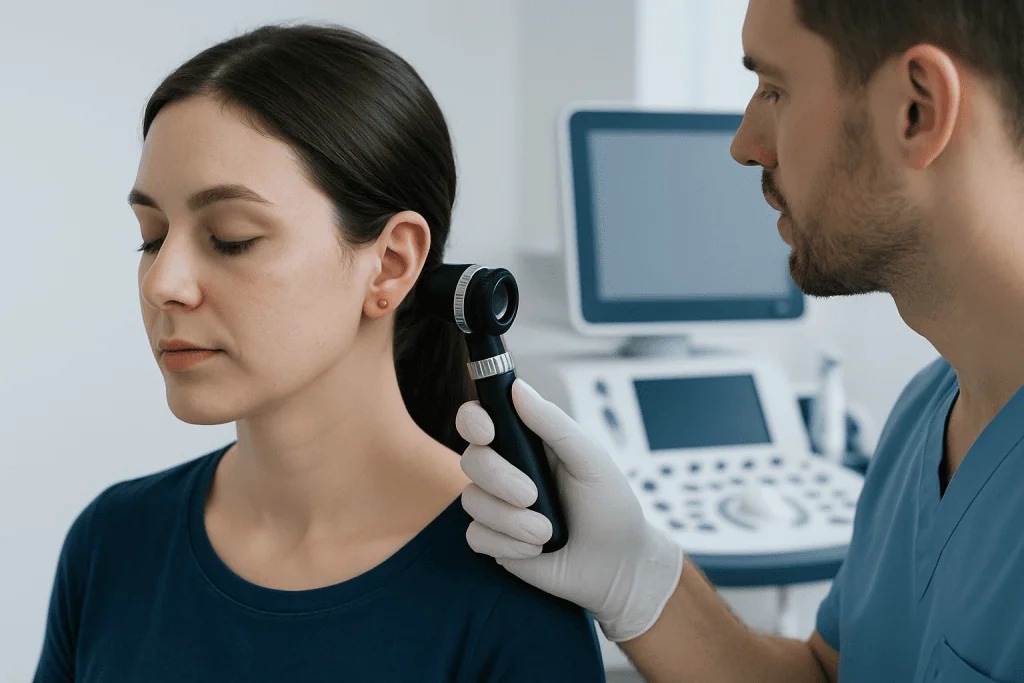
Most earlobe pimples can be recognized based on appearance and symptoms alone. A doctor will usually ask how long the bump has been present, whether it is painful, if it drains, whether there is a piercing, and whether similar bumps occur elsewhere on the skin.
The exam typically focuses on the size, color, warmth, tenderness, and depth of the lump. The doctor may also inspect the ear canal, nearby skin, scalp, and lymph nodes if infection is suspected. In many cases, no special test is needed.
If the area is recurrent, unusually large, or not healing, the doctor may consider whether it is a cyst, an abscess, or another skin condition. In selected cases, referral for dermatology evaluation may help clarify the diagnosis, especially when the bump is persistent or atypical.
Treatment Options and Safe Home Care
For a small, uncomplicated pimple on earlobe, gentle home care is often enough. Washing the area with mild soap and water once or twice daily and using a warm compress for several minutes can help reduce discomfort and encourage natural drainage. It is best to keep phones, earbuds, and hands clean to limit further irritation.
Squeezing, popping, or using harsh acne products on the earlobe can make the skin more inflamed. Because the earlobe is delicate, aggressive picking may cause bleeding, bacterial infection, or a longer-lasting mark. If there is a piercing, removing jewelry without medical advice is not always the best option, especially if infection is present, because the hole can close and trap infection.
When the lump is larger, very painful, or clearly infected, medical treatment may be needed. Depending on the cause, a doctor may recommend topical medication, oral antibiotics, or drainage if an abscess has formed. If a cyst is repeatedly inflamed or bothersome, a minor procedure may be discussed, and some patients may be referred for ear, nose, and throat evaluation or specialist skin care and dermatology when diagnosis or treatment is not straightforward.
Prevention and Everyday Self-Care
Preventing an earlobe pimple often comes down to reducing blockage and irritation. Regular but gentle cleansing, especially after sweating, can help remove oil and debris. Headphones, earbuds, and phone screens should be cleaned routinely because they come into frequent contact with the ears.
Jewelry care also matters. Earrings should be kept clean, and people with sensitive skin may do better with hypoallergenic materials. Heavy earrings or tight backing pieces can irritate the earlobe and contribute to rubbing or small injuries that become inflamed.
Helpful habits include:
- Avoid touching or picking the earlobes
- Clean piercing sites as advised after new piercings
- Wash hair products off the ears after showering
- Change pillowcases regularly
- Use non-irritating skin products if prone to acne or dermatitis
If a person has repeated bumps on the ears along with acne on the face, chest, or back, addressing the broader skin condition may help prevent recurrence. In some situations, doctors may evaluate related concerns such as skin infections when symptoms suggest more than simple acne.
When to Seek Medical Care
A pimple on earlobe should be medically reviewed if it becomes very painful, rapidly enlarges, feels hot, or causes redness that spreads beyond the immediate area. Heavy drainage, a foul smell, fever, or swelling of nearby lymph nodes can suggest infection that needs professional treatment.
Medical advice is also important if the bump lasts more than a few weeks, keeps coming back, develops after a piercing, or feels more like a deep fixed lump than a surface pimple. People with diabetes, weakened immunity, or a history of significant skin infections should seek care sooner because minor skin problems can sometimes progress more easily.
If expert assessment is needed, Acibadem International’s multidisciplinary specialists in JCI-accredited hospitals evaluate and treat skin and ear-related conditions for international patients. The most appropriate specialist may be a dermatologist, an ENT doctor, or a primary care physician depending on the appearance and suspected cause.
Frequently asked questions
Can a pimple on the earlobe go away on its own?
Yes. Many small earlobe pimples improve on their own within days to a couple of weeks with gentle cleansing and avoiding picking. If the bump gets larger, more painful, or does not improve, it should be checked by a doctor.
Is it safe to pop a pimple on the earlobe?
It is generally not recommended. Popping can push inflammation deeper, increase the risk of infection, and leave a mark or scar on the delicate earlobe skin. Warm compresses and gentle care are safer first steps.
How can someone tell if an earlobe bump is a cyst instead of a pimple?
A cyst often feels like a deeper, smooth, round lump under the skin and may stay present for a longer time. A pimple is usually more superficial, red, and linked to pore blockage or inflammation. If the distinction is unclear, a doctor can examine it.
Can earrings cause a pimple on the earlobe?
Yes. Earrings can irritate the skin, trap moisture, or trigger allergy to metals such as nickel, and piercing holes can also become infected. If symptoms are linked to jewelry use, cleaning the area and discussing the issue with a clinician may help identify the cause.
What home remedies are reasonable for a pimple on earlobe?
Simple measures are usually best, such as gentle washing and a warm compress for comfort. Keeping the area dry, clean, and free from friction can support healing. Strong or irritating products should be used cautiously because the earlobe skin is sensitive.
When is an earlobe pimple a sign of infection?
Signs of possible infection include increasing pain, warmth, swelling, pus, spreading redness, or fever. A bump near a piercing that throbs or drains should also raise concern. These symptoms warrant medical advice, especially if they worsen quickly.
References
- American Academy of Dermatology
- National Health Service
- Cleveland Clinic
- Mayo Clinic
- Merck Manual Consumer Version
This article is for general information only and is not a substitute for professional medical advice. Please consult a qualified doctor about your individual situation.
Hair transplant in Turkey — costs, graft counts & a free assessment
JCI-accredited · board-certified surgeons · reply within 24h

More from the Health Library



Related Specialists

Dr. Atilla Damlacık
Radiology
Dr. Danyal Gümüş
Orthopedic Surgery & Traumatology
Prof. Dr. Mehmet Aytaç Yüksel
Gynecology & Obstetrics
Prof. Dr. Elif Eroğlu Büyüköner
Cardiology