Plantar Wart Pictures Early Stage — Explained by Medical Evidence, Not Myths

Early plantar warts often begin as a small rough patch on the bottom of the foot rather than a large raised bump. Tiny black dots, disrupted natural skin lines, and pain with side-to-side squeezing can support the diagnosis.
Key Takeaways
- Early plantar warts often begin as a small rough patch on the bottom of the foot rather than a large raised bump.
- Tiny black dots, disrupted natural skin lines, and pain with side-to-side squeezing can support the diagnosis.
- Corns, calluses, and other skin conditions can look similar, so persistent or painful lesions should be checked by a doctor.
- Many plantar warts improve with topical treatment or office procedures, but they may take weeks to months to clear.
- Good foot hygiene, avoiding barefoot contact on shared wet floors, and not picking at lesions can reduce spread.
Plantar wart pictures early stage usually match a small, rough area on the sole that may look grainy, flatten under pressure, and show tiny black dots. Rather than relying on myths, diagnosis is based on the wart’s appearance, location, symptoms, and a clinician’s skin examination when needed.
What early-stage plantar wart pictures usually show
When people search for plantar wart pictures early stage, they are usually trying to answer one practical question: “Does this spot on the bottom of the foot look like a wart?” In early stages, a plantar wart often appears as a small, rough, slightly thickened area on a weight-bearing part of the sole, such as the heel or ball of the foot. It may look flatter than a wart elsewhere on the body because walking presses it inward.
Pictures can be helpful, but they have limits. Lighting, skin tone, dry skin, and camera angle can change how a lesion appears. A true plantar wart often interrupts the normal skin lines of the sole and may contain tiny dark pinpoint dots, which represent clotted small blood vessels rather than “seeds” or dirt.
In some people, the earliest change is just a tender spot that feels like stepping on a grain of sand. Over time, the area may become more grainy or callus-like. Looking at pictures is most useful when paired with a few evidence-based clues: location on the sole, rough texture, black dots, and discomfort with pressure.
How to recognize a plantar wart without relying on myths
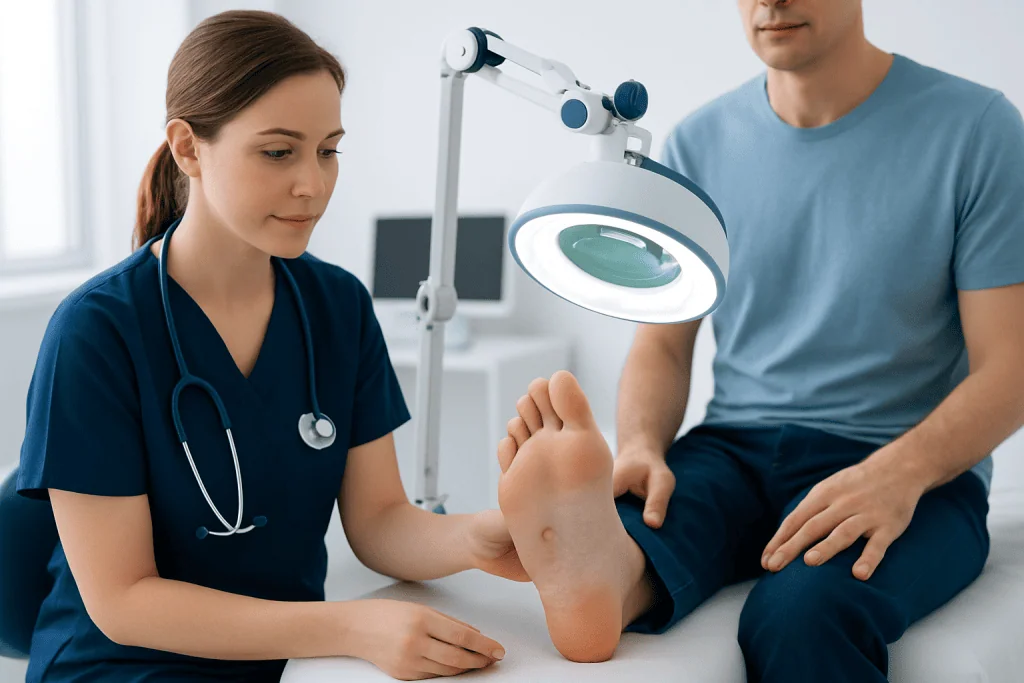
Plantar warts are caused by certain types of human papillomavirus (HPV) infecting the outer layer of skin on the foot. They are not caused by poor hygiene alone, do not have roots growing deep into the body, and the black dots seen in many lesions are not insect eggs or trapped debris. These common myths can make a harmless but bothersome condition seem more mysterious than it is.
A more reliable way to recognize a plantar wart is to focus on its clinical features. Compared with surrounding skin, the area is usually rougher and may be slightly yellow, gray, tan, or skin-colored. Normal skin lines often stop at the lesion instead of crossing through it. If the top layer is pared down by a clinician, pinpoint bleeding may be seen.
Symptoms also help. A plantar wart may hurt more when the sides are squeezed than when direct pressure is applied from above, although this is not a perfect rule. Some people have a single wart, while others develop clustered lesions called mosaic warts. If appearance is unclear, a dermatologist or foot specialist can evaluate it and rule out other problems, including skin cancer when a lesion has unusual features.
What can look similar to an early plantar wart
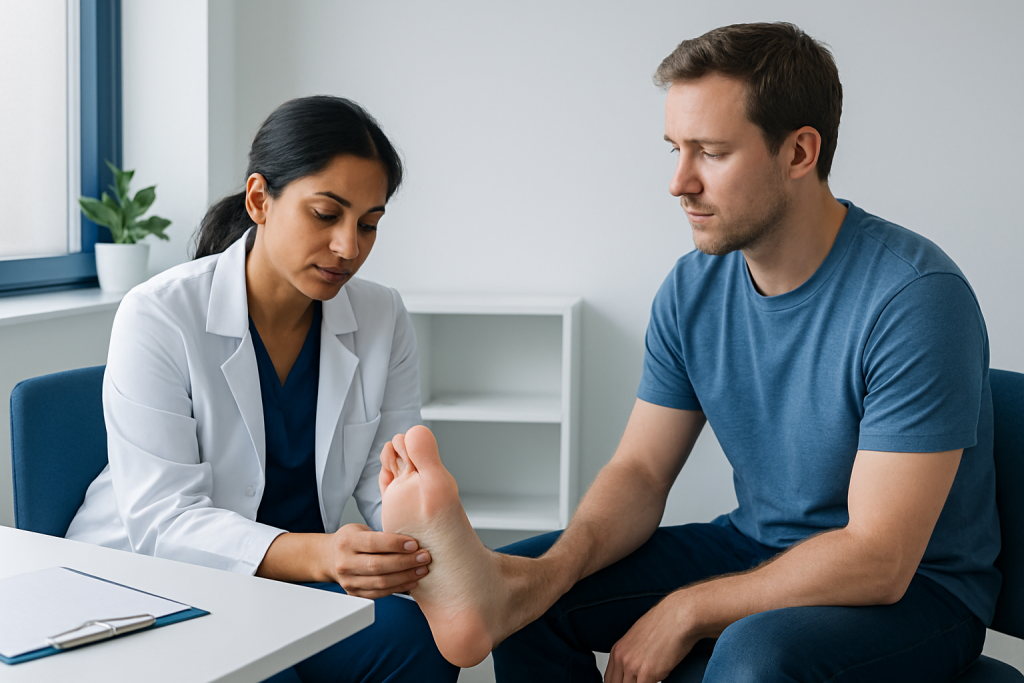
Several common foot conditions can resemble an early plantar wart. Corns and calluses are the most frequent look-alikes. They are also thickened areas of skin, especially in spots exposed to pressure or friction from walking, standing, or footwear. Unlike plantar warts, calluses usually preserve the normal skin lines, and they do not typically show black pinpoint dots.
Other conditions can sometimes be confused with warts as well. These include small foreign bodies in the skin, friction blisters in later stages, eczema, fungal infections, and less commonly unusual growths. In children, teenagers, athletes, and adults who use communal showers or pools, a wart may be more likely, but appearance alone is not always enough for certainty.
Because many online images show advanced or classic cases, very early lesions are easy to misidentify. A rough spot that keeps growing, becomes painful, or does not improve with routine skin care deserves medical review. Proper diagnosis matters because treatment for a wart is different from treatment for a corn, a callus, or inflammatory skin disease.
Why plantar warts develop and who is more likely to get them
Plantar warts develop when HPV enters the skin through tiny breaks or weakened areas in the sole. The virus spreads more easily in warm, moist environments such as pool decks, locker rooms, and shared showers. Not everyone exposed to HPV develops a wart; the skin barrier, immune response, and repeated pressure on the feet all play a role.
Children, teenagers, and young adults commonly get warts, but they can occur at any age. Risk may be higher in people with sweaty feet, those who walk barefoot in communal spaces, and individuals who already have skin damage from friction or dryness. People with weakened immune systems may be more prone to persistent or multiple lesions and should seek medical advice earlier.
Plantar warts are contagious, but usually through direct or indirect skin contact rather than through casual proximity. Picking, shaving, or cutting at the lesion can spread the virus to nearby skin or to other people. Good hygiene and not sharing footwear or foot-care tools can reduce this risk.
How doctors diagnose plantar warts
Diagnosis usually begins with a clinical examination. A doctor looks at the lesion’s texture, shape, and location and may gently remove a thin surface layer to see whether black dots or pinpoint bleeding are present. In many cases, this exam is enough to distinguish a plantar wart from a corn or callus.
If the diagnosis is uncertain, especially in adults with a new solitary lesion, a doctor may consider other causes. A biopsy is not needed for most typical warts, but it can be useful if the growth is changing quickly, bleeding without reason, unusually pigmented, or not responding to treatment. This helps exclude other skin conditions, including rare but important diagnoses.
When foot pain affects walking, a broader assessment may be needed to rule out problems such as pressure-related lesions or structural foot strain. In some settings, patients may be evaluated by specialists in dermatology or orthopedics and traumatology depending on the appearance and symptoms.
Treatment options and what to expect
Many plantar warts eventually resolve on their own, but some last a long time or become painful. Treatment depends on symptoms, size, number of lesions, age, skin sensitivity, and patient preference. The most commonly used first-line treatment is a salicylic acid preparation applied regularly over weeks, often after soaking and gently filing the thickened skin according to medical advice.
Office-based treatments may be recommended when home treatment fails, the diagnosis is uncertain, or the wart is painful. These can include freezing with cryotherapy, careful paring, chemical treatments, or other clinician-directed procedures. Stubborn warts sometimes require repeated visits because plantar lesions are pressed inward and can be harder to clear than warts on other body areas.
Self-treatment should be approached carefully. Cutting deeply into the lesion, using harsh home acids not designed for skin, or trying to burn the area can cause infection, delayed healing, and unnecessary pain. In people with diabetes, poor circulation, or reduced feeling in the feet, professional guidance is especially important before starting any treatment on the sole.
If the lesion is persistent, painful, or recurrent, specialist care may help. In more complex cases, treatment plans may involve skin specialist care and, when walking mechanics or pressure points are contributing to discomfort, assessment through physical therapy and rehabilitation.
Self-care and prevention
Self-care focuses on reducing irritation, limiting spread, and supporting treatment. Keeping the feet clean and dry, changing socks regularly, and wearing breathable shoes may help protect the skin barrier. If a wart is painful, cushioned pads designed to reduce pressure around the spot may make walking more comfortable.
To reduce transmission, it is sensible to avoid walking barefoot in communal wet areas, avoid sharing shoes, socks, nail tools, or pumice stones, and cover the lesion if advised by a clinician. Picking at a wart can spread the virus to nearby skin, so it is best avoided. Good skin care for dryness and cracks may also lower the chance of viral entry.
It is also helpful to keep expectations realistic. Even effective treatments often take time because the virus lives in the superficial skin layer and the thick sole skin responds slowly. If a lesion is not improving after a reasonable trial of treatment, the next step is not to use stronger home methods at random, but to get a proper diagnosis.
When to seek medical care
A doctor should assess a suspected plantar wart if it is very painful, growing quickly, bleeding, changing color, or making walking difficult. Medical review is also important if there are multiple lesions, repeated recurrences, or uncertainty about whether the spot is truly a wart. What seems like a wart may occasionally be another skin condition that needs different care.
People with diabetes, nerve damage, circulation problems, or weakened immunity should not try aggressive home treatment on the feet without professional advice. Early evaluation helps reduce the risk of skin injury or infection. Children can also benefit from review if the lesion is tender or interfering with activity.
Near the end of the care pathway, some patients need coordinated specialist assessment to confirm the diagnosis and choose the most suitable treatment. Acibadem International’s multidisciplinary specialists in JCI-accredited hospitals diagnose and treat plantar warts and other foot skin conditions for international patients.
Frequently asked questions
What does an early plantar wart look like?
An early plantar wart often looks like a small rough or grainy patch on the sole of the foot. It may be flat rather than raised because body weight pushes it inward, and tiny black dots may appear over time.
How can someone tell a plantar wart from a callus?
A plantar wart often interrupts the normal skin lines and may show black pinpoint dots, while a callus usually keeps the skin lines intact. Warts may also feel more tender with side-to-side pressure, although a clinician may still be needed to confirm the difference.
Are the black dots in a plantar wart a sign of infection?
Usually not. The black dots are typically tiny clotted blood vessels within the wart, not dirt, seeds, or pus. They are a common visual clue but do not appear in every case.
Can plantar warts go away without treatment?
Yes, some plantar warts eventually clear as the immune system responds to the virus. However, they can take a long time to resolve and may become painful or spread, which is why treatment is often considered.
Is it safe to remove a plantar wart at home?
Mild over-the-counter treatments may be appropriate for some people, but cutting or burning the lesion at home is not safe. Anyone with diabetes, poor circulation, reduced foot sensation, or uncertainty about the diagnosis should seek medical advice first.
When should a suspected plantar wart be checked by a doctor?
Medical review is a good idea if the lesion is painful, growing, bleeding, changing appearance, or not improving with standard care. A doctor should also check any uncertain foot lesion to rule out other skin conditions.
References
- American Academy of Dermatology
- American Podiatric Medical Association
- National Health Service
- Mayo Clinic
- Centers for Disease Control and Prevention
This article is for general information only and is not a substitute for professional medical advice. Please consult a qualified doctor about your individual situation.
Explore treatments in Turkey — costs, top hospitals & a free quote
JCI-accredited · board-certified surgeons · reply within 24h