Prostatectomy: How It Works, Recovery, and What to Expect

Prostatectomy can mean partial or complete removal of the prostate, depending on the condition being treated. Radical prostatectomy is most often used for localized prostate cancer and may be done with open, laparoscopic, or robotic techniques.
Key Takeaways
- Prostatectomy can mean partial or complete removal of the prostate, depending on the condition being treated.
- Radical prostatectomy is most often used for localized prostate cancer and may be done with open, laparoscopic, or robotic techniques.
- Recovery usually involves short-term catheter use, gradual return to activity, and monitoring for urinary control and sexual function changes.
- Possible benefits include cancer control or symptom relief, while risks include bleeding, infection, urinary incontinence, and erectile dysfunction.
- Careful preoperative assessment helps determine whether surgery is the best option compared with surveillance, radiation, or medicines.
Prostatectomy is surgery to remove part or all of the prostate gland. It may be recommended to treat prostate cancer or, in selected cases, severe urinary symptoms from an enlarged prostate when other treatments have not helped.
Overview: what prostatectomy is and how it works
Prostatectomy is an operation that removes part or all of the prostate gland. In everyday medical use, the term often refers to radical prostatectomy, which removes the entire prostate and usually the seminal vesicles to treat prostate cancer that appears limited to the prostate. In other settings, a simple prostatectomy removes only the enlarged inner portion of the gland to improve urinary blockage caused by benign enlargement.
How it works depends on the goal of surgery. For cancer, the operation aims to remove the prostate and a small margin of surrounding tissue so that cancer cells are taken out completely when possible. For noncancerous enlargement, surgery is designed to open the blocked urinary channel and improve symptoms such as weak flow, urgency, or incomplete emptying.
Prostatectomy can be performed through an open incision, standard laparoscopy, or robot-assisted minimally invasive surgery. These approaches differ in how the surgeon reaches the prostate, but the main treatment goal remains the same: safe removal of tissue while protecting nearby structures as much as possible, including the nerves involved in bladder control and erections.
Who may be a candidate for prostatectomy
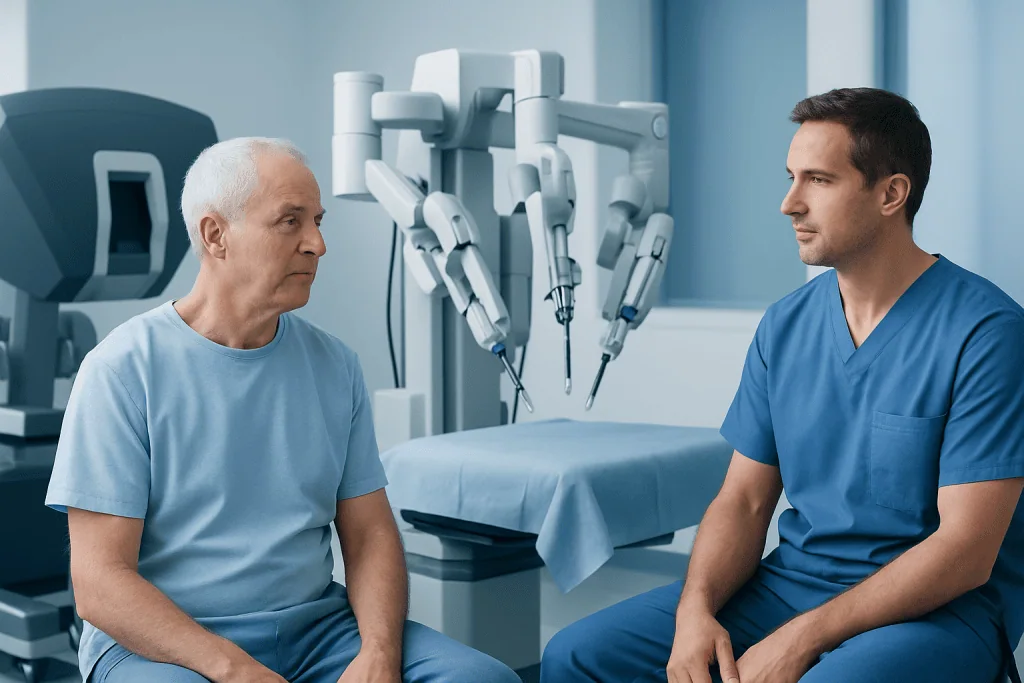
Candidacy depends on the underlying diagnosis, a person’s age and general health, test results, and treatment goals. Radical prostatectomy is commonly considered for men with localized or locally advanced prostate cancer who are healthy enough for surgery and are expected to benefit from definitive treatment. It may also be discussed when biopsy and imaging suggest the cancer can be removed completely or controlled with surgery.
Simple prostatectomy is less common today but may be an option for severe urinary obstruction caused by a very large benign prostate when medicines or endoscopic procedures are not appropriate or have not worked. People with repeated urinary retention, bladder stones, recurrent urinary tract infections, or kidney effects from obstruction may be evaluated for surgical treatment.
Not everyone with prostate disease needs surgery. Depending on the case, alternatives may include active surveillance, radiation therapy, hormone therapy, or less invasive procedures for enlarged prostate. A specialist may also assess related conditions such as prostate cancer or benign prostatic hyperplasia (BPH), since the diagnosis helps guide whether prostatectomy is appropriate.
- Typical factors considered include PSA level, biopsy findings, imaging results, urinary symptoms, and prostate size.
- Heart, lung, and bleeding risks are reviewed before an operation is planned.
- Personal priorities, such as cancer control, urinary function, and sexual function, are part of shared decision-making.
Before surgery: evaluation and planning

Preparation usually starts with a detailed consultation. The urologist reviews symptoms, medical history, medications, previous surgeries, and test results. Blood tests, urine testing, ECG, and imaging may be requested, and men being treated for cancer may need MRI, bone imaging, or lymph node evaluation depending on the clinical picture.
The surgeon explains the planned technique, whether open, laparoscopic, or robot-assisted surgery, and discusses what tissue will be removed. For cancer surgery, the conversation often includes whether a nerve-sparing approach may be possible. This decision depends on where the tumor is located and whether preserving nearby nerves appears safe from an oncologic perspective.
Patients are also given practical instructions for the days before surgery. These can include when to stop eating and drinking, which medications to pause, and whether blood thinners need special management. Understanding the expected hospital stay, the temporary urinary catheter, and the early recovery plan helps make the process more predictable and less stressful.
Step by step: how the procedure is performed
Prostatectomy is performed under general anesthesia. After the patient is asleep, the surgical team positions the body carefully and prepares the operating area to reduce infection risk. The exact steps vary by technique, but in a radical prostatectomy the surgeon reaches the prostate through either a single incision or several small incisions used for laparoscopic or robotic instruments.
The surgeon separates the prostate from surrounding tissues, identifies the bladder and urethra, and works carefully around important nerves and blood vessels. If the surgery is for cancer, the entire prostate is removed, usually together with the seminal vesicles. In selected cases, nearby lymph nodes may also be removed for staging and treatment planning.
Once the prostate has been removed, the bladder is reconnected to the urethra so urine can pass again. A urinary catheter is left in place to allow healing at this connection. The removed tissue is sent to pathology, which confirms the diagnosis, reports the cancer grade and stage when relevant, and helps determine whether any additional treatment may be needed later.
For patients with severe enlargement rather than cancer, prostatectomy may involve removing the obstructing inner portion of the gland while leaving the outer capsule in place. In modern practice, some men with enlarged prostate may instead be offered other urology treatment options depending on gland size, anatomy, and overall health.
Benefits, risks, and possible side effects
The main benefit of radical prostatectomy is the possibility of removing prostate cancer completely when it is confined to the gland or nearby tissues. Surgery also provides detailed pathology information that can guide follow-up care. For men with noncancerous obstruction, the main benefit is improved urine flow and relief of symptoms that affect sleep, comfort, and quality of life.
Like any major operation, prostatectomy carries risks. These include bleeding, infection, blood clots, pain, anesthesia-related complications, and delayed healing. There can also be procedure-specific problems such as leakage where the bladder and urethra are rejoined, narrowing of the urinary channel, or temporary bowel and bladder changes.
Two of the most discussed long-term side effects are urinary incontinence and erectile dysfunction. Many men see gradual improvement in bladder control over time, especially with pelvic floor rehabilitation, but recovery patterns vary. Sexual function can also change after surgery, and whether erections return depends on age, baseline function, nerve preservation, and the extent of surgery needed for safe treatment.
These risks should be balanced against the expected benefit of treatment. A careful discussion with a urologist helps compare surgery with alternatives such as radiation therapy, medicines, or observation, depending on the diagnosis and personal goals.
Recovery timeline and what to expect after prostatectomy
Recovery begins in the hospital, where the care team monitors pain, fluid intake, walking, and early bladder function. Many patients are encouraged to get out of bed and walk soon after surgery to support circulation and healing. The hospital stay depends on the surgical approach, the person’s general health, and whether any early issues arise.
A urinary catheter usually stays in place for several days to about two weeks, depending on the procedure and how the connection between the bladder and urethra is healing. Mild fatigue, abdominal discomfort, or pelvic soreness are common early on. Most people are advised to avoid heavy lifting and strenuous exercise for a period recommended by the surgeon, while gradually increasing light activity.
In the first weeks, urinary leakage can happen, especially with coughing, standing, or physical movement. Pelvic floor exercises may help improve control, though they should be done according to professional guidance. Bowel habits can also be temporarily different, so staying hydrated, eating fiber as tolerated, and following postoperative instructions can be helpful.
Longer-term follow-up depends on the reason for surgery. After radical prostatectomy for cancer, PSA testing is used to monitor for recurrence because the prostate has been removed and PSA should become very low. If recovery is slower than expected or side effects persist, further support may include continence therapy, sexual rehabilitation, or additional treatment planning.
Self-care after surgery and long-term outlook
Good recovery is supported by rest, gradual activity, balanced nutrition, and careful attention to wound and catheter instructions. It is important to take medicines exactly as prescribed and attend all follow-up visits. Patients should ask when it is safe to drive, return to work, resume exercise, and restart sexual activity, because timelines vary by procedure and individual healing.
Emotional adjustment is also part of recovery. Men treated for cancer may need time to process the diagnosis and the uncertainty of follow-up, while those coping with incontinence or erectile changes may benefit from open discussion with their doctor. These concerns are common and manageable, and bringing them up early often leads to better support.
The long-term outlook depends on the original condition, the stage of disease if cancer is present, overall health, and how the body heals after surgery. For suitable candidates, prostatectomy can be an effective part of care. In specialized centers, multidisciplinary teams may coordinate surgery, pathology, rehabilitation, and if needed, further oncology care. Acibadem International’s multidisciplinary specialists and JCI-accredited hospitals diagnose and treat prostate conditions for international patients.
When to seek medical care
Medical advice should be sought promptly for symptoms that could suggest a prostate problem, such as difficulty urinating, blood in the urine, repeated urinary infections, bone pain, or unexplained weight loss. These symptoms do not always mean cancer, but they should be assessed by a qualified doctor, especially if they are persistent or worsening.
After prostatectomy, urgent medical attention is needed for fever, chills, chest pain, shortness of breath, severe or increasing pain, heavy bleeding, large clots in the urine, inability to drain urine through the catheter, or swelling and redness around the wound. Sudden calf pain or swelling should also be reported because it may signal a blood clot.
Patients should also contact their care team if urinary leakage remains severe, if bowel function does not return as expected, or if they have questions about medications, activity, or follow-up testing. Early communication can often prevent small concerns from becoming bigger problems.
Frequently asked questions
Is prostatectomy always done for cancer?
No. Prostatectomy may be done for prostate cancer, but a different form of the operation can also be used for severe urinary blockage caused by a noncancerous enlarged prostate. The exact type of surgery depends on the diagnosis and the treatment goal.
How long does it take to recover from a prostatectomy?
Initial recovery usually takes several weeks, but full recovery can take longer. Fatigue, temporary urinary leakage, and reduced activity are common early on, while bladder control and sexual function may improve gradually over months.
Will a catheter be needed after surgery?
Yes, a urinary catheter is commonly used after prostatectomy. It helps urine drain while the area between the bladder and urethra heals, and it is usually removed after a follow-up assessment.
What are the main risks of prostatectomy?
The main risks include bleeding, infection, blood clots, and anesthesia-related complications. Longer-term concerns can include urinary incontinence, erectile dysfunction, and scarring or narrowing in the urinary tract.
Can prostate cancer come back after radical prostatectomy?
It can, depending on the cancer stage, grade, and pathology findings. Follow-up PSA testing is important after surgery because it helps detect whether cancer activity may be returning.
Is robotic prostatectomy better than open surgery?
Robotic and open surgery are different ways to perform the same operation, and each has advantages in certain situations. Outcomes depend on the patient's condition, the surgeon's experience, and whether the cancer can be removed safely while preserving function when possible.
References
- American Cancer Society
- National Cancer Institute
- National Institute of Diabetes and Digestive and Kidney Diseases
- European Association of Urology
- Urology Care Foundation
This article is for general information only and is not a substitute for professional medical advice. Please consult a qualified doctor about your individual situation.
Oncology care in Turkey — second opinion and treatment plan
JCI-accredited · board-certified surgeons · reply within 24h

More from the Health Library



Related Specialists

Dr. Ridvan Acar
Emergency Service
Fzt. Elif Tokgöz Nizam
Physical Medicine and Rehabilitation
Prof. Dr. Mehmet Temel Yilmaz
Endocrinology
Prof. Dr. Kerem Bilsel
Orthopedic Surgery & Traumatology