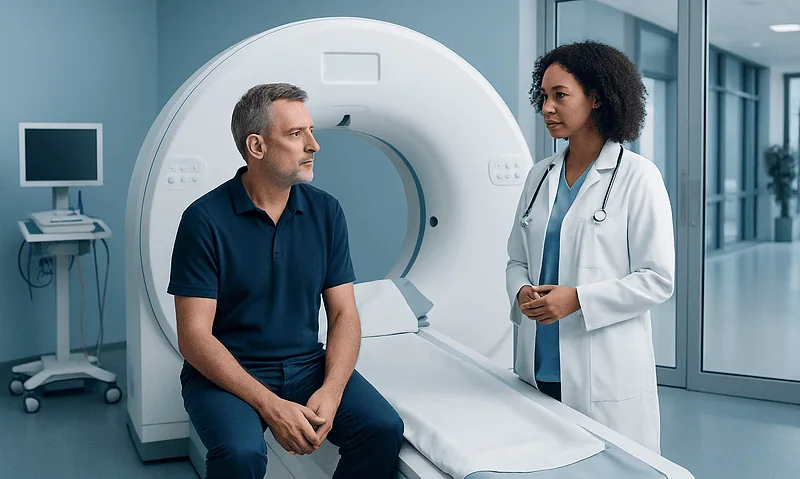
Proton Therapy for Pancreatic Cancer: How It Works, Results and What to Expect

Proton therapy uses charged particles that deposit most of their energy at a planned depth within the body. For pancreatic cancer, it is usually combined with expert assessment of surgery, chemotherapy and other radiation approaches.
Key Takeaways
- Proton therapy uses charged particles that deposit most of their energy at a planned depth within the body.
- For pancreatic cancer, it is usually combined with expert assessment of surgery, chemotherapy and other radiation approaches.
- Potential benefits include reduced radiation exposure to organs close to the pancreas, although individual outcomes vary.
- Treatment commonly involves planning scans followed by daily outpatient sessions over several weeks.
- A multidisciplinary cancer team can determine whether proton therapy is appropriate based on tumor stage, location and overall health.
Proton therapy for pancreatic cancer is an advanced form of radiation treatment that can focus radiation dose on the tumor while reducing exposure to nearby healthy tissues, such as the stomach, bowel, liver and kidneys. It may be considered as part of an individualized treatment plan, particularly for localized or locally advanced disease, but it is not suitable for every person.
Overview: Proton Therapy for Pancreatic Cancer
Proton therapy for pancreatic cancer is a type of external-beam radiation therapy that uses protons rather than conventional X-rays (photons). Protons can be planned to release most of their radiation energy at a selected depth, called the Bragg peak. This physical property may help reduce radiation dose beyond the tumor, which is important because the pancreas lies close to the stomach, small intestine, liver, kidneys, spinal cord and major blood vessels.
It is not a replacement for all other pancreatic cancer treatments. Depending on the type and stage of disease, care may include surgery, chemotherapy, radiation therapy, supportive care, or a combination of these options. Proton therapy is most often discussed for non-metastatic pancreatic cancer when radiation is recommended to help control disease in and around the pancreas.
Pancreatic tumors vary in their position, relationship to blood vessels and response to treatment. For this reason, decisions are usually made by a multidisciplinary team that includes medical oncologists, radiation oncologists, pancreatic surgeons, radiologists, pathologists, dietitians and supportive-care specialists.
How Proton Therapy Works
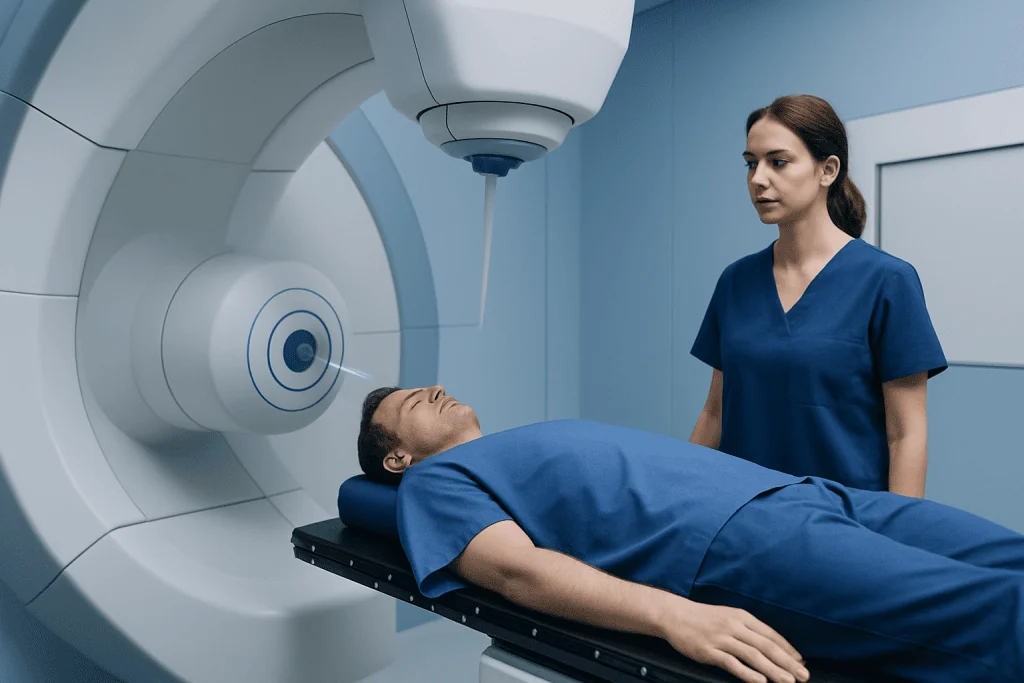
Radiation damages the DNA of cancer cells, making it harder for them to divide and survive. Proton beams are generated by specialized equipment and shaped using advanced planning technology so that the prescribed radiation dose conforms as closely as possible to the target area.
Unlike X-ray radiation, which continues to deliver some dose as it travels beyond the target, protons slow down and deposit a concentrated amount of energy near a planned stopping point. In pancreatic cancer, this may lower the dose reaching certain healthy tissues behind the tumor. However, the actual advantage depends on the tumor location, its movement with breathing, body anatomy and the radiation plan.
Before treatment, the team uses detailed imaging to define the tumor and nearby organs. Motion-management techniques, such as breath-hold instructions, abdominal compression, image guidance or four-dimensional CT planning, may be used because the pancreas can move slightly during breathing and digestion.
Can You Treat Pancreatic Cancer With Proton Therapy?
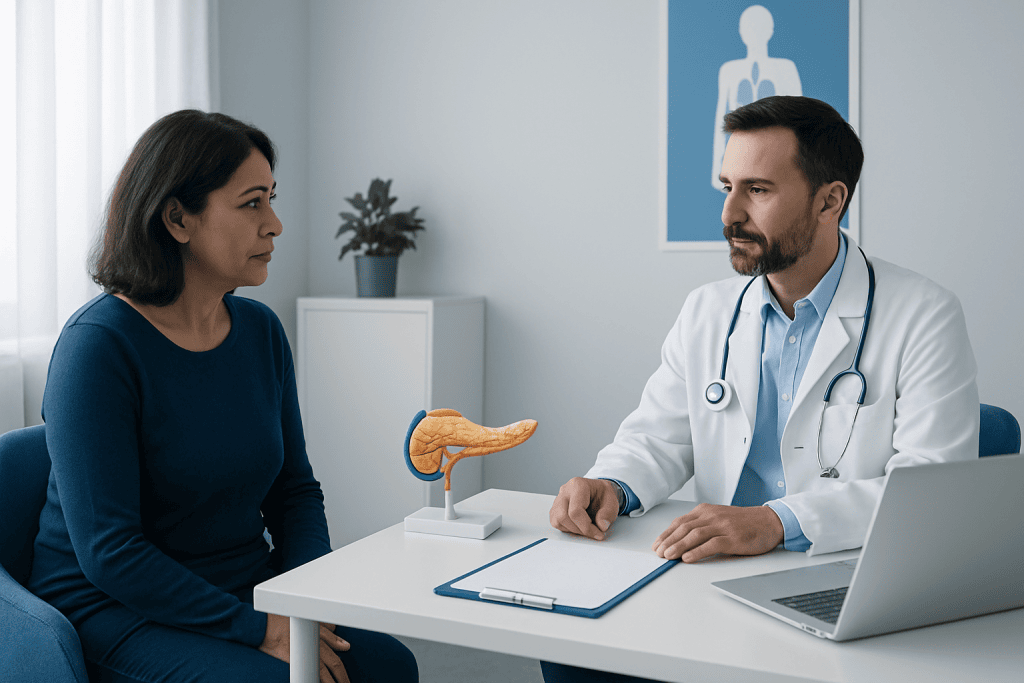
Yes. Proton therapy can be used to treat selected people with pancreatic cancer, most commonly when the cancer is localized or locally advanced and radiation is part of the recommended treatment plan. It may be used after chemotherapy, before surgery in selected situations, after surgery when there is concern about residual local disease, or to help control a tumor that cannot be surgically removed.
Whether it is appropriate depends on several factors, including the cancer stage, whether it has spread to distant organs, the tumor’s contact with major blood vessels, previous radiation treatment, general health and treatment goals. Proton therapy does not usually treat cancer that has already spread widely throughout the body; systemic therapies such as chemotherapy are generally central in that setting.
A careful review should also distinguish pancreatic cancer from other conditions affecting the area. Patients can learn more about the disease and its evaluation through pancreatic cancer information.
Candidacy and the Most Promising Treatment for Pancreatic Cancer
There is no single “most promising” treatment for pancreatic cancer for every patient. The best approach is individualized and is based on whether the cancer is resectable, borderline resectable, locally advanced or metastatic. When complete surgical removal is possible, surgery offers the main opportunity for long-term disease control and is commonly combined with chemotherapy. For other stages, chemotherapy, radiation and symptom-focused treatments may have important roles.
Proton therapy may be considered when radiation is expected to benefit local tumor control and when a proton plan can meaningfully reduce radiation exposure to nearby organs compared with an advanced photon-based plan. It can be especially relevant when the tumor sits close to the stomach or small bowel, or when previous radiation makes normal-tissue protection particularly important.
Not every patient will obtain a meaningful dosimetric advantage from protons. The care team compares plans, reviews imaging and considers practical issues such as the ability to attend treatment consistently. A consultation for proton therapy can clarify the potential role of this approach within the wider treatment plan.
What to Expect: Planning, Treatment and Recovery
The process begins with a radiation oncology consultation and review of scans, pathology results, prior treatments and overall health. If proton therapy is recommended, the patient has a simulation appointment. During this visit, a planning CT scan is performed in the treatment position, often with an immobilization device that helps reproduce the same position each day. Additional MRI or PET imaging may also be incorporated into planning when appropriate.
The radiation team then develops a personalized plan. This process can take several days to a few weeks because clinicians and medical physicists carefully calculate how to cover the target while protecting nearby organs. Some patients may have small markers placed near the tumor to assist with daily image guidance, although this is not needed in every case.
Proton therapy is delivered as an outpatient procedure. Each visit includes positioning and imaging checks; the beam delivery itself is painless. A course may be given over several weeks in daily weekday treatments, or in fewer sessions for selected patients, depending on the treatment intent and clinical plan. Chemotherapy may be given before, during or after radiation according to the oncology team’s recommendations.
Most people can continue many usual activities during treatment, although fatigue can build gradually. Recovery is individual. Short-term effects often improve in the weeks after treatment, while follow-up appointments and imaging continue for months to assess response, manage symptoms and coordinate further care.
Benefits, Risks and What Is the Downside of Proton Therapy?
A potential benefit of proton therapy is that it may reduce radiation dose to certain healthy tissues near the pancreas. In some patients, this could support safer delivery of a planned radiation dose or reduce the likelihood of particular treatment-related effects. It may also be valuable when treating complex anatomy or when prior radiation has already limited the amount of additional radiation that can be given.
The downside of proton therapy is that it is not automatically better for every tumor or every patient. Its precision depends on highly accurate planning, positioning and management of internal motion. Changes in bowel gas, stomach filling, weight or anatomy during treatment can affect where the proton dose is deposited, so frequent imaging and plan review are important.
Possible side effects are similar to those of other upper-abdominal radiation treatments and can include tiredness, nausea, reduced appetite, indigestion, diarrhea or abdominal discomfort. More serious effects are less common but may include inflammation, bleeding, ulceration or narrowing involving the stomach or intestine. Risks can be higher when radiation is combined with chemotherapy or when a tumor is very close to sensitive organs.
Proton therapy also requires access to a specialized center and may involve travel or added logistical demands. The team should explain the expected benefit, uncertainties, alternatives and likely side effects before treatment begins, allowing the patient to make an informed decision.
What Is the Success Rate of Proton Therapy?
There is no single success rate for proton therapy for pancreatic cancer. Outcomes depend strongly on the cancer stage, whether it can be removed surgically, tumor biology, response to chemotherapy, the presence or absence of spread, the radiation dose and the patient’s general condition. Studies of proton therapy have reported that it can be delivered feasibly for selected patients, but comparisons with modern photon radiation are still evolving.
Radiation is usually assessed by more than one outcome. The care team may consider local control, whether the tumor shrinks or remains stable, symptom relief, the possibility of surgery after treatment, treatment-related side effects and overall survival. These measures are not interchangeable, and a favorable local response does not necessarily mean that cancer elsewhere in the body has been controlled.
Patients should ask their oncology team what radiation is intended to achieve in their own case: supporting surgery, reducing the chance of local progression, relieving symptoms or controlling an unresectable tumor. A team can also explain how the expected results of proton therapy compare with other radiation techniques and systemic treatment options.
When to Seek Medical Care
Anyone with new or persistent symptoms that could suggest a pancreatic or digestive disorder should arrange medical assessment. These may include jaundice (yellowing of the skin or eyes), dark urine, pale stools, persistent upper abdominal or back pain, unexplained weight loss, ongoing poor appetite, new digestive symptoms or a new diagnosis of diabetes without a clear explanation. These symptoms can have many causes, but timely evaluation is important.
Urgent medical attention is needed for severe or worsening abdominal pain, repeated vomiting, fever with jaundice, signs of dehydration, black stools, vomiting blood, confusion or inability to keep fluids down. People already receiving cancer treatment should contact their treatment team promptly for significant side effects, including uncontrolled nausea, severe diarrhea, worsening pain or symptoms of infection.
At Acibadem International, multidisciplinary specialists in JCI-accredited hospitals assess and treat pancreatic cancer for international patients, coordinating radiation oncology, medical oncology, surgery and supportive care according to individual needs.
Frequently asked questions
Is proton therapy painful?
Proton therapy itself is painless. The patient lies still on a treatment table while the machine delivers radiation from outside the body. Some people find the positioning process tiring, but the treatment team works to keep them comfortable.
How long does proton therapy for pancreatic cancer take?
The planning process commonly takes days to a few weeks and includes imaging, contouring of the target and treatment-plan review. Treatment schedules vary, but many courses involve weekday outpatient sessions over several weeks. The exact schedule depends on the goal of treatment and whether chemotherapy is being used.
Can proton therapy be combined with chemotherapy?
Yes, in selected cases radiation may be combined with chemotherapy or sequenced after chemotherapy. The combination can increase treatment effectiveness for some tumors, but it can also increase side effects. Medical and radiation oncologists coordinate the timing and monitoring.
Can proton therapy make pancreatic cancer operable?
For some people with borderline resectable or locally advanced disease, treatment before surgery may help improve local control and allow reassessment for surgery. However, proton therapy cannot guarantee that a tumor will become operable. Surgical eligibility depends largely on tumor involvement of blood vessels, disease spread and response to overall treatment.
What side effects can occur after proton therapy to the pancreas?
Short-term effects may include fatigue, nausea, appetite changes, diarrhea, indigestion or abdominal discomfort. Most effects can be managed with supportive care and tend to improve after treatment. Less commonly, radiation can cause more significant irritation or injury to nearby digestive organs.
Is proton therapy better than standard radiation for pancreatic cancer?
Proton therapy can reduce radiation dose to selected nearby healthy tissues, but it is not universally superior for every patient. Modern photon radiation techniques can also be highly precise. A radiation oncologist can compare treatment plans and recommend the approach that best balances tumor coverage, safety and practical considerations.
References
- National Cancer Institute
- American Cancer Society
- National Comprehensive Cancer Network
- American Society for Radiation Oncology
- Pancreatic Cancer Action Network
This article is for general information only and is not a substitute for professional medical advice. Please consult a qualified doctor about your individual situation.
Pancreatic Cancer in Turkey — costs, top hospitals & a free quote
JCI-accredited · board-certified surgeons · reply within 24h
Add us as a Preferred Source to see more of our trusted health content across Google Search, AI Overviews and Discover.