Rabies Injection for Dogs Side Effects: What to Expect and How to Manage
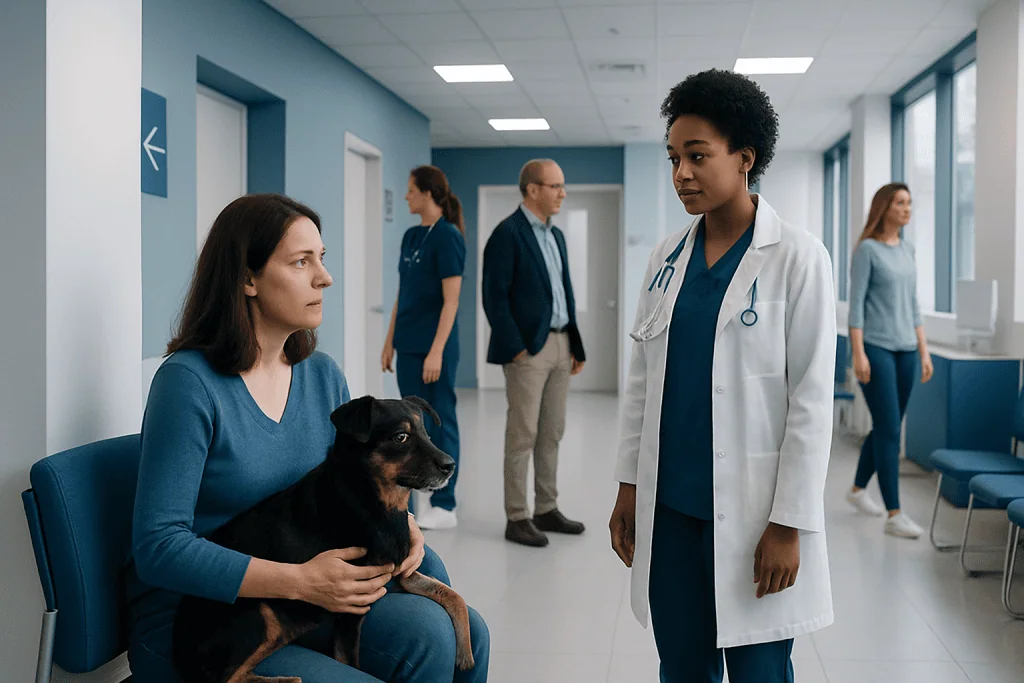
Most dogs have no reaction or only mild, short-lived effects after a rabies vaccination. Soreness, sleepiness, mild fever, and lower appetite commonly settle within 24 to 48 hours.
Key Takeaways
- Most dogs have no reaction or only mild, short-lived effects after a rabies vaccination.
- Soreness, sleepiness, mild fever, and lower appetite commonly settle within 24 to 48 hours.
- Severe allergic reactions are rare but can develop quickly and need emergency veterinary care.
- There is no evidence-based need to detox a dog after vaccination; supportive care and veterinary guidance are safest.
- Rabies vaccination is an important public and animal health measure because rabies is nearly always fatal after symptoms begin.
Rabies injection for dogs side effects are most often limited to temporary injection-site soreness, tiredness, reduced appetite, or a mild fever. Most dogs recover within one to two days, but facial swelling, breathing difficulty, repeated vomiting, collapse, or marked weakness require urgent veterinary attention.
Overview: What Side Effects Can Follow a Rabies Injection?
Rabies injection for dogs side effects are usually mild, temporary, and manageable at home. A dog may seem tired, eat less than usual, have mild soreness where the injection was given, or develop a low-grade fever for a short time. These responses reflect normal immune-system activation and commonly improve within 24 to 48 hours.
More serious reactions are uncommon, but owners should know the warning signs. Hives, swelling of the face or muzzle, trouble breathing, repeated vomiting, diarrhea, collapse, extreme weakness, or pale gums can indicate a significant allergic reaction. These symptoms should be treated as a veterinary emergency, particularly when they begin soon after vaccination.
Rabies is a viral infection that affects the nervous system of mammals, including dogs and people. Once clinical signs develop, it is almost always fatal. Vaccination therefore remains a key part of prevention, alongside local licensing and public-health requirements.
How the Rabies Vaccine Works and Which Dogs Need It
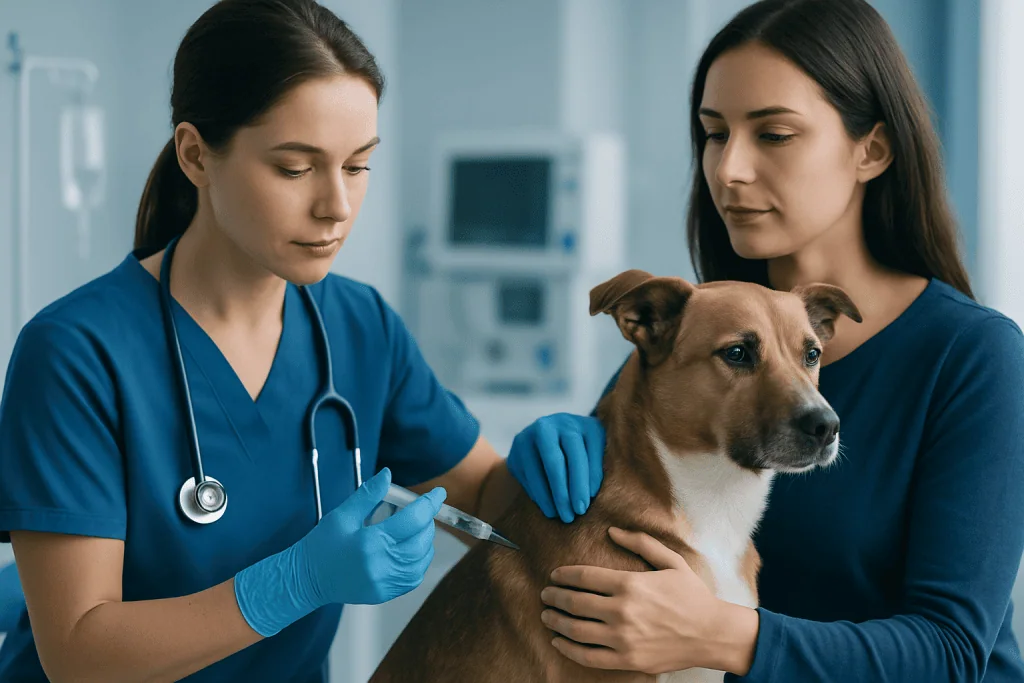
A rabies vaccine contains material that trains a dog’s immune system to recognize rabies virus and respond to it. It does not give a dog rabies. After vaccination, the immune system produces protective responses that can help prevent disease if the dog is later exposed to the virus.
Vaccination schedules depend on the product used, the dog’s age, previous vaccination record, local regulations, and travel requirements. In many places, puppies receive their first rabies vaccine at an age set by local law or veterinary guidance, followed by booster doses at specified intervals. A veterinarian can confirm the appropriate schedule and provide the official documentation required in the relevant location.
Healthy dogs are generally candidates for routine vaccination. A veterinarian may individualize timing for a dog that is currently ill, has a fever, has had a previous vaccine reaction, is receiving immune-suppressing treatment, or has a complicated medical history. Delaying or modifying vaccination should only be done with veterinary advice because legal and exposure-management consequences can vary.
What Happens During the Rabies Vaccination Procedure?
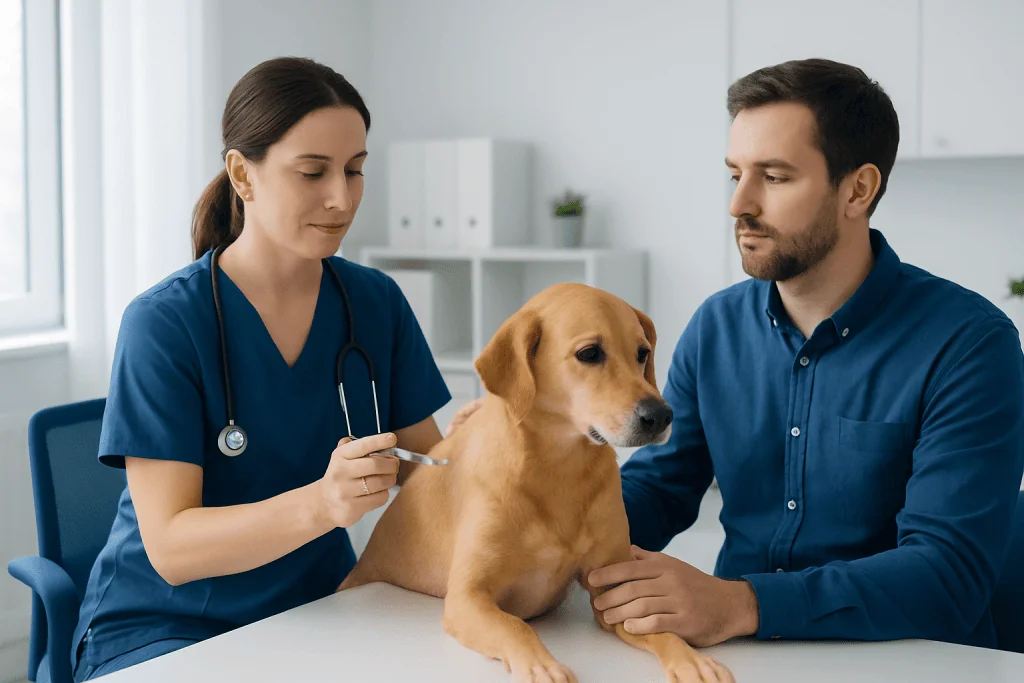
The appointment usually begins with a brief health assessment. The veterinarian or veterinary team asks about prior vaccinations, current medications, past reactions, recent illness, and possible wildlife exposure. A physical examination helps determine whether the dog is well enough to receive the vaccine that day.
The vaccine is given as a small injection, usually under the skin or into a muscle depending on the licensed product and local practice. The procedure itself is quick. Some dogs briefly flinch or become anxious because of handling or the needle, but most tolerate it well with calm reassurance and gentle restraint.
Afterward, the vaccination is documented in the dog’s medical record and, where required, on an official rabies certificate. It is sensible to keep the dog nearby and observable for a period after the appointment, especially if the dog has previously reacted to a vaccine. Owners should follow the veterinary clinic’s specific aftercare instructions.
Expected Recovery Timeline and Common Reactions
Most dogs behave normally after a rabies injection. If mild side effects occur, they often begin on the day of vaccination or the following day. Common effects include tenderness at the injection site, brief lethargy, sleeping more than usual, a temporary reduction in appetite, or mild discomfort when being touched near the injection area.
These effects typically improve within one to two days. A small, non-painful lump at the injection site can occasionally remain for longer; it should still be discussed with a veterinarian if it enlarges, becomes warm or painful, drains, or does not gradually improve. Any persistent change in behavior, appetite, mobility, or breathing deserves veterinary advice.
For the first day or two, a quiet routine is usually appropriate. The dog should have access to fresh water, normal meals if interested, and a comfortable resting place. Owners should avoid giving human pain medicines or over-the-counter remedies unless a veterinarian has specifically recommended them, as several common human medicines can be dangerous for dogs.
What Not to Do After Dog Rabies Vaccine?
After a dog receives a rabies vaccine, owners should not give unprescribed medications, supplements, herbal products, or human pain relievers in an attempt to prevent side effects. Products that are safe for people may cause poisoning or interact with veterinary medicines. A veterinarian should guide any medication decision, including treatment for soreness or itching.
It is also best not to schedule strenuous exercise, lengthy travel, grooming appointments, boarding, or major changes in routine immediately after vaccination if these can be avoided. Gentle normal activity is usually fine for a dog that feels well, but a quieter day makes it easier to notice changes such as fatigue, vomiting, swelling, or discomfort.
Owners should not dismiss serious symptoms as routine vaccine effects. Facial swelling, breathing changes, collapse, ongoing vomiting, severe diarrhea, seizures, or worsening weakness need prompt emergency veterinary assessment. Keeping the vaccination record and noting when symptoms began can help the veterinary team assess the event.
How to Detox Your Dog From a Rabies Vaccine?
There is no evidence-based detox treatment needed after a rabies vaccine. A healthy dog’s body processes vaccine components naturally, while the immune system develops its protective response. Detox products, restrictive diets, fasting, and unverified supplements are not proven to reduce vaccine side effects and may delay appropriate care or create new health problems.
Supportive care is usually all that is needed for mild, expected symptoms: provide water, allow rest, offer the dog’s usual balanced food if it is interested, and monitor closely. If reduced appetite or lethargy lasts beyond 24 to 48 hours, or if the dog appears painful or unwell, a veterinarian should be contacted.
Dogs with a known history of vaccine reactions need an individualized plan before future doses. Depending on the reaction and local requirements, a veterinarian may recommend additional observation, timing adjustments, pre-treatment in selected cases, or discussion of available documentation options. These decisions should be based on the dog’s medical history and applicable regulations rather than on detox claims.
How Long Will My Dog Feel Bad After a Rabies Shot?
If a dog feels mildly unwell after a rabies shot, recovery commonly occurs within 24 to 48 hours. Slight tiredness, reduced enthusiasm for food, and injection-site soreness should gradually improve rather than become more severe. Many dogs have no noticeable symptoms at all.
Contact a veterinarian if symptoms continue beyond two days, if a lump at the injection site is growing or painful, or if the dog is reluctant to stand, walk, drink, or eat. The veterinarian can determine whether the signs are likely vaccine-related or whether another illness may be present at the same time.
Dogs with a prior severe allergic reaction need particular care with future vaccines. Owners should tell every veterinary team about the earlier event, including the symptoms, timing, and any treatment received. This allows safer planning while still considering the importance of rabies protection.
What Is the 10 Day Rule for Rabies Exposure?
The 10-day rule generally refers to observation of a dog, cat, or ferret that has bitten or otherwise potentially exposed a person to rabies. In jurisdictions that use this approach, a healthy animal is confined and observed for 10 days under the direction of public-health and veterinary authorities. If the animal remains healthy throughout that period, it was not infectious with rabies at the time of the exposure.
This rule does not mean that every dog exposed to wildlife should simply be watched at home for 10 days. Management of a dog that has been bitten or potentially exposed to a rabid animal depends on vaccination status, the type of exposure, local rabies risk, and public-health regulations. Immediate contact with a veterinarian and local public-health authority is important.
If a person has been bitten, scratched, or had saliva from a potentially rabid animal contact broken skin or mucous membranes, the wound should be washed promptly and medical advice sought without delay. Human rabies prevention after an exposure is time-sensitive and should be guided by healthcare and public-health professionals.
Acibadem International’s multidisciplinary specialists and JCI-accredited hospitals support international patients who need medical assessment after animal exposures, including advice on appropriate human rabies post-exposure care.
Frequently asked questions
Are rabies injection for dogs side effects common?
Most dogs either have no noticeable reaction or develop mild, temporary effects such as tiredness, soreness at the injection site, or a reduced appetite. These symptoms usually resolve within one to two days. Serious reactions are uncommon but require urgent veterinary care.
Can a rabies vaccine give a dog rabies?
No. Licensed rabies vaccines are designed to stimulate immune protection and do not cause rabies infection. A veterinarian can explain the product used and the recommended vaccination schedule for the dog.
What should I watch for after my dog gets a rabies shot?
Monitor for tiredness, appetite changes, soreness, vomiting, diarrhea, hives, facial swelling, or breathing changes. Mild signs that improve within 24 to 48 hours are often expected. Rapid swelling, breathing difficulty, collapse, repeated vomiting, or marked weakness needs emergency veterinary assessment.
Can I give my dog Benadryl or a painkiller after a rabies vaccine?
Owners should not give any medication unless a veterinarian has recommended it for that individual dog. The correct treatment depends on the dog’s weight, health conditions, other medicines, and symptoms. Human pain medicines in particular can be unsafe for dogs.
What should I do if my dog was exposed to a potentially rabid animal?
Contact a veterinarian and local public-health authority immediately, even if the dog has been vaccinated. Management may include a booster vaccine, observation, quarantine, or other measures depending on local rules and the dog’s vaccination status. Do not handle a suspicious wild animal or attempt to capture it.
When should I seek medical care after a dog bite or rabies exposure?
A person should promptly wash any bite or scratch with soap and running water and seek medical advice after a possible rabies exposure. Urgent assessment is especially important if the animal is wild, stray, acting unusually, unavailable for observation, or known to have been exposed to rabies. Public-health authorities can help determine whether rabies post-exposure prevention is needed.
References
- World Health Organization
- Centers for Disease Control and Prevention
- American Veterinary Medical Association
- World Organisation for Animal Health
- American Animal Hospital Association
This article is for general information only and is not a substitute for professional medical advice. Please consult a qualified doctor about your individual situation.
Rabies in Turkey — costs, top hospitals & a free quote
JCI-accredited · board-certified surgeons · reply within 24h