Surgeries for Prostate: An Evidence-Based Patient Guide

Prostate surgery is used for different conditions, most commonly benign prostate enlargement and prostate cancer. Procedures for enlargement usually improve urine flow by removing or destroying tissue that blocks the urethra.
Key Takeaways
- Prostate surgery is used for different conditions, most commonly benign prostate enlargement and prostate cancer.
- Procedures for enlargement usually improve urine flow by removing or destroying tissue that blocks the urethra.
- Radical prostatectomy removes the prostate and is a potential curative treatment for selected localized prostate cancers.
- Urinary leakage and sexual changes are possible after surgery, but their likelihood and duration vary by procedure and individual factors.
- Age alone does not determine whether surgery is appropriate; overall health, diagnosis, symptoms and personal priorities matter.
Surgeries for prostate conditions include procedures that remove or reduce obstructing prostate tissue and operations that remove the prostate gland for cancer. The appropriate approach depends on whether the concern is benign enlargement, cancer, recurrent complications or symptoms that have not improved with less invasive care.
Overview: What Are Surgeries for Prostate Conditions?
Surgeries for prostate issues are performed for two very different reasons: to relieve urinary obstruction caused by benign prostate enlargement, or to treat prostate cancer. The prostate sits below the bladder and surrounds the urethra, the tube through which urine leaves the body. As the gland enlarges, it can narrow the urethra and make urination difficult.
For benign prostatic hyperplasia (BPH), surgery generally removes, vaporizes or otherwise reduces the part of the prostate blocking urine flow. It does not remove the entire gland and does not treat cancer. For prostate cancer, a radical prostatectomy removes the whole prostate, usually together with the seminal vesicles, with the aim of removing localized cancer.
A urologist helps determine whether surgery is needed and which option fits the person’s diagnosis, prostate size, urinary symptoms, cancer features, medical history and preferences. Many people with prostate enlargement or prostate cancer do not need immediate surgery and may instead benefit from monitoring, medicines, radiation treatment or other approaches.
Which Symptoms and Problems Can Lead to Surgery?
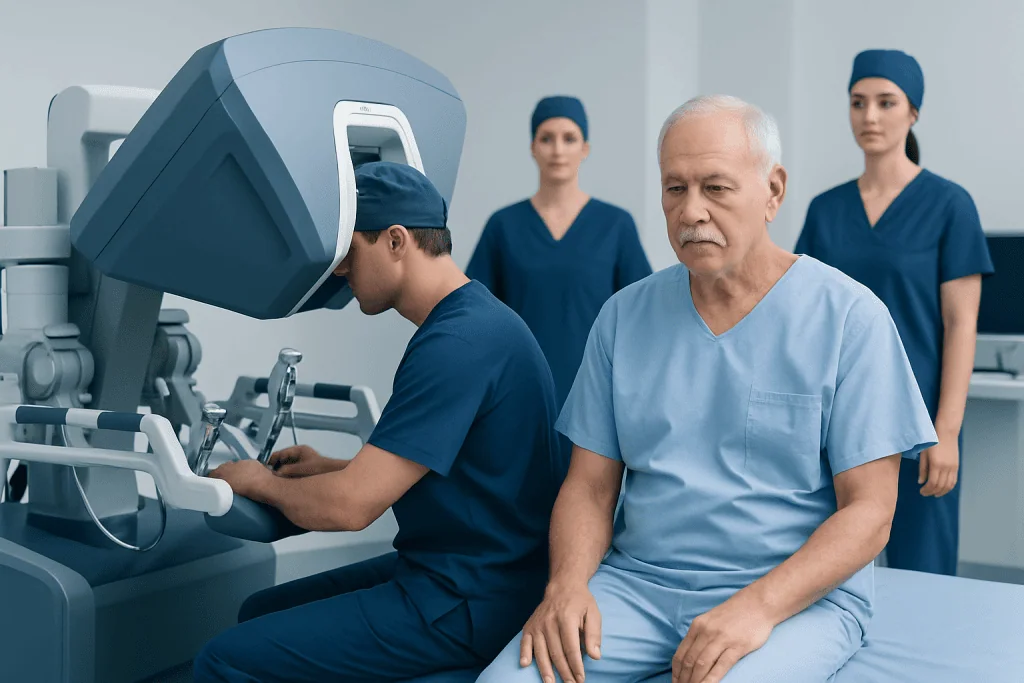
Surgeries for prostate enlargement may be considered when urinary symptoms are persistent, troublesome or causing complications. Typical symptoms include a weak or interrupted stream, straining to urinate, difficulty starting, frequent urination, urgency, waking at night to urinate, or a feeling that the bladder does not empty fully.
Surgery may be recommended more strongly when enlargement leads to repeated urinary retention, recurrent urinary tract infections, bladder stones, visible bleeding from the prostate, or effects on kidney function. These complications do not occur in everyone with BPH, but they require timely assessment.
Surgeries for prostate cancer are considered according to the cancer’s stage, grade, prostate-specific antigen (PSA) level, imaging findings and the individual’s overall health. Surgery is most often discussed for cancer believed to be confined to the prostate or nearby tissues. In some cases, treatment may also include radiation therapy, hormone therapy or ongoing monitoring.
Types of Prostate Surgery and How They Work

For urinary obstruction from BPH, transurethral resection of the prostate (TURP) is a long-established operation. A surgeon passes a viewing instrument through the urethra and removes small pieces of obstructing tissue. No incision through the skin is usually required. Other transurethral techniques may use laser energy to remove or enucleate tissue, or heat to vaporize it.
For a very large prostate, a simple prostatectomy may be considered. Despite its name, this is a larger operation that removes the inner portion of the gland causing blockage while leaving the outer prostate tissue in place. It may be done through open, laparoscopic or robot-assisted techniques, depending on the clinical situation and local expertise.
For cancer, radical prostatectomy removes the full prostate gland and seminal vesicles. The operation can be performed through an open incision, laparoscopy or robot-assisted laparoscopy. Nearby lymph nodes may also be removed when there is a meaningful risk that cancer has spread to them. The surgical approach is selected individually; the surgeon’s experience and the patient’s clinical needs are important considerations.
There are also minimally invasive options for selected men with BPH, but not every technique suits every prostate shape, size or symptom pattern. A detailed urological assessment is essential before deciding among procedures.
How Is a Person Evaluated and Chosen for Surgery?
Before prostate surgery, the care team reviews urinary symptoms, medication use, medical conditions, prior operations and goals for treatment. Tests may include a physical examination, urine testing, blood tests, PSA testing when appropriate, ultrasound measurement of bladder emptying, urine-flow testing and cystoscopy, which uses a small camera to view the urethra and bladder.
When cancer is suspected or confirmed, evaluation may include prostate biopsy, magnetic resonance imaging and, when needed, additional staging scans. The decision about surgery is not based on PSA alone. Cancer grade, location, likely extent, expected life expectancy, possible side effects and the person’s preferences are all considered.
For BPH, surgery is often considered after lifestyle measures and medicines have not provided sufficient relief, or when complications develop. Some people may choose a procedure earlier because symptoms significantly affect sleep, work, travel or daily comfort. The aim is shared decision-making rather than using the same treatment pathway for everyone.
What Happens During Prostate Surgery and Recovery?
Preparation commonly includes a review of medicines that may affect bleeding, instructions about eating and drinking before anesthesia, and arrangements for getting home after discharge. The exact steps depend on the procedure. In transurethral surgery, instruments are passed through the penis into the urethra, allowing the surgeon to treat obstructing tissue without an external incision.
Following BPH surgery, a urinary catheter is usually placed temporarily to allow the bladder to drain while healing begins. Urine may be pink or contain small clots for a short period. Many transurethral procedures involve a brief hospital stay or, in selected circumstances, same-day discharge. Strenuous activity, heavy lifting and sexual activity may need to be avoided for several weeks, according to the surgical team’s advice.
After radical prostatectomy, a catheter commonly remains in place for a period determined by the surgeon. Hospital recovery and the return to routine activities vary according to the surgical approach, general health and whether other procedures were performed. Walking and gentle movement are generally encouraged early, while more demanding exercise resumes gradually.
Recovery also includes follow-up. After BPH surgery, clinicians assess urinary improvement and any complications. After prostate cancer surgery, PSA blood tests are checked over time to look for evidence of remaining or recurrent cancer. Personalized recovery instructions should always take priority over general timelines.
What Is the Most Effective Prostate Surgery?
There is no single most effective prostate surgery for every person because the best procedure depends on the condition being treated. For urinary obstruction from BPH, TURP and several laser-based procedures are established, effective choices for many men. The most suitable technique depends on prostate size and anatomy, bleeding risk, catheter dependence, desired recovery profile and the importance of preserving ejaculation where possible.
For localized prostate cancer, radical prostatectomy can be an effective treatment with curative intent for appropriately selected patients. However, surgery is not automatically better than radiation therapy or active surveillance. These options can be appropriate in different circumstances, and their potential benefits and side effects should be compared carefully.
A person should ask the urologist which procedures are suitable in their case, what symptom or cancer-control outcome is realistic, and how the recommended option compares with alternatives. Experience with the chosen technique and access to follow-up care are also important parts of safe treatment planning.
Do Men Have to Wear Diapers After Prostate Surgery?
Not all men need absorbent pads or protective underwear after prostate surgery. After surgery for prostate enlargement, some temporary urgency, frequency or mild leakage can occur as the urinary tract heals, but many people regain control without needing pads for long.
Urinary incontinence is more common after radical prostatectomy because removing the prostate can temporarily affect the urinary sphincter and pelvic-floor function. Men may use pads during recovery, particularly when coughing, lifting or exercising. Control often improves over time, although the pace of improvement differs from person to person.
Pelvic-floor muscle training, usually guided by a qualified clinician or physiotherapist, may support continence recovery. Persistent or severe leakage should be discussed with the urology team, as further assessment and treatment options are available.
What Is the Downside of Prostate Surgery?
The downside of prostate surgery depends on the operation. General surgical risks include bleeding, infection, blood clots, anesthesia-related problems and injury to nearby structures, although teams take measures to reduce these risks. Transurethral procedures can also cause temporary burning with urination, bleeding, urinary infection, scar narrowing of the urethra or bladder neck, and a need for additional treatment later in some cases.
A common sexual change after TURP and some other BPH procedures is retrograde ejaculation, where semen enters the bladder rather than leaving through the penis during orgasm. This is not harmful, but it can affect fertility. Erectile function may change after some procedures, although the risk varies by technique and by pre-existing sexual function.
After radical prostatectomy, the main concerns are urinary leakage and erectile dysfunction. Nerve-sparing surgery may be possible for some cancers and can help preserve erectile function, but it cannot guarantee it. Fertility is permanently affected because the prostate and seminal vesicles are removed; people who may want biological children should discuss sperm preservation before treatment.
The potential benefits must be balanced against these risks. For BPH, benefits may include stronger urine flow, less retention and improved quality of life. For localized prostate cancer, surgery may remove the cancer while providing detailed pathological information about it.
Should a 77 Year Old Man Have Prostate Surgery?
A 77-year-old man may be a suitable candidate for prostate surgery, but age alone should not decide the question. Clinicians consider overall fitness, heart and lung health, frailty, independence, medicines, life expectancy, the severity of symptoms and the nature of any cancer. A healthy older adult with significant urinary obstruction may benefit substantially from a procedure.
For prostate cancer, the likely pace and risk level of the cancer matter greatly. Some prostate cancers grow slowly and may be monitored safely, while others require active treatment. The possible impact of surgery on urinary control, sexual function and recovery should be weighed against expected cancer-control benefits and alternatives such as radiation treatment or surveillance.
A geriatric-informed assessment can be helpful when health needs are complex. The most appropriate plan should reflect both medical evidence and what matters most to the individual, such as avoiding repeated catheterization, preserving independence or prioritizing cancer treatment.
When to Seek Medical Care
Medical advice should be sought promptly for an inability to pass urine, fever or chills with urinary symptoms, severe lower abdominal pain, large amounts of blood or clots in the urine, or new confusion or marked weakness in an older person with possible infection. These symptoms can require urgent assessment.
People should arrange a non-urgent urology appointment for ongoing urinary difficulty, repeated infections, blood in the urine, rising PSA results, unexplained pelvic discomfort or concerns about sexual or urinary changes. These symptoms have several possible causes and should not be assumed to be due to prostate enlargement alone.
At Acibadem International, multidisciplinary specialists in urology, oncology, radiology and rehabilitation can evaluate prostate conditions and discuss surgical and non-surgical options for international patients in JCI-accredited hospitals. A qualified clinician can provide individualized guidance based on the person’s diagnosis and health status.
Frequently asked questions
What is the recovery time after prostate surgery?
Recovery depends on the operation and the person’s health. Many people recover from transurethral treatment for enlargement over several weeks, while recovery after radical prostatectomy may take longer and includes time for catheter removal and return of urinary control. The surgeon’s activity and follow-up instructions should guide recovery.
Can prostate surgery affect erections?
Yes, particularly after radical prostatectomy, because the nerves involved in erections are close to the prostate. The likelihood depends on age, baseline erectile function, cancer location, whether nerve-sparing surgery is possible and other health factors. Recovery can take time, and treatments for erectile dysfunction may be offered.
Will prostate surgery cure an enlarged prostate?
Surgery for benign enlargement can remove or reduce the tissue causing blockage and often provides long-lasting improvement in urine flow and symptoms. It does not remove every possible urinary cause, such as an overactive bladder. Some men may need further treatment later, depending on the procedure and ongoing prostate changes.
Can prostate cancer return after surgery?
Prostate cancer can recur after radical prostatectomy in some people, even when surgery removes all visible disease. Regular PSA testing is used to monitor for signs of recurrence. If PSA rises, the care team may recommend further evaluation and discuss additional treatment options.
Is a catheter always needed after prostate surgery?
A catheter is commonly used after many prostate operations, but how long it remains depends on the procedure and healing progress. It is often temporary after surgery for enlargement and typically remains longer after radical prostatectomy. The clinical team explains catheter care and when removal is expected.
Can medication be tried instead of surgery for prostate enlargement?
Yes, medication is often used before surgery for mild to moderate BPH symptoms. Options may relax prostate and bladder-neck muscles or reduce prostate size over time. Surgery may be considered when medication does not help enough, causes unacceptable side effects or when complications such as urinary retention occur.
References
- American Urological Association
- European Association of Urology
- National Cancer Institute
- National Health Service
- Mayo Clinic
This article is for general information only and is not a substitute for professional medical advice. Please consult a qualified doctor about your individual situation.
Oncology care in Turkey — second opinion and treatment plan
JCI-accredited · board-certified surgeons · reply within 24h