Reasons for Urgent Colonoscopy: Preparation, Procedure and Results

Urgent colonoscopy is commonly arranged for rectal bleeding, unexplained iron-deficiency anemia, major bowel habit changes or concerning scan findings. The procedure examines the lining of the rectum and colon and can allow biopsies or removal of many polyps during the same visit.
Key Takeaways
- Urgent colonoscopy is commonly arranged for rectal bleeding, unexplained iron-deficiency anemia, major bowel habit changes or concerning scan findings.
- The procedure examines the lining of the rectum and colon and can allow biopsies or removal of many polyps during the same visit.
- The endoscopist may discuss visible findings immediately, but biopsy and polyp laboratory results usually take several days.
- Careful bowel preparation is essential because a clean colon helps the clinician see small abnormalities accurately.
- Severe or ongoing bleeding, black stools, fainting, severe abdominal pain or symptoms of shock require emergency medical assessment rather than waiting for an outpatient test.
An urgent colonoscopy may be recommended when symptoms, blood test results or imaging findings suggest a bowel problem that should be assessed promptly. It does not automatically mean cancer; the test can identify many causes, including inflammation, bleeding, polyps and infections.
Overview: reasons for urgent colonoscopy
Reasons for urgent colonoscopy include unexplained rectal bleeding, iron-deficiency anemia, a persistent change in bowel habits, concerning abdominal imaging or symptoms that could reflect significant inflammation, bleeding or, less commonly, colorectal cancer. An urgent referral means the clinical team wants the bowel assessed without unnecessary delay; it is not a diagnosis and does not mean that cancer is certain.
A colonoscopy is a flexible-camera examination of the rectum and large bowel (colon). It helps a gastroenterologist find a source of bleeding, inspect areas of inflammation, identify polyps and take tissue samples when needed. Polyps are growths in the bowel lining; many are benign, but some can develop into cancer over time and may be removed during the examination.
Urgency is based on the person’s symptoms, age, medical history, examination findings and test results. In some situations, such as substantial ongoing bleeding or severe abdominal symptoms, assessment may take place in hospital. In others, an expedited outpatient appointment is appropriate.
What are the indications for an urgent colonoscopy?
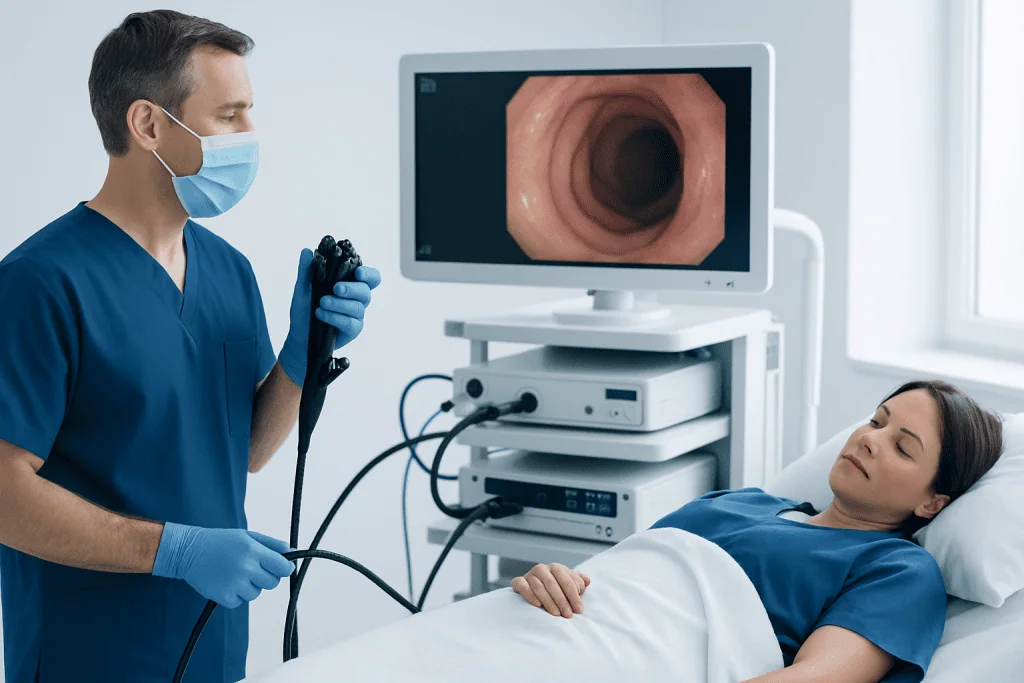
An urgent colonoscopy may be advised when a clinician needs to investigate symptoms or findings that could represent a serious bowel condition. The referral pathway and timing vary between health systems, and the treating clinician determines whether a test is urgent, routine or best performed in an emergency setting.
- Visible blood in the stool, especially if recurrent, unexplained or mixed with stool
- New, persistent changes in bowel habits, such as diarrhea, constipation or narrower stools
- Unexplained iron-deficiency anemia, which can sometimes result from slow bleeding in the digestive tract
- A positive stool-based screening test, such as a fecal immunochemical test (FIT)
- An abnormality on CT, MRI or other imaging that involves the colon
- Unintentional weight loss, ongoing abdominal pain or a palpable abdominal mass alongside bowel symptoms
- Suspected or known inflammatory bowel disease with significant symptoms or a need to clarify the diagnosis
Not every episode of bleeding or bowel change requires an urgent colonoscopy. Hemorrhoids, anal fissures, infections, medication effects and diet can also cause symptoms. However, it is important not to assume a benign cause without appropriate clinical assessment, particularly when symptoms persist or occur with anemia, weight loss or a family history of colorectal cancer.
Why would you be sent for an urgent colonoscopy?
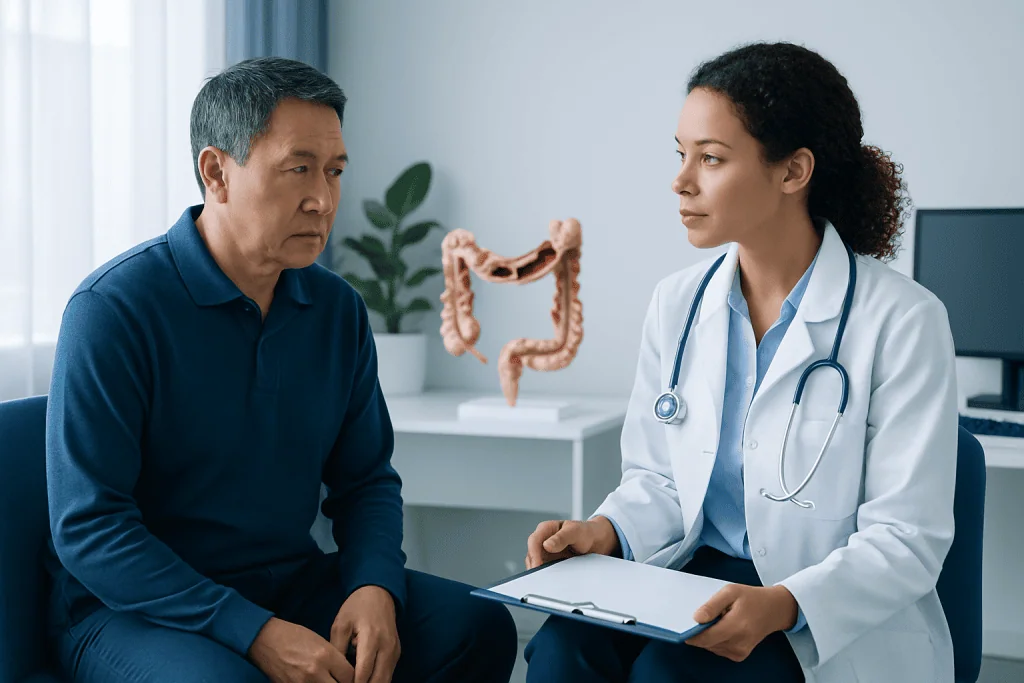
A clinician may send someone for an urgent colonoscopy because the available information cannot safely explain a symptom or test result. The aim is to identify the cause promptly, guide treatment and, where appropriate, rule out conditions that need early care. For example, a person with iron-deficiency anemia may have no visible bleeding, yet a colonoscopy can assess whether there is bleeding from the bowel.
The test may detect conditions such as diverticular disease, colitis, angiodysplasia (fragile blood vessels), polyps or colorectal cancer. It may also be normal, which can be reassuring and helps the clinician consider other sources of symptoms. A normal colonoscopy does not mean symptoms should be ignored; the follow-up plan depends on the original concern and the person’s overall health.
Urgent investigation is particularly useful where clinicians need to distinguish between inflammatory conditions and other causes of symptoms. If inflammatory bowel disease is suspected, findings may overlap with conditions such as Crohn’s disease, and biopsies can help clarify the diagnosis.
How an urgent colonoscopy works: candidacy, preparation and steps
Before colonoscopy, the care team reviews symptoms, medical conditions, allergies and medicines. It is especially important to discuss blood-thinning medicines, diabetes treatments, kidney disease, pregnancy, sleep apnea and previous reactions to sedation. Patients should not stop prescribed medicines on their own; the endoscopy team provides individualized instructions when changes are needed.
Preparation usually involves following a low-fiber diet for a short period and drinking a prescribed bowel-cleansing solution according to exact timing instructions. Clear liquids are often allowed until a specified time before the procedure, but the instructions from the endoscopy unit take priority. Good preparation is essential: retained stool can hide small polyps or inflammation and may mean the examination needs to be repeated.
During the procedure, the person changes into a gown and receives monitoring for breathing, pulse and blood pressure. Sedation and pain relief are commonly used, though the approach differs by country, medical history and preference. The endoscopist gently passes a thin flexible colonoscope through the rectum and advances it through the colon while viewing images on a monitor. Air or carbon dioxide is introduced to expand the bowel temporarily, and tissue samples or polyps can often be removed through the scope.
A diagnostic colonoscopy is also an opportunity for treatment. Removing suitable polyps can reduce future colorectal cancer risk. If surgery, advanced polyp removal or cancer care is required, the next steps are planned after the results are reviewed.
When you have a colonoscopy, do you get the results immediately?
The endoscopist can often explain the main visible findings soon after the procedure, once the person is awake enough after sedation. They may say whether the bowel looked normal, whether polyps were found or removed, whether there were signs of inflammation, or whether another clear cause of bleeding was seen.
However, complete results are not always available immediately. If biopsies are taken or a polyp is removed, the samples are sent to a laboratory for examination by a pathologist. These results commonly take several days and sometimes longer, depending on the tests required. The care team will explain how and when results will be communicated.
If an important finding is seen, the clinician may arrange further blood tests, imaging, referral to surgery or oncology, or additional endoscopic treatment. A discussion with the treating team is the best way to understand what the result means for an individual situation.
Benefits, recovery timeline and possible risks
The main benefit of urgent colonoscopy is that it provides direct assessment of the colon and can combine diagnosis with treatment. It can locate a bleeding source, detect inflammation, obtain biopsies and remove many polyps in one procedure. This information can prevent delays in care and allows a tailored follow-up plan.
After sedation, most people rest in a recovery area for about one to two hours before going home with a responsible adult. Bloating, gas and mild cramping are common for several hours because of the air used during the examination. Many people return to usual light activities the next day, but driving, alcohol, operating machinery and signing important documents should be avoided for the period specified by the care team, often until the following day.
Colonoscopy is generally safe, but complications can occur. These include reactions to sedation, bleeding after polyp removal, a tear in the bowel wall (perforation), infection and missed abnormalities. The risk depends on the reason for the procedure, overall health and whether treatment is performed. Patients should follow the unit’s discharge advice and contact the team promptly if they develop worsening pain, fever, persistent vomiting, heavy rectal bleeding, dizziness or fainting.
What are 5 warning signs of colon cancer?
Colorectal cancer can cause no symptoms in its earlier stages, which is why screening matters for people who are eligible. Symptoms are common and often have non-cancer causes, but persistent or unexplained changes should be assessed rather than self-diagnosed.
- A lasting change in bowel habits, including diarrhea, constipation or stools that are persistently narrower than usual
- Blood in or on the stool, or very dark stools that may indicate bleeding higher in the digestive tract
- Unexplained iron-deficiency anemia, fatigue, weakness or shortness of breath
- Persistent abdominal discomfort, cramping, bloating or a feeling that the bowel does not empty fully
- Unintentional weight loss or reduced appetite without a clear explanation
These signs do not confirm cancer. Hemorrhoids, benign polyps, infections, diverticular disease and inflammatory bowel disease can produce similar symptoms. Early review by a qualified clinician helps determine whether tests such as colonoscopy are appropriate.
When to seek medical care
Medical advice should be sought promptly for new or recurrent rectal bleeding, black or tar-like stools, a bowel habit change lasting more than a few weeks, unexplained anemia, persistent abdominal pain or unexplained weight loss. People with a close family history of colorectal cancer or certain hereditary bowel cancer syndromes should discuss earlier or more frequent screening with their clinician.
Emergency assessment is needed for heavy bleeding, black stools with dizziness or fainting, severe or rapidly worsening abdominal pain, a swollen abdomen with vomiting, confusion, chest pain or trouble breathing. These symptoms may have different causes, but they should not wait for a scheduled outpatient colonoscopy.
For international patients, Acibadem International’s multidisciplinary specialists and JCI-accredited hospitals can assess digestive symptoms and coordinate colonoscopy, pathology and follow-up care when appropriate. A gastroenterologist can explain the safest preparation plan, sedation options and expected timing of results for each individual.
Frequently asked questions
Does an urgent colonoscopy mean cancer?
No. An urgent colonoscopy does not mean a person has cancer. It means symptoms or test findings need timely investigation because several conditions, including benign and treatable causes, can produce similar signs.
How quickly is an urgent colonoscopy arranged?
Timing depends on the severity of symptoms, clinical findings and local referral pathways. Significant ongoing bleeding or severe illness may require hospital assessment immediately, while other urgent referrals are scheduled as soon as safely possible.
Can a colonoscopy find the cause of anemia?
It can help identify bleeding or disease in the colon that may contribute to iron-deficiency anemia. Some people may also need an upper endoscopy, blood tests or other investigations because anemia can have causes outside the colon.
Is sedation always used for colonoscopy?
Sedation is commonly offered, but practice varies and some examinations can be performed with little or no sedation. The team considers medical history, procedure complexity, local practice and patient preference when discussing options.
Can polyps be removed during an urgent colonoscopy?
Many polyps can be removed during the same colonoscopy using instruments passed through the scope. Larger or more complex polyps may need a specialized procedure or another treatment plan, depending on their appearance and location.
What should a person eat before a colonoscopy?
The endoscopy unit provides specific instructions, which commonly include a temporary low-fiber diet followed by clear liquids and a bowel-cleansing medicine. Instructions vary, so patients should follow their own appointment guidance rather than using a generic plan.
References
- American Society for Gastrointestinal Endoscopy
- American College of Gastroenterology
- National Cancer Institute
- National Health Service
- World Health Organization
This article is for general information only and is not a substitute for professional medical advice. Please consult a qualified doctor about your individual situation.
Persistent digestive symptoms? Get evaluated in Turkey
JCI-accredited · board-certified surgeons · reply within 24h
Add us as a Preferred Source to see more of our trusted health content across Google Search, AI Overviews and Discover.
Check your numbers in seconds
BMI, calories, due date, blood pressure and 30+ more clinical calculators — free, instant, doctor-reviewed ranges.