Sinding Larsen Johansson Syndrome: Early Signs, Risk Factors, and How It Is Treated

Sinding Larsen Johansson syndrome affects the growth area at the lower end of the kneecap in active, growing children and teens. Pain is usually felt at the front of the knee and tends to worsen with running, jumping, squatting, or kneeling.
Key Takeaways
- Sinding Larsen Johansson syndrome affects the growth area at the lower end of the kneecap in active, growing children and teens.
- Pain is usually felt at the front of the knee and tends to worsen with running, jumping, squatting, or kneeling.
- The condition is often diagnosed through symptoms and a physical exam; imaging may be used to rule out other causes.
- Treatment is usually non-surgical and focuses on reducing strain, easing pain, and restoring strength and flexibility.
- Early attention to symptoms can help prevent longer-lasting pain and support a safe return to sports.
Sinding Larsen Johansson syndrome is a common overuse injury that affects the lower part of the kneecap in growing children and teenagers, especially those who run and jump often. It usually causes activity-related pain at the front of the knee and is typically managed with activity changes, pain relief, and guided rehabilitation.
Overview
Sinding Larsen Johansson syndrome is an overuse condition that causes pain where the patellar tendon attaches to the lower part of the kneecap. It most often appears in children and teenagers during growth spurts, especially if they take part in sports that involve frequent running, jumping, sprinting, or sudden direction changes.
The condition develops because the growth area at the bottom of the kneecap is still maturing. Repeated pulling from the thigh muscles through the patellar tendon can irritate this area and lead to pain and tenderness. It is not usually dangerous, but it can interfere with sports, exercise, and everyday comfort if it is not recognized early.
Sinding Larsen Johansson syndrome is one of several causes of front-of-knee pain in young athletes. It is related to growth and overuse rather than a single major injury. In many cases, symptoms improve with time and proper care as the child grows and the irritated area settles.
Early Signs and Symptoms
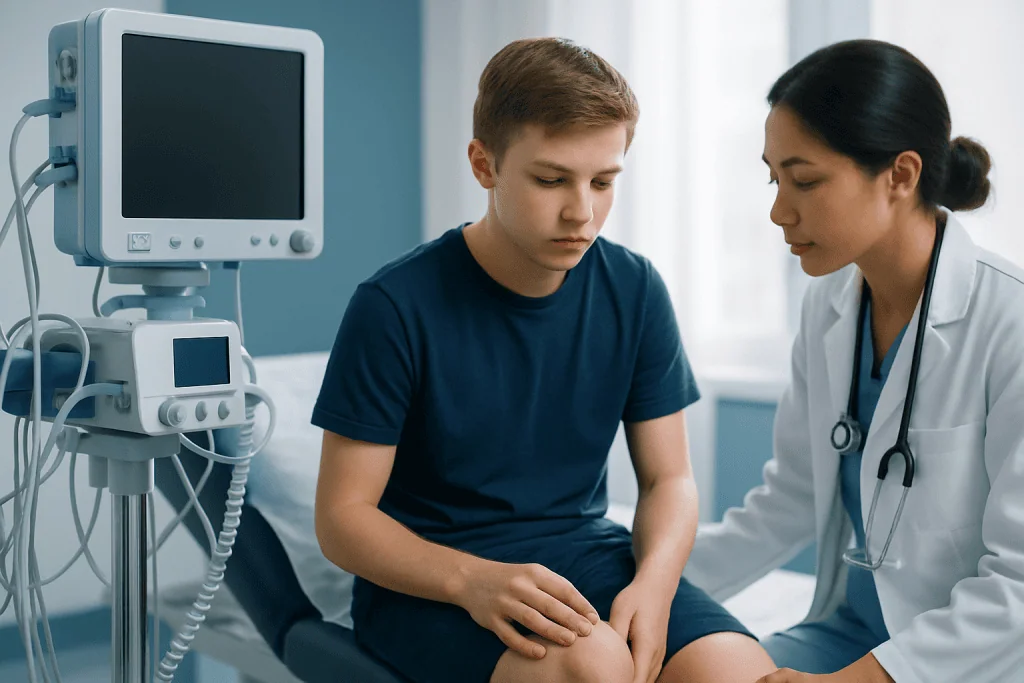
The earliest sign is often pain at the front of the knee, just below the kneecap. At first, the pain may only appear during sports or shortly afterward. As irritation continues, discomfort can start earlier in activity or linger longer after exercise.
Children may describe the pain as sore, sharp, or tender when touching the lower edge of the kneecap. Activities that increase the pull on the patellar tendon commonly make symptoms worse, such as jumping, climbing stairs, squatting, kneeling, or getting up from a seated position.
Other symptoms can include mild swelling, tightness in the thigh muscles, or a limp after training. Some children continue playing through the pain, which can make symptoms more persistent. Unlike severe ligament injuries or fractures, this condition usually does not cause sudden instability, significant deformity, or immediate inability to bear weight.
- Pain below the kneecap during or after sports
- Tenderness when pressing the lower pole of the patella
- Discomfort with running, jumping, squatting, or kneeling
- Symptoms that flare with activity and ease with rest
Why It Happens: Causes and Risk Factors

The main cause of sinding larsen johansson syndrome is repeated stress on the lower kneecap while the skeleton is still developing. During periods of rapid growth, bones, muscles, and tendons do not always lengthen and strengthen at the same pace. This can increase tension across the front of the knee.
Sports participation is a major risk factor, especially activities that involve jumping and explosive leg movements. Basketball, volleyball, football, soccer, gymnastics, track, and dance can all place repeated strain on the patellar tendon attachment. A sudden increase in training intensity, practice frequency, or competition schedule may trigger symptoms.
Other factors may contribute, including tight quadriceps or hamstrings, reduced flexibility, muscle imbalance around the hip and knee, and limited recovery between activities. Biomechanical patterns such as poor landing control or alignment problems can also increase stress across the kneecap. This condition can overlap with other causes of knee pain in children, including Osgood-Schlatter disease, which affects a different growth area just below the kneecap on the shinbone.
How Doctors Diagnose It
Diagnosis usually begins with a careful history and physical examination. A doctor will ask when the pain started, which activities bring it on, whether there has been a recent growth spurt, and if the child has had any direct blow or twist to the knee. The exact location of tenderness is especially helpful in identifying this condition.
During the exam, the doctor may check for pain when pressing the lower pole of the kneecap, assess knee motion, and look at muscle flexibility and strength. They may also evaluate walking, squatting, or single-leg movements to see how the knee behaves during load.
Imaging is not always necessary, but it may be recommended if symptoms are severe, persistent, or not improving as expected. X-rays can help rule out fracture, other bone conditions, or unusual changes at the lower kneecap. In some cases, MRI scanning or ultrasound can provide more detail about the tendon and surrounding tissues, especially when the diagnosis is unclear or another condition is suspected. A broader assessment may also be useful when doctors are evaluating ongoing knee pain.
Treatment Options and Recovery
Treatment for sinding larsen johansson syndrome is usually conservative, meaning surgery is rarely needed. The main goals are to reduce pain, calm irritation at the growth area, and gradually return the child to normal activity. Relative rest is often the first step. This does not always mean complete inactivity, but it usually means reducing or temporarily stopping the movements that trigger pain.
Ice, short-term pain relief measures advised by a doctor, and activity modification can help during flare-ups. As symptoms settle, rehabilitation becomes important. Stretching tight muscles, strengthening the quadriceps, hamstrings, hips, and core, and improving movement patterns can reduce stress on the knee. Guided physical therapy and rehabilitation may be especially helpful for children with recurring symptoms or difficulty returning to sports.
Most children improve over weeks to months, although the timeline varies depending on growth, training load, and how long symptoms have been present. Return to sport is usually gradual and based on pain, function, and strength rather than a fixed date. If pain is severe, persistent, or associated with another knee problem, an orthopedic evaluation may be needed; in selected cases, doctors may recommend a specialist knee surgery assessment to rule out other structural causes, though surgery for this syndrome itself is uncommon.
Prevention and Self-care
Although sinding larsen johansson syndrome cannot always be prevented, some practical steps may lower the risk of flare-ups. A balanced training schedule is important for young athletes. Rest days, gradual increases in activity, and avoiding sudden spikes in jumping or running volume can help protect the growing knee.
Warm-up routines should include dynamic movement and sport-specific preparation. Flexibility work for the quadriceps, hamstrings, calves, and hip muscles may reduce tension around the kneecap. Strengthening the hips and trunk can also improve leg alignment and landing control, which may decrease strain at the patellar tendon attachment.
Families can help by paying attention to pain that keeps returning. A child should not feel pressure to play through persistent knee pain. Supportive footwear, recovery after intense activity, and early review by a qualified clinician can all be useful. For international patients who need evaluation for sports-related knee conditions, Acibadem International’s multidisciplinary specialists in JCI-accredited hospitals provide diagnosis and treatment planning.
When to Seek Medical Care
Medical advice is appropriate if knee pain keeps coming back, limits sports participation, or affects walking, stair climbing, or sleep. Early evaluation can confirm the diagnosis, guide safe activity changes, and help the child return to movement without unnecessary delay.
Prompt assessment is especially important if the pain followed a clear injury, the knee is very swollen, locks, gives way, or the child cannot bear weight normally. Fever, redness, significant warmth, or pain that is not linked to activity also needs medical attention because these signs may point to a different problem.
If symptoms do not improve with rest and home measures, a doctor may suggest further testing or referral to a specialist. Getting the right diagnosis matters because front-of-knee pain in children can have several causes, and the best treatment depends on identifying the source accurately.
Frequently asked questions
What is sinding larsen johansson syndrome?
Sinding Larsen Johansson syndrome is an overuse injury affecting the growth area at the lower end of the kneecap. It commonly occurs in active children and teenagers, especially during periods of rapid growth.
Is sinding larsen johansson syndrome the same as Osgood-Schlatter disease?
No. Both are overuse conditions linked to growth and sports, but they affect different locations. Sinding Larsen Johansson syndrome involves the lower pole of the kneecap, while Osgood-Schlatter disease affects the bony bump on the upper shin where the patellar tendon attaches.
How long does recovery usually take?
Recovery time varies depending on symptom severity, activity level, and whether the child continues painful movements. Many children improve over several weeks to a few months with activity changes and rehabilitation, though some have flare-ups during growth spurts.
Can a child keep playing sports with this condition?
Some children can continue modified activity if pain is mild and does not worsen, but pushing through significant pain is not recommended. A doctor or physiotherapist can help decide what level of activity is safe and when a gradual return to sport is appropriate.
Are imaging tests always needed?
Not always. Doctors often diagnose this condition based on symptoms and a physical examination. X-rays or other imaging may be used if symptoms are severe, unusual, or not improving as expected.
Does sinding larsen johansson syndrome need surgery?
Surgery is rarely needed. Most children recover with non-surgical treatment such as rest from painful activities, stretching, strengthening, and a guided return to sport.
References
- American Academy of Orthopaedic Surgeons
- American Academy of Pediatrics
- National Institute of Arthritis and Musculoskeletal and Skin Diseases
- American Orthopaedic Society for Sports Medicine
This article is for general information only and is not a substitute for professional medical advice. Please consult a qualified doctor about your individual situation.
Joint and spine care in Turkey — expert assessment & treatment
JCI-accredited · board-certified surgeons · reply within 24h

More from the Health Library



Related Specialists
Prof. Dr. Fulya Ağaoğlu
Radiation Oncology
Prof. Dr. Levent Eralp
Orthopedic Surgery & Traumatology
Prof. Dr. Ömer Fatih Ölmez
Medical Oncology
Prof. Dr. Ersin Erek
Cardiovascular Surgery