Small White Spots on Skin: An Evidence-Based Guide for Patients

Small white spots on skin can have many causes, including dry skin, post-inflammatory change, fungal infection, idiopathic guttate hypomelanosis, and vitiligo. The appearance, location, symptoms, and pattern of spread help doctors narrow the diagnosis.
Key Takeaways
- Small white spots on skin can have many causes, including dry skin, post-inflammatory change, fungal infection, idiopathic guttate hypomelanosis, and vitiligo.
- The appearance, location, symptoms, and pattern of spread help doctors narrow the diagnosis.
- Not all white spots need treatment, but some improve with creams, antifungal treatment, or light-based therapy depending on the cause.
- Sudden change, rapid spread, itching, scaling, pain, or new spots in a child should prompt medical evaluation.
- Sun protection and gentle skin care can help reduce contrast and support overall skin health.
Small white spots on skin are common and often linked to reduced pigment, mild irritation, dryness, sun-related change, or certain skin conditions. While many causes are harmless, persistent, spreading, itchy, or sharply defined spots should be assessed by a qualified doctor to confirm the diagnosis and guide treatment.
Overview: what small white spots on skin can mean
Small white spots on skin usually happen when an area of skin has less pigment than the surrounding skin. This change may be temporary, as after irritation or a rash, or longer-lasting, as in conditions that affect melanocytes, the cells that produce skin color. In many people, the spots are harmless and do not signal a serious illness.
Common explanations include dry skin, mild eczema, post-inflammatory hypopigmentation after a rash or injury, fungal overgrowth such as tinea versicolor, sun-related white speckles called idiopathic guttate hypomelanosis, and autoimmune pigment loss in vitiligo. Less often, white spots are linked to nutritional issues, medication effects, or inflammatory skin disease.
The main questions are whether the spots are flat or scaly, whether they itch, whether they are spreading, and whether the borders are sharply defined. These details help a clinician tell apart common causes that may look similar at first glance. Because treatment depends on the underlying reason, an accurate diagnosis matters more than trying random creams.
How white spots may look and feel
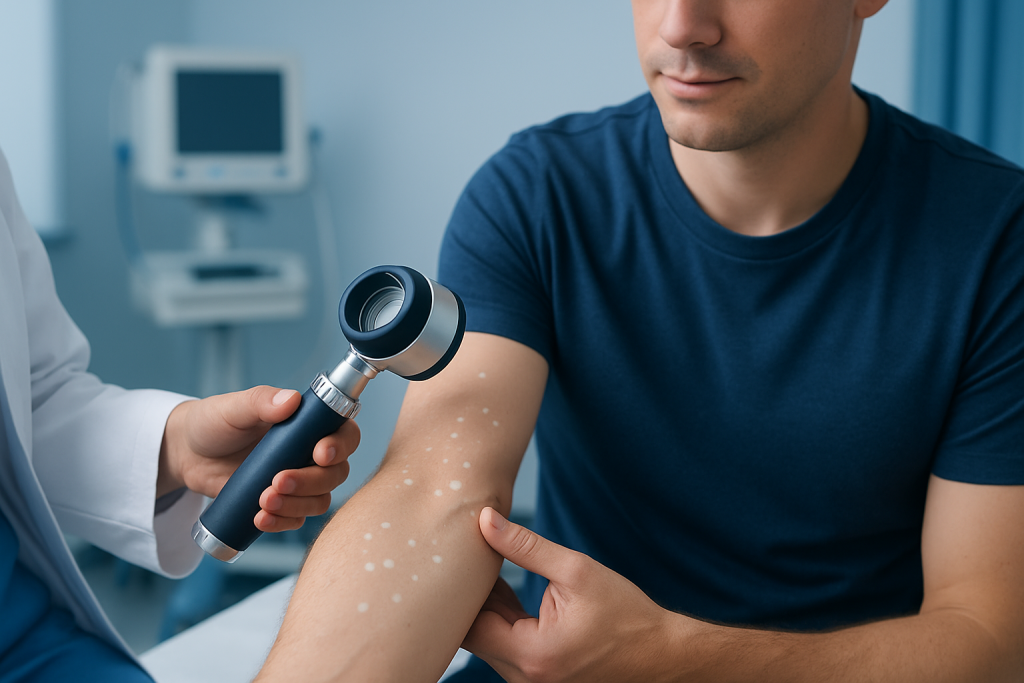
Small white spots on skin can appear as tiny dots, round macules, irregular patches, or slightly larger pale areas. They may be brighter or only subtly lighter than the surrounding skin. On darker skin tones, the contrast is often more noticeable, which can make even small changes feel concerning.
Some spots are completely smooth and cause no symptoms. Others may feel dry, rough, or faintly scaly. Itching can point toward eczema, irritation, or a fungal cause, while a lack of symptoms is more typical of conditions like idiopathic guttate hypomelanosis or stable vitiligo.
Location also provides clues. White spots on the trunk, neck, and upper arms may suggest tinea versicolor. Small sun-exposed spots on the forearms or shins are often related to sun damage over time. Pale patches on the face in children may occur with pityriasis alba, a mild eczema-related condition. Spots around the mouth, eyes, hands, or genitals may raise more suspicion for vitiligo.
- Dry or fine scale: often seen with pityriasis alba or tinea versicolor
- Sharply outlined, chalk-white areas: can occur in vitiligo
- Tiny scattered white macules on sun-exposed skin: may suggest idiopathic guttate hypomelanosis
- Lighter spots after acne, eczema, or injury: may reflect post-inflammatory hypopigmentation
Common causes and risk factors

One of the most frequent explanations for small white spots on skin is post-inflammatory hypopigmentation. This means the skin temporarily makes less pigment after inflammation from eczema, acne, scratches, burns, cosmetic irritation, or other rashes. The pale area often improves gradually over weeks to months once the trigger settles.
Tinea versicolor is another common cause. It is related to an overgrowth of yeast that normally lives on the skin and can create lighter, darker, or pink patches, often on the chest, back, shoulders, or neck. Warm climates, sweating, oily skin, and recurrence in summer can make it more likely. Treatment may involve medicated washes or dermatology treatment with antifungal therapies recommended by a doctor.
Idiopathic guttate hypomelanosis causes small, round white spots, usually on chronically sun-exposed areas such as the forearms and lower legs. It is benign and becomes more common with age. Pityriasis alba, often seen in children and teenagers, creates pale, slightly dry patches, especially on the face, and is linked to sensitive skin or mild eczema.
Vitiligo develops when pigment-producing cells are lost, likely through an autoimmune process. The spots are often more clearly defined than other causes and may slowly enlarge or appear in new places. Family history of autoimmune disease can increase the likelihood. Other less common causes of white spots include lichen sclerosus, certain inflammatory disorders, and rarely infection-related or genetic conditions. Some people searching for small white spots on skin may also be dealing with broader pigmentation changes such as skin discoloration.
How doctors diagnose the cause
Diagnosis starts with a careful history and skin examination. A doctor will ask when the spots started, whether they itch or scale, whether they appeared after a rash or injury, whether they worsen in sun, and whether there is a personal or family history of eczema, autoimmune disease, or pigment disorders. Photographs showing earlier stages can sometimes help.
The visual pattern is often enough to strongly suggest a diagnosis. A Wood’s lamp, which uses ultraviolet light, may help highlight pigment loss or support the assessment of fungal or depigmenting conditions. In some cases, the doctor may gently scrape the skin to look for scale or test for fungal involvement.
If the diagnosis remains uncertain, additional steps may include dermoscopy, fungal testing, or rarely a skin biopsy. Blood tests are not needed for every patient, but they may be considered if vitiligo is suspected and there are symptoms suggesting associated autoimmune conditions. Identifying the correct cause helps avoid treatments that are unnecessary or irritating.
Treatment options depend on the diagnosis
There is no single treatment for all small white spots on skin because the causes are different. If dryness, pityriasis alba, or post-inflammatory hypopigmentation is the issue, treatment often focuses on moisturizers, gentle cleansing, sun protection, and treating any underlying eczema or irritation. The skin may slowly repigment over time, although improvement can be gradual.
For tinea versicolor, doctors may recommend antifungal shampoos, washes, or creams used on the affected areas. More widespread or recurrent cases sometimes need prescription medication. Even after the yeast is treated, the color difference may take weeks or months to fade because pigment recovery is slower than clearing the infection.
If vitiligo is diagnosed, management may include topical anti-inflammatory medicines, light-based therapies such as phototherapy, and plans tailored to the area involved and the patient’s age. Some patients with stable, localized disease may be evaluated by a specialist center for procedures used in selected cases. In individuals seeking help for autoimmune pigment loss, vitiligo treatment is usually guided by dermatology expertise.
Benign sun-related white macules such as idiopathic guttate hypomelanosis may not need treatment at all if they are not bothersome. When appearance is a concern, a dermatologist can discuss realistic options and expected results. Near the end of the care pathway, some international patients choose specialist assessment at Acibadem International, where multidisciplinary teams in JCI-accredited hospitals evaluate and treat skin conditions according to the confirmed diagnosis.
Skin care, prevention, and what not to do
Prevention is not always possible, but good skin habits can reduce irritation and make white spots less noticeable. Daily sun protection helps because tanning of the surrounding skin increases contrast, especially after inflammation or in vitiligo. Broad-spectrum sunscreen, protective clothing, and avoiding intense midday sun are practical steps for many patients.
Gentle skin care is also important. Fragrance-free cleansers and regular moisturizers support the skin barrier and are especially useful when dry skin or eczema contributes to lighter patches. Prompt treatment of rashes, acne, and irritation may reduce the chance of post-inflammatory pigment change afterward.
It is best not to scrub, peel, or use strong bleaching products on unexplained white spots. Over-the-counter steroid creams should not be used for long periods without medical advice, especially on the face or in children. If a fungal infection is possible, heavy oils and occlusive products can sometimes worsen recurrence in prone individuals.
- Use sunscreen consistently on exposed skin
- Moisturize dry or sensitive areas daily
- Avoid picking, scratching, and harsh exfoliation
- Seek medical advice before using steroid or lightening creams
- Follow treatment long enough, as repigmentation often takes time
When to seek medical care
Small white spots on skin should be assessed if they are new and spreading, sharply defined, associated with itching or scale, or appearing after no obvious trigger. Medical review is also sensible if the spots involve the face, hands, genitals, or large body areas, or if they are causing distress because of their visibility. Children with persistent pale patches may benefit from an examination to distinguish dryness or pityriasis alba from other causes.
Urgent evaluation is usually not necessary, but prompt attention is helpful if the spots are accompanied by pain, signs of infection, significant redness, hair whitening within the patch, or symptoms that suggest another illness. If there is concern about an autoimmune pigment disorder, a dermatologist can assess whether vitiligo or another condition is responsible.
A qualified doctor can confirm whether the spots are harmless, infectious, inflammatory, or autoimmune in nature and suggest the most appropriate next steps. This is especially important when home care has not helped, when the diagnosis is uncertain, or when cosmetic self-treatment may risk irritation and make the skin look more uneven.
Frequently asked questions
Are small white spots on skin usually serious?
Most small white spots on skin are not serious and may be related to dryness, mild eczema, sun-related change, or a superficial fungal condition. However, persistent, spreading, or sharply defined spots should be checked by a doctor to confirm the cause.
Can a fungal infection cause white spots on the skin?
Yes. Tinea versicolor can cause lighter patches, often on the chest, back, shoulders, or neck. These areas may have a fine scale, and the color difference can remain for some time even after treatment works.
How can someone tell if white spots might be vitiligo?
Vitiligo often causes clearly defined white patches rather than faint dry areas. It may affect the face, hands, around the mouth or eyes, and sometimes areas where friction is common. A dermatologist may use the clinical pattern and special light examination to help confirm it.
Do white spots go away on their own?
Some do. White spots caused by dry skin or post-inflammatory hypopigmentation may fade gradually once the skin heals and irritation is controlled. Others, such as vitiligo or idiopathic guttate hypomelanosis, may persist and may need specialist advice if treatment is being considered.
Should sunscreen be used on white spots?
Yes. Sunscreen helps protect the skin and can reduce contrast between white spots and surrounding tanned skin. This can be particularly helpful when pigment is returning slowly or when depigmented areas burn more easily.
When should a child with white spots on skin see a doctor?
A child should be assessed if the spots are persistent, spreading, very noticeable, itchy, scaly, or affecting the face or large areas of skin. Many cases are related to dry skin or mild eczema, but a medical review can make the diagnosis clearer and avoid unnecessary treatments.
References
- American Academy of Dermatology
- National Health Service
- Mayo Clinic
- Merck Manual Consumer Version
- American Osteopathic College of Dermatology
This article is for general information only and is not a substitute for professional medical advice. Please consult a qualified doctor about your individual situation.
Explore treatments in Turkey — costs, top hospitals & a free quote
JCI-accredited · board-certified surgeons · reply within 24h