Spurling Test: What Patients Need to Know

The spurling test is used during a physical exam to check for signs of a pinched nerve in the neck. A positive result means the test reproduces arm pain, tingling, or numbness in a pattern that suggests nerve root irritation.
Key Takeaways
- The spurling test is used during a physical exam to check for signs of a pinched nerve in the neck.
- A positive result means the test reproduces arm pain, tingling, or numbness in a pattern that suggests nerve root irritation.
- The test is only one part of diagnosis and is usually interpreted alongside symptoms, neurologic exam findings, and sometimes imaging.
- Not everyone with neck or arm pain needs this test, and it should be performed by a trained clinician.
- Treatment depends on the cause and may include rest, medication, physical therapy, or selected procedures.
The spurling test is a simple physical exam maneuver used to see whether neck position reproduces pain, tingling, or numbness caused by an irritated nerve in the neck. It does not confirm a diagnosis on its own, but it can help a doctor decide whether cervical radiculopathy is likely and whether more testing is needed.
Overview: what the spurling test checks
The spurling test is a bedside exam used to help identify whether symptoms may be coming from a compressed or irritated nerve root in the cervical spine, which is the neck portion of the spine. During the maneuver, a clinician gently positions the head and neck in a way that can narrow the openings where the nerves exit. If this reproduces pain, tingling, numbness, or weakness that travels into the shoulder or arm, it may suggest cervical radiculopathy.
For patients, the most important point is that the spurling test is not a treatment and not a stand-alone diagnosis. It is one clue among several. Doctors usually combine it with a symptom history, a neurologic examination, and, when needed, imaging or other tests to understand whether symptoms are related to a spinal disc problem, age-related wear in the neck, or another condition.
This test is often considered when a person has neck pain along with arm symptoms rather than neck pain alone. It is especially useful when symptoms follow a nerve pattern, such as pain traveling from the neck into the shoulder, forearm, or hand. In that setting, the test may help separate a neck-related nerve problem from shoulder disorders or more general muscle strain.
How the test is performed and what a positive result means
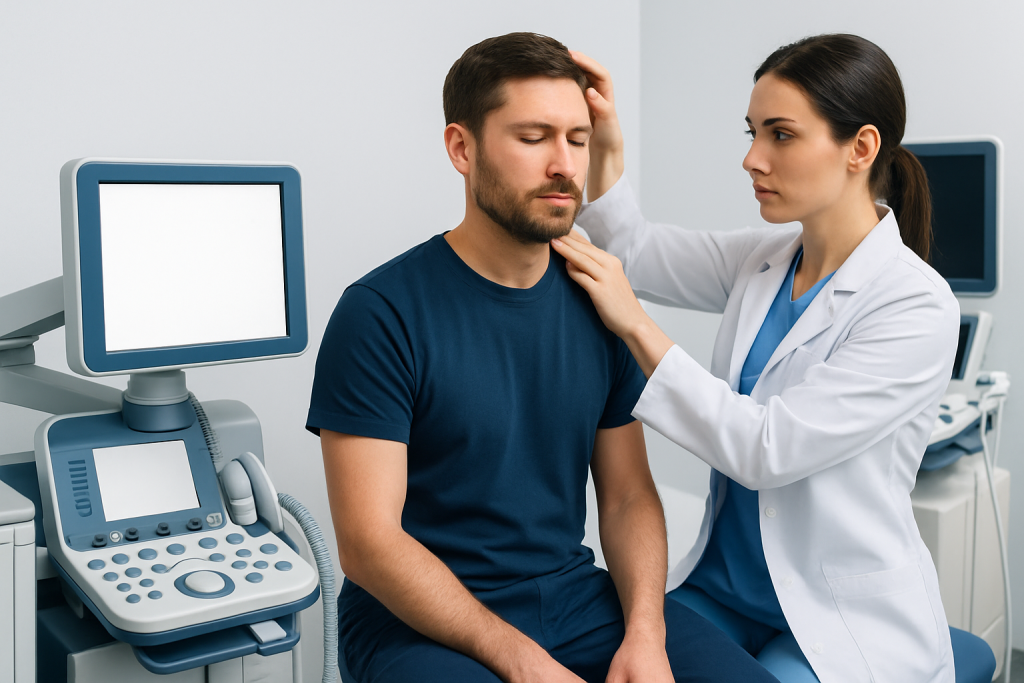
To perform the spurling test, the clinician usually asks the patient to sit upright. The head is gently tilted and turned toward the side of symptoms, and then light downward pressure may be applied to the top of the head. The movement is controlled and brief. If symptoms increase, the maneuver is stopped.
A positive spurling test does not simply mean neck discomfort. Many people with muscle tightness may feel pressure in the neck during movement. What makes the test more meaningful is reproduction of the person’s usual radiating symptoms, such as sharp pain, tingling, numbness, or an electric-like feeling traveling into the arm or hand. That pattern suggests irritation of a cervical nerve root.
A negative test does not rule out a neck nerve problem. Some patients with cervical radiculopathy have normal or unclear results, especially early in the condition or if symptoms vary from day to day. For this reason, experienced clinicians interpret the spurling test together with other findings instead of relying on it alone.
Symptoms and conditions linked to the spurling test

The spurling test is commonly used when a patient reports neck pain together with symptoms in the upper limb. These may include pain that starts in the neck and travels into the shoulder or arm, pins-and-needles sensations, numbness in the fingers, or weakness when lifting, gripping, or reaching. Some people notice symptoms mainly when turning the head, coughing, or sleeping in certain positions.
The condition most often associated with the test is cervical radiculopathy, sometimes called a pinched nerve in the neck. This can happen when a spinal disc bulges or herniates, or when age-related changes narrow the space around a nerve root. In some cases, symptoms can resemble those of other problems, including shoulder injury, peripheral nerve compression, or less commonly cervical disc herniation with more pronounced neck and arm pain.
Because symptoms can overlap, doctors often look for associated clues on examination. These can include changes in reflexes, reduced sensation in part of the arm or hand, or weakness in muscles supplied by a particular nerve root. The pattern helps guide which nerve may be involved and whether further evaluation is needed.
- Neck pain that radiates into one arm
- Tingling or numbness in the hand or fingers
- Weakness in the shoulder, arm, or grip
- Symptoms that worsen with neck movement
Common causes and risk factors
A spurling test is usually performed because a clinician suspects a structural cause of nerve irritation in the neck. One common cause is a herniated cervical disc, in which disc material presses on a nearby nerve root. Another is cervical spondylosis, a general term for age-related changes in the neck such as bone spurs, disc dehydration, and narrowing of the foramina, the small openings where nerves leave the spine.
Risk factors for these problems include increasing age, repetitive neck strain, jobs that involve prolonged sitting or awkward posture, and previous neck injury. Some people develop symptoms after lifting, sports activity, or a sudden twist of the neck, while others notice a more gradual onset over time. Poor workstation ergonomics and long periods looking down at a phone or laptop may also worsen existing neck strain, although they are not the only cause.
Not all radiating arm symptoms come from the spine. Diabetes-related nerve disease, carpal tunnel syndrome, shoulder pathology, or inflammation around peripheral nerves can cause somewhat similar complaints. That is why the spurling test is best viewed as part of a wider evaluation rather than a final answer by itself.
How doctors confirm the diagnosis
Diagnosis usually starts with a medical history and physical examination. The doctor asks where the pain begins, where it travels, what makes it better or worse, and whether numbness or weakness is present. The exam may include checking range of motion in the neck, muscle strength, reflexes, sensation, and special maneuvers such as the spurling test.
If symptoms are mild and there are no concerning neurologic findings, immediate imaging may not be necessary. If symptoms are more severe, persistent, or associated with weakness, the clinician may recommend imaging of the cervical spine. MRI is often helpful because it can show discs, nerve roots, and soft tissues in detail. In some cases, CT scan may be used, especially to assess bony narrowing.
Other tests may be considered when the diagnosis is uncertain. Nerve conduction studies and electromyography can help distinguish a cervical nerve root problem from peripheral nerve compression. These tests are chosen based on the patient’s symptoms, exam findings, and how long the problem has been present.
Treatment options after a positive spurling test
A positive spurling test does not automatically mean surgery. Treatment is based on the underlying cause, the severity of symptoms, and whether there is muscle weakness or progressive neurologic change. Many patients improve with conservative care, especially when symptoms are recent and there are no red flags.
Initial treatment often includes relative rest, short-term activity modification, and medications recommended by a doctor for pain and inflammation. Guided exercises and physical therapy and rehabilitation can help improve posture, neck mobility, and support from surrounding muscles. Patients are usually advised to avoid repeated neck positions that trigger radiating pain while recovery is underway.
If pain persists or significant nerve compression is confirmed, additional options may be discussed. These can include image-guided injections in selected cases or surgical treatment when there is ongoing weakness, disabling pain, or structural compression that has not improved. The goal is to relieve pressure on the nerve and protect function while choosing the least invasive effective approach.
Self-care, prevention, and when to seek medical care
Self-care can support recovery, but it should be practical and gentle. Many people benefit from improving desk setup, keeping screens at eye level, taking regular movement breaks, and avoiding prolonged positions that strain the neck. A supportive pillow, attention to posture, and exercises prescribed by a clinician or therapist may reduce recurrence. Sudden forceful neck stretching is generally best avoided when arm symptoms are active.
It is sensible to seek medical care if neck pain lasts more than a few days and is accompanied by pain spreading into the arm, tingling, numbness, or weakness. Prompt evaluation is especially important if symptoms are worsening, interfere with sleep or daily function, or return repeatedly. Urgent medical attention is needed for severe weakness, loss of coordination, trouble walking, new bowel or bladder changes, fever, significant trauma, or unexplained weight loss.
For patients who need specialist assessment, Acibadem International’s multidisciplinary teams in JCI-accredited hospitals evaluate neck and nerve-related symptoms for international patients using appropriate examination, imaging, and treatment planning. The right care plan depends on the cause, so professional evaluation remains the safest next step after a concerning or persistent positive spurling test.
Frequently asked questions
Is the spurling test painful?
The test may briefly reproduce the symptoms a person already has, such as arm pain or tingling, but it should be performed gently by a trained clinician. It is not meant to force the neck into a painful position. If symptoms become intense, the maneuver is stopped.
What does a positive spurling test mean?
A positive result means the maneuver triggers radiating symptoms that suggest irritation of a cervical nerve root. It raises suspicion for cervical radiculopathy, but it does not prove the diagnosis by itself. Doctors interpret it together with the medical history, neurologic exam, and sometimes imaging.
Can the spurling test diagnose a herniated disc?
No. The spurling test can suggest that a neck nerve is irritated, which may happen with a herniated disc or other causes of narrowing in the neck. Imaging such as MRI is usually needed if a doctor wants to confirm the exact cause.
Should someone try the spurling test at home?
It is best not to perform this test at home. Neck maneuvers can worsen symptoms if done incorrectly or too forcefully. A qualified healthcare professional can perform it safely and interpret the result in the right clinical context.
What if the spurling test is negative but symptoms continue?
A negative result does not completely rule out cervical radiculopathy. Symptoms can still come from a neck nerve problem or from another condition such as shoulder disease or peripheral nerve compression. Persistent symptoms should be assessed by a doctor, especially if there is weakness or numbness.
How is cervical radiculopathy usually treated?
Treatment often begins with conservative care, including activity modification, pain management, and physical therapy. Many people improve without surgery. More advanced treatment may be considered if symptoms are severe, last a long time, or are associated with progressive weakness.
References
- American Academy of Orthopaedic Surgeons
- National Institute of Neurological Disorders and Stroke
- American Association of Neurological Surgeons
- National Institute for Health and Care Excellence
- Merck Manual Professional Edition
This article is for general information only and is not a substitute for professional medical advice. Please consult a qualified doctor about your individual situation.
Joint and spine care in Turkey — expert assessment & treatment
JCI-accredited · board-certified surgeons · reply within 24h