Surgery Instrument Cleaning: Procedure, Recovery and Results

Cleaning must happen before sterilization because organic material can protect microorganisms from the sterilizing process. Reusable surgical instruments are precleaned, transported safely, washed, inspected, prepared and sterilized according to validated instructions.
Key Takeaways
- Cleaning must happen before sterilization because organic material can protect microorganisms from the sterilizing process.
- Reusable surgical instruments are precleaned, transported safely, washed, inspected, prepared and sterilized according to validated instructions.
- The time needed for sterilization depends on the instrument, packaging, load, sterilizer type and required drying and cooling steps.
- Patients do not need to manage instrument cleaning, but they can reasonably expect hospitals to use documented infection-prevention procedures.
- Single-use instruments are disposed of after use and are not cleaned or sterilized for another patient.
Surgery instrument cleaning is a carefully controlled reprocessing process that removes visible soil and microscopic contamination before sterilization. It is performed by trained healthcare professionals using validated methods, equipment and quality checks rather than by patients or surgical teams at the bedside alone.
Overview: What Is Surgery Instrument Cleaning?
Surgery instrument cleaning is the first essential part of reprocessing reusable medical devices after an operation. It involves removing blood, tissue, fluids and other material from instruments before they are disinfected or sterilized. The aim is to prepare each device safely for a future procedure while protecting patients and healthcare workers from avoidable infection risks.
Although people may describe the entire process as “sterilizing instruments,” cleaning and sterilization are not the same. Cleaning physically removes contamination, while sterilization is a validated process intended to destroy all forms of microbial life, including bacterial spores. A reliable surgical instrument cleaning protocol uses both steps in the correct order.
This work takes place in dedicated sterile processing or central sterilization departments. It is performed by trained staff following the device manufacturer’s instructions, hospital infection-prevention policies and national standards. Patients are not expected to perform any part of surgery instrument cleaning before or after their own operation.
How Surgery Instrument Cleaning Works
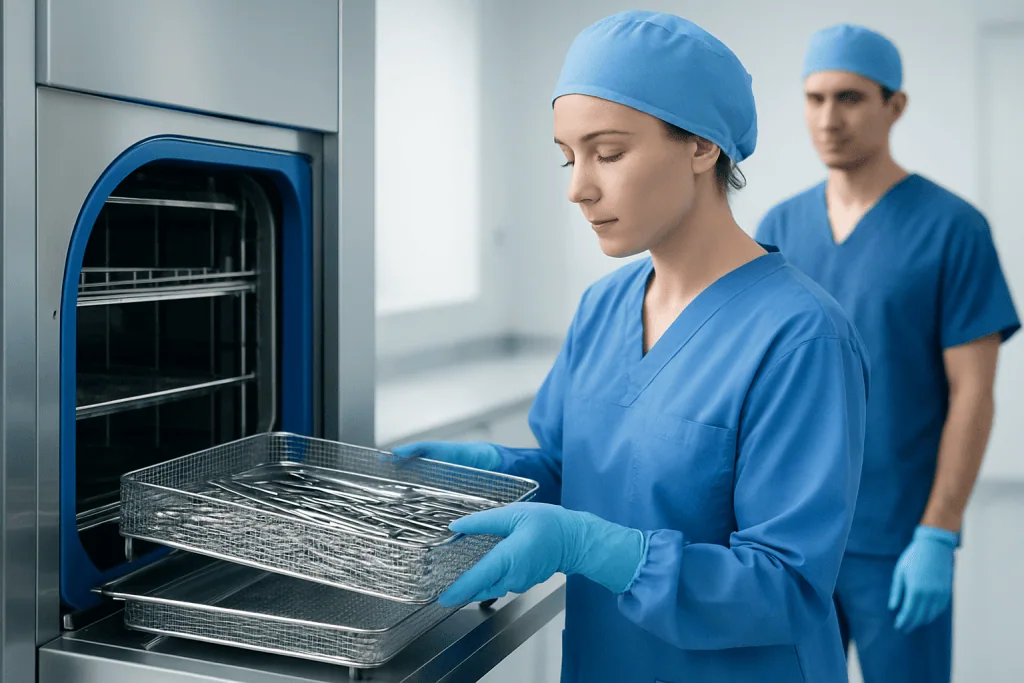
Reusable instruments can have hinges, serrations, lumens, channels and delicate surfaces that retain debris. For this reason, surgery instrument cleaning is a structured process rather than a simple rinse. Staff use personal protective equipment and separate areas for contaminated and clean devices to reduce the chance of cross-contamination.
A surgery instrument cleaner may refer to an enzymatic cleaning solution, an ultrasonic cleaner or an automated washer-disinfector. Enzymatic products help break down proteins and other organic material. Ultrasonic devices use sound waves in a cleaning fluid to reach fine surfaces and joints, while washer-disinfectors use controlled water flow, detergent, temperature and timed cycles.
After washing, every instrument is inspected for cleanliness, function and damage. Hinged devices are checked for movement, cutting edges are assessed, and instruments with channels may require specific tests. Clean devices are then assembled into sets, packaged with appropriate indicators and sent for sterilization using a method compatible with the device.
- Precleaning begins at the point of use.
- Safe transport moves contaminated items to the decontamination area.
- Manual and/or mechanical cleaning removes remaining soil.
- Inspection, assembly and packaging prepare instruments for sterilization.
- Sterilization, storage and traceability support safe future use.
What's the First Step in the Process of Cleaning Surgical Instruments?

The first step in the process of cleaning surgical instruments is point-of-use precleaning. Soon after an instrument has been used, the surgical team removes gross soil and helps keep the device moist according to its instructions for use. This prevents blood, tissue and other debris from drying onto surfaces, joints or internal channels.
Point-of-use precleaning does not mean that instruments are fully washed in the operating room. They are placed in an approved, closed or covered transport system and moved to the decontamination area. Sharp instruments and delicate devices require particular care during handling to prevent injury to staff and damage to the instrument.
Prompt precleaning supports later cleaning, but it is only the beginning of the process. Devices still require complete cleaning, inspection and sterilization before they can be considered ready for another procedure. The exact approach varies by instrument design and the manufacturer’s validated reprocessing instructions.
What Should Be Done After Precleaning a Surgical Instrument?
After precleaning, a surgical instrument should be safely contained and transported to the designated decontamination area for full reprocessing. There, staff sort and disassemble instruments when required, then carry out manual cleaning, mechanical cleaning or both. The selected method must be suitable for the specific instrument and consistent with its manufacturer’s instructions.
Manual cleaning commonly involves flushing channels and brushing surfaces beneath the waterline with the recommended detergent. Mechanical equipment, such as an ultrasonic cleaner or washer-disinfector, may then provide a standardized cleaning cycle. Instruments are rinsed as required and dried thoroughly, since moisture can affect subsequent packaging, sterilization or storage.
Once clean, instruments are inspected under appropriate lighting and magnification when needed. Staff confirm that there is no remaining residue and that the device functions as intended. Only then are instruments packaged and processed through a validated sterilization cycle or, for some devices, an approved alternative high-level disinfection process.
How Long Does It Take to Sterilize Surgical Instruments?
The length of time needed to sterilize surgical instruments depends on the sterilization method, the type and number of devices in the load, packaging, sterilizer settings and the manufacturer’s instructions. Steam sterilization cycles may have relatively short exposure phases, but the full process also includes loading, air removal, heating, drying, cooling and documentation.
Some heat-sensitive instruments require low-temperature sterilization methods, which can take longer. Instruments with lumens or complex designs may also need special preparation and cycle selection. For safety, staff do not rely on time alone: they use physical monitors, chemical indicators and routine biological monitoring to confirm that equipment is functioning properly.
In practical terms, a sterile instrument set is not released merely when a cycle ends. It must complete the required process, cool appropriately and remain in intact packaging before it is stored or delivered for use. Hospitals plan inventory and workflows so that safety checks are not bypassed when operating schedules are busy.
Benefits, Limitations and Safety Considerations
The main benefit of a robust surgical instrument cleaning protocol is that it supports safe surgery by reducing contamination on reusable devices before sterilization. Standardized processes also help preserve instrument function, support traceability and allow teams to identify and correct problems quickly through quality assurance systems.
There are important limitations. Sterilization cannot reliably compensate for inadequate cleaning, because dried organic material and debris may prevent the sterilizing agent from reaching all surfaces. Conversely, aggressive brushing, unsuitable chemicals or incorrect processing temperatures can damage instruments and may reduce their safe lifespan.
Healthcare facilities manage these risks through staff education, documented workflows, equipment maintenance, monitoring and audits. For patients, the key point is that instrument reprocessing is a systems-based safety practice. Questions about infection prevention or the handling of reusable instruments can be discussed with the surgical team before a planned procedure.
Recovery Timeline and What Patients Can Expect
There is no personal recovery period from surgery instrument cleaning itself because it is not a treatment performed on the patient. Instrument reprocessing takes place behind the scenes before and after operations. A patient’s recovery is determined by the surgery, anesthesia, overall health and any underlying condition being treated.
Before surgery, patients can focus on following preoperative instructions, including guidance about medications, fasting, bathing and arrival time. They should tell the care team about allergies, implanted devices, current infections and relevant health conditions. These steps help the team plan care safely alongside established operating-room infection-prevention practices.
After surgery, patients should follow the discharge plan for wound care, activity, pain control and follow-up. If an operation is being considered, a qualified surgical team can explain how the facility prepares equipment and manages infection prevention as part of routine perioperative care. Acibadem International’s multidisciplinary specialists and JCI-accredited hospitals diagnose and treat conditions requiring surgery for international patients.
When to Seek Medical Care
Patients should seek urgent medical advice after surgery if they develop symptoms that may suggest a complication, such as a fever, worsening redness or swelling around the incision, increasing wound drainage, severe or escalating pain, shortness of breath, chest pain, fainting or confusion. These symptoms do not necessarily mean an infection, but timely assessment is important.
They should also contact the surgical team if a wound opens, bleeding does not stop with the advice provided, vomiting prevents them from drinking fluids, or they are concerned about a medication reaction. The appropriate service may be the operating surgeon, a postoperative clinic, an urgent-care provider or emergency services depending on symptom severity and local instructions.
Concerns about the cleanliness of instruments before a planned operation can be raised calmly with the hospital or surgeon. Patients may ask whether the facility follows validated reprocessing standards and whether staff are trained in sterile processing. A reputable care team should be able to explain its safety procedures in clear terms.
Frequently asked questions
What is it called when you clean surgical instruments?
The overall process is commonly called medical device reprocessing or surgical instrument reprocessing. Cleaning is one stage of reprocessing, followed by inspection, preparation and sterilization or another approved disinfection method, depending on the device.
Is cleaning the same as sterilizing surgical instruments?
No. Cleaning removes visible and microscopic soil from an instrument, while sterilization is intended to eliminate all microorganisms, including spores. Thorough cleaning must come first because residue can interfere with effective sterilization.
Who performs surgery instrument cleaning?
Trained sterile processing professionals and appropriately trained clinical staff perform different parts of the process. Operating-room personnel typically carry out point-of-use precleaning, while specialized reprocessing staff complete decontamination, inspection, packaging and sterilization.
Can all surgical instruments be reused?
No. Some medical devices are designed and labeled for single use and must be discarded after one procedure. Reusable instruments can only be reprocessed when the manufacturer provides validated instructions and the healthcare facility has the appropriate equipment and expertise.
Why are instruments inspected after cleaning?
Inspection helps confirm that instruments are visibly clean, undamaged and functioning properly before sterilization. It can identify retained debris, corrosion, misalignment, dull cutting edges or other problems that could affect patient care or device performance.
How do hospitals know instruments are sterile?
Hospitals use validated sterilization cycles together with physical cycle records, chemical indicators and routine biological monitoring. They also maintain documentation and follow procedures for responding to any failed test or equipment concern.
References
- World Health Organization
- Centers for Disease Control and Prevention
- Association for the Advancement of Medical Instrumentation
- Association of periOperative Registered Nurses
- U.S. Food and Drug Administration
This article is for general information only and is not a substitute for professional medical advice. Please consult a qualified doctor about your individual situation.
Explore treatments in Turkey — costs, top hospitals & a free quote
JCI-accredited · board-certified surgeons · reply within 24h
Add us as a Preferred Source to see more of our trusted health content across Google Search, AI Overviews and Discover.