Target Therapy for Cancer Treatment: How It Works, Results and What to Expect

Targeted therapy is guided by the cancer’s biomarker or genetic test results, not only by where the cancer began. Its benefits and side effects vary widely by cancer type, drug, and the specific target being treated.
Key Takeaways
- Targeted therapy is guided by the cancer’s biomarker or genetic test results, not only by where the cancer began.
- Its benefits and side effects vary widely by cancer type, drug, and the specific target being treated.
- Targeted therapy can control advanced cancer for some people, but it does not guarantee a cure.
- Regular blood tests, scans, and symptom reviews help the oncology team assess response and manage side effects.
- Targeted medicines may be tablets, capsules, injections, or intravenous infusions, depending on the treatment plan.
Target therapy for cancer treatment uses medicines designed to block specific molecules, genes, or pathways that help cancer cells grow and survive. It is selected through careful testing and may be used alone or alongside surgery, chemotherapy, radiation therapy, immunotherapy, or hormone therapy.
Overview: what is target therapy for cancer treatment?
Target therapy for cancer treatment is a form of precision medicine that uses drugs to act on particular features that help cancer cells grow, divide, repair themselves, or spread. These features, often called targets or biomarkers, may include altered genes, proteins on the cell surface, or signals within cancer cells. By focusing on a defined target, treatment can interrupt an important cancer pathway.
It is different from traditional chemotherapy, which generally affects rapidly dividing cells throughout the body. Targeted therapy may act more selectively, but it can still affect healthy tissues that use the same biological pathways. It is therefore a medical cancer treatment with meaningful potential benefits and possible side effects, rather than a harmless alternative to chemotherapy.
Not every cancer has a targetable change, and the same cancer type can behave differently in different people. An oncology team uses pathology results, biomarker testing, imaging, and the person’s overall health to decide whether targeted treatment is appropriate.
How targeted therapy works in cancer cells
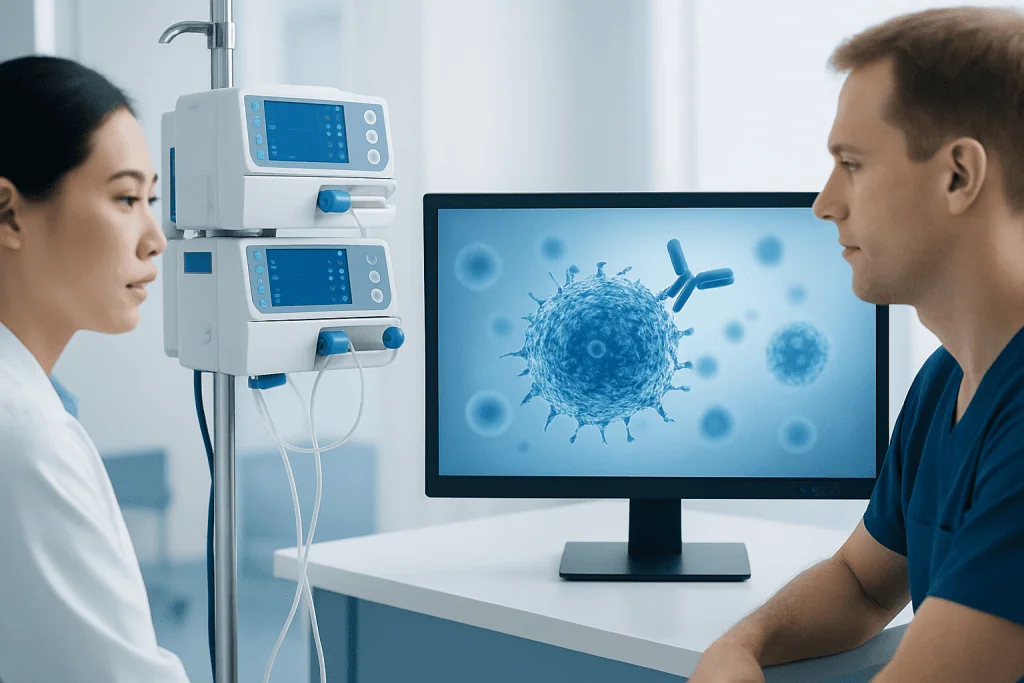
Cancer develops when cells acquire changes that allow them to grow outside the body’s usual controls. Some of these changes create signals that are especially important to the cancer. Targeted medicines are designed to interfere with those signals. For example, they may block a growth receptor, inhibit an enzyme involved in cell division, prevent the formation of new blood vessels that feed a tumor, or carry a treatment directly to cells with a particular surface marker.
There are several broad groups of targeted medicines. Small-molecule drugs are often taken by mouth and can enter cells to block internal signaling pathways. Monoclonal antibodies are usually given by infusion or injection and commonly attach to targets on the outside of cancer cells or in the bloodstream. Antibody-drug conjugates combine an antibody with an anticancer drug to deliver treatment more directly to cells carrying a chosen marker.
Some targeted treatments work best when a specific genetic alteration is present. Others are used when a protein is overproduced or when a pathway is active. A target may be present in different types of cancer, which is why testing can sometimes identify treatment options beyond those usually associated with the organ where cancer started.
Who may be a candidate for targeted therapy?

Candidacy begins with an accurate diagnosis and a review of the tumor tissue. A pathologist may test a biopsy or surgical specimen for proteins, genes, chromosomes, or other biomarkers. In some circumstances, blood-based testing, sometimes called a liquid biopsy, may help identify cancer-related genetic changes. The tests used depend on the cancer type and the available treatments.
The oncology team also considers the cancer stage, whether it has returned or spread, previous treatments, the pace of the disease, organ function, other health conditions, and personal treatment goals. Targeted therapy may be used before surgery, after surgery, during treatment for metastatic disease, or when another treatment has stopped working. It may be combined with chemotherapy, immunotherapy, hormone therapy, or radiation in selected situations.
A biomarker result does not automatically mean that a targeted medicine will be suitable or effective. Some changes are not yet linked to an approved therapy, while others may be associated with resistance. Discussing the results with a medical oncologist or molecular tumor board can help put testing findings into a practical treatment plan.
- Testing may be performed on tumor tissue, blood, or both.
- Some biomarkers are inherited, but many are changes found only in the cancer cells.
- Testing may need to be repeated if the cancer changes or progresses during treatment.
What happens during targeted therapy treatment?
Before treatment starts, the team confirms the diagnosis and biomarker findings, reviews medical history and current medicines, and completes baseline blood tests and scans. Depending on the drug, heart function, liver function, kidney function, blood pressure, eye health, or skin condition may also be checked. The clinician explains the purpose of treatment, how it will be given, likely side effects, and when to contact the care team.
Oral targeted drugs are usually taken at home on a regular schedule. It is important to take them exactly as prescribed and to ask before using supplements, over-the-counter medicines, or herbal products, because interactions can change how a cancer medicine works. Infused treatments are delivered at an outpatient infusion center, where staff monitor for reactions during and after the visit.
Follow-up is an active part of treatment rather than a final step. Blood tests, examinations, symptom checks, and imaging scans are scheduled to see whether the cancer is responding and whether the body is tolerating treatment. The doctor may continue the medicine, pause it, adjust the dose, prescribe supportive treatment, or recommend a different approach based on these findings.
Benefits, limits, and common risks
When a cancer depends on a target that can be effectively blocked, targeted therapy may shrink tumors, slow progression, reduce symptoms, or extend the time before a cancer grows. In some cancers, it can be a highly important part of treatment. However, the expected benefit is individual and depends on the target, cancer type, disease stage, and how the cancer responds over time.
Side effects vary considerably between medicines. Possible effects include tiredness, diarrhea, nausea, mouth soreness, skin rash or dryness, changes in hair or nails, high blood pressure, changes in liver or kidney blood tests, and low blood counts. Some medicines can cause more specific concerns, such as heart effects, lung inflammation, bleeding, blood clots, nerve problems, or eye changes. The oncology team will explain the risks relevant to the prescribed drug.
Cancer cells can sometimes develop resistance, meaning the treatment becomes less effective after an initial response. This does not mean care has failed. Repeat testing, a treatment combination, another targeted drug, a clinical trial, or a different treatment type may be considered. Prompt reporting of side effects can often allow them to be managed before they become more serious.
What is the success rate of targeted therapy for cancer?
There is no single success rate for targeted therapy for cancer treatment. Results differ greatly according to the cancer type, the exact biomarker, the medicine used, the stage of cancer, earlier treatments, and the person’s general health. In clinical studies, success may be reported as tumor response rate, time before cancer progression, disease control, or overall survival, and these measures are not interchangeable.
For some biomarker-defined cancers, targeted medicines can produce substantial and sometimes long-lasting responses. For others, the benefit may be more modest or temporary. An oncologist can explain the evidence for a particular medicine in the context of an individual diagnosis, including the realistic aim of treatment: cure, reducing the chance of recurrence, shrinking a tumor before another treatment, or controlling advanced disease.
Scans and other monitoring provide the clearest information about whether treatment is helping a particular person. A response is assessed over time, not from symptoms alone.
Can targeted therapy cure stage 4 cancer?
Targeted therapy does not usually cure stage 4 cancer, which means cancer has spread to distant parts of the body. However, it can sometimes control the disease for a meaningful period, shrink tumors, relieve cancer-related symptoms, and help people maintain daily activities. A small number of people may have unusually durable responses, but this cannot be predicted with certainty.
The goal in stage 4 disease is often long-term control while preserving quality of life. Treatment choices may change over time as the cancer responds, develops resistance, or causes new symptoms. Some people receive targeted therapy as a single medicine, while others receive it with other systemic treatments or local treatments such as surgery or radiation for selected areas.
It is reasonable to ask the oncology team what the intended goal is, how treatment response will be measured, and what options may be available if the current medicine stops working. Supportive and palliative care can also be provided alongside cancer treatment to help manage symptoms and practical concerns.
Is targeted chemo better than regular chemo?
The term “targeted chemo” is commonly used, but targeted therapy and chemotherapy are different categories of treatment. Neither is universally better. Chemotherapy remains highly effective for many cancers and may be the preferred option when there is no actionable target, when rapid disease control is needed, or when evidence supports chemotherapy as part of curative treatment.
Targeted therapy may be preferable when testing identifies a target for which an effective medicine is available. It can sometimes offer a more personalized approach and a different side-effect pattern. Yet targeted medicines can still cause significant adverse effects, and not all tumors respond. In certain cancers, combining targeted therapy with chemotherapy produces better results than either approach alone.
The best choice is based on cancer biology and the overall treatment plan rather than an assumption that one option is gentler or stronger. A medical oncologist can compare expected benefits, risks, scheduling, and monitoring for the available approaches.
Is targeted therapy hard on the body?
Targeted therapy can be easier for some people to tolerate than some chemotherapy regimens, but it can still be hard on the body. The type and severity of side effects depend on the medicine and the target it blocks. For example, treatments that affect growth pathways in skin may cause rash, while medicines affecting blood vessel signaling may raise blood pressure or increase bleeding risk.
Many side effects are manageable with early reporting, regular monitoring, supportive medicines, skin care, nutrition support, hydration, or changes to the treatment schedule. It is important not to stop a cancer medicine without speaking with the prescribing team unless urgent medical advice has been given.
People should contact their cancer team promptly for severe or persistent diarrhea or vomiting, fever, shortness of breath, chest pain, sudden swelling, unusual bleeding, a widespread or blistering rash, yellowing of the skin or eyes, confusion, or symptoms that are rapidly worsening.
When to seek medical care
Anyone with a known cancer diagnosis should contact their oncology team when new symptoms develop, treatment side effects interfere with eating, drinking, sleeping, or everyday activities, or there is concern about a missed dose or medication interaction. The team can advise whether home measures, an urgent clinic visit, blood tests, or hospital assessment are needed.
Emergency medical care is appropriate for severe breathing difficulty, chest pain, fainting, signs of a serious allergic reaction such as swelling of the face or throat, uncontrolled bleeding, seizure, sudden weakness on one side of the body, or a high fever during cancer treatment. These symptoms can have several causes and should be assessed without delay.
For people considering targeted treatment, care is best coordinated by specialists experienced in medical oncology, pathology, radiology, surgery, and supportive care. Acibadem International’s multidisciplinary specialists and JCI-accredited hospitals diagnose and treat cancer for international patients, with treatment plans guided by individual clinical findings.
Frequently asked questions
How is targeted therapy different from immunotherapy?
Targeted therapy acts on a specific cancer-related molecule, pathway, or marker. Immunotherapy works by helping the immune system recognize or attack cancer cells. Some people may receive both approaches, but they have different mechanisms, tests, and side-effect patterns.
How long does targeted therapy take to work?
The timing varies by cancer type, medicine, and the individual cancer response. Some symptoms may improve within days or weeks, while imaging scans are usually used over time to assess whether tumors are shrinking or remaining controlled. The oncology team sets the monitoring schedule.
Can targeted therapy be taken at home?
Many targeted medicines are tablets or capsules taken at home, while others are given by infusion or injection in a clinic. Oral treatment still requires regular follow-up, blood tests, and communication with the oncology team. It should be taken only as prescribed.
Will targeted therapy cause hair loss?
Hair loss is less common with many targeted therapies than with some chemotherapy drugs, but it can occur with certain medicines or treatment combinations. Some people notice hair thinning, changes in texture, or scalp and skin effects instead. The oncology team can explain what is expected with a specific treatment.
What happens if targeted therapy stops working?
Cancer can sometimes become resistant to a targeted medicine. The care team may arrange new scans, repeat biomarker testing, or a biopsy to understand the change. Depending on the results, options may include another targeted therapy, a combination treatment, chemotherapy, immunotherapy, radiation, surgery, or a clinical trial.
Can supplements be used during targeted therapy?
Some supplements and herbal products can interact with targeted cancer medicines or increase side effects. People should tell their oncologist and pharmacist about all prescription medicines, nonprescription products, vitamins, and supplements before starting or stopping them. A clinician can advise what is safe for the individual treatment plan.
References
- National Cancer Institute
- American Cancer Society
- European Society for Medical Oncology
- National Comprehensive Cancer Network
- World Health Organization
This article is for general information only and is not a substitute for professional medical advice. Please consult a qualified doctor about your individual situation.
Oncology care in Turkey — second opinion and treatment plan
JCI-accredited · board-certified surgeons · reply within 24h
Add us as a Preferred Source to see more of our trusted health content across Google Search, AI Overviews and Discover.
Check your numbers in seconds
BMI, calories, due date, blood pressure and 30+ more clinical calculators — free, instant, doctor-reviewed ranges.