Status Epilepticus Treatment: How It Works, Results and What to Expect

Status epilepticus is a medical emergency, usually defined as a seizure lasting 5 minutes or repeated seizures without recovery of awareness between them. Treatment begins immediately with seizure-stopping medicine, followed by longer-acting anti-seizure medication and close monitoring.
Key Takeaways
- Status epilepticus is a medical emergency, usually defined as a seizure lasting 5 minutes or repeated seizures without recovery of awareness between them.
- Treatment begins immediately with seizure-stopping medicine, followed by longer-acting anti-seizure medication and close monitoring.
- Doctors investigate possible triggers such as missed medication, stroke, infection, metabolic changes, alcohol or drug withdrawal, or brain injury.
- Some people recover fully, while others need rehabilitation or ongoing epilepsy care depending on the cause, seizure duration and overall health.
- Call emergency services immediately for a seizure lasting 5 minutes, repeated seizures, breathing difficulty, injury, pregnancy, diabetes, or a first seizure.
Status epilepticus treatment is emergency care designed to stop ongoing or repeated seizures quickly, support breathing and circulation, and treat the underlying trigger. Outcomes vary, but prompt hospital treatment can reduce the risk of complications and help guide recovery.
Overview: how status epilepticus treatment works
Status epilepticus treatment is urgent hospital care for a seizure that does not stop promptly or for repeated seizures when the person does not regain their usual level of awareness between episodes. In practical terms, emergency treatment should begin when a convulsive seizure lasts 5 minutes or longer. The immediate aims are to stop seizure activity, maintain oxygenation and circulation, prevent injury, and identify the reason it happened.
Treatment is often delivered in stages because some seizures stop with the first medication while others need additional medicines or intensive care. The care team works in parallel: one group focuses on stabilizing the patient and stopping seizures, while another checks blood sugar, medication history, possible infection, brain injury, stroke, and other causes. Continuous brain-wave monitoring may be needed because seizure activity can sometimes continue without obvious shaking.
Status epilepticus can affect people with known epilepsy, but it can also be the first sign of a neurological or medical problem. It is different from a brief seizure that ends on its own and is followed by a gradual recovery. Emergency assessment is important even if the visible movements have stopped, particularly when the person remains confused, unresponsive, or unusually sleepy.
Who needs urgent treatment and what happens first
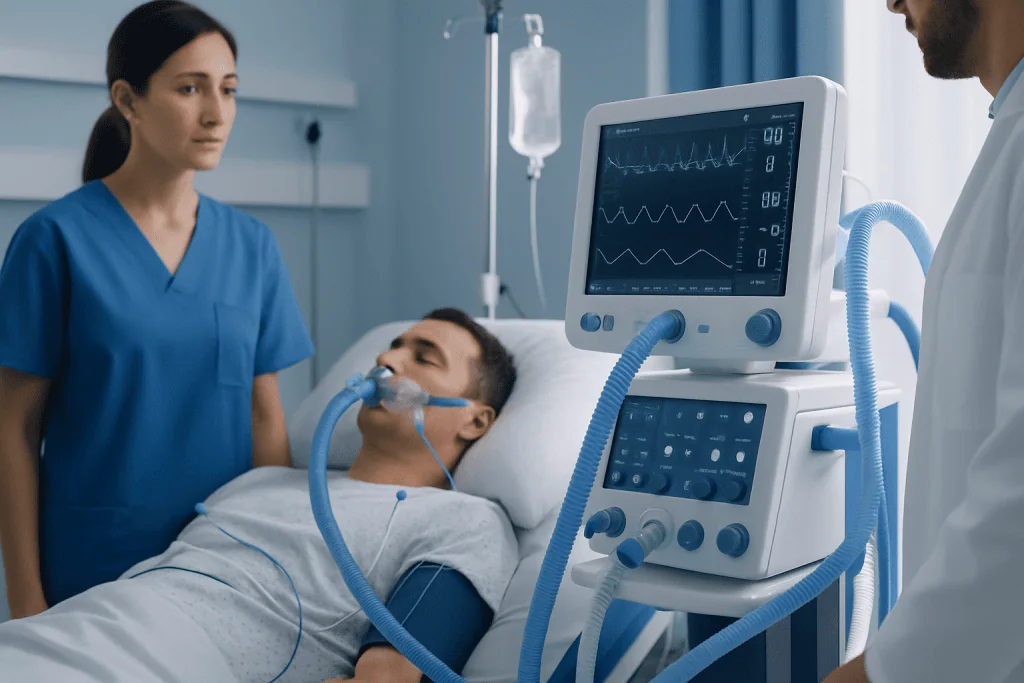
Anyone suspected of having status epilepticus needs emergency evaluation. A person may be having generalized convulsive status epilepticus, with stiffening and rhythmic jerking, or a less visible form such as focal or non-convulsive status epilepticus. The latter may cause persistent confusion, staring, altered behavior, speech difficulty, or reduced responsiveness and may require an electroencephalogram (EEG) to confirm it.
First responders and emergency clinicians prioritize airway, breathing and circulation. They position the person safely, provide oxygen when needed, check vital signs and blood glucose, obtain intravenous access when possible, and look for injuries or signs of an underlying illness. If vomiting or reduced consciousness creates a risk of aspiration, airway protection may be necessary.
People with epilepsy may have an individualized seizure action plan, including a prescribed rescue medicine for prolonged seizures. Family members or caregivers should follow that plan only as instructed by the treating clinician. Rescue medication does not replace emergency evaluation when a seizure continues, repeats without recovery, or is associated with breathing concerns.
- Seizure lasting 5 minutes or more
- Repeated seizures without return to usual awareness
- A first-ever seizure or a seizure after head trauma
- Seizure during pregnancy, in a person with diabetes, or with fever and severe illness
- Breathing difficulty, bluish color, significant injury, or failure to wake as expected
Step-by-step: medicines, monitoring and intensive care

The first treatment step is usually a fast-acting benzodiazepine medicine, given by a route that can be used quickly in an emergency. This medicine may stop the seizure rapidly, but its effect can wear off. For this reason, clinicians usually give a longer-acting anti-seizure medicine soon afterward to reduce the chance of seizure recurrence.
If seizures continue, the team may use another anti-seizure medicine and involve neurology and critical-care specialists. Blood tests can assess glucose, salts and minerals, kidney and liver function, medication levels when relevant, and signs of infection or toxic exposure. A brain scan may be needed to look for bleeding, stroke, a structural brain problem, or injury. Lumbar puncture may be considered when infection or inflammation of the brain is suspected.
When seizures persist despite initial medications, the condition is called refractory status epilepticus. It may require admission to an intensive care unit, anesthetic medicines, assisted ventilation, and continuous EEG monitoring. These measures allow clinicians to identify ongoing electrical seizures and adjust treatment safely. The underlying trigger must be treated at the same time, such as correcting low glucose, managing infection, treating stroke, or addressing medication withdrawal.
Specialist follow-up also considers the person’s longer-term seizure risk and whether they may have an underlying condition such as epilepsy. Medication choices are individualized according to seizure type, age, pregnancy status, other health conditions, and possible drug interactions.
Benefits, risks and recovery timeline
The main benefit of rapid treatment is stopping seizure activity before it causes further physical stress and neurological harm. Prompt care also helps clinicians detect serious causes that need immediate treatment. The expected result is that seizures end, breathing and alertness stabilize, and a plan is made to prevent recurrence; however, the timeline differs widely between individuals.
After treatment, it is common to have a post-seizure period of sleepiness, confusion, headache, muscle soreness, or temporary memory difficulty. This can last minutes to hours and sometimes longer after a severe or prolonged episode. People who received sedating medicines may need observation until breathing, coordination, and alertness are safely recovered.
Anti-seizure and sedating medicines can cause drowsiness, low blood pressure, slowed breathing, agitation, or allergic reactions, so they are given with appropriate monitoring. More intensive treatment may involve risks related to ventilation, infections, blood clots, or prolonged hospitalization. Clinicians weigh these risks against the serious risks of uncontrolled seizure activity.
Recovery can include review by neurology, medication education, and advice on sleep, alcohol, missed doses, and safety. Some patients benefit from rehabilitation for mobility, speech, thinking, or emotional wellbeing, especially when status epilepticus was linked to stroke, infection, injury, or a prolonged intensive-care stay.
Can you fully recover from status epilepticus?
Yes, many people can fully recover from status epilepticus, especially when it is treated quickly and the cause is reversible. For example, a seizure related to missed anti-seizure medication, a correctable metabolic problem, or a short-lived illness may resolve without lasting effects once the trigger is addressed.
Recovery is less predictable when seizures are very prolonged, difficult to control, or caused by a major brain condition such as stroke, severe infection, lack of oxygen, or traumatic brain injury. Age, general health, prior neurological function, and the type of status epilepticus also influence outcome. The treating team can give the most meaningful outlook after the cause and response to treatment are clearer.
Some people have temporary difficulties with memory, concentration, mood, speech, or physical strength during recovery. Follow-up appointments are important to review seizure control, adjust medications if necessary, and arrange rehabilitation or neuropsychological support when appropriate.
How long can a person be in status epilepticus?
Status epilepticus is treated as an emergency once a convulsive seizure lasts 5 minutes or there are repeated seizures without recovery in between. It can last longer if it is not stopped, and the longer seizure activity continues, the more difficult it may become to control. This is why emergency teams begin treatment before waiting to see whether a prolonged seizure will end by itself.
The duration is not always obvious to observers. A person may stop having visible convulsions but remain confused or unresponsive because of a post-seizure state, sedating treatment, or ongoing non-convulsive seizure activity. EEG monitoring can help distinguish these possibilities in hospital.
There is no safe time to wait at home once a seizure reaches the 5-minute mark. Caregivers should note when the seizure started if possible, avoid putting anything in the person’s mouth, protect them from nearby hazards, and call local emergency services.
What happens to the brain after status epilepticus?
During ongoing seizures, groups of brain cells are firing abnormally and repeatedly. This increases the brain’s demand for oxygen and energy and can affect normal networks involved in awareness, memory, movement, and behavior. The body may also be under considerable stress from changes in breathing, temperature, blood pressure, and muscle activity.
After the seizure stops, the brain commonly needs time to recover. Temporary confusion, sleepiness, headache, slowed thinking, memory gaps, or weakness on one side of the body can occur. A brief period of weakness after a seizure is sometimes called Todd’s paralysis and should still be assessed urgently, because stroke can produce similar symptoms.
Not every episode causes permanent brain injury. The risk of lasting effects is higher with prolonged or refractory status epilepticus, severe underlying disease, or complications such as low oxygen. Neurologists use the clinical examination, EEG, imaging, and recovery pattern to assess whether further evaluation and support are needed.
How serious is status epilepticus and when to seek medical care
Status epilepticus is serious because it may affect breathing and circulation, lead to injury, and sometimes signal a life-threatening cause. It should always be managed as a medical emergency. Early treatment is associated with a better chance of controlling seizures and reducing complications.
Emergency services should be contacted immediately for a seizure lasting 5 minutes or longer, any cluster of seizures without full recovery, or a seizure in someone without a known diagnosis of epilepsy. Urgent care is also needed for seizures with breathing problems, a significant injury, pregnancy, diabetes, suspected poisoning, fever with severe illness, or new neurological symptoms.
Until help arrives, observers should stay with the person, gently guide them away from hazards, cushion the head if possible, loosen tight clothing around the neck, and place them on their side once it is safe to do so. They should not restrain movements, give food or drink, or place objects or fingers in the person’s mouth. Acibadem International’s multidisciplinary specialists and JCI-accredited hospitals can assess seizure emergencies and coordinate neurological care for international patients.
Frequently asked questions
What is the first-line status epilepticus treatment?
The first-line treatment is usually a fast-acting benzodiazepine medicine given promptly by trained healthcare professionals or according to a prescribed rescue plan. A longer-acting anti-seizure medicine is commonly given soon afterward to maintain seizure control. The specific medicines and route depend on the setting and the individual patient.
Can status epilepticus happen without shaking?
Yes. Non-convulsive status epilepticus may present with persistent confusion, staring, unusual behavior, reduced awareness, or failure to return to normal after a visible seizure. An EEG is often needed to detect and monitor this form of seizure activity.
What causes status epilepticus?
Possible causes include missed anti-seizure medication, a new epilepsy diagnosis, stroke, brain infection, head injury, low blood sugar, abnormal electrolyte levels, alcohol or drug withdrawal, and toxic exposures. In some cases, the cause is not identified immediately. Hospital testing helps guide treatment.
Can status epilepticus be prevented?
Not every episode can be prevented, but taking prescribed anti-seizure medicine consistently and discussing side effects or access problems with a clinician can reduce risk for many people with epilepsy. Adequate sleep, avoiding known personal triggers, and following an individualized seizure action plan may also help. People should not stop anti-seizure medication suddenly unless a clinician advises it.
Will a person need intensive care after status epilepticus?
Not always. Intensive care is more likely when seizures do not respond to initial treatment, when breathing support is needed, or when there is a serious underlying condition. People whose seizures stop quickly may still require observation and neurological evaluation.
What should family members do during a prolonged seizure?
They should time the seizure, keep the person away from hazards, protect the head, and call emergency services when it reaches 5 minutes or repeats without recovery. Nothing should be placed in the person’s mouth, and the person should not be restrained. If a prescribed rescue medicine is available, it should be used exactly as directed in the person’s seizure plan.
References
- World Health Organization
- International League Against Epilepsy
- American Epilepsy Society
- National Institute of Neurological Disorders and Stroke
- Epilepsy Foundation
This article is for general information only and is not a substitute for professional medical advice. Please consult a qualified doctor about your individual situation.
Explore treatments in Turkey — costs, top hospitals & a free quote
JCI-accredited · board-certified surgeons · reply within 24h
Add us as a Preferred Source to see more of our trusted health content across Google Search, AI Overviews and Discover.