Gi Bleeding Treatment: How It Works, Results and What to Expect

GI bleeding can occur anywhere from the esophagus to the rectum and may be visible or hidden. Emergency evaluation is important for vomiting blood, black stools, red blood in stool, fainting, severe weakness or signs of shock.
Key Takeaways
- GI bleeding can occur anywhere from the esophagus to the rectum and may be visible or hidden.
- Emergency evaluation is important for vomiting blood, black stools, red blood in stool, fainting, severe weakness or signs of shock.
- Endoscopy is often used to diagnose and treat bleeding in the upper digestive tract during the same procedure.
- Recovery and hospital stay depend on the cause, amount of blood loss, overall health and whether bleeding returns.
- Blood tests can identify anemia and help clinicians assess the effects of blood loss, but they do not always pinpoint the bleeding source.
GI bleeding treatment focuses first on stabilizing the person, locating the source of bleeding and stopping it safely. Care may involve medication, endoscopic treatment, interventional radiology or, less commonly, surgery, with the approach tailored to the cause and severity.
GI Bleeding Treatment: How It Works
GI bleeding treatment is designed to stabilize circulation, identify where bleeding is coming from and stop it while addressing the underlying condition. Gastrointestinal (GI) bleeding means bleeding anywhere along the digestive tract, including the esophagus, stomach, small intestine, colon, rectum and anus. It is a symptom rather than a diagnosis, so treatment depends on the source, speed and severity of blood loss.
Some bleeding is obvious, such as vomit containing blood or material that resembles coffee grounds, black tar-like stool, or bright red blood from the rectum. Other bleeding is slow and not visible, but may lead to iron-deficiency anemia, tiredness, shortness of breath or light-headedness. A care team may use blood tests, endoscopy, imaging and other investigations to determine the cause.
When bleeding is significant, initial care may include intravenous fluids, close monitoring and blood products when clinically needed. Medicines may reduce stomach acid, help correct abnormal clotting, or treat a specific cause. In many cases, endoscopic GI bleeding treatment can both locate the bleeding site and control it without open surgery.
What Causes GI Bleeding and Who May Need Treatment?
GI bleeding has many possible causes. Upper GI bleeding, arising above the beginning of the small intestine, may result from stomach or duodenal ulcers, inflammation of the stomach lining, tears near the lower esophagus after forceful vomiting, enlarged veins in the esophagus or stomach, or tumors. Lower GI bleeding may be related to diverticular disease, hemorrhoids, anal fissures, inflammation, polyps, blood-vessel abnormalities, or colorectal cancer.
A person may need urgent treatment if bleeding is ongoing, heavy, associated with a fall in blood pressure or hemoglobin level, or causing symptoms such as fainting, confusion, chest discomfort or severe weakness. Older age, liver disease, kidney disease, heart disease and use of medicines that affect bleeding can increase the clinical risk and may influence monitoring and treatment decisions.
Anti-inflammatory pain relievers such as ibuprofen or naproxen, aspirin and anticoagulant or antiplatelet medicines can contribute to bleeding in some people. These medicines should not be stopped independently, especially when prescribed to prevent stroke, blood clots or heart problems. The clinician treating the bleeding will weigh bleeding control against the risks of interrupting essential medication.
Not every episode requires the same level of intervention. Minor bleeding from a clearly identified local cause may be managed differently from bleeding caused by an ulcer or a blood vessel deep within the bowel. Prompt assessment helps distinguish these situations safely.
How Doctors Diagnose the Source of Bleeding

Assessment begins with symptoms, medical history and a physical examination. Clinicians ask about stool color, vomiting, abdominal pain, recent illness, alcohol use, prior ulcers or bowel disease, and all medicines and supplements. They also assess heart rate, blood pressure, oxygen level and signs of dehydration or anemia.
Bloodwork commonly includes a complete blood count to assess hemoglobin and red blood cells, tests of kidney and liver function, and clotting studies when appropriate. Blood type and crossmatching may be performed if transfusion could be needed. A normal early hemoglobin result does not always exclude acute blood loss, because laboratory changes can take time to develop.
For suspected upper GI bleeding, an upper endoscopy allows a gastroenterologist to inspect the esophagus, stomach and first part of the small intestine. Colonoscopy may be used for lower GI bleeding once the person is stable and the bowel can be prepared. CT angiography, catheter angiography, capsule endoscopy or specialized small-bowel procedures may be considered when standard tests do not reveal the source.
Conditions that may be investigated in this setting include peptic ulcer disease and diverticular disease. Identifying the reason for the bleed is important because durable treatment includes reducing the chance of recurrence.
The GI Bleeding Treatment Procedure: Step by Step
In an emergency setting, treatment starts with stabilization. The team secures intravenous access, monitors vital signs, takes blood samples and gives fluids or blood products if indicated. Depending on the suspected source, medication may be started before an endoscopy, such as acid-suppressing therapy for a possible ulcer-related upper GI bleed.
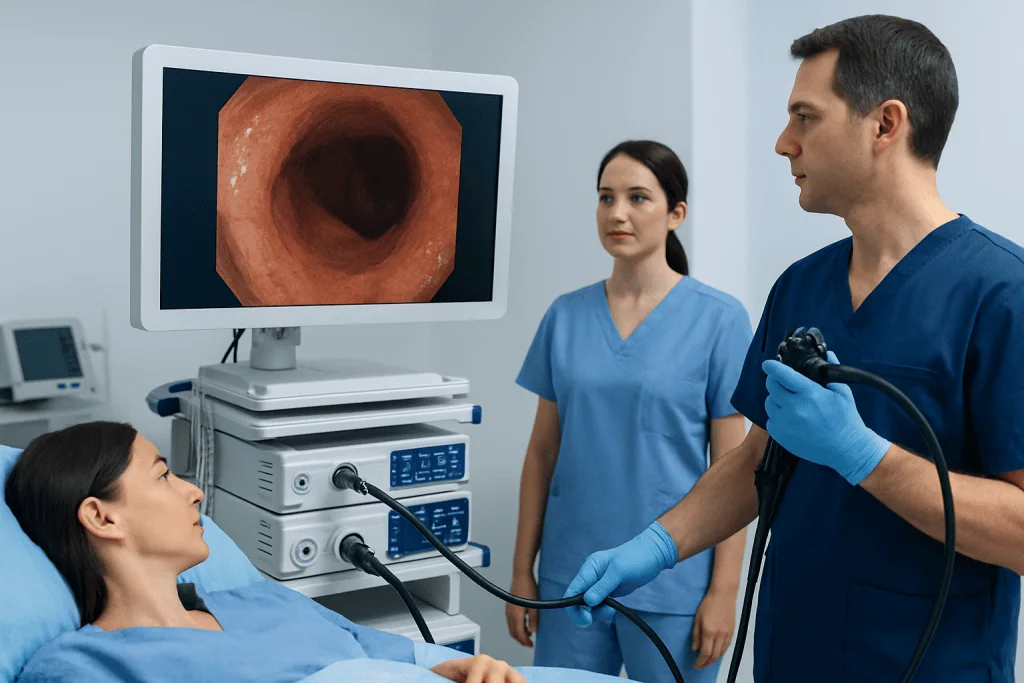
During endoscopy, the patient is usually given sedation or anesthesia appropriate to their condition. For an upper endoscopy, a thin flexible camera passes through the mouth to inspect the upper digestive tract. For colonoscopy, the camera passes gently through the rectum to examine the large bowel. The procedure generally allows direct visualization of a bleeding point.
If active bleeding or a high-risk lesion is found, the specialist may treat it with injection therapy, thermal treatment, clips, a banding device for certain enlarged veins, or topical hemostatic material. The exact technique is chosen according to the location and cause. Tissue samples may be taken if an abnormal area needs further evaluation.
If endoscopy does not control bleeding or the location cannot be reached, interventional radiology may use angiography to identify and block the bleeding vessel. interventional radiology procedures can be valuable for selected patients. Surgery is generally reserved for severe, persistent or recurrent bleeding when less invasive methods are not suitable or have not succeeded.
Benefits, Risks and Recovery Timeline
The main benefit of timely GI bleeding treatment is control of blood loss and prevention of complications from anemia or low blood pressure. Endoscopic therapy can often avoid surgery while enabling the care team to diagnose the cause. Treating the underlying problem, such as an ulcer, inflammation or abnormal blood vessel, may also lower the likelihood of future bleeding.
All procedures have potential risks. Endoscopy is generally well tolerated, but possible complications include a reaction to sedation, aspiration, perforation, infection or recurrent bleeding; serious complications are uncommon. Angiography and embolization may involve contrast-related effects, injury to blood vessels or reduced blood supply to nearby tissue. The clinical team discusses relevant risks in the context of the person’s condition.
Recovery varies widely. After a straightforward diagnostic or therapeutic endoscopy, some people go home the same day or after short observation if they are stable and no longer bleeding. Others require admission for monitoring, repeat blood tests, intravenous medicines or further treatment. A person should follow discharge instructions about diet, medication, activity and follow-up testing.
After treatment, new black stools may reflect older blood clearing from the bowel for a short time, but fresh red blood, recurrent vomiting of blood, worsening dizziness or fainting needs urgent reassessment. The treating team may schedule repeat endoscopy or follow-up to confirm healing and manage contributing conditions.
When to Seek Medical Care
Emergency medical care is needed for vomiting blood, coffee-ground vomit, black tarry stools, a large amount of red blood in the stool, fainting, confusion, severe weakness, shortness of breath, chest pain or a fast heartbeat. These signs can indicate substantial blood loss or reduced circulation and should not be managed at home.
Medical advice should also be sought promptly for persistent rectal bleeding, unexplained dark stools, repeated abdominal pain with blood in stool, or symptoms of anemia such as unusual fatigue, paleness, dizziness or reduced exercise tolerance. Even small amounts of bleeding deserve evaluation when they recur or occur with weight loss, change in bowel habits or a family history of digestive cancers.
Until assessed, a person should avoid alcohol and should not take non-prescribed anti-inflammatory pain medicines that may worsen bleeding. Those taking prescribed blood thinners, aspirin or antiplatelet medicines should contact the clinician who manages these medications or seek urgent care rather than making unsupervised changes.
How Long Can You Survive with GI Bleeding?
There is no safe or predictable time frame for surviving GI bleeding because the amount and speed of blood loss, the bleeding source and a person’s overall health vary greatly. A rapid, heavy bleed can become life-threatening within a short period, while slow hidden bleeding may develop over weeks or months and cause anemia.
Symptoms do not reliably show how serious bleeding is. Someone may initially feel only tired or dizzy, while others may become unwell quickly. Any suspected GI bleed, especially with black stool, vomiting blood, red rectal bleeding, fainting or weakness, requires timely medical assessment.
With prompt diagnosis and appropriate treatment, many causes of GI bleeding can be controlled. Early care offers the best opportunity to stabilize blood loss and address the cause before complications develop.
Can You Recover from a GI Bleed?
Yes. Many people recover fully from a GI bleed once the bleeding is controlled and the underlying cause is treated. Recovery may involve healing an ulcer, treating an infection, adjusting a medicine under medical guidance, managing liver disease, removing a polyp or treating another identified digestive condition.
Some people need iron replacement or time for their blood count and energy level to return to normal after blood loss. Follow-up testing may be recommended to confirm that anemia is improving and that the source of bleeding has been adequately addressed. Recurrence risk depends on the cause, medical conditions and continued exposure to risk factors.
For international patients, Acibadem International’s multidisciplinary specialists and JCI-accredited hospitals can assess GI bleeding and coordinate gastroenterology, interventional radiology, surgical and supportive care when needed.
How Long Is a Hospital Stay for a GI Bleed?
Hospital stay for a GI bleed can range from brief observation to several days or longer. People who are stable, have low-risk findings, and do not have ongoing bleeding may be discharged after assessment or endoscopic care with a clear follow-up plan. Others need admission because of anemia, recurrent bleeding, significant medical conditions or the need for additional procedures.
The care team considers blood pressure, pulse, blood test results, endoscopy findings, medication use and home support when deciding whether discharge is safe. A longer stay may be needed for intensive monitoring, transfusion, radiology treatment, surgery or complications related to the underlying illness.
Before leaving hospital, patients should understand which symptoms require emergency care, when to restart or adjust prescribed medicines, and when follow-up is needed. Individual recovery plans are more useful than a fixed expected length of stay.
Would a GI Bleed Show Up in Bloodwork?
Bloodwork can show the effects of GI bleeding, particularly a low hemoglobin or hematocrit level that suggests anemia. Tests may also assess iron stores, kidney and liver function, platelet levels and how well blood is clotting. These results help clinicians judge severity and plan treatment.
However, blood tests alone usually cannot identify exactly where bleeding is occurring. They can also be normal early in a sudden bleed, before fluid shifts make the drop in red blood cells apparent. For this reason, clinicians interpret results alongside symptoms, vital signs and diagnostic procedures such as endoscopy or imaging.
Slow, unnoticed blood loss may first appear as iron-deficiency anemia on routine testing. When there is no obvious explanation, clinicians may recommend evaluation of the digestive tract to look for a potential source.
Frequently asked questions
What is the first treatment for a GI bleed?
The first priority is to assess stability and support circulation with monitoring, intravenous access and fluids or blood products when needed. Clinicians then use symptoms, blood tests and procedures such as endoscopy to find and control the bleeding source. Medication may be started early when a particular cause is suspected.
Can GI bleeding stop on its own?
Some minor bleeding episodes can stop temporarily, but this does not confirm that the cause is harmless or resolved. Bleeding may recur, and slow bleeding can still lead to anemia. A clinician should evaluate any suspected GI bleeding, especially if stool is black, blood is visible or symptoms of weakness occur.
Is endoscopy painful for GI bleeding treatment?
Endoscopy is usually performed with sedation, so most patients are comfortable and have little or no memory of the procedure. A mild sore throat, bloating or cramping can occur afterward, depending on the type of examination. The team monitors the patient during recovery from sedation.
Can blood thinners cause a GI bleed?
Anticoagulants and antiplatelet medicines can increase the likelihood or severity of bleeding, especially if an ulcer or another bleeding source is present. They may still be essential for preventing blood clots, stroke or heart events. Patients should not stop them without urgent advice from the prescribing clinician or the team treating the bleeding.
What foods should be avoided after a GI bleed?
Diet advice depends on the cause of bleeding and the treatment received. A clinician may advise avoiding alcohol and medications that irritate the stomach, while recommending a gradual return to usual foods after an acute episode. People with anemia may also receive individualized guidance on iron intake or supplements.
Can stress cause GI bleeding?
Everyday emotional stress is not usually a direct cause of GI bleeding. Severe physical stress during critical illness can contribute to stomach lining injury, and stress may worsen digestive symptoms or influence behaviors that affect risk. A medical evaluation is still needed to identify the actual bleeding source.
References
- National Institute of Diabetes and Digestive and Kidney Diseases
- American College of Gastroenterology
- National Health Service
- Mayo Clinic
- Merck Manual Consumer Version
This article is for general information only and is not a substitute for professional medical advice. Please consult a qualified doctor about your individual situation.
Persistent digestive symptoms? Get evaluated in Turkey
JCI-accredited · board-certified surgeons · reply within 24h
Add us as a Preferred Source to see more of our trusted health content across Google Search, AI Overviews and Discover.
Check your numbers in seconds
BMI, calories, due date, blood pressure and 30+ more clinical calculators — free, instant, doctor-reviewed ranges.

More from the Health Library



Related Specialists

Dr. Aytaç Çalışkan
Cardiovascular Surgery
Prof. Dr. Selami Çakmak
Orthopedic Surgery & Traumatology
Dr. Tülay Tekin
Acibadem Life Clinical Service
Assoc. Prof. Dr. Serap Şahin Önder
Otorhinolaryngology