Testosterone Levels: Normal Ranges, High and Low Results Explained

Normal testosterone levels depend on sex, age, pubertal stage, and the laboratory’s reference range. In adults assigned male at birth, testing is often done in the morning because testosterone follows a daily rhythm.
Key Takeaways
- Normal testosterone levels depend on sex, age, pubertal stage, and the laboratory’s reference range.
- In adults assigned male at birth, testing is often done in the morning because testosterone follows a daily rhythm.
- Low or high testosterone becomes medically meaningful when symptoms, repeat blood tests, and related hormone tests support the finding.
- Causes can include pituitary disease, testicular or ovarian conditions, adrenal disorders, obesity, chronic illness, and certain medicines.
- Treatment focuses on the underlying cause and is not based on one number alone.
Medically reviewed by the Acıbadem International Medical Board — July 24, 2026
Testosterone levels are interpreted by looking at the number first, then the person’s sex, age, time of testing, symptoms, and whether the result is confirmed on repeat testing. A single low or high value does not always mean disease, but persistent abnormalities may point to hormonal, reproductive, adrenal, or medication-related causes.
Overview: what testosterone levels mean
Testosterone levels are blood test results that show how much testosterone is circulating in the body. Testosterone is a hormone made mainly in the testes in males, the ovaries in females, and in smaller amounts by the adrenal glands in both sexes. It helps regulate sexual development, fertility, muscle and bone health, red blood cell production, mood, and energy.
The most useful way to read testosterone results is to start with the number, then place it in context. That context includes sex, age, pubertal stage, time of day, symptoms, medicines, and the laboratory’s own reference range. Because normal values differ across laboratories and testing methods, the range printed on the report is usually the first guide.
Doctors may measure total testosterone, free testosterone, or both. Total testosterone includes hormone that is attached to proteins in the blood as well as the small unbound portion. Free testosterone refers to the unbound fraction and may be helpful when protein levels are altered, such as in obesity, aging, liver disease, thyroid disorders, or with certain medications.
A result outside the reference range does not automatically mean a serious condition. Temporary illness, poor sleep, intense exercise, weight change, medications, and even the timing of the blood draw can affect the result. For this reason, an unexpected result is often repeated before a diagnosis is made.
Normal ranges: the number comes first
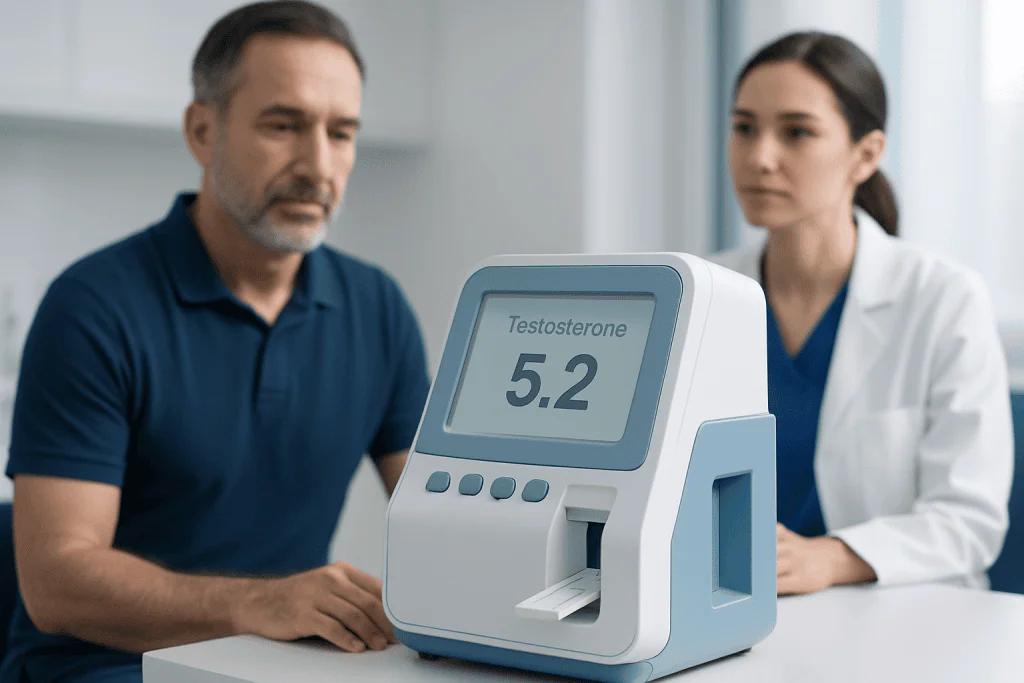
Testosterone ranges are reported in different units and vary somewhat by laboratory, but adult total testosterone is generally much higher in men than in women. In adult men, many laboratories use a broad total testosterone reference range of roughly 300 to 1,000 ng/dL, though some use slightly different limits. In adult women, total testosterone is normally much lower, often around 15 to 70 ng/dL, again depending on the lab and method used.
Children and adolescents have different expected values that change with age and puberty. A result that is normal in a young child would be abnormal in an adult, and a result that is expected during puberty may not be expected later in life. For this reason, pediatric testosterone results are always interpreted using age- and sex-specific ranges.
Testosterone also varies during the day. In younger and middle-aged adult men, levels are usually highest in the early morning and gradually fall later in the day. That is why doctors often prefer a morning sample, especially when evaluating possible low testosterone. In women, the timing is usually less tightly linked to a morning peak, but menstrual cycle stage, hormonal contraception, and menopause can still influence interpretation.
Equally important is whether a result matches the person’s symptoms and health history. A borderline low number without symptoms may not require treatment, while a persistently low result with sexual symptoms, infertility, or delayed puberty may need a full endocrine evaluation.
How testosterone levels vary by age, sex, and life stage

Sex and age are central to interpretation. In males, testosterone rises during puberty, peaks in early adulthood, and tends to decline gradually with age. In females, levels are lower throughout life and may decrease further with aging and after menopause. These shifts are normal, but symptoms and the degree of change help determine whether further assessment is needed.
Life stage matters as much as the absolute value. In a teenage boy, low testosterone may suggest delayed puberty, while in an older man it may reflect aging, obesity, chronic disease, or a problem involving the pituitary gland or testes. In women, higher-than-expected testosterone can be associated with menstrual irregularity, acne, excess hair growth, or fertility concerns, whereas low testosterone is less commonly used as a stand-alone diagnosis.
Protein levels in the blood can change how much testosterone is available to tissues. Sex hormone-binding globulin, often called SHBG, can rise or fall with age, thyroid disease, liver disease, obesity, insulin resistance, and medication use. When SHBG is unusually high or low, total testosterone can appear misleading, and free testosterone or calculated free testosterone may be more informative.
Pregnancy, menopause, athletic training, sleep quality, and body composition can all influence results. For that reason, hormone testing is rarely interpreted in isolation. Doctors usually look at the full clinical picture and may compare testosterone with other hormone tests such as luteinizing hormone, follicle-stimulating hormone, estradiol, prolactin, thyroid tests, or adrenal hormones.
When low or high testosterone is medically meaningful
A low or high result matters most when it is both persistent and relevant to symptoms. In adult men, low testosterone may be medically meaningful when two separate morning tests are low and the person has symptoms such as reduced sexual desire, erectile dysfunction, fatigue, loss of body hair, decreased muscle mass, infertility, low mood, or reduced bone density. Low values can reflect a problem in the testes, called primary hypogonadism, or a problem in the pituitary or hypothalamus, called secondary hypogonadism.
In women, higher testosterone is often more clinically important than lower testosterone. Elevated levels may be associated with acne, increased facial or body hair, scalp hair thinning, irregular or absent periods, or fertility problems. One common reason is polycystic ovary syndrome, though adrenal conditions, certain medications, and rarely androgen-secreting tumors may also be considered depending on the level and the pace of symptom development.
Very high testosterone can have different implications depending on the person and the setting. In men, unusually high results may occur with testosterone therapy, anabolic steroid use, or less commonly certain adrenal or testicular conditions. In women and children, clearly elevated testosterone often prompts additional evaluation because it may affect puberty, menstrual function, hair growth, skin changes, and reproductive health.
The degree of abnormality also matters. Mild changes are more often linked to common issues such as obesity, stress, sleep problems, or medication effects, while marked abnormalities are more likely to trigger a broader work-up. Doctors also consider whether symptoms developed gradually or suddenly, since rapid changes may suggest a different cause than long-standing symptoms.
Causes and risk factors behind abnormal results
Low testosterone in men can be linked to aging, obesity, obstructive sleep apnea, poorly controlled diabetes, chronic kidney or liver disease, significant stress, and acute illness. Medicines such as opioids, glucocorticoids, some hormone therapies, and certain psychiatric medications may also lower levels. Damage to the testes from infection, injury, chemotherapy, radiation, or inherited conditions can reduce testosterone production as well.
Problems in the pituitary gland or hypothalamus are another important cause of low testosterone. These areas of the brain control hormone signals to the testes. Conditions affecting them can lead to low testosterone together with low or inappropriately normal luteinizing hormone and follicle-stimulating hormone. When symptoms suggest this pattern, doctors may investigate for pituitary disease and may consider imaging.
High testosterone in women is commonly related to conditions that increase androgen production or change hormone balance. These include PCOS, some adrenal disorders, insulin resistance, and exposure to androgen-containing medications or supplements. If there are signs such as rapid-onset hair growth, voice deepening, or severe menstrual change, testing may need to be more urgent.
High testosterone in men is often due to prescribed testosterone treatment or anabolic steroid use, but natural overproduction is less common. Doctors may also think about related endocrine conditions, including Cushing’s syndrome or adrenal disease, especially if there are changes in weight, blood pressure, glucose, skin, or mood. In both sexes, a careful review of supplements is important because some products marketed for performance or vitality may alter hormone levels.
How doctors diagnose the cause
Diagnosis usually starts with a discussion of symptoms, medical history, medicines, sleep, weight changes, exercise patterns, fertility goals, and puberty or menstrual history when relevant. The physical examination may look for body hair pattern, breast tissue changes, testicular size, acne, blood pressure, body composition, and signs of thyroid, pituitary, or adrenal disease.
Because testosterone changes over time, repeat testing is often necessary. In men being evaluated for possible low testosterone, doctors commonly repeat a morning total testosterone test on a different day. Depending on the result and the person’s health, they may also order free testosterone, SHBG, luteinizing hormone, follicle-stimulating hormone, prolactin, estradiol, thyroid tests, iron studies, or semen analysis if fertility is a concern.
Women with signs of androgen excess may need total and free testosterone, DHEAS, 17-hydroxyprogesterone, thyroid tests, and other reproductive hormone tests. If symptoms or lab findings suggest an ovarian, adrenal, or pituitary cause, imaging or specialist assessment may be advised. In some cases, endocrinology evaluation helps clarify whether the abnormality is hormonal, metabolic, or related to medication use.
Test accuracy matters. Different laboratories use different assays, and some methods are more reliable than others at low concentrations, especially in women and children. If a result does not fit the clinical picture, the doctor may repeat the test at a qualified laboratory or request a more specific method before deciding on treatment.
Treatment options and what happens next
Treatment depends on the cause, not just the lab value. If a temporary factor such as acute illness, sleep loss, major stress, or medication use appears responsible, the first step may be to address that issue and repeat testing later. Weight management, better sleep, treatment of sleep apnea, and control of chronic conditions can improve testosterone levels in some people without hormone replacement.
When adult men have confirmed low testosterone with compatible symptoms, doctors may discuss testosterone replacement therapy. This treatment may help some symptoms, but it is not suitable for everyone and requires careful monitoring. It can affect fertility, blood counts, prostate-related care, and cardiovascular risk assessment, so the decision is individualized.
For women with excess testosterone due to an underlying disorder, treatment is directed at that condition. In people with PCOS, management may include weight and metabolic support, menstrual regulation, acne or hair-growth treatment, and fertility-focused care when needed. If an adrenal or pituitary cause is suspected, treatment may involve specialist-led medication, monitoring, or procedures such as pituitary surgery in selected cases.
Some patients need coordinated care across endocrinology, gynecology, urology, reproductive medicine, and radiology. Near the end of the diagnostic pathway, international patients may seek care at centers such as Acibadem International, where multidisciplinary specialists in JCI-accredited hospitals evaluate and treat hormone-related conditions in a structured way.
Self-care, test preparation, and when to seek medical care
Before testing, it helps to follow the doctor’s instructions about timing and medications. Men are often asked to have blood drawn in the morning. Patients should tell the clinician about all prescription medicines, steroids, supplements, and herbal products, because many of these can affect results. Heavy exercise, poor sleep, and recent illness can also influence hormone levels.
Healthy habits support hormone balance even when they do not fully explain abnormal results. Practical steps include maintaining a healthy weight, sleeping regularly, limiting alcohol excess, avoiding non-prescribed anabolic steroids, managing chronic diseases, and discussing medication side effects with a doctor rather than stopping treatment independently.
Medical care should be sought if there are symptoms such as persistent low sexual desire, erectile dysfunction, infertility, loss of periods, new excess facial or body hair, severe acne, delayed puberty, breast enlargement in males, unexplained fatigue, or rapidly changing body composition. Urgent assessment is especially important if symptoms appear suddenly or progress quickly, or if they are accompanied by headaches, vision changes, marked weakness, or other signs suggesting pituitary or adrenal disease.
A single abnormal result is a reason for follow-up, not panic. The safest next step is usually to review the result with a qualified doctor, repeat the test if needed, and complete any recommended hormonal evaluation before starting treatment or supplements.
Frequently asked questions
What is considered a normal testosterone level?
A normal testosterone level depends on the person’s sex, age, and the laboratory’s reference range. In general, adult men have much higher total testosterone levels than adult women, and children are interpreted using age-specific ranges. Doctors always read the result in context rather than using one universal cutoff.
Why is testosterone often tested in the morning?
In many adult men, testosterone is highest in the early morning and declines later in the day. Testing in the morning helps reduce normal daily variation and makes low results easier to interpret. If the first result is low, doctors often repeat another morning test on a different day.
Does one low testosterone result mean hypogonadism?
No. A single low result does not usually confirm hypogonadism because temporary illness, poor sleep, stress, medications, and test timing can affect the number. Diagnosis usually requires symptoms plus repeat testing and often additional hormone tests.
Can women have abnormal testosterone levels too?
Yes. Women naturally make testosterone in smaller amounts, and levels that are too high may contribute to acne, excess hair growth, scalp hair thinning, irregular periods, or fertility problems. Doctors may look for causes such as PCOS, adrenal disorders, or medication effects.
What symptoms can low testosterone cause in men?
Possible symptoms include reduced sex drive, erectile dysfunction, fatigue, low mood, infertility, decreased muscle mass, reduced body hair, and lower bone density. These symptoms are not specific to testosterone alone, so they need medical evaluation. The diagnosis depends on both symptoms and confirmed lab findings.
Can supplements or medicines change testosterone test results?
Yes. Testosterone therapy, anabolic steroids, opioids, corticosteroids, some fertility treatments, and certain supplements may alter results. That is why patients should tell their doctor about everything they take, including non-prescription products. This helps avoid misinterpretation and unnecessary treatment.
References
- Endocrine Society
- American Urological Association
- American College of Obstetricians and Gynecologists
- National Institute of Diabetes and Digestive and Kidney Diseases
- MedlinePlus
This article is for general information only and is not a substitute for professional medical advice. Please consult a qualified doctor about your individual situation.
Explore treatments in Turkey — costs, top hospitals & a free quote
JCI-accredited · board-certified surgeons · reply within 24h

More from the Health Library



Related Specialists

Dr. Ebru Yılmaz
Emergency Service
Prof. Dr. Neşe Tuncer
Neurology
Dr. Feyza Arslan
Physical Medicine & Rehabilitation
Assoc. Prof. Dr. Ahmet Küçükçelebi
Aesthetic Plastic & Reconstructive Surgery