Tmj Exercises: An Evidence-Based Guide for Patients

TMJ exercises may relieve pain, stiffness, and limited jaw movement when done gently and consistently. Exercises work best when matched to the cause of symptoms, such as muscle tension, joint irritation, or clenching.
Key Takeaways
- TMJ exercises may relieve pain, stiffness, and limited jaw movement when done gently and consistently.
- Exercises work best when matched to the cause of symptoms, such as muscle tension, joint irritation, or clenching.
- Pain should not sharply increase during exercise; worsening symptoms are a sign to stop and seek advice.
- Self-care measures such as soft foods, heat, posture correction, and stress reduction often improve results.
- Persistent pain, jaw locking, bite changes, or swelling should be assessed by a qualified clinician.
TMJ exercises can help some people reduce jaw pain, improve opening, and relax overworked muscles around the temporomandibular joint. The safest approach is gentle, controlled movement paired with habit changes, because not every jaw problem improves with the same exercises.
Overview: Do TMJ Exercises Help?
TMJ exercises are simple jaw and tongue movements used to improve comfort and function in the temporomandibular joint, the hinge connecting the lower jaw to the skull. For many people, these exercises can help reduce muscle tightness, improve mouth opening, and make everyday actions such as chewing or speaking more comfortable. They are usually most helpful when symptoms are related to muscle overuse, clenching, mild joint irritation, or poor jaw habits.
However, TMJ exercises are not one-size-fits-all. Some people have primarily muscle-related temporomandibular disorders, while others have inflammation inside the joint, disc displacement, arthritis, or problems related to the bite or nearby structures. In these cases, a movement that helps one person may aggravate another. This is why gentle progression and individual assessment matter.
In patient care, exercises are often part of a broader plan rather than a standalone cure. A clinician may combine them with rest strategies, stress management, posture training, pain relief measures, dental evaluation, or physical therapy. People with ongoing jaw pain may also be assessed for temporomandibular joint disorder to identify the likely source of symptoms and guide treatment safely.
Common Symptoms TMJ Exercises May Address
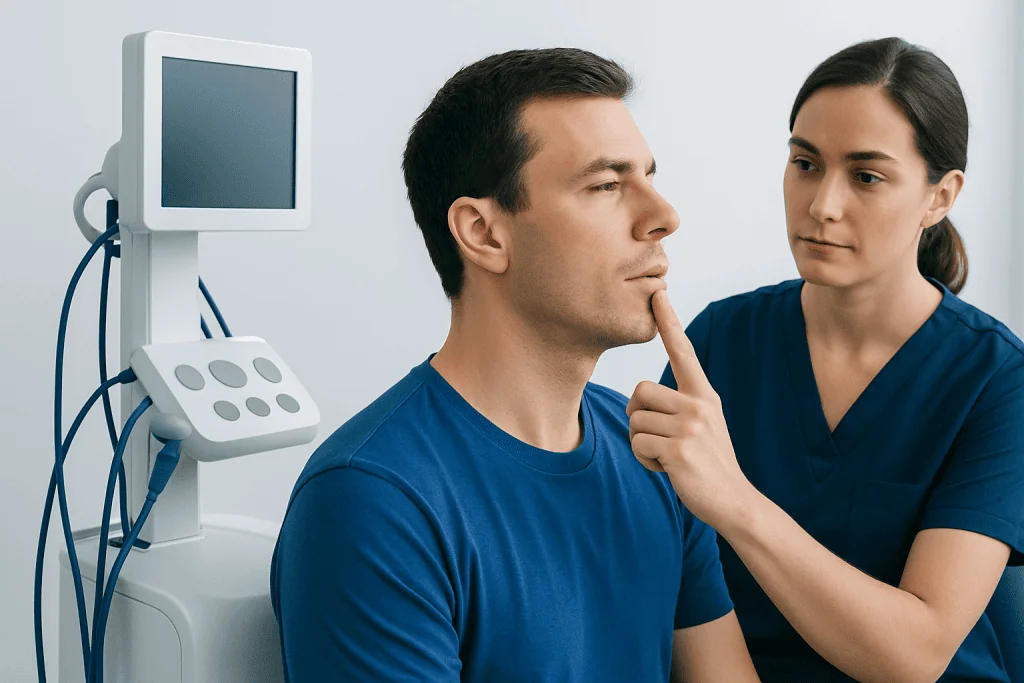
People often look for TMJ exercises when they notice jaw discomfort that feels muscular, stiff, or mechanical. Common symptoms include pain in front of the ear, jaw fatigue, tenderness in the cheeks or temples, difficulty opening wide, clicking or popping, and a sense that the jaw does not move smoothly. Some also develop headaches, neck tension, or pain that worsens after chewing gum, yawning, long conversations, or stressful periods.
Exercises may be especially useful when there is reduced control of jaw movement. For example, some people open their mouth in a side-to-side pattern rather than a straight line, suggesting muscle imbalance or compensation. Others keep the jaw clenched throughout the day without realizing it, leading to overworked muscles and gradual discomfort.
That said, symptoms such as true locking, significant swelling, trauma, sudden bite change, fever, numbness, or severe pain need professional evaluation rather than self-treatment alone. Jaw symptoms can overlap with dental problems, sinus conditions, ear disorders, headache disorders, and arthritis, so it is important not to assume all pain near the joint is caused by TMJ dysfunction.
Why TMJ Problems Happen

The temporomandibular joint is complex because it depends on coordinated work between the joint surfaces, a cushioning disc, surrounding ligaments, and several muscles of chewing. Symptoms can begin when any part of this system is irritated or overloaded. Common triggers include teeth clenching or grinding, stress-related muscle tension, prolonged mouth opening during dental work, nail biting, gum chewing, poor head and neck posture, and overuse from hard or chewy foods.
Some patients have joint-related causes such as internal disc displacement, arthritis, hypermobility, or prior injury. Others have muscle-dominant pain, sometimes called myofascial pain, where the muscles around the jaw and temples become tender and tight. Neck dysfunction may also contribute, because jaw movement and cervical posture are closely linked.
Underlying dental issues can sometimes play a role, especially when tooth pain, bite discomfort, or bruxism are present. In some situations, an oral and maxillofacial or dental specialist may recommend further assessment or dental treatment as part of a complete plan. Identifying the likely cause helps determine whether exercises should focus on relaxation, controlled opening, stretching, or stabilization.
How to Do TMJ Exercises Safely
Before starting, the general rule is that exercises should feel gentle and controlled, not forceful. The jaw is a sensitive joint, and aggressive stretching can worsen irritation. It is often helpful to apply a warm compress for a few minutes first, sit upright with the shoulders relaxed, and breathe slowly through the nose. Movements should stay within a comfortable range unless a clinician has advised otherwise.
Patients are often told to begin with awareness of the resting jaw position: lips together, teeth slightly apart, and tongue resting lightly on the roof of the mouth just behind the front teeth. This “teeth apart” posture can reduce daytime clenching and give overactive muscles a chance to relax. Practicing it several times a day may be as important as formal exercise.
If any exercise causes a sharp increase in pain, a catching sensation, or more locking, it should be stopped. Mild stretching discomfort can occur, but symptoms should settle soon after finishing. Keeping a brief symptom diary can help track whether the jaw feels looser, more painful, or unchanged over one to two weeks.
- Move slowly and stay within a comfortable range.
- Repeat exercises in short sessions rather than long, intense sets.
- Do not force the mouth open with the hands unless specifically instructed by a clinician.
- Avoid gum, hard foods, and wide yawning while the joint is irritated.
A Practical TMJ Exercise Routine
A useful home routine usually combines relaxation, control, and gentle mobility. One common starting exercise is the tongue-up controlled opening drill. The patient places the tongue on the roof of the mouth just behind the front teeth, then slowly opens and closes the mouth while keeping the movement smooth and centered. This may help reduce excessive forward movement of the jaw and improve control.
Another option is gentle jaw relaxation with diaphragmatic breathing. The patient sits upright, lets the shoulders drop, keeps the teeth apart, and takes slow breaths for one to two minutes. This can help reduce protective muscle tension, especially in people who clench during concentration or stress. Some patients also benefit from side-to-side control work in front of a mirror, using very small movements to encourage symmetry rather than range.
For limited opening, a clinician may advise a light stretching exercise using the tongue-up position and gradual opening to the first point of resistance, holding briefly, then relaxing. For clicking without pain, symptom-focused retraining may help, but painful clicking should be evaluated. When neck tension is part of the problem, posture and upper cervical exercises are often added, sometimes through physical therapy and rehabilitation to address both jaw and neck mechanics.
A simple routine may include:
- Resting jaw position practice several times daily.
- Controlled opening with tongue on the palate.
- Gentle mirror-guided opening and closing to keep the jaw centered.
- Relaxed breathing and shoulder release.
- Posture correction, especially avoiding a forward head position.
What Else Helps Alongside Exercises
Exercises tend to work best when daily habits that strain the joint are reduced. During a flare, many clinicians advise soft foods for a short time and avoiding crusty bread, nuts, chewing gum, very large bites, and prolonged chewing. Yawning with support under the chin, limiting wide mouth opening, and taking breaks from singing or extended speaking can also help calm irritated tissues.
Heat or cold may be useful depending on the symptom pattern. Warm compresses often help muscle tightness, while a brief cold pack may feel better if the joint seems inflamed after overuse. Good sleep, stress management, and attention to clenching triggers are also important, because jaw pain often fluctuates with emotional tension and sleep quality. If nighttime grinding is suspected, a dentist can advise whether an appliance may be appropriate.
For some patients, the best results come from a multidisciplinary approach. This may include evaluation of dental health, imaging when structural problems are suspected, and guidance from rehabilitation specialists. In selected cases, doctors may consider pain management strategies or other targeted therapies to make exercise and function more tolerable while the underlying problem is being addressed.
How TMJ Disorders Are Diagnosed and Treated
Diagnosis usually begins with a history and physical examination. A clinician asks when symptoms started, what makes them better or worse, whether there is clenching or grinding, and whether chewing, headaches, ear symptoms, or neck pain are present. The examination may include feeling the jaw muscles, listening for joint sounds, checking mouth opening, and observing whether the jaw tracks smoothly.
Imaging is not needed for every patient, but it may be useful when there is trauma, persistent locking, suspected arthritis, or failure to improve with conservative care. Depending on the situation, clinicians may use dental imaging, CT, or MRI to look at bone, joint position, and disc problems. This is especially relevant when symptoms suggest more than simple muscle overuse.
Treatment usually starts conservatively. Common options include education, self-care, targeted exercises, short-term pain relief measures, stress reduction, dental assessment, and referral for maxillofacial surgery evaluation only when clearly indicated. Near the end of the care pathway, and only for selected patients, more advanced interventions may be considered. Acibadem International’s multidisciplinary specialists in JCI-accredited hospitals also assess and treat TMJ-related conditions for international patients when coordinated care is needed.
When to Seek Medical Care
Most mild jaw discomfort improves with time, self-care, and gentle exercises. Medical or dental assessment is recommended if pain lasts more than a few weeks, returns frequently, or interferes with eating, sleep, speech, or daily activities. An evaluation is also appropriate if home exercises do not help or if symptoms clearly worsen with movement.
Prompt care is important if the jaw becomes locked open or closed, the bite suddenly changes, there is visible swelling, fever, facial numbness, or symptoms begin after an injury. These features may point to a problem that needs targeted treatment rather than home management. New one-sided ear or jaw pain should also be checked, especially if dental or sinus causes are possible.
People with known arthritis, connective tissue disorders, or complex facial pain may benefit from earlier assessment. A qualified clinician can confirm whether the symptoms fit a TMJ problem, rule out other causes, and advise the most appropriate exercise plan.
Frequently asked questions
How often should TMJ exercises be done?
Frequency depends on the type of exercise and the person’s symptoms, but gentle short sessions are generally preferred over long or forceful practice. Many clinicians suggest doing simple relaxation and control exercises several times a day while monitoring for improvement rather than pushing through pain.
Can TMJ exercises make symptoms worse?
Yes, they can if the movement is too aggressive or not matched to the underlying problem. Exercises should not cause sharp pain, increased locking, or a clear worsening of jaw function, and these signs should prompt a pause and professional advice.
Do TMJ exercises help jaw clicking?
They may help in some cases, especially when clicking is related to poor jaw control or muscle tension. However, clicking alone is not always harmful, and painful clicking or clicking with locking should be evaluated before starting a self-directed program.
What is the best sleeping position for TMJ pain?
Many people feel better sleeping on their back with the neck supported in a neutral position. Side sleeping may be comfortable for some, but pressure on the jaw and a poorly supported neck can aggravate symptoms in others.
Should a person use heat or ice for TMJ pain?
Both can help, depending on the symptom pattern. Heat is often useful for muscle tightness and stiffness, while a brief cold pack may feel better after overuse or when the joint feels more inflamed.
When should someone stop home TMJ exercises?
Home exercises should be stopped if they cause increasing pain, new locking, significant bite changes, swelling, or neurologic symptoms such as numbness. In those situations, medical or dental evaluation is safer than continuing to experiment with exercises.
References
- National Institute of Dental and Craniofacial Research
- American Academy of Orofacial Pain
- National Health Service
- Mayo Clinic
- American Dental Association
This article is for general information only and is not a substitute for professional medical advice. Please consult a qualified doctor about your individual situation.
Joint and spine care in Turkey — expert assessment & treatment
JCI-accredited · board-certified surgeons · reply within 24h

More from the Health Library



Related Specialists

Assoc. Prof. Dr. Şule Göncü Ayhan
Gynecology & Obstetrics
Dr. Betül Toygar
Physical Medicine & Rehabilitation
Dr. Gülay Beydilli Nacak
Gynecology & Obstetrics
Aylin Kurt
Pediatric Rehabilitation