Transcranial Magnetic Stimulation: Neuromodulation for Brain-Based Symptoms

TMS uses magnetic fields to stimulate targeted areas of the brain without surgery or anesthesia. The best-established use of repetitive TMS is for treatment-resistant major depression, with other uses depending on local approvals and specialist assessment.
Key Takeaways
- TMS uses magnetic fields to stimulate targeted areas of the brain without surgery or anesthesia.
- The best-established use of repetitive TMS is for treatment-resistant major depression, with other uses depending on local approvals and specialist assessment.
- A typical course involves repeated outpatient sessions over several weeks, and patients usually remain awake and can go home afterward.
- Common side effects are usually mild, such as scalp discomfort or headache; serious complications are uncommon when patients are properly screened.
- People with certain implanted devices, metal near the head, or a seizure history need careful evaluation before TMS.
Transcranial Magnetic Stimulation, often called TMS, is a noninvasive neuromodulation treatment that uses magnetic pulses to influence brain activity. It is most commonly used for selected mental health conditions such as depression when standard treatments have not provided enough relief, and it may also be considered in other brain-based symptoms under specialist guidance.
Overview
Transcranial Magnetic Stimulation is a medical treatment that uses a magnetic coil placed against the scalp to deliver brief magnetic pulses to specific brain regions. These pulses create small electrical currents in the brain, which can increase or decrease the activity of nerve networks involved in mood, attention, pain processing, or movement control. Because the coil stays outside the body, TMS does not require an incision, anesthesia, or hospital admission in most cases.
TMS belongs to a broader group of treatments called neuromodulation. Neuromodulation means adjusting the activity of the nervous system in a targeted way. In clinical practice, repetitive TMS, or rTMS, is the most familiar form. It delivers repeated pulses in carefully planned patterns, often to areas of the frontal part of the brain that communicate with deeper mood-regulating circuits.
The most established clinical use of TMS is for adults with major depressive disorder who have not improved enough with standard treatments such as psychotherapy and antidepressant medication. Depending on the country and device approval, TMS may also be used or studied for obsessive-compulsive disorder, certain migraine protocols, tinnitus, post-stroke rehabilitation, chronic pain, and other neurological or psychiatric symptoms. Suitability depends on the diagnosis, safety screening, and the treatment goals agreed with a qualified specialist.
How TMS Works
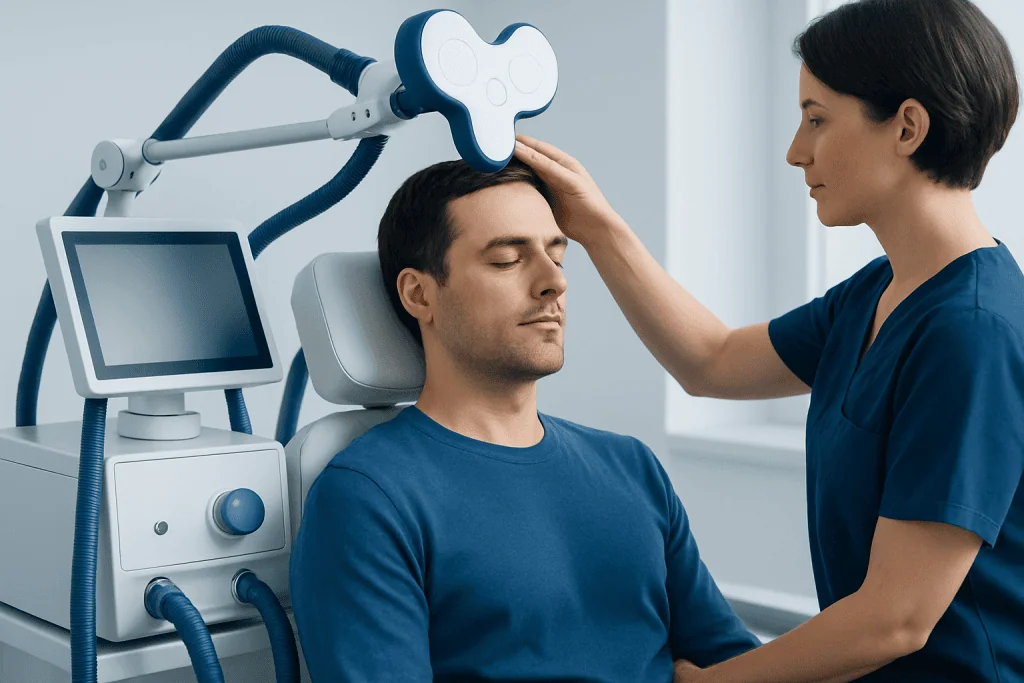
During TMS, an electromagnetic coil produces a rapidly changing magnetic field. This field passes safely through the scalp and skull and reaches the outer layers of the brain. The stimulation is focused on a selected target, such as the dorsolateral prefrontal cortex, a region commonly involved in depression treatment because it is connected to networks that regulate mood, motivation, and emotional control.
Different stimulation patterns can have different effects. Higher-frequency stimulation may increase activity in a targeted circuit, while low-frequency stimulation may reduce overactivity. Newer protocols, such as theta burst stimulation, deliver patterned pulses in a shorter session for selected patients. The treating team chooses the protocol based on the condition, available evidence, device settings, and the person’s medical history.
TMS is not the same as electroconvulsive therapy. ECT uses controlled electrical stimulation under anesthesia and is reserved for specific severe conditions. TMS uses magnetic stimulation while the person is awake and does not intentionally cause a seizure. It also differs from deep brain stimulation, which requires surgically implanted electrodes. For many patients, this noninvasive approach is one reason TMS is considered when symptoms persist despite standard care.
Conditions and Symptoms TMS May Help
The strongest evidence for TMS is in treatment-resistant depression. This term generally means that a person has had an adequate trial of one or more standard treatments but still has clinically significant symptoms. TMS may be considered as part of a broader treatment plan that can include medication, psychotherapy, sleep support, and management of medical conditions that affect mood.
In some healthcare systems, TMS is also used for obsessive-compulsive disorder with specific stimulation targets and protocols. Other applications are more specialized. For example, certain forms of magnetic stimulation have been explored for migraine, tinnitus, anxiety symptoms, post-traumatic stress symptoms, Parkinson-related symptoms, stroke recovery, and chronic pain. The level of evidence is not the same for every condition, so patients should ask whether the recommended use is approved, guideline-supported, investigational, or part of a research protocol.
Symptoms that may lead a clinician to discuss TMS include persistent low mood, loss of interest, low energy, impaired concentration, intrusive thoughts or compulsions, or brain-based symptoms that have not responded sufficiently to standard care. TMS is not a first-line treatment for every person, and it is not a substitute for urgent care when someone has immediate safety concerns. A careful evaluation helps determine whether TMS is appropriate and how it fits with the person’s overall health needs.
Assessment and Candidacy
Before starting TMS, a clinician reviews the person’s diagnosis, current symptoms, previous treatments, medical history, medications, and safety factors. This assessment may be done by a psychiatrist, neurologist, or another specialist trained in TMS, depending on the condition being treated. The goal is to confirm that the diagnosis matches an evidence-based use of TMS and that there are no avoidable risks.
Screening is especially important for people with metal or electronic implants. TMS may not be suitable for someone with certain implanted devices near the head, such as cochlear implants, deep brain stimulators, some aneurysm clips, or implanted medication pumps. Dental fillings and most routine orthodontic materials are usually not a problem, but the treatment team should still be told about any metal, surgical clips, shrapnel, or implanted device.
Other factors that require careful discussion include a history of seizures, epilepsy, significant head injury, brain tumors, recent stroke, substance withdrawal, pregnancy, and medications that may affect seizure threshold. These factors do not always rule out TMS, but they may change the risk-benefit discussion or the treatment protocol. Patients should bring an updated medication list and be open about supplements, alcohol use, and any neurological symptoms.
What Happens During Treatment
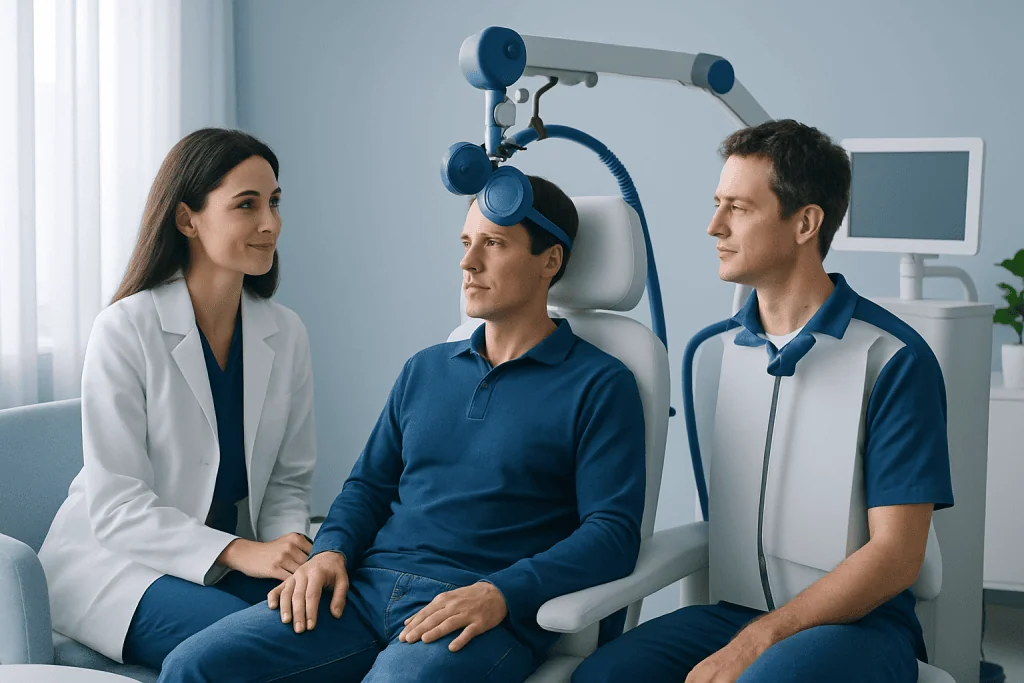
TMS is usually provided in an outpatient setting. At the first session, the team may measure the head and determine the motor threshold, which is the minimum stimulation needed to cause a small movement in a hand muscle. This helps individualize the dose of stimulation. The coil is then positioned over the treatment target, and the patient sits in a comfortable chair while awake.
During the session, the person may hear clicking sounds and feel tapping or pulsing on the scalp. Ear protection is commonly used because the device can be loud. Some people feel scalp tightness or mild discomfort at first, which often improves as they become familiar with the sensation or as the team adjusts positioning within safe limits. The patient can usually speak to staff during treatment and can return to normal daily activities afterward unless advised otherwise.
A full course typically involves multiple sessions over several weeks, though exact schedules vary by protocol and clinical need. Improvement, when it occurs, may be gradual rather than immediate. Clinicians often track symptoms with questionnaires and regular discussions to see whether the treatment is helping. Some patients may later be considered for maintenance sessions, but this decision is individualized and based on symptom pattern, response, and professional guidance.
- Patients remain awake and do not usually need sedation.
- Sessions are planned with a specific target, intensity, and pulse pattern.
- Consistency is important because TMS is usually delivered as a course, not a one-time treatment.
- Medication changes should only be made with the prescribing clinician’s advice.
Benefits, Limits, and Possible Side Effects
The main potential benefit of TMS is symptom improvement in people whose condition has not responded adequately to usual care. For depression, some patients experience reduced sadness, improved interest, better concentration, or increased ability to participate in therapy and daily activities. TMS may be attractive to some patients because it is noninvasive and generally does not cause the whole-body side effects that can occur with some medications.
However, TMS is not guaranteed to work for everyone. Response varies, and some people have partial improvement or no meaningful change. It may also take time to notice benefit. Treatment planning should include realistic goals, ongoing symptom monitoring, and a plan for what to do if symptoms persist. For many people, TMS works best as one part of comprehensive care rather than as a stand-alone solution.
Common side effects are usually temporary and may include scalp discomfort, headache, facial muscle twitching during stimulation, lightheadedness, or fatigue after a session. Serious side effects are uncommon when proper screening and safety procedures are followed, but a seizure is a recognized rare risk. Patients should tell the team immediately if they experience unusual neurological symptoms, worsening mood, or any new health issue during the treatment course.
Preparation, Self-Care, and When to See a Doctor
Good preparation starts with a clear conversation about goals and expectations. Patients should ask what condition is being treated, what protocol is recommended, how progress will be measured, and what alternatives are available. It is also helpful to discuss sleep, stress, substance use, medication adherence, and medical conditions such as thyroid disease or chronic pain, because these can influence brain-based symptoms and treatment response.
On treatment days, patients are often advised to eat normally, stay hydrated, and avoid sudden changes in medications unless their doctor recommends them. Reporting headaches, scalp soreness, sleep changes, or mood changes helps the team make safe adjustments. Continuing psychotherapy, healthy routines, social support, and prescribed medications may improve overall care, depending on the individual plan.
A doctor should be consulted if depression, anxiety, obsessive symptoms, migraine, chronic pain, or other neurological symptoms interfere with daily life or do not improve with standard treatment. Urgent medical support is needed for thoughts of self-harm, sudden weakness, speech difficulty, seizure, severe confusion, or abrupt neurological changes. For international patients seeking evaluation, Acibadem International’s multidisciplinary specialists and JCI-accredited hospitals can assess whether TMS or another evidence-based approach is appropriate as part of a personalized care plan.
Frequently asked questions
Is Transcranial Magnetic Stimulation painful?
Most people describe TMS as a tapping or pulsing sensation on the scalp rather than pain. Some scalp tenderness or headache can occur, especially during early sessions, and usually improves or can be managed by adjusting positioning. Patients should tell the treatment team if the sensation becomes uncomfortable.
How is TMS different from ECT?
TMS uses magnetic pulses while the patient is awake and does not require anesthesia. ECT is a different treatment that uses controlled electrical stimulation under anesthesia and is used for specific severe psychiatric conditions. Both are medical treatments, but their methods, indications, and treatment experience are different.
How long does it take for TMS to work?
Some people notice changes after several sessions, while others improve more gradually over the treatment course. The timing depends on the condition, the protocol, and individual brain response. Clinicians usually track symptoms regularly to decide whether treatment should continue or be adjusted.
Can TMS be used with antidepressants or therapy?
Yes, TMS is often used alongside prescribed medication and psychotherapy when clinically appropriate. Patients should not stop or change medications on their own during a TMS course. The prescribing clinician and TMS team should coordinate care to support safety and consistency.
Who should not have TMS?
TMS may not be suitable for people with certain implanted electronic devices or metal objects near the head. A history of seizures, significant brain injury, or certain neurological conditions requires careful specialist assessment. Screening before treatment is essential to decide whether TMS is safe for an individual.
Does TMS affect memory or personality?
TMS is not expected to erase memories or change a person’s personality. It targets brain circuits linked to symptoms, such as mood regulation, using a planned medical protocol. If a patient notices any unusual cognitive or emotional changes, they should report them to the treating clinician.
References
- National Institute of Mental Health
- U.S. Food and Drug Administration
- American Psychiatric Association
- National Institute for Health and Care Excellence
- International Federation of Clinical Neurophysiology
This article is for general information only and is not a substitute for professional medical advice. Please consult a qualified doctor about your individual situation.
Neuromodulation in Turkey — costs, top hospitals & a free quote
JCI-accredited · board-certified surgeons · reply within 24h