Vocal Nodules — Explained by Medical Evidence, Not Myths

Vocal nodules are noncancerous growths caused mainly by repeated vocal overuse or misuse. The most common symptom is ongoing hoarseness, especially in people who use their voice heavily.
Key Takeaways
- Vocal nodules are noncancerous growths caused mainly by repeated vocal overuse or misuse.
- The most common symptom is ongoing hoarseness, especially in people who use their voice heavily.
- Diagnosis usually involves an ear, nose, and throat examination and visualization of the vocal cords.
- Voice therapy and vocal habit changes are the main treatments; surgery is usually reserved for selected cases.
- Early evaluation can help prevent long-term voice problems and support a smoother recovery.
Vocal nodules are small, benign thickened areas that form on the vocal cords after repeated voice strain. They commonly cause persistent hoarseness, but with proper diagnosis, voice therapy, and healthy voice habits, most people improve significantly.
What vocal nodules are
Vocal nodules are small, benign, callus-like thickenings that develop on both vocal cords, usually where they strike each other most during speaking or singing. They are not a cancer and do not usually represent a dangerous illness. Instead, they are most often a sign that the voice has been under repeated mechanical stress over time.
These nodules can interfere with the normal vibration of the vocal cords. When the cords cannot close and vibrate smoothly, the voice may sound hoarse, rough, breathy, or tired. Some people also notice that they need more effort to speak, especially later in the day.
Vocal nodules are sometimes compared with calluses on the skin: the tissue thickens in response to repeated friction or pressure. This is why they are seen more often in teachers, singers, coaches, call-center workers, public speakers, and anyone who regularly uses their voice loudly or for long periods.
They are different from other voice-related throat conditions such as laryngitis, which often develops with infection, irritation, or short-term inflammation. A careful assessment helps distinguish vocal nodules from polyps, cysts, paralysis, reflux-related irritation, or other causes of persistent hoarseness.
Symptoms and how they affect the voice
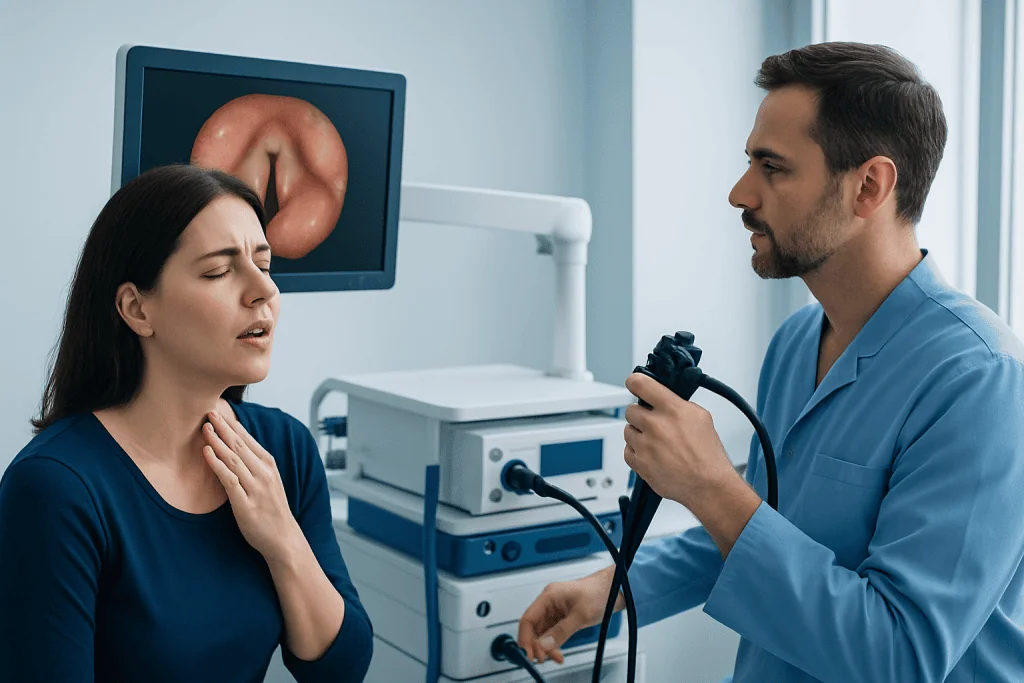
The most common symptom of vocal nodules is hoarseness that does not fully settle with ordinary rest. The voice may sound raspy, rough, weak, or strained. Many people describe a loss of vocal clarity or a reduced ability to project their voice.
Symptoms often develop gradually rather than suddenly. At first, the voice may only feel tired after long conversations, teaching, presentations, cheering, or singing. Over time, the hoarseness can become more consistent and may start to affect work, social interactions, or performance.
Other symptoms can include:
- A breathy or airy voice
- Needing to clear the throat often
- A sensation of throat tightness or effort when speaking
- Reduced vocal range, especially in singers
- Voice breaks or difficulty sustaining sounds
- Neck discomfort from speaking with extra effort
Not every hoarse voice is due to nodules. Temporary hoarseness may follow a cold, shouting at an event, allergies, smoke exposure, or acid reflux. However, hoarseness that lasts more than a few weeks should be assessed, especially if the person depends on their voice professionally.
Causes and risk factors

The main cause of vocal nodules is chronic voice overuse or misuse. Repeated yelling, speaking loudly over background noise, using poor singing technique, frequent throat clearing, or speaking for long periods without rest can all create ongoing collision and irritation of the vocal cords. Over time, the body responds by thickening the tissue.
Some people are more likely to develop nodules because of how often and how intensely they use their voice. Professional voice users are a well-recognized group, but children can also develop nodules, particularly if they frequently shout or speak forcefully.
Several factors may increase the risk or make recovery slower:
- Heavy occupational voice use
- Speaking in noisy environments
- Dehydration and poor vocal hygiene
- Smoking or exposure to irritants
- Untreated acid reflux
- Allergies with chronic throat clearing or coughing
- Poor breath support or inefficient voice technique
Stress can also play a role. When people are tired, anxious, or under pressure, they may unconsciously tighten the throat or speak with excessive effort. In some cases, treatment includes looking beyond the vocal cords themselves and addressing the habits and triggers that continue to strain the voice.
How vocal nodules are diagnosed
Diagnosis starts with a detailed history. A doctor will ask how long the voice problem has been present, whether it is getting worse, what the person’s work or singing demands are, and whether there are related symptoms such as cough, reflux, smoking exposure, pain, swallowing changes, or recent infections.
The next step is examining the larynx, or voice box. An ear, nose, and throat specialist usually looks at the vocal cords using a small camera passed through the nose or mouth. In many cases, specialized techniques such as stroboscopy help show how the cords vibrate, which can make small lesions easier to identify and distinguish from other problems.
Because hoarseness has many possible causes, the goal is not only to find nodules but also to rule out other explanations. Depending on the person’s symptoms, clinicians may consider vocal cord paralysis or inflammation affecting the larynx, and may assess contributing issues such as reflux or allergy.
In selected patients, evaluation may also involve a speech-language pathologist with expertise in voice disorders. This can be especially helpful for singers, teachers, or others whose recovery depends on understanding how they use their voice in daily life.
Treatment options and what recovery usually involves
Treatment for vocal nodules usually focuses first on reducing the strain that caused them. The mainstay is voice therapy, often provided by a speech-language pathologist or voice therapist. Therapy aims to improve how the voice is produced, reduce harmful habits, and teach techniques that lower pressure on the vocal cords during daily use.
Supportive care also matters. Doctors often recommend temporary voice modification, better hydration, avoiding smoking, limiting shouting, and treating contributing conditions such as reflux, allergy, or chronic coughing. These steps help the irritated vocal cords recover and can improve the effectiveness of therapy.
For many patients, voice therapy is the central treatment because it addresses the underlying behavior rather than only the visible lesion. If the doctor suspects additional structural or airway issues, further ENT assessment may be recommended, and in some cases procedures performed within ENT surgery services may be considered.
Surgery is not the first treatment for most vocal nodules. It may be considered when nodules are persistent, when the diagnosis is uncertain, or when a person’s voice needs remain significantly affected despite appropriate conservative care. Surgical decisions are individualized and are usually followed by continued voice therapy to reduce the chance of recurrence.
Voice care, prevention, and self-care
Healthy voice habits can help both prevent vocal nodules and support recovery. One of the most effective strategies is reducing unnecessary vocal strain. That may mean taking speaking breaks, using amplification when addressing groups, avoiding talking over loud music or machinery, and learning efficient breathing and speaking techniques.
Hydration is also important because well-hydrated vocal cord tissues generally function more comfortably. Many people benefit from drinking fluids regularly, avoiding smoking and secondhand smoke, and limiting behaviors that dry or irritate the throat. Frequent throat clearing can be particularly hard on the vocal cords and may need to be replaced with gentler strategies advised by a clinician.
Useful self-care measures often include:
- Resting the voice after heavy use
- Keeping the body well hydrated
- Avoiding yelling, whispering forcefully, and repeated throat clearing
- Managing reflux, allergies, and chronic cough with medical advice
- Using proper warm-up techniques before prolonged speaking or singing
- Seeking early help if hoarseness becomes recurrent
Self-care can improve symptoms, but it should not replace medical evaluation when hoarseness persists. A person may believe they have simple overuse when the problem is actually another voice disorder that needs different treatment.
When to seek medical care
Medical advice should be sought when hoarseness lasts longer than two to three weeks, especially without a clear reason such as a short cold. Evaluation is also important sooner for people who smoke, have heavy professional voice demands, or have symptoms that are worsening rather than improving.
Prompt assessment is recommended if voice changes occur with trouble breathing, pain when speaking, coughing up blood, difficulty swallowing, a neck lump, unexplained weight loss, or a recent surgery affecting the neck or chest. These features do not necessarily mean a serious condition, but they do need timely medical review.
An ENT specialist can help clarify whether the cause is vocal nodules or another laryngeal problem. In centers with multidisciplinary voice care, patients may be assessed by both ENT and speech-language experts so that diagnosis and treatment planning happen together.
Acibadem International’s multidisciplinary specialists and JCI-accredited hospitals diagnose and treat voice disorders for international patients, including assessment through ear, nose, and throat care when persistent hoarseness needs specialist review.
Frequently asked questions
Are vocal nodules dangerous?
Vocal nodules are usually benign, which means they are noncancerous. They are not typically dangerous, but they can interfere with communication and quality of life if they are not addressed. Persistent hoarseness still deserves medical evaluation because other conditions can cause similar symptoms.
Can vocal nodules go away without surgery?
Yes, many vocal nodules improve with voice therapy, vocal rest strategies, and correction of habits that strain the voice. Treating related factors such as reflux, smoking exposure, or allergies can also help. Surgery is generally reserved for selected cases that do not respond well to conservative treatment.
How long does it take for vocal nodules to heal?
Recovery time varies from person to person and depends on how long the nodules have been present, how the voice is used, and whether contributing factors are controlled. Some people improve over weeks, while others need longer-term therapy and habit changes. A specialist can give a more realistic timeline after examination.
What is the difference between vocal nodules and polyps?
Vocal nodules usually develop on both vocal cords and are linked to repeated voice strain over time. Polyps are often more localized and may occur on one cord, sometimes after a single episode of heavy vocal trauma or ongoing irritation. Both can cause hoarseness, but they may be managed differently, so accurate diagnosis matters.
Can children get vocal nodules?
Yes, children can develop vocal nodules, especially if they frequently yell, shout, or use their voice forcefully. The symptoms are similar, with persistent hoarseness being common. Assessment and voice guidance can be helpful, and treatment is usually conservative.
Should someone with vocal nodules stop talking completely?
Complete silence is not usually necessary unless a doctor recommends short-term voice rest in a specific situation. More often, the goal is to use the voice more efficiently and avoid the habits that continue to irritate the vocal cords. A voice specialist can explain what level of rest or modification is appropriate.
References
- American Academy of Otolaryngology–Head and Neck Surgery
- National Institute on Deafness and Other Communication Disorders
- American Speech-Language-Hearing Association
- Cleveland Clinic
- Merck Manual
This article is for general information only and is not a substitute for professional medical advice. Please consult a qualified doctor about your individual situation.
Oncology care in Turkey — second opinion and treatment plan
JCI-accredited · board-certified surgeons · reply within 24h