What Size of Kidney Cyst Is Dangerous? A Doctor-Reviewed Answer

There is no single dangerous size for a kidney cyst; many large simple cysts remain benign. Doctors are more concerned about symptoms, pressure on nearby structures, and complex imaging features than size alone.
Key Takeaways
- There is no single dangerous size for a kidney cyst; many large simple cysts remain benign.
- Doctors are more concerned about symptoms, pressure on nearby structures, and complex imaging features than size alone.
- Warning signs include pain, blood in the urine, fever, repeated urinary infections, high blood pressure, or reduced kidney function.
- Ultrasound, CT, or MRI can help tell a simple cyst from a complex cyst that needs closer follow-up.
- Treatment may range from observation to drainage or surgery, depending on symptoms and imaging findings.
Most kidney cysts are harmless, especially if they are simple, fluid-filled cysts found by chance on imaging. A kidney cyst becomes more concerning not just because of its size, but if it causes pain, blocks urine flow, bleeds, becomes infected, or has complex features on ultrasound or CT.
Overview: Is There a Dangerous Kidney Cyst Size?
For most people, the answer to what size of kidney cyst is dangerous is reassuring: there is no exact size at which a kidney cyst automatically becomes dangerous. Many kidney cysts are simple cysts, which means they are thin-walled, filled with fluid, and non-cancerous. Even when these simple cysts grow several centimeters in size, they often do not harm the kidney or require treatment.
What matters more than size alone is how the cyst behaves. A cyst may need medical attention if it causes pain, presses on the kidney or nearby organs, blocks urine drainage, bleeds, becomes infected, or looks complex on imaging. In other words, a smaller complex cyst can be more important than a larger simple one.
This is why doctors do not usually judge risk by measurements alone. They look at the person’s symptoms, kidney function, and the cyst’s appearance on ultrasound, CT, or MRI. If a cyst has septations, thick walls, calcifications, solid areas, or enhancement after contrast, it may need closer evaluation than a simple round cyst with clear fluid.
A practical way to think about it is this: a kidney cyst may be considered more concerning when it is large enough to cause symptoms or when imaging suggests it is not a simple cyst. That approach helps explain why some people only need monitoring, while others may need treatment or referral to a urologist.
What Size of Kidney Cyst Is Dangerous in Practice?
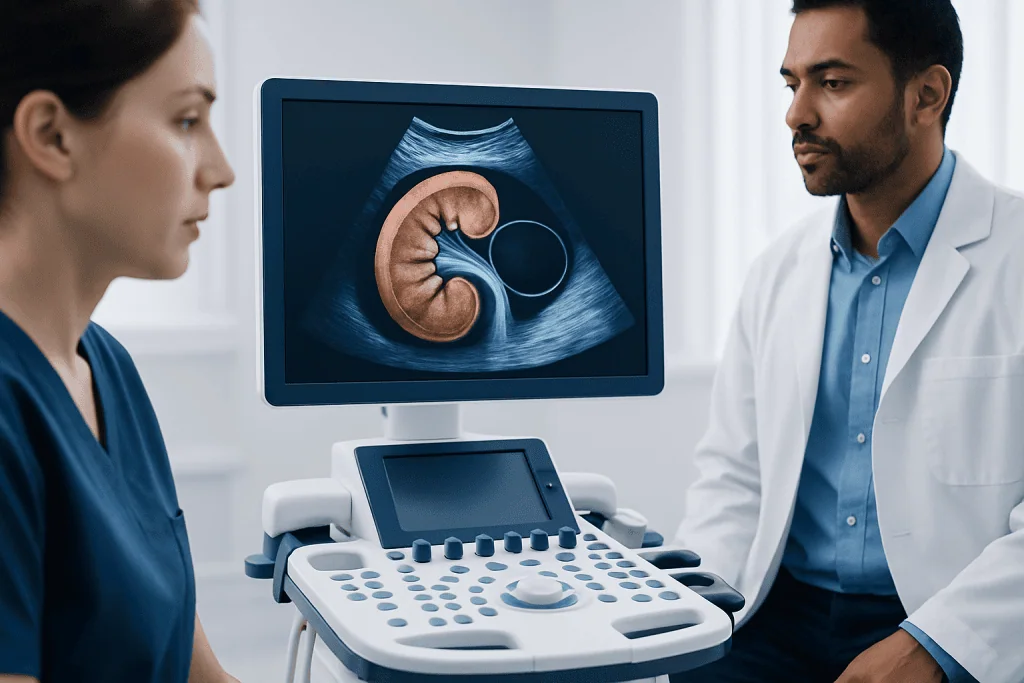
Doctors do not use one universal cut-off such as 3 cm, 5 cm, or 7 cm to define danger. A small cyst can still matter if it is complex, and a large cyst can remain harmless if it is simple and causes no problems. In practice, concern rises when a cyst grows enough to create pressure symptoms, distort the kidney, or interfere with urine flow.
Simple kidney cysts are common, especially with age. A person may live for years with a cyst that is found incidentally during imaging for another reason. If the cyst stays simple in appearance and the person has no pain, blood in the urine, infection, or kidney function changes, doctors often recommend observation rather than treatment.
That said, larger cysts are somewhat more likely to be noticed because they can cause symptoms. A larger cyst may lead to flank discomfort, a feeling of fullness, or pressure on nearby tissues. Rarely, it can rupture, bleed, or contribute to blockage in the urinary tract.
The key point is that danger is defined by impact and appearance, not just measurement. If a cyst is enlarging over time, causing symptoms, or showing complex features, a doctor may recommend further testing and possibly treatment. If it remains a classic simple cyst, size alone often does not mean cancer or kidney failure.
Symptoms and Red Flags That Matter More Than Size

A kidney cyst may cause no symptoms at all. When symptoms do occur, they often provide better clues than size alone about whether medical review is needed. Pain in the side or back, abdominal fullness, and tenderness in the area of the kidney are common reasons people seek evaluation.
Other warning signs include blood in the urine, fever, chills, painful urination, or repeated urinary tract infections. These may suggest bleeding into the cyst, infection, or pressure on the urinary system. High blood pressure and changes in kidney blood tests can also be relevant, especially if a cyst is large or there are multiple cysts.
Doctors are particularly alert to symptoms that suggest obstruction or a more complex underlying problem. A cyst that blocks urine drainage can contribute to swelling of the kidney and may require prompt attention. In some cases, the appearance of a cyst raises concern for a tumor rather than a simple cyst, which is why imaging details matter.
- Flank or back pain that persists
- Blood in the urine
- Fever or signs of infection
- Repeated urinary infections
- Abdominal swelling or fullness
- High blood pressure or reduced kidney function
These red flags do not automatically mean something serious is present, but they do mean the cyst should be assessed by a qualified clinician. They help doctors decide whether simple monitoring is enough or whether more detailed testing is needed.
Causes, Types, and Risk Factors
Most kidney cysts discussed in routine practice are simple kidney cysts. These often develop with age and may have no clear cause. They differ from inherited conditions that cause many cysts over time, such as polycystic kidney disease, where kidney enlargement and long-term kidney problems are more important concerns.
Doctors usually divide kidney cysts into simple and complex cysts. A simple cyst has a thin wall and clear fluid, with no solid components. A complex cyst may have internal divisions, thicker walls, calcium deposits, or tissue that enhances with contrast imaging. Complex cysts do not always mean cancer, but they do need more careful evaluation.
Risk factors for having kidney cysts include older age and, in some cases, family history or underlying kidney conditions. People may also learn they have a kidney cyst while being checked for kidney stones, urinary symptoms, or high blood pressure. Sometimes, cysts are found during abdominal imaging done for unrelated reasons.
It is also important to distinguish a kidney cyst from other kidney findings. A mass, a blocked urine-filled area, or changes related to kidney cancer can look different on imaging and require a different plan. That is one reason self-diagnosis based on size alone can be misleading.
How Doctors Diagnose and Assess Kidney Cysts
When a kidney cyst is found, the first question is usually whether it is simple or complex. Ultrasound is often the starting test because it can show whether the cyst is fluid-filled and smooth-walled. If the findings are not fully clear, CT or MRI may be used to provide more detail.
Radiologists often describe complex kidney cysts using imaging classifications that help estimate how suspicious the cyst may be and whether follow-up is needed. The doctor also considers whether the cyst is causing symptoms, whether there are one or many cysts, and whether kidney blood tests remain normal.
Additional evaluation may include urine testing, blood tests for kidney function, and blood pressure measurement. If there are symptoms such as recurrent infections, stones, or blockage, the urinary tract may need further review. In selected cases, people are referred to urology for monitoring or treatment planning.
Imaging is central because it answers the most important questions: Is this truly a simple cyst? Is it pressing on the kidney or ureter? Are there features that suggest bleeding, infection, or a tumor? At centers with advanced imaging and specialist care, evaluation may include MRI or CT scanning when clinically appropriate.
Treatment Options: When a Kidney Cyst Needs Care
Most simple kidney cysts do not need treatment. If they are not causing symptoms and imaging confirms a benign appearance, doctors may simply recommend periodic follow-up or no further action at all. This conservative approach is common and appropriate for many patients.
Treatment is more likely if the cyst causes pain, infection, bleeding, obstruction, or ongoing uncertainty on imaging. One option is drainage of the cyst, sometimes combined with a method to reduce the chance of it filling again. Another option is surgical removal or unroofing of the cyst, especially when symptoms persist or the cyst is large and troublesome.
Complex cysts may need a different plan depending on their imaging features and level of concern. Some are monitored with repeat scans, while others are removed because cancer cannot be confidently excluded. If the cyst affects urine drainage or coexists with another urologic problem, the treatment plan may need to address both issues.
Care is individualized. Near the end of the evaluation process, patients may benefit from seeing specialists familiar with urology care and kidney imaging. Acibadem International’s multidisciplinary specialists and JCI-accredited hospitals diagnose and treat kidney cysts and related kidney conditions for international patients when further assessment or treatment is needed.
Prevention, Monitoring, and Self-Care
There is no proven way to prevent simple kidney cysts from forming. However, general kidney health habits are still worthwhile. Staying well hydrated, managing blood pressure, avoiding unnecessary use of medicines that can affect the kidneys, and following up on urinary symptoms can all support overall kidney health.
For people who already know they have a kidney cyst, the most important self-care step is to follow the doctor’s advice about repeat imaging or check-ups. Not every cyst needs monitoring, but some do, especially if the first scan was not fully conclusive or the cyst had mildly complex features. Keeping track of symptoms can also help guide care.
It may help to seek review sooner if new pain, fever, blood in the urine, or urinary difficulties develop. These changes do not always mean the cyst has become dangerous, but they can signal infection, bleeding, or obstruction. Prompt review can help prevent complications and provide reassurance.
People with a family history of inherited kidney cyst disorders or reduced kidney function should mention this during appointments. That information can influence whether additional testing or longer-term follow-up is sensible.
When to Seek Medical Care
Medical care is appropriate if a kidney cyst causes ongoing flank pain, visible blood in the urine, fever, repeated urinary infections, nausea with severe pain, or difficulty passing urine. These symptoms can suggest bleeding, infection, or blockage, all of which deserve professional evaluation.
It is also reasonable to book a non-urgent appointment if imaging has shown a kidney cyst and the report mentions that it is complex, indeterminate, enlarging, or needs follow-up. Many of these cysts still turn out to be benign, but they should be interpreted in the context of symptoms, kidney function, and repeat imaging if needed.
Urgent assessment is especially important if a person has severe pain, fever with chills, or signs that kidney function may be worsening. Early treatment can relieve symptoms and protect kidney health. For most people, though, the outcome is reassuring once the cyst is properly characterized.
If there is uncertainty, a doctor can decide whether simple follow-up is enough or whether imaging, blood tests, or specialist review is needed. That step-by-step approach is usually the safest and most reassuring way to answer the question of whether a kidney cyst is dangerous.
Frequently asked questions
What size of kidney cyst is considered dangerous?
There is no single size that automatically makes a kidney cyst dangerous. Doctors are usually more concerned about whether the cyst is complex, growing, causing symptoms, or affecting urine flow or kidney function.
Can a large kidney cyst still be harmless?
Yes. A large simple kidney cyst can remain benign and cause no problems at all. Treatment is usually only considered if it causes pain, pressure, infection, bleeding, or blockage.
Are kidney cysts usually cancerous?
Most kidney cysts are not cancerous, especially simple cysts found incidentally on imaging. Concern rises when the cyst has complex features such as thick walls, septations, calcifications, or solid components.
How do doctors tell if a kidney cyst is serious?
Doctors use imaging tests such as ultrasound, CT, or MRI to see whether the cyst is simple or complex. They also consider symptoms, urine findings, blood tests, blood pressure, and whether the cyst changes over time.
Do all kidney cysts need treatment?
No. Many simple kidney cysts do not need any treatment and may only need observation, if that. Treatment is more likely when the cyst causes symptoms or when imaging cannot rule out a more serious problem.
When should someone with a kidney cyst see a doctor?
A doctor should be consulted if there is flank pain, blood in the urine, fever, repeated urinary infections, or a report showing a complex or enlarging cyst. Immediate care is important if symptoms are severe or if there are signs of infection or urinary blockage.
References
- National Institute of Diabetes and Digestive and Kidney Diseases
- American College of Radiology
- National Kidney Foundation
- Mayo Clinic
- European Association of Urology
This article is for general information only and is not a substitute for professional medical advice. Please consult a qualified doctor about your individual situation.
Explore treatments in Turkey — costs, top hospitals & a free quote
JCI-accredited · board-certified surgeons · reply within 24h
Check your numbers in seconds
BMI, calories, due date, blood pressure and 30+ more clinical calculators — free, instant, doctor-reviewed ranges.