

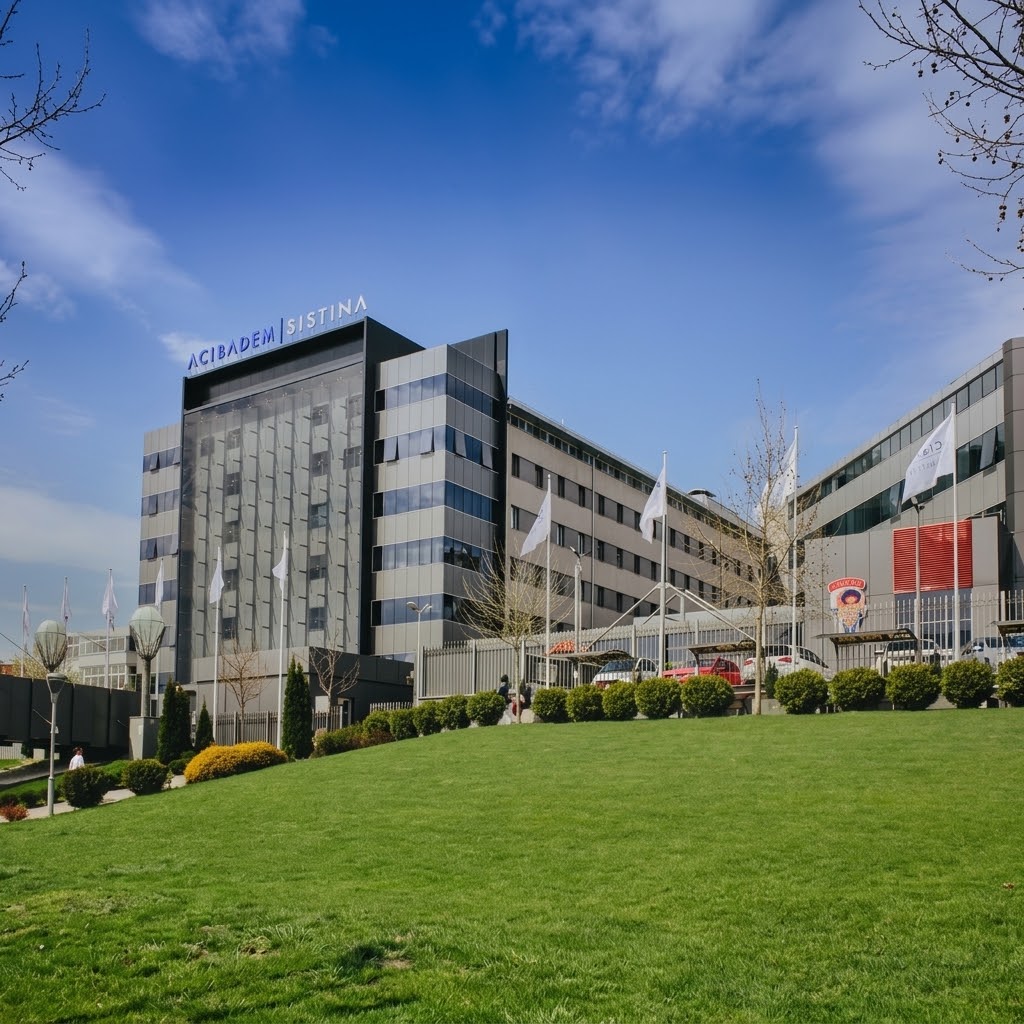
Acibadem Sistina Hospital
Learn about Acibadem Sistina Hospital in Skopje, offering multidisciplinary diagnostic, medical and surgical care within Acibadem Healthcare Group.
Get directions →
Acibadem Sistina Hospital at a Glance
Acibadem Sistina Hospital is North Macedonia's reference hospital and the Acıbadem group's longest-serving international campus: part of the family since October 2011, JCI-accredited since April 2016 as the first hospital in the country to earn that audit, and staffed today by roughly 1,213 people: 227 physicians, 43 of them professors, and some 440 nurses and allied professionals. The Skopje campus covers 37,400 m² with 339 beds and 9 operating theatres, and its technology floor…
The Hospital in Numbers
Facility Highlights
339 beds; around 1,213 staff including 227 physicians, 43 of them professors, and 440 nurses and technicians.
Cardiac surgery (11 beds), general (9), coronary and internal medicine (6), neonatal (14), pediatric and pediatric cardiac surgery (7).
3-Tesla MRI, 512-slice CT, PET/CT, gamma camera, Trilogy linear accelerator, nuclear medicine and radiotherapy.
UNICEF Baby-Friendly Hospital certificate for its neonatology department's breastfeeding standards.
Cancer, breast health, spine health, IVF and reproductive health, cardiac and vascular surgery.
1,130 m² centre with sports rehabilitation, corrective exercise, nutrition counselling and two VIP rooms.
Joined the Acıbadem group in October 2011.
Listed among environment-friendly hospitals; waste is recycled on site.
Acibadem Sistina Hospital, in depth
Acibadem Sistina Hospital is North Macedonia’s reference hospital and the Acıbadem group’s longest-serving international campus: part of the family since October 2011, JCI-accredited since April 2016 as the first hospital in the country to earn that audit, and staffed today by roughly 1,213 people: 227 physicians, 43 of them professors, and some 440 nurses and allied professionals. The Skopje campus covers 37,400 m² with 339 beds and 9 operating theatres, and its technology floor reads like a flagship’s: 3-Tesla MRI, 512-slice CT, a Trilogy linear accelerator for radiotherapy, PET/CT, gamma camera, digital angiography and mammography. For a country of two million, this is national-scale medicine under an international audit, at home.
What this building is organised around
Sistina’s role is national: to be the hospital North Macedonia does not have to leave. That shows in its proportions: 339 beds and nine theatres in a country where the alternative for serious medicine was historically a foreign airport, and in its faculty density, with 43 professors among 227 physicians giving the campus a university hospital’s intellectual weight. The radiotherapy machine matters most of all: a Trilogy linear accelerator means a cancer course happens in Skopje, not in a rented apartment abroad. Thirteen years inside the Acıbadem system have wired the group’s protocols, records culture and five-country referral network through all of it.
Quality and safety: the accredited frame
Acibadem Sistina Hospital has held JCI accreditation since April 2016: the first hospital in North Macedonia to earn the golden seal, and one of the seven JCI-accredited Acıbadem hospitals alongside five in Türkiye and the City Clinic university hospital in Sofia. The audit examines what patients cannot see: surgical checklists, medication safety, infection control, credentialing, the honest reporting of outcomes. For a national reference hospital the badge carries a particular weight: it is the difference between being the best available and being externally proven.
Cancer, hearts and intensive care: the serious floors
The campus carries the country’s heaviest programmes on site. The oncology pathway runs from diagnosis through tumour-board planning to systemic treatment and radiotherapy on the Trilogy accelerator, with PET/CT and the gamma camera answering the staging questions that decide plans. Cardiac medicine runs from angiography through cardiac surgery, with a dedicated cardiac-surgery intensive care unit of eleven beds leading the specialised critical-care floor. And the neurosurgical microscope, 3-Tesla MRI and 512-slice CT give the brain-and-spine programme imaging most regional capitals cannot match. Where a rare case genuinely needs an installation only the group’s flagships house, the network routes it, with the file travelling and the reason stated.
The national everyday hospital
Around the named weights, Sistina is Skopje’s complete hospital: births and children’s medicine, general and specialist surgery across nine theatres, internal medicine, orthopaedics, gynaecology, urology, ENT, ophthalmology and the diagnostic floor of daily life, 4D ultrasonography, digital mammography, digital X-ray, with an aquatic therapy treadmill marking a rehabilitation floor that takes recovery as seriously as surgery. The professor-dense faculty means the second opinion is usually in the building.
Technology, honestly framed
The installation is stated plainly because it is verifiable: 3-Tesla MRI, 512-slice CT, Trilogy linear accelerator, PET/CT, gamma camera, digital angiography, neurosurgical microscope, laser and fluoroscopy platforms. What the campus does not house is named just as plainly: the group’s heaviest radiosurgery and transplant installations stand at the Istanbul flagshipsMaslak’s MR-Linac above all, and when a plan genuinely needs them, the coordinators arrange the journey and say why. A national hospital honest about its edges is what makes its national completeness believable.
International patients at the Skopje campus
The group’s records-first process applies exactly as everywhere: reports and imaging reviewed before travel, a written plan and cost estimate, interpreter support (Macedonian, Albanian and English routinely, other languages arranged), and discharge notes written for the doctor continuing care at home. Sistina’s international patients are mostly the region’s own: North Macedonia’s diaspora returning for planned care, and patients from neighbouring Balkan countries for whom a JCI-accredited hospital in Skopje is closer than any alternative, with Istanbul’s flagships behind it through one network when a case demands them.
Getting here
The hospital stands at Skupi 5A in Skopje, with the full address, map link and phone in the identity card at the top of this page. Skopje’s airport connects the capital regionally and to the European hubs, and for planned visits the coordinators arrange transfers as standard.
How to decide whether Sistina is your hospital
Choose Sistina when North Macedonia or its region is yours and the medicine is here, which for almost everything it is: a cancer course with radiotherapy on site, cardiac surgery with its own intensive care, brain and spine surgery under flagship-grade imaging, births, children’s medicine and the everyday whole of specialist care, all under a JCI audit. Choose an Istanbul flagship when a programme needs installations only they house, and expect that sentence early, file included, because thirteen years in the group have made honest routing the house style.
Frequently asked questions
Is Acibadem Sistina Hospital JCI-accredited?
Yes, since April 2016, as the first hospital in North Macedonia to earn JCI accreditation, and one of seven JCI-accredited Acıbadem hospitals.
How big is the hospital?
37,400 m² with 339 beds and 9 operating theatres, national-reference scale for the country.
When did Sistina join the Acıbadem group?
In October 2011, making it the group’s longest-serving international campus.
Is radiotherapy available in Skopje?
Yes: a Trilogy linear accelerator operates on this campus, so a cancer treatment course does not require leaving the country.
Is cardiac surgery performed here?
Yes, with a dedicated eleven-bed cardiac-surgery intensive care unit behind the theatres, and angiography running the diagnostic load upstream.
How strong is the medical faculty?
227 physicians including 43 professors: a university hospital’s intellectual density, which usually means the second opinion is already in the building.
What imaging is available?
3-Tesla MRI, 512-slice CT, PET/CT, gamma camera, digital angiography, digital mammography, 4D ultrasonography and digital X-ray.
Is there a 24-hour emergency service?
Yes, at national-reference scale, with nine theatres and specialised intensive care behind it.
Can cancer be treated entirely at Sistina?
The full common pathway, diagnosis, PET/CT staging, surgery, systemic treatment and radiotherapy, runs on site through tumour-board planning; the rare flagship-only plan is routed and explained.
Are births attended here?
Yes: the national hospital’s maternity service with the campus’s critical-care depth behind it.
Can children be treated here?
Yes, children’s medicine at the campus’s full scale, with complex paediatric programmes routed within the group honestly.
Which languages are supported?
Macedonian, Albanian and English routinely, with other languages arranged through the international office.
Do patients come from neighbouring countries?
Yes, for much of the region, a JCI-accredited hospital in Skopje is the nearest audited campus, with the group’s network behind it.
How does the records-first process work?
Reports and imaging reviewed remotely, a written plan and cost estimate, and scheduling coordinated so the visit is as short as the medicine allows.
Can my insurance be used here?
The hospital works with national coverage in defined scopes and with private and international insurers, confirm your coverage in writing before planned care.
How does payment work?
A written estimate precedes planned care; for emergencies, treatment comes first and paperwork is sorted with you or your insurer after stabilisation.
Can my companion stay with me?
Yes, rooms accommodate companions, and the intensive-care units have their own explained visiting protocols.
What is the aquatic therapy treadmill?
A rehabilitation installation using water-supported walking, easier loading for joints and post-surgical recovery, part of a rehabilitation floor that takes the after-surgery half seriously.
Do I need an appointment for the emergency service?
No, emergencies are walk-in by definition; the records-first process applies to planned care only.
Can a case be referred to Istanbul if needed?
Yes: the five-country network moves files both ways; when a programme genuinely needs a flagship-only installation, the coordinators arrange it and state the reason.
Can I get laboratory tests and imaging done quickly?
Yes, same-visit diagnostics through the campus laboratories and imaging floors, readable across the group’s network.
Do you repeat tests I already had?
Only for a stated reason, existing studies are integrated wherever usable, exactly as across the group.
Can I get a second opinion here?
Yes, including written records-based opinions without a visit, often from a professor in the relevant field.
Is neurosurgery performed at Sistina?
Yes, brain and spine surgery under a neurosurgical microscope, with 3-Tesla MRI and 512-slice CT answering the imaging questions that decide such operations.
What does “first JCI hospital in the country” actually change?
It converts “the best available” into “externally proven”: an independent audit of safety systems, renewed on JCI’s schedule, that no self-description can substitute for.
Will my doctor at home receive a handover?
Always, discharge notes and planned-care summaries are written for the clinician continuing your care, with imaging and laboratory data included.
What should I bring to a planned visit?
Reports and scans in any language, a complete medication list including supplements, and your written questions: the records-first rule.
How fast is scheduling for planned care?
Coordinator-managed and quick; the honest variable is whether your records arrive before you do.
How do I reach Skopje from abroad?
Via Skopje’s airport, connected regionally and to European hubs, with transfers arranged by the coordinators for planned visits.
Why choose Sistina over travelling abroad for treatment?
Because the serious medicine is already in Skopje, radiotherapy, cardiac surgery, flagship-grade imaging, a professor-dense faculty, all JCI-audited, and the rare case that needs more is routed honestly through the group, file included.
Send your reports: a physician-reviewed plan comes back before you travel.
Free · No obligation · Reply within 24 hours