

Meals in Turkish Hospitals: What International Patients Can Expect
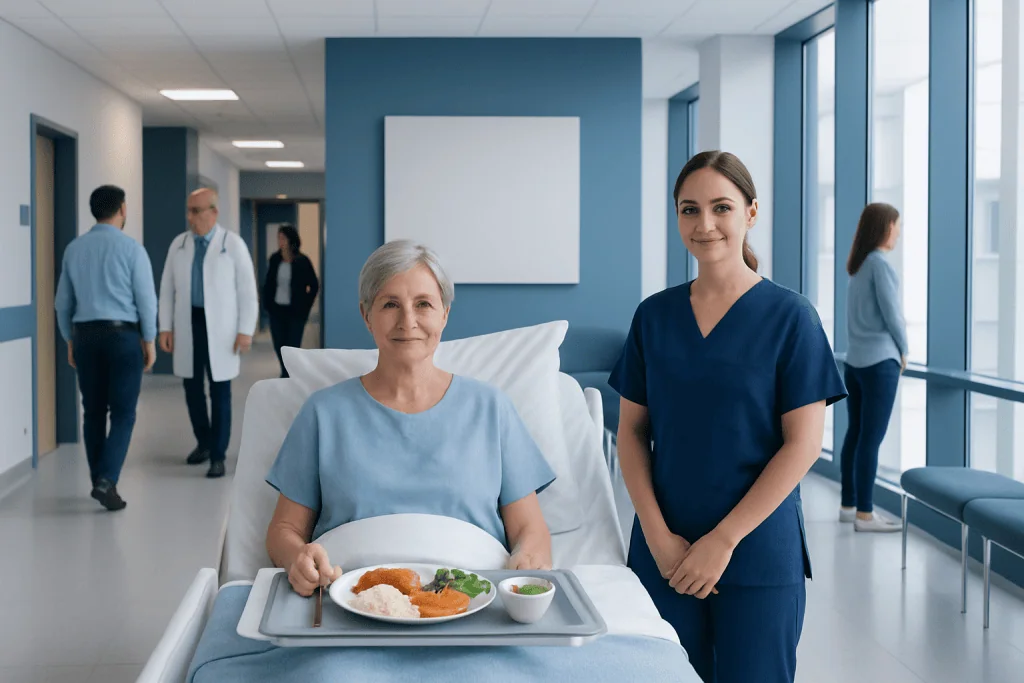
Meals in Turkish hospitals are planned for your medical needs, with dietary options, timing guidance, and practical help for international patients in Turkey.
If you are staying in a Turkish hospital, your meals are usually organized around your treatment plan, recovery needs, and any dietary restrictions you share with your care team. Knowing how meal timing, special diets, fasting instructions, and family food visits work can help you feel more comfortable and prepared.
At a glance
- Best for: International patients preparing for an inpatient hospital stay in Turkey
- What meals depend on: Your treatment plan, fasting requirements, allergies, and doctor-approved diet
- Special diets: Usually possible with advance notice, including allergy-aware and medically required diets
- Language support: International patient teams and interpreters can help you communicate food needs
- Family bringing food: Often limited or doctor-dependent, especially after procedures
- Key tip: Tell your hospital about allergies, intolerances, religion-based preferences, and cultural needs before admission
What hospital meals are usually like in Turkey
Meals in Turkish hospitals are generally practical, scheduled, and closely linked to your medical care. Rather than offering a hotel-style dining experience, hospitals usually provide food that supports recovery, hydration, digestion, and any doctor-directed restrictions you may have during your stay.
As an international patient, you may notice that meal service follows hospital routines quite closely. Breakfast, lunch, dinner, and sometimes snacks are delivered at set times, and the menu may change depending on whether you are recovering from surgery, having tests, taking medication, or preparing for discharge.
In larger private hospitals, including JCI-accredited Acibadem International hospitals, meal planning is typically coordinated with your treating team and hospital nutrition services. This means the food you receive is not only about preference, but also about what is considered safe and suitable for your condition on that day.
How your treatment affects what you can eat
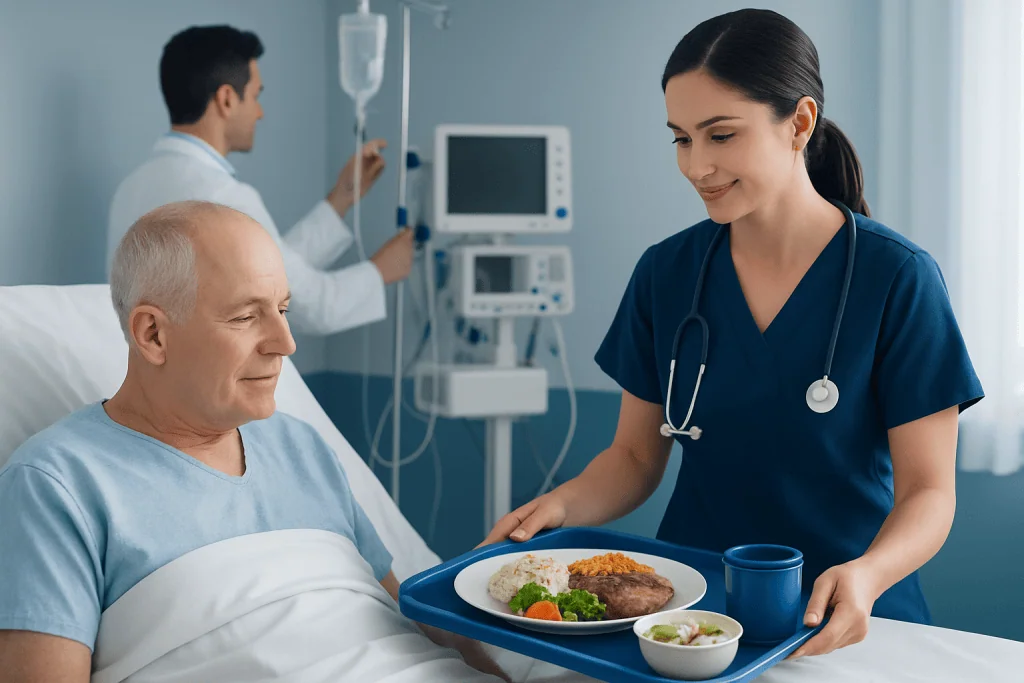
Your meals may change several times during your stay. Before a procedure, you might be told not to eat or drink for a specific number of hours. After treatment, you may restart with water, clear liquids, soft foods, or a light diet before returning to more regular meals.
This can feel restrictive if you are tired or hungry, but it is usually done for safety reasons. Anesthesia, nausea, swallowing comfort, blood sugar control, bowel recovery, and medication timing can all affect when and what you are allowed to eat.
If your instructions seem different from what you expected, ask your nurse or international patient coordinator to explain them in simple terms. At Acibadem International, interpreters and patient service teams can help make sure you understand whether a meal delay, fasting order, or diet change is temporary and medically necessary.
- Fasting may apply before surgery, imaging, or sedation
- Liquids may be limited even if you feel well enough to drink
- Certain foods may be avoided to reduce nausea or digestive strain
- Your doctor may approve gradual diet progression as you recover
Special diets, allergies, and cultural preferences
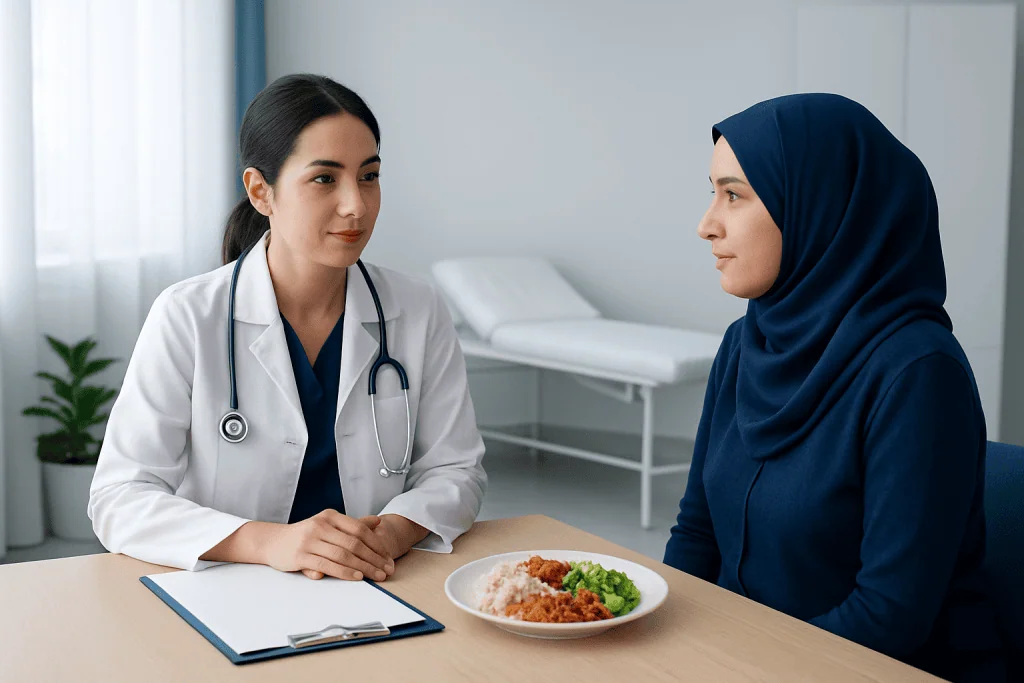
If you have food allergies, intolerances, diabetes, celiac disease, kidney-related dietary restrictions, or other nutrition needs, tell the hospital as early as possible. Ideally, share this information before you travel and repeat it again at admission so it is clearly documented in your file.
Many hospitals in Turkey can accommodate medically necessary diets and common food restrictions when informed in advance. This may include low-salt, diabetic-friendly, soft, pureed, gluten-aware, vegetarian, or other modified meal plans, depending on your condition and the facility’s nutrition protocols.
Religious and cultural preferences also matter. If you avoid certain ingredients or need meals prepared within specific dietary boundaries, mention this clearly to the international patient team. Acibadem International regularly supports patients from many countries, so it is helpful to use interpreters or coordinators to explain exactly what you do and do not eat rather than assuming it will be understood automatically.
It is also wise to bring a written list of severe allergies in English and, if possible, translated into Turkish. This is especially important if your reaction is serious or if cross-contact with specific foods is a concern.
Can your companion bring food or order outside meals?
This depends on your doctor, the hospital’s safety rules, and your stage of recovery. In some cases, food from outside may be discouraged or temporarily prohibited, especially after surgery, during infection-control precautions, or when your digestive system needs careful monitoring.
Even if you feel hungry for familiar food, it is important to ask before eating anything brought by a family member or companion. Some foods may interfere with fasting rules, medication timing, blood sugar management, or post-procedure recovery. A well-meant snack can create a real medical issue if your team does not know about it.
Companions can often help by checking with nurses first, confirming what is allowed, and bringing only approved items. If you are staying at an Acibadem International hospital, the international patient support team can often help explain visitor and food policies so your companion knows what is practical and safe.
- Ask before bringing homemade meals or restaurant food
- Check whether hot drinks, fruit, or packaged snacks are permitted
- Confirm any restrictions after anesthesia or gastrointestinal treatment
- Do not assume “light” foods are automatically allowed
How to make meals easier during your stay
A little preparation can make hospital meals much less stressful. Before admission, make a simple note of your allergies, strong dislikes, religious preferences, usual meal pattern, and anything that affects how you eat, such as dentures, swallowing difficulty, reflux, or nausea. Share this with your care team early.
During your stay, ask practical questions instead of waiting until the tray arrives. You can ask when meals are usually served, whether snacks are available, what to do if you miss a meal because of tests, and who to tell if you are not tolerating the food provided. These are very normal questions in hospital settings.
If you are worried about language barriers, request help from an interpreter or patient coordinator. Acibadem International’s international patient services are designed to support non-Turkish-speaking patients with day-to-day questions like these, not only major treatment discussions. That can be especially reassuring when you are tired, uncomfortable, or trying to follow fasting instructions correctly.
What to expect before discharge
As you get closer to discharge, your team may give you eating guidance for the first days at home or in your hotel. This is often more important than patients expect, especially after surgery, digestive procedures, dental treatment, bariatric-related care, or any treatment that affects swallowing, appetite, hydration, or bowel habits.
Your discharge plan may include advice on fluid intake, soft foods, meal frequency, foods to avoid, and when to return to a more normal diet. If you are traveling soon after discharge, ask for practical examples of what you can eat at the hotel, airport, or during transfer. This helps you avoid guesswork when you are away from the hospital.
Before leaving, make sure you understand whether reduced appetite is expected, what warning signs matter, and who to contact if you cannot eat or drink as instructed. International patient teams at hospitals such as Acibadem International can also help align these instructions with your accommodation and onward travel plans.
Step by step
- Share your dietary needs before you arrive. Send your allergies, intolerances, medical diet needs, and religious or cultural food preferences before admission if possible. Then repeat them again at check-in so the information is documented clearly and not missed during a busy admission process.
- Ask about fasting rules early. If you are having surgery, sedation, imaging, or tests, confirm exactly when you must stop eating and drinking. Ask whether water, gum, tea, coffee, or medication are included in the restriction, because details can vary.
- Confirm what diet you are on each day. Your allowed foods may change after treatment, sometimes quickly. Ask your nurse or coordinator whether you are on clear liquids, soft foods, a regular diet, or a restricted plan so you know what to expect.
- Check before eating outside food. Do not assume snacks or meals brought by family are safe to eat right away. Ask your care team first, especially after procedures or when you are taking medications that affect your stomach, blood sugar, or hydration.
- Speak up if you cannot tolerate your meals. If you feel nauseated, have pain while swallowing, or cannot manage the texture or taste of the food, tell the team promptly. There may be medically appropriate alternatives, timing adjustments, or supportive measures that make eating easier.
- Get discharge eating instructions in simple language. Before you leave, ask for clear guidance on what to eat and drink over the next few days. This is especially useful if you are recovering in a hotel, traveling shortly after discharge, or managing medications that should be taken with food.
Your checklist
- List all food allergies and severe reactions
- Note any intolerances, diabetes, celiac disease, or kidney-related diet needs
- Mention vegetarian, halal, or other religious and cultural preferences
- Ask about fasting rules before procedures or tests
- Check whether companions may bring food from outside
- Keep a written translation of critical dietary warnings
- Ask who to contact if you miss a meal due to testing
- Confirm your post-discharge diet before leaving the hospital
Key takeaways
- Meals in Turkish hospitals are usually guided by your treatment plan, not only by preference.
- Fasting, soft diets, or delayed meals are common around procedures and are often temporary.
- Tell the hospital early about allergies, medical diets, and cultural or religious food needs.
- Outside food may be restricted, so always ask before eating anything brought by visitors.
- International patient coordinators and interpreters can help you understand meal rules and discharge diet advice.
Frequently asked questions
Will I get regular meals during my hospital stay in Turkey?
Usually yes, if your medical condition allows it. Meals are commonly served on a schedule, but timing and content may change depending on tests, surgery, medication, nausea, or recovery stage.
Can Turkish hospitals accommodate allergies or special diets?
Many hospitals can support medically necessary dietary adjustments when they are informed in advance. It is still important to repeat your needs at admission and make sure severe allergies are clearly documented.
Why am I not allowed to eat even when I feel hungry?
This often happens before procedures, after anesthesia, or when your doctor needs to protect your airway, stomach, or digestion. It can be frustrating, but fasting instructions are usually there to reduce medical risk.
Can my family bring me food from outside the hospital?
Sometimes, but only if your doctor and the ward rules allow it. After surgery or during certain treatments, outside food may not be safe or appropriate, so your companion should always ask first.
What if I do not speak Turkish and need help explaining food restrictions?
Ask for interpreter support or help from the international patient team. At Acibadem International, these services can help you communicate practical needs such as allergies, meal timing questions, and cultural preferences more clearly.
Will hospital food in Turkey match the food I eat at home?
Not always. Hospital meals are usually simple and medically guided, so they may feel plainer or more structured than what you normally eat, especially right after treatment.
Do I need food instructions before I leave the hospital?
Yes, especially if your treatment affected your stomach, swallowing, mouth, digestion, or appetite. Ask what foods to choose, what to avoid, how much to drink, and when to seek help if eating becomes difficult.

More Patient Guides
How to Prepare for Your First Night in Hospital in Turkey
First night in hospital in Turkey: pack light, bring key documents, confirm your companion plan, and know what to expect on arrival…
8 min read
Staying Connected During Treatment in Turkey: SIM Cards, Wi-Fi, and Useful Apps
Staying connected during treatment in Turkey is easiest with airport Wi-Fi, an eSIM or local SIM, and a few essential apps for…
8 min read
Admission Day in Turkey: Documents, Payments, and Check-In Steps
Admission day in Turkey usually means passport, medical records, payment confirmation, consent forms, and a short check-in before your tests or treatment.
9 min read