

How to Prepare for Your First Night in Hospital in Turkey
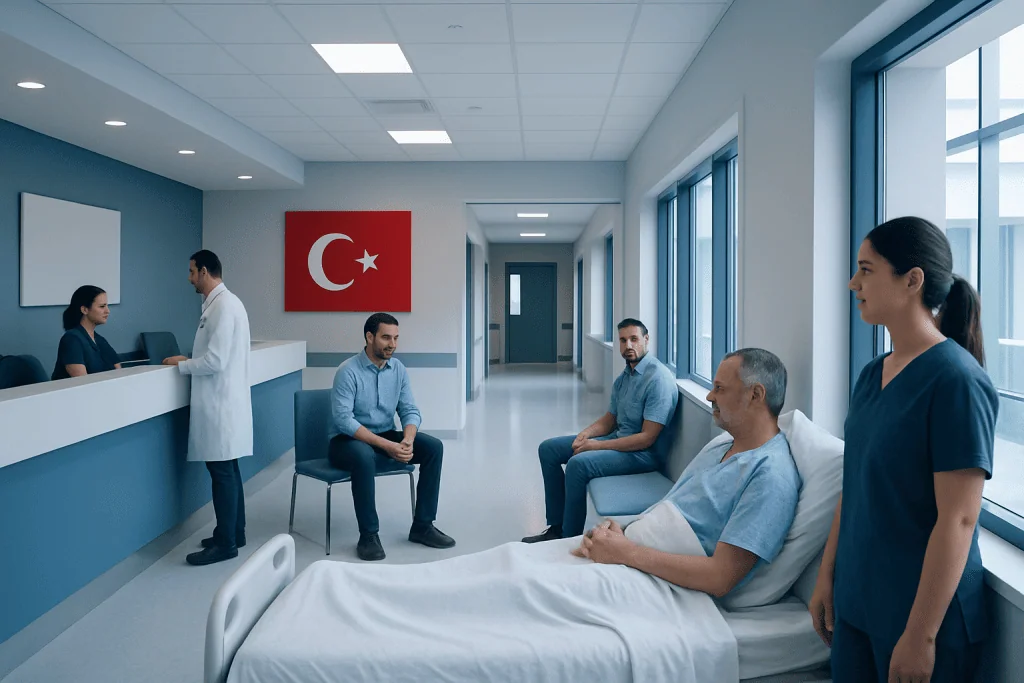
To prepare for your first night in hospital in Turkey, pack one small bag with your passport, admission papers, a written medication and allergy list, chargers, and a few comfort items. Confirm your arrival time and companion rules in advance, ask practical questions as soon as you reach your room, and expect routine checks overnight. Preparation replaces most of the uncertainty with routine.
Wondering what the first night actually looks like, what goes in your bag, how admission works, and who you can ask once the corridor goes quiet? These are the questions almost every international patient has. The first night is rarely difficult in itself. It only feels difficult when you arrive without answers.
This guide explains how to prepare for your first night in hospital in Turkey: what to bring, what happens in the first few hours after admission, what the overnight routine tends to involve, and what practical support exists for patients who have travelled from abroad. It covers the small details deliberately, because on a first night the small details are what you notice.
At a glance
- Best for: International patients preparing for their first overnight hospital stay in Turkey
- Main goal: Replace first-night uncertainty with a clear plan for documents, packing, admission, and communication
- What to bring: Passport or ID, admission papers, a written medication and allergy list, chargers, glasses or daily aids, a few comfort items
- Companion planning: Confirm visiting hours and overnight companion rules before admission: they vary by room type and treatment
- Overnight reality: Expect observation checks and some interruption; lighter sleep on the first night is normal
- Support available: International patient teams and interpreter services help with paperwork, orientation, and language
Why the first night matters
The first night in hospital is usually the moment treatment stops being a plan and becomes real. Even when the admission itself is routine, the combination of a new building, a new time zone, unfamiliar sounds, and a language you may not speak makes the evening feel longer than it is. None of that is a medical problem. It is simply what a first night feels like, and it is easier to manage when you expect it.
The most effective way to prepare for your first night in hospital in Turkey is to separate the medical side from the practical side. The medical side belongs to your care team: tests, observations, and the plan for the next day. The practical side belongs to you: your documents, your phone and charger, your glasses, a written list of the medicines you normally take, and one clear way to reach your family. If the practical side is handled before you walk in, the evening asks very little of you.
Timing also shapes the first night. Some patients are admitted straight from the airport, others after a night or two in a hotel, and the two experiences feel quite different. If your flight lands in the evening, it is worth reading what to plan when arriving in Turkey at night for medical treatment before you travel, because a rushed arrival tends to make everything that follows feel rushed too.
What hospitals in Turkey are like
People searching for this topic often ask what hospitals in Turkey are actually like, so it is worth setting expectations plainly. Turkey has both a public hospital system and a large private sector, and international patients are usually treated in private hospitals that work with foreign patients regularly. In that setting, you can generally expect a private or semi-private room, an en-suite bathroom, a nurse call system, and, depending on room type and hospital policy, a sofa or fold-out bed for a companion.
Hospitals that receive international patients typically run an international patient department. Its role is practical: helping with registration paperwork, coordinating interpreters, orienting you to the building, and answering logistical questions that a nursing team is not there to handle. At Acibadem, this kind of coordination is part of how international admissions are organised, but the general pattern holds across most hospitals in Turkey that treat patients from abroad.
As for what people travel for: patients come to Turkey for a wide range of care, including planned surgery, dental and eye treatment, orthopaedics, cardiology, oncology, fertility treatment, and structured health check-up programmes. Whatever the reason for your stay, the first-night logistics described in this guide are broadly the same. What differs is your specific medical plan, fasting instructions, test schedules, mobility restrictions, and those details come from your treating team, not from a guide.
What to pack for your first overnight stay
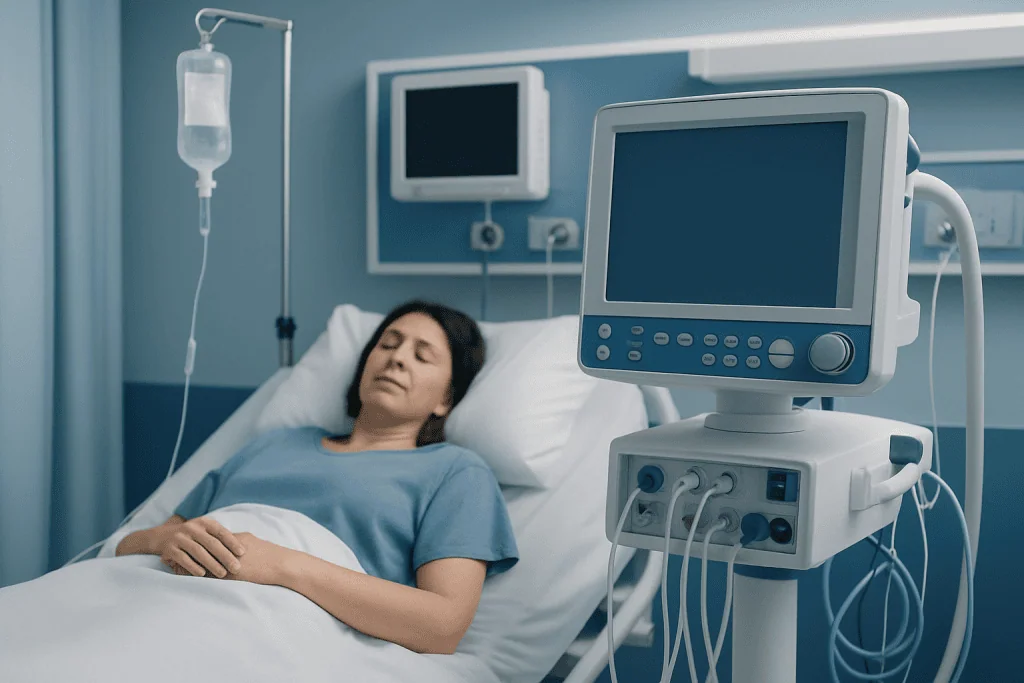
Pack lightly, but pack deliberately. The hospital provides the clinical essentials, gowns, bedding, basic toiletries in many private rooms, so your bag exists for two purposes only: identity and comfort. One small bag is better than a suitcase, especially if your first hours involve moving between registration, testing, and your room. If you are still deciding what travels in which bag, the guide on preparing a carry-on bag for treatment travel to Turkey covers the flight side of the same problem.
Documents come first: your passport or national ID, admission confirmation, insurance papers if relevant, and copies of any medical records or scans you were asked to bring. Then the items you reach for daily: phone and charger, a plug adaptor (Turkey uses the two-pin European socket type), glasses, hearing aids, dentures with a storage case, lip balm, tissues, a toothbrush, slippers with grip, and loose comfortable clothes for discharge. Turkish hospital rooms, like hospital rooms everywhere, tend to be warm and dry, lip balm and a small moisturiser earn their place.
One document matters more than the rest: a clear written list of every medicine, supplement, and allergy, ideally in English, with doses and timings. Do not rely on memory after a long travel day. There is a full guide on how to prepare a medication list for treatment in Turkey, and it is worth doing properly before you fly.
Keep valuables to a minimum. Expensive jewellery, large amounts of cash, and spare electronics are better left at your hotel or at home. Whatever important items you do bring, keep them in one pouch so you are not emptying your bag at midnight looking for a passport.
- Passport or national ID, and admission confirmation
- Insurance papers or payment paperwork if relevant
- Written medication and allergy list, plus your regular medicines in original packaging
- Phone, charger, and a European two-pin plug adaptor
- Glasses, hearing aids, dentures, or other daily aids
- Comfort items: earplugs, a sleep mask, lip balm, tissues, a light robe
- Slip-resistant slippers and a change of clothes for discharge
What happens on admission and in the first few hours
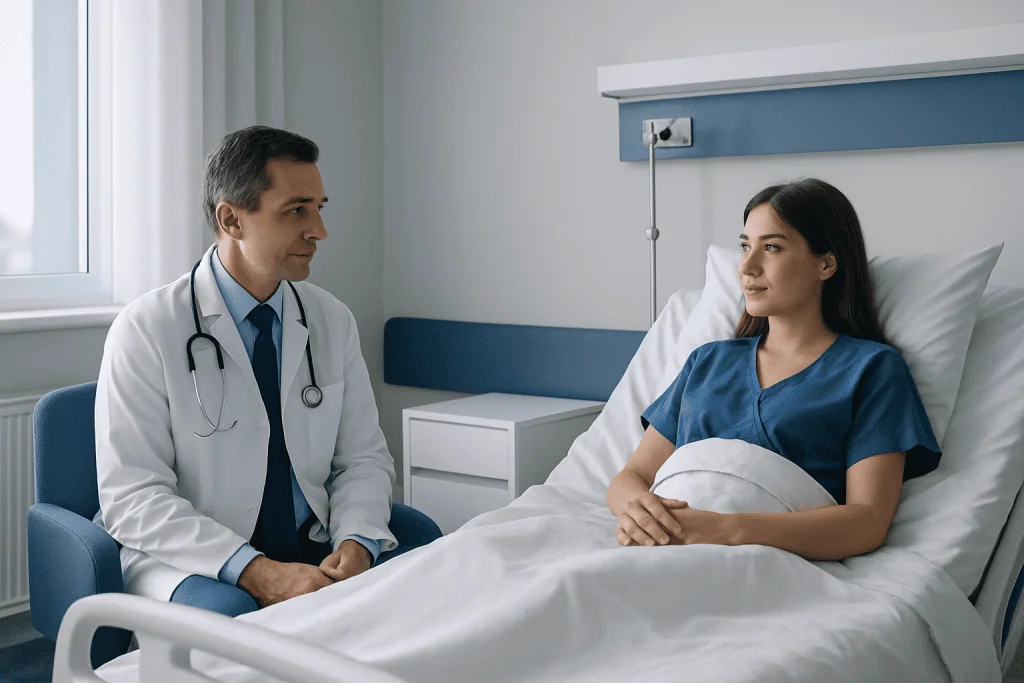
Admission begins with registration and identity checks. Expect to be asked the same questions more than once, full name, date of birth, allergies, medications, reason for admission. The repetition is not disorganisation; it is a deliberate safety practice, and every well-run hospital does it. Answer each time as if it were the first.
What follows depends on your treatment plan. The first hours may include blood tests, imaging, baseline observations, or a conversation with your doctor, nurse, or anaesthesia team. Timing shifts are common because hospitals sequence work around medical need, not around the schedule printed on your paperwork. A charged phone, something to read, and a small dose of patience make the waiting easier. If your admission leads into surgery, the guide to your first 48 hours after arriving in Turkey for surgery explains how the whole sequence typically unfolds.
If English is not your preferred language, raise the question of interpreter support early rather than late. International patient teams coordinate interpreters, paperwork, and room orientation, and that help is most valuable on the first evening, when you are tired and processing new information slowly.
Once you reach your room, ask your practical questions straight away, while a nurse is present: how the call button works, where your belongings should go, whether you may drink water, and what the plan is for the evening. Five minutes of questions at 8pm prevents an hour of uncertainty at 2am.
How to make yourself comfortable that evening
Your goal after settling in is not a perfect setup; it is a simple one. Put your phone, charger, glasses, tissues, water if permitted, and the call button within arm’s reach before you lie down. If you use hearing aids, dentures, or a mobility aid, tell the staff so they can help you store and reach them safely: this matters most if you are given medication that makes you drowsy.
Hospital rooms are busier at night than most people expect. There will be vital-sign checks, possibly a medication round, staff conversations, and the ordinary sounds of equipment and corridor traffic. Earplugs and a sleep mask help if you are sensitive to noise and light, provided they do not stop you hearing your care team when they need you.
It is also entirely normal to feel restless, emotional, or wide awake at the wrong hour, particularly after a flight and a time-zone change. Keep the evening simple: send one update to one family contact, ask when the next check is expected, and take comfort in small routines rather than trying to force sleep. If you flew in the same day, pacing matters even more: the guide on pacing your first medical day after an overnight flight explains why doing less on day one usually works better.
Planning for your companion, family, and communication
If someone is travelling with you, confirm the hospital’s companion and visiting rules before admission day. Policies vary with room type, the treatment involved, infection-control measures, and the time of day. In many private rooms a companion can stay overnight on a sofa or fold-out bed; in intensive care and some specialised units, they cannot. Knowing which applies to you removes a common source of last-minute stress.
Choose one main family contact for updates. One person receives your news and passes it on to everyone else. This spares you a full inbox while you are being admitted or trying to rest, and it means that if your phone dies or your schedule changes, one reliable person can keep the rest of the family informed.
Companions have their own logistics to think about, meals, transport between hotel and hospital, and what happens if the stay runs longer than planned. It is sensible for whoever travels with you to know where your essential documents are kept and to have their own plan for the evening, rather than improvising in a hospital lobby.
Safety basics: medicines, food, and personal information
Bring an accurate written record of everything you take regularly, prescription medicines, over-the-counter products, supplements, plus every allergy you know of. Do not assume the team already has each detail from earlier emails or uploaded documents; travel, transfers, and translations create gaps, and a clear list on paper closes them.
Bring your regular medicines with you, in original packaging where possible, and show them to staff when asked. What you should not do is take them on your own schedule once admitted. After admission, medicines are documented and administered according to a plan your treating team confirms, because some need to be timed differently around tests or procedures. Wait for that confirmation rather than continuing your home routine by habit.
Food and drink instructions carry the same weight on a first night. If a test or procedure is possible the next day, you may be asked to fast from a certain hour. If you are unsure whether water, tea, or a snack is allowed, ask before taking anything. It is a thirty-second question with real consequences if skipped.
Finally, keep your personal information manageable. Passport, insurance paperwork, and phone in one secure place; your companion told where that place is. If you are drowsy after medication in the morning, you will be glad someone else knows where the documents live.
What to expect overnight and the next morning
Many patients worry about sleeping badly on the first night, and many do sleep lightly. Hospitals run around the clock, so interruptions for observations, medication, or equipment checks are part of the night. Light sleep still counts as rest, and staff can often make small comfort adjustments, lighting, temperature, positioning, when it is safe to do so. It helps to treat the first night as a night of resting rather than a test of sleeping.
Before lights out, confirm four things: whether you may eat or drink overnight, when the next check is expected, what time the morning is likely to start, and whether you should call for help before getting out of bed. That last one matters most. If you feel weak, dizzy, or simply unfamiliar with the room, calling first is always the right choice, hospital falls happen most often on the way to an unfamiliar bathroom at night.
In the morning, your team may review observations, repeat tests, discuss the next treatment step, or begin discharge planning if your stay is short. Keep your essentials gathered so you are ready for a room transfer, imaging, or a conversation with your doctor. It is also realistic to know that hospital stays sometimes run longer than the original plan; the guide on preparing for unexpected extra nights in hospital in Turkey explains how to build that flexibility in without anxiety. In the end, most of what it takes to prepare for your first night in hospital in Turkey happens before you ever reach the ward: a small bag, a clear list, and a handful of answered questions.
Costs, check-ups, and choosing a hospital: honest answers
Two questions come up constantly around first-night planning, and they deserve straight answers even though neither has a single number attached.
What does a hospital stay or a full check-up cost in Turkey? There is no universal figure, and any page that gives you one is guessing. The price of an overnight stay depends on the hospital, the room type, the treatment or check-up programme involved, the tests included, and whether a companion stays. Check-up programmes in particular vary widely in scope, some are a morning of basic tests, others a full day of imaging and specialist consultations. The reliable approach is a written, itemised quote for your specific plan, stating what is included, what counts as an extra, and how additional nights or tests would be handled. That written quote is also what makes budgeting for the trip as a whole possible.
Which hospital in Turkey is best? There is no single “best” hospital, and you should be wary of any source that names one without qualification. The right hospital depends on your condition, the specialty involved, the experience of the specific team treating you, language support, and practical factors such as location and companion arrangements. Judge hospitals by how clearly they answer your questions in writing, about your treatment plan, your quote, and your stay, rather than by rankings.
Step by step
- Confirm your admission plan the day before. Check your arrival time, the hospital address, contact numbers, and whether you need to fast before admission. If you are travelling across Istanbul or arriving from another city, confirm transfer timing so you arrive calm rather than late.
- Prepare one small hospital bag. Pack documents, daily essentials, and comfort items for the first 12 to 24 hours. Keep papers and your charger in one easy-to-reach section.
- Write out your medicines and allergies. Every medicine, supplement, dose, and allergy, in English if possible. Bring regular medicines in original packaging, and wait for your team to confirm the plan before taking them after admission.
- Set up your communication plan. Choose one family contact to receive updates and relay them. Agree this before admission day, not during it.
- Ask practical room questions on arrival. How to call the nurse, where belongings go, whether you may drink water, whether your companion can stay, and what the overnight routine looks like.
- Arrange your space before you settle. Phone, glasses, tissues, and call button within reach. If you have been advised not to walk alone, or you feel weak, call for help before getting out of bed at night.
Your checklist
- Passport or ID and admission confirmation
- Insurance documents or payment paperwork if relevant
- Printed medication list and allergy information
- Regular medicines in original packaging
- Phone, charger, and European plug adaptor
- Glasses, hearing aids, dentures, or other daily aids
- Comfort items: lip balm, tissues, earplugs, sleep mask
- Loose clothes and slip-resistant slippers
- One family contact chosen for updates
Key takeaways
- Pack for comfort and communication, not for a long trip, one small, well-organised bag
- Keep documents and a written medication list where you can reach them without searching
- Confirm companion and visiting rules before admission; they vary by room type and treatment
- Ask your practical questions early in the evening, while staff are in the room
- Expect interruptions overnight and treat light sleep as normal, not as a problem
- Use international patient and interpreter support: that is what it exists for
Frequently asked questions
What should I bring for my first night in hospital in Turkey?
Bring your passport or ID, admission documents, a written medication and allergy list, your regular medicines in original packaging, a phone charger with a European plug adaptor, and a few comfort items such as earplugs and a sleep mask. Keep the bag small and leave valuables at your hotel or at home.
What are hospitals like in Turkey?
Turkey has both public and private hospitals. International patients are usually treated in private hospitals with private or semi-private rooms, en-suite bathrooms, and international patient departments that handle paperwork, interpreters, and orientation. Facilities vary by hospital and room type, so confirm specifics for your own admission in writing.
Can my companion stay with me overnight?
Often yes in a private room, where a sofa or fold-out bed may be provided, but it depends on the hospital’s policy, your room type, your treatment, and infection-control rules. Intensive care units usually do not allow overnight companions. Confirm the rules before admission day so your companion can plan the evening.
Will there be someone who speaks English?
Hospitals that treat international patients regularly provide English-speaking coordinators and interpreter services, and many staff speak some English. Raise the question of interpreter support early on your first evening rather than waiting until you are given instructions you cannot follow.
Should I bring my regular medicines, and can I take them as usual?
Bring them, ideally in original packaging, together with a written list of doses and timings. After admission, wait for your doctor or nurse to confirm the plan before taking anything yourself, because some medicines are timed differently around tests and procedures.
How much does a full body check-up cost in Turkey?
There is no single figure. The cost depends on the hospital, the scope of the programme, the tests and imaging included, and any consultations attached. The reliable approach is a written, itemised quote for a named programme, stating exactly what is included and what would count as an extra.
Which hospital in Turkey is considered the best?
No single hospital is best for every patient. The right choice depends on your condition, the specialty and team involved, language support, and practical factors such as location and companion arrangements. Judge a hospital by how clearly it answers your questions in writing rather than by rankings.
Is it normal not to sleep well on the first night?
Yes. Observation checks, medication rounds, unfamiliar sounds, and travel fatigue all make light sleep common on a first hospital night. Resting quietly still helps, and earplugs, a sleep mask, and knowing the overnight plan usually make the night noticeably easier.
Add us as a Preferred Source to see more of our trusted health content across Google Search, AI Overviews and Discover.

Update history
- PublishedAugust 1, 2026
- Medical review approvedSeptember 13, 2026
- Last content updateSeptember 12, 2026
References2
- Medical Tourism: CDC Travelers' Health wwwnc.cdc.gov
- Patient Safety: MedlinePlus medlineplus.gov
More Patient Guides

When a Hospital Stay in Turkey Becomes Longer Than Planned: What to Arrange
If your hospital stay in Turkey is longer than planned, arrange medical updates, accommodation, travel changes, insurance and support for your companion.

Waiting for Test Results in Turkey: How to Use Time Between Appointments
Waiting for test results in Turkey is easier with a clear plan for appointments, rest, records, questions and support in Istanbul.

Unexpected ICU Stay in Turkey: What Patients and Families Should Expect
Unexpected ICU stay in Turkey: learn what patients and families can expect, from communication and visiting to care updates and travel support.

How to Manage Special Diets During Medical Travel in Turkey
Special diets during medical travel in Turkey are easier to manage when you share your needs early, confirm meals and carry safe…