

How to Prepare a Carry-On Bag for Treatment Travel to Turkey

Your carry-on should cover your first 24 to 48 hours in Turkey without your suitcase. Pack your passport, hospital letters, recent test results, your regular medicines in original packaging, chargers, daily aids such as glasses, and one change of clothes. Group documents, medicines, liquids and electronics separately so security checks and hospital registration go quickly.
Standing over an open bag, deciding what stays with you and what goes in the hold? For treatment travel, that decision carries more weight than it does on a holiday. Your carry-on needs to hold everything you might rely on during your first 24 to 48 hours in Turkey, above all your medicines, your documents, and a small set of first-day essentials.
This guide walks you through how to prepare a carry-on bag for treatment travel to Turkey: what belongs in the cabin, what can safely go in checked luggage, and how to organise the bag so airport security, the flight itself, and hospital registration all run more smoothly.
At a glance
- Best for: Patients flying to Turkey for consultations, tests, procedures or surgery
- Main goal: Keep medicines, documents and first-day essentials with you, not in the hold
- Pack first: Passport, hospital letters, regular medicines in original packaging, chargers, one change of clothes
- Never check in: Passports, essential medicines, test results, daily aids, power banks and device chargers
- Rule of thumb: If you would struggle to get through your first two days without it, it travels in the cabin
Why your carry-on matters more than on a regular trip
On an ordinary trip, a delayed suitcase is an annoyance. On a treatment trip, it can complicate your first appointment. When you prepare a carry-on bag for treatment travel to Turkey, you are packing a backup plan: a document folder, a medication kit and a first-day comfort set in one bag that never leaves your side.
Checked luggage can be delayed, rerouted or held. Arrivals can take longer than planned. Some patients go from the airport almost directly to a hotel check-in or a pre-treatment assessment. In each of these situations, the items in your cabin bag may be the only things available to you. That is why the guiding principle is simple: if you cannot safely or calmly spend your first 24 to 48 hours in Turkey without it, it belongs in your carry-on.
For most patients that means the passport, treatment correspondence, recent test results, all regular medicines, chargers, glasses or hearing aids, and one change of clothing. If you use a medical device, mobility aid accessories or special nutrition, plan for those separately: the guide on flying to Turkey with medical devices or implants covers what to check before departure.
Many patients find it easier to divide the packing into three groups: medical essentials, travel documents, and comfort items. Three pouches, three purposes. It makes airport screening quicker, and it means you are never emptying the whole bag to find one paper.
The most important medical and travel documents to keep with you
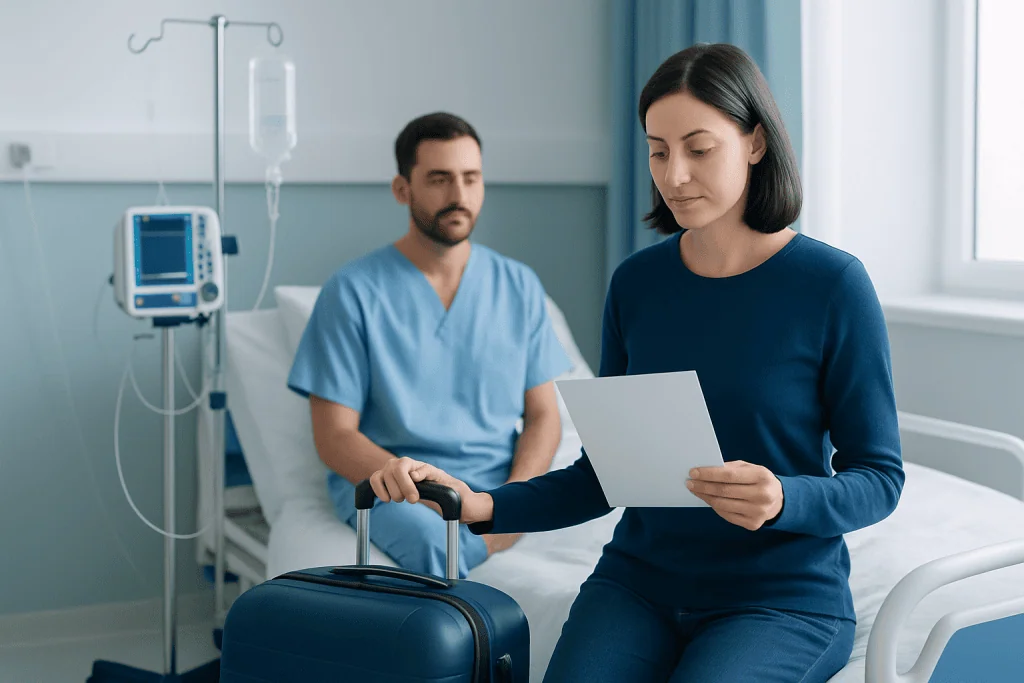
Documents travel in the cabin, always. Put them together in a slim folder or zip pouch so you can produce them at passport control, hotel check-in and hospital registration without digging. Keep digital copies on your phone as well, but do not rely on the phone alone: batteries run flat, roaming can fail, and printed papers are simply easier to hand across a registration desk.
| Document | Why it stays with you |
|---|---|
| Passport and visa or entry documents | Needed at border control and often at hotel and hospital registration |
| Hospital appointment letters and treatment correspondence | Confirms your booking and helps registration staff find your file quickly |
| Recent reports, scans and lab results | Your care team may want to review them at the first consultation |
| Medication list and allergy information | Gives any clinician an accurate picture of what you take and what to avoid |
| Insurance documents, if relevant | May be requested during admission or when arranging cover for the trip |
| Coordinator, driver and hospital contact details | Lets you reach the right person if a flight is late or plans shift |
A short medical history summary in English is worth preparing before you leave home, together with a clear list of everything you take. If you have not built that list yet, the guide on how to prepare a medication list for treatment in Turkey explains what to include and how to format it so it is useful to a clinical team.
Save your key phone numbers twice: once in your phone, once on paper in the document pouch. If your treatment arrangements include an international patient coordinator, keep that contact alongside your hotel and hospital details so everything you might need on arrival sits in one place.
Medicines, medical items and health basics to pack in the cabin
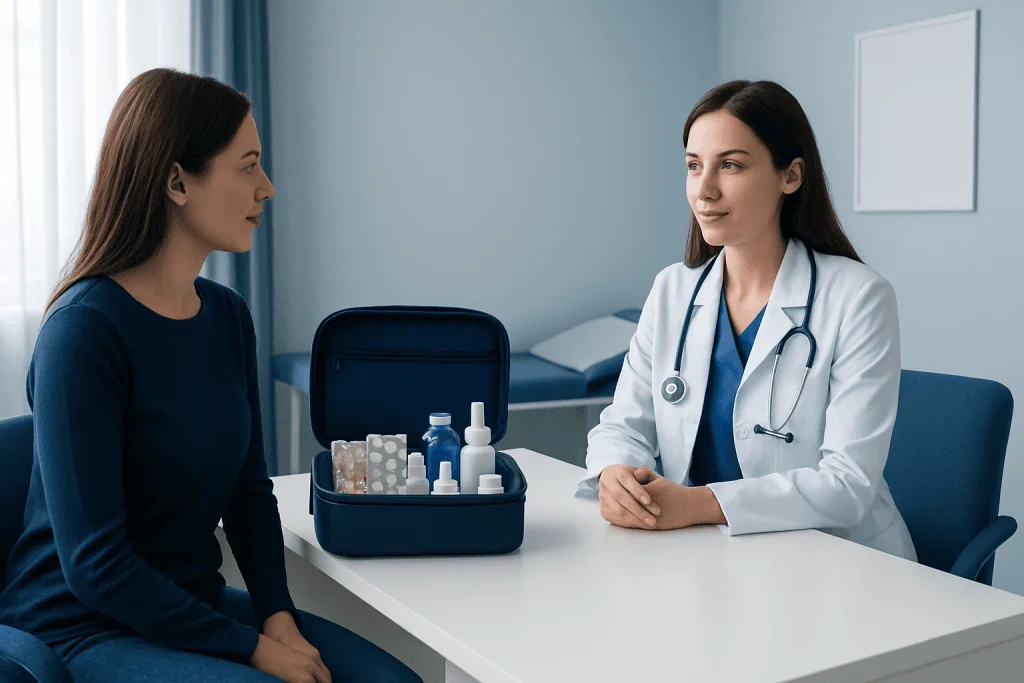
Your regular medicines never go in checked luggage. Keep them in your carry-on, in their original packaging wherever possible, with the labels visible. Bring enough for the travel days plus a modest extra supply in case of delays, within legal limits and your airline’s rules. A copy of the prescription or a doctor’s note is sensible, particularly for injectables or anything that may prompt questions at security. The guide on travelling to Turkey with regular prescriptions covers the paperwork in more detail.
Some medicines need extra care. Controlled medicines have their own documentation requirements, explained in the guide on travelling to Turkey with controlled medicines. Medicines that need cooling, protection from crushing, or a strict dosing schedule are addressed in how to store and carry your medicines safely during treatment travel. Any change to what you take or when you take it belongs to your treating doctor, so plan the journey around your existing schedule rather than adjusting it yourself.
Daily medical aids deserve the same priority as medicines. Glasses, hearing aids, inhalers, CPAP accessories, stoma supplies, compression stockings and blood glucose monitoring items should all stay with you. Batteries, chargers, plug adaptors and small device components are the items patients most often forget, and often the hardest to replace quickly in an unfamiliar city. Anything you may need during the flight itself should sit where you can reach it without unpacking.
Round the medical pouch off with a few health basics: tissues, hand sanitiser, lip balm, a small moisturiser, and any snacks or hydration support your care team has approved. If you have dietary restrictions or a condition that affects your energy, do not assume the airport or airline will stock what suits you. Pack for yourself, while staying within the security rules on liquids and gels.
Comfort items that make treatment travel easier
Treatment travel often involves longer waits, early check-ins and stretches of the day when you feel tired or on edge. A handful of well-chosen comfort items makes a real difference. Think in terms of warmth, rest, hydration and easy access, not volume.
Useful cabin comforts include a light scarf or cardigan, warm socks, a neck pillow if you use one, headphones, an empty refillable water bottle to fill after security, and a phone charger or an airline-permitted power bank. An eye mask and earplugs help on long or overnight flights. If tests or an assessment may follow soon after landing, loose, easy-to-change clothes and slip-on shoes save time and effort.
Pack one change of underwear and one simple outfit in the carry-on. This matters most when a consultation or admission falls within a day of landing: if the suitcase is delayed, you can still arrive at the hospital presentable and comfortable. If your plan involves a hospital stay, choose something soft and practical rather than bulky.
If someone is travelling with you, coordinate rather than duplicate. Each of you should carry a small set of your own essentials, so a briefly inaccessible bag never leaves either of you without documents or medicines. The guide on bringing a companion to Turkey for treatment covers the wider planning that goes with travelling as a pair.
How to pack for airport security, the flight and arrival in Turkey
The way you prepare a carry-on bag for treatment travel to Turkey also decides how smoothly security goes. Pack in layers, not in piles. Documents in one outer pocket. Medicines together in a clear pouch. Electronics in a section you can lift out in one movement. Liquids bagged according to airport rules. When the security tray comes round, you place three items on it and repack them in seconds, nothing gets left on the belt.
For the flight, keep the most-used items at the top of the bag or in a small personal item under the seat: passport, phone, charger, any dose due during the journey, tissues, lip balm and a light layer. You do not want to be opening the overhead locker every hour for basics.
Before you board, settle the arrival plan. Know your pickup arrangement, your destination address and your first point of contact. Screenshot the hotel and hospital details so they are available offline if your signal is weak on landing. If your arrangements include a transfer or interpreter, confirm the meeting point and phone number before departure rather than on the concourse.
Finally, pack with your first day in mind, not the whole trip. Going straight to your accommodation? Think about what helps you settle in. Same-day or next-day hospital appointments? Keep those papers and any requested records in their own sleeve, ready to present. Everything else: the second week’s clothes, the spare shoes, the gifts, can travel in the hold.
What should never go in checked luggage
Some items must not be separated from you unless airline rules specifically require it. Do not check in passports, wallets, essential medicines, test results, hearing aids, glasses, medical device chargers, or anything difficult to replace at short notice. Power banks and spare lithium batteries belong in the cabin in any case, most airlines prohibit them in the hold. Even on a smooth journey, checked baggage can be delayed, rerouted or temporarily out of reach.
At the same time, resist overpacking the carry-on. A heavy cabin bag is exhausting to manage through a long terminal, especially if you are already dealing with symptoms, fatigue or travel nerves. Choose practical, multipurpose items and keep the bag light enough to lift comfortably. If lifting or long walks are difficult, request airport special assistance when you book your flight, airlines arrange this free of charge, and it works best when requested at least 48 hours before departure.
When you are unsure about an item, three questions settle it. Will I need this during the journey? Will I need it immediately after arrival? Would it be hard to replace if my suitcase went missing for two days? One yes, and it goes in the carry-on.
Step by step
- Start with your medical essentials. Pack your regular medicines first, before any clothing or comfort items. Keep them in original packaging and add prescription copies, your dosing schedule and any clinician notes you may need at security or on arrival.
- Create one dedicated document pouch. Passport, flight details, appointment confirmations, reports and emergency contacts all live in one slim folder. This saves time at the airport and keeps you organised at hotel reception and hospital registration.
- Plan for the first 48 hours, not the whole trip. The carry-on covers the journey and your first day or two in Turkey. One practical outfit, underwear, toiletries within travel rules, chargers, daily aids and immediate-use medical items, nothing more.
- Keep in-flight items easy to reach. Anything you may use during the flight sits at the top of the bag or in a small personal item: a dose due in the air, tissues, headphones, a sweater, your charger.
- Check airline and airport rules in advance. Review bag size limits, liquid rules, battery restrictions and any medical documentation requirements before departure. If you carry special nutrition, sharps or a medical device, confirm what is permitted so nothing becomes a last-minute problem at screening.
- Prepare your arrival plan before takeoff. Save your pickup details, hotel address and hospital contacts both offline on your phone and on paper. Confirm any transfer or interpreter meeting point before you fly, and keep those details visible in the document pouch.
Your checklist
- Passport and travel documents
- Hospital appointment letters and treatment correspondence
- Recent reports, scans and test results
- Regular medicines in original packaging
- Prescription copies and allergy list
- Phone, charger and a suitable plug adaptor
- One change of clothes and underwear
- Glasses, hearing aids or other daily medical aids
- Small comfort items such as tissues, lip balm and socks
Key takeaways
- Your carry-on should cover your medical, document and comfort needs for the first 24 to 48 hours in Turkey.
- Medicines, passport, test results and key hospital contacts always travel in the cabin.
- Group documents, medicines, liquids and electronics separately so security screening and repacking take seconds.
- Pack one change of clothes and your daily aids in case checked baggage is delayed.
- Power banks and spare lithium batteries go in the cabin; passports and essential medicines never go in the hold.
- Confirm transfers, interpreters and airport assistance before departure, and keep those contacts on paper as well as on your phone.
Frequently asked questions
What is the most important thing to pack in a carry-on for treatment travel to Turkey?
Your passport, hospital documents and regular medicines. If checked baggage is delayed, these are the items that protect your treatment schedule and your peace of mind, and they are the hardest things to replace quickly in another country.
Should I keep my medicines in original packaging?
Yes, that is usually the safest approach. Original packaging identifies the medicine clearly, and a prescription copy or doctor’s note helps at security checks, especially for injectable medicines or anything classed as a controlled substance.
Can I carry liquid medicines over the standard 100ml limit?
Medically necessary liquids are usually exempt from the standard limit, but you should declare them at screening and carry supporting documentation such as a prescription or doctor’s letter. Rules vary between airports and airlines, so confirm with your carrier before you fly.
How much clothing should I put in my carry-on?
Keep it simple. One change of clothes, underwear, and whatever you need for the first day or two is enough. The carry-on is a first-48-hours bag, not a second suitcase: the rest of your wardrobe travels in the hold.
Do I need printed medical records if I already have them on my phone?
Carry both. Phones lose battery, roaming can be unreliable, and printed copies are easier to hand over at registration or during a first consultation. A slim folder with your reports, medication list and allergy information covers you either way.
Can a power bank go in my checked suitcase?
No. Power banks and spare lithium batteries must travel in the cabin under most airline rules. Check your airline’s capacity limits before you fly, and keep the power bank where you can reach it, since chargers matter more than usual on a treatment trip.
Can I pack all my important items in my companion’s bag?
It is better to split essentials while keeping your own critical items with you. Each traveller should have immediate access to their own documents, medicines and a few basics, in case you are briefly separated during the journey or one bag is out of reach.
What kind of help can I arrange for the airport and arrival?
Airlines provide special assistance for passengers with reduced mobility when it is requested in advance, usually at least 48 hours before the flight. Hospital international patient services often coordinate transfers and interpreter support, so it helps to confirm meeting points and contact numbers before departure.
Add us as a Preferred Source to see more of our trusted health content across Google Search, AI Overviews and Discover.

Update history
- PublishedAugust 6, 2026
- Medical review approvedSeptember 13, 2026
- Last content updateSeptember 12, 2026
References3
- Hand luggage restrictions at UK airports: GOV.UK gov.uk
- Pack Smart: CDC Travelers' Health wwwnc.cdc.gov
- Traveling Abroad with Medicine: CDC Travelers' Health wwwnc.cdc.gov
More Patient Guides

GHIC and EHIC in Turkey: Why They Do Not Cover You
The blue card that quietly covers you across Europe stops working at the Turkish border, and every summer, travelers discover this…

Do You Need Vaccinations for Turkey?
Here is the answer travel clinics give every day: no vaccinations are required to enter Turkey from anywhere in the normal course…

Flying With a Broken Leg or Cast: Airline Rules and Comfort
A broken leg does not cancel a flight, airlines carry passengers in casts every single day. What surprises travelers is that…

Travel Insurance After Cancer: What Patients Should Know
A cancer diagnosis changes how insurers read your name, but it does not end your traveling life. Thousands of people with…