

Flying to Turkey with Medical Devices or Implants: What to Prepare Before Travel

Flying to Turkey with medical devices or implants is usually manageable with preparation. Carry your device card, a doctor's letter in English, and your prescription list in hand luggage. Keep all medicines and device supplies in the cabin, never the hold. Check your airline's battery and equipment rules early, request any approvals in writing, and allow extra time at security for alternative screening if needed.
A hip replacement that sets off the metal detector. A CPAP machine the check-in agent wants to count as your cabin bag. Spare lithium batteries the airline has firm opinions about. Flying to Turkey with medical devices or implants is rarely a problem in itself: the problems come when preparation is left until the airport.
Three things do most of the work: carry the right documents, keep medicines and device supplies in the cabin, and tell your airline early about anything that needs approval or assistance. This guide walks through each of those, plus the parts other guides skip, what Turkish customs expects for regulated medicines, how airlines actually treat medical equipment against baggage allowances, and when a device makes it sensible to have a medical review before you fly.
At a glance
- Start preparing: 2–3 weeks before departure; earlier if airline approval is needed
- Core documents: Device card, doctor’s letter in English, prescription list, passport
- In the cabin: All medicines, chargers, spare batteries, several days of backup supplies
- Who needs to know: Your airline, airport assistance, the treating hospital in Turkey
- Watch closely: Battery rules, oxygen approval, screening guidance from your device manufacturer
What counts as a medical device or implant when you fly
Think more broadly than you might at home. For the purposes of flying to Turkey with medical devices or implants, the category includes implanted items, pacemakers, defibrillators, joint replacements, stents, cochlear implants, neurostimulators, pain pumps, breast implants, and external equipment such as CPAP machines, insulin pumps, glucose monitors, portable oxygen concentrators, wheelchairs, feeding pumps and drainage systems.
Different devices raise different travel questions. A knee replacement mainly affects the two minutes you spend at the security arch. A powered wheelchair affects check-in, battery paperwork and boarding. An insulin pump affects screening, packing and what you keep within reach during the flight. It helps to sort your own equipment into three rough groups: things that only matter at screening, things that need airline approval, and things you depend on continuously and cannot afford to lose to a checked bag.
If you are unsure whether something counts, treat it as though it does. Your local doctor, the device manufacturer and your airline can each confirm what applies to your specific model. Guesswork is the one approach that reliably causes airport delays.
The documents you should carry with you
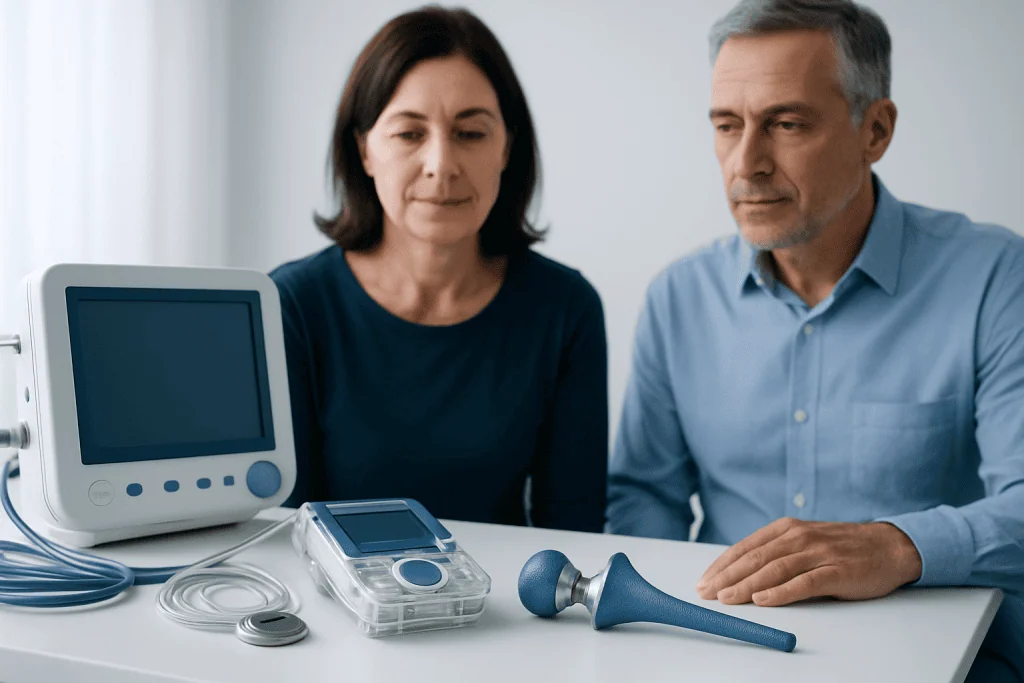
Your most useful travel tool is a small, organised set of documents in your hand luggage. At minimum: your device identification card if one was issued, a recent doctor’s letter, your current prescription list, and contact details for your home clinician and the hospital you will attend in Turkey.
The doctor’s letter should be practical rather than technical. It should state what device or implant you have, whether it has implications for airport screening, that you need to carry medicines and supplies in the cabin, and whether you need assistance during the journey. If you use a battery-powered device or oxygen equipment, ask for that to be named explicitly: a vague letter is only slightly better than no letter.
Keep both paper and digital copies. Scan everything to your phone and store it somewhere a family member can also reach. If your records are not in English, ask whether a short English summary can be added; it is far more useful at a Turkish check-in desk than a full clinical file in another language. Building a digital medical travel folder before departure keeps all of this in one place, and our guide to letters, scans and airport checks for implants covers the paperwork side in more depth.
One honest caveat: no document guarantees a particular screening process or waives an airline rule. What documents do is turn a long conversation into a short one. That is worth the twenty minutes it takes to assemble them.
Airport security and screening with implants

Security is the moment most travellers worry about, and it is usually the most straightforward part. Tell security staff before screening that you have an implant or wear a medical device, before, not after the alarm sounds. Present your device card or doctor’s letter early rather than waiting for questions.
Metal implants such as joint replacements can trigger walk-through detectors. Electronic implants such as pacemakers, defibrillators and neurostimulators may come with manufacturer guidance about specific screening methods, some manufacturers advise against certain scanners or against prolonged contact with handheld wands. Follow the guidance for your device and carry it with you. Screening technology varies between airports and even between lanes, so do not assume the process at your home airport will be repeated in Istanbul.
You can politely request alternative screening, such as a manual pat-down, if your device documentation supports it. Staff at major Turkish airports handle international passengers with medical needs daily, and a single clear sentence, “I have an implanted medical device and I have documentation with me”, usually moves things along. Build extra time into your airport arrival so additional checks do not become a source of stress or a missed flight.
Medicines and Turkish rules: what to check before packing
Turkey, like most countries, regulates certain categories of medicine. Narcotic painkillers, some psychiatric and ADHD medicines, benzodiazepines and certain sleep medicines fall under controlled-substance rules in many jurisdictions, and travellers carrying them are generally expected to bring quantities for personal use only, in original packaging, with the prescription and a doctor’s letter that names the medicine and the condition it treats.
The specifics change, so check current official guidance: your own government’s travel advice for Turkey and the Turkish embassy in your country are the right sources, not forums. What does not change is the principle: original packaging, matching prescription, personal quantities, and a letter that connects the medicine to you.
Two things this guide will not do. It will not give you a definitive list of banned substances, because such lists go out of date and your situation may involve exemptions or permits. And it will not suggest adjusting any medicine for travel, decisions about starting, stopping or rescheduling medication belong to your treating doctor, including changes to timing across time zones for insulin or other time-sensitive treatment.
Packing batteries, chargers and backup supplies
Everything essential travels in the cabin. Checked bags get delayed, rerouted and exposed to hold temperatures that some medicines and equipment tolerate badly. Pack enough medicine and consumables for your whole trip plus a margin for delays, schedule changes or an extended stay, several extra days is a reasonable working figure.
If your device uses batteries, cables or a remote, keep them reachable and labelled. If you rely on disposables, infusion sets, sensors, dressings, tubing, masks, catheters, split them between bags where possible so one lost bag does not take everything with it.
Batteries deserve their own attention. Airlines apply specific rules to lithium batteries: watt-hour limits, terminal protection, restrictions on where spares may travel (typically cabin only), and advance approval for larger packs. Powered wheelchairs, battery-equipped CPAP units and portable oxygen concentrators are the items most often caught out. Our guide to using battery-powered medical devices during travel to Turkey covers this in detail, and CPAP users will find the specific arrangements in travelling to Turkey with a CPAP machine.
A practical cabin-bag list:
- Device card and doctor’s letter, together in one pouch
- All prescription medicines, in original packaging where possible
- Chargers, cables, plug adapters and spare batteries within airline limits
- Consumables for several days beyond your planned stay
- A short written note on what to do if the device alarms or stops, in plain language you could hand to someone else
Airlines, cabin allowances and when to notify
A common question: are medical devices exempt from carry-on limits? Often, yes, many airlines allow essential medical equipment such as a CPAP machine to travel in addition to your standard cabin allowance rather than counting against it. But this is airline policy, not a universal right, and it frequently comes with conditions: the item must be for your own medical use, and battery-powered equipment may still need approval. Confirm your carrier’s rule before you pack, and keep the confirmation email with your travel documents.
Contact the airline as soon as flights are booked if any of the following apply: you use a wheelchair or need mobility assistance, you plan to use a device in flight, you travel with a portable oxygen concentrator, you carry large or spare batteries, or you may struggle with long walks between gates. Some airlines require medical information forms or fitness-to-fly confirmation for certain conditions and equipment; others only need notice. Portable oxygen concentrators typically must come from the airline’s approved model list, and compressed oxygen cylinders are often not permitted at all, never assume oxygen arrangements will be solved on the day.
Whatever the airline tells you, get it in writing. A screenshot of an approval email settles in seconds a discussion that would otherwise consume your check-in.
The flight, arrival in Turkey, and your first day
Make the travel day physically easy. Wear clothing that gives access to any external device without leaving you feeling exposed. Keep medicines, snacks and anything needed for symptom management within reach rather than in the overhead locker. If fatigue, breathlessness, pain or low blood sugar are realistic possibilities for you, plan the day around them instead of pushing through.
On arrival, pace yourself. Immigration, baggage collection and ground transport at a large Turkish airport take time. If you have arranged airport assistance or a hospital transfer, confirm the meeting point before departure and carry the local contact numbers on paper as well as on your phone: a phone that has not yet found a local network is a common first-hour problem.
In your first 24 hours, keep the routine stable: charge devices, organise supplies, check that medicines are stored correctly, and confirm the route and timing for your hospital visit. Hospitals that treat international patients, including Acibadem, generally ask about implants and devices during pre-travel planning, because details such as imaging compatibility, charging access and mobility support affect how an appointment day is organised. Sharing accurate device information early is part of the preparation, not an afterthought.
If your treatment in Turkey will itself involve a new implant or prosthesis, it is worth reading ahead: flying home with medical implants or prostheses after treatment covers the return journey, which has its own paperwork.
When a device makes a pre-travel medical review sensible
Most people with stable, established implants or devices fly without difficulty. Some situations are less routine, and doctors typically want to review travel plans when a device was implanted very recently, when settings have just been adjusted, when there has been a recent infection or wound-healing issue, or when new symptoms have appeared since the device was last checked.
A review also tends to matter more when the stakes of a mid-journey failure are high, travel with oxygen, dependence on a powered device with no simple fallback, significant mobility limitation, or ongoing wound care. In those cases a doctor may recommend a specific fitness-to-fly plan, extra supplies, or itinerary changes. Our guide on medical fitness to fly to Turkey explains how that assessment works and who carries it out.
General online advice, including this page, cannot replace device-specific guidance. Airline policies vary, airport processes vary, and your medical situation is your own. Your treating clinician and the device manufacturer are the two sources whose instructions actually apply to you.
Step by step
- List every device, implant and essential supply. Write down everything you use or have implanted, with model names where you know them. This list drives every other step: it is what you check airline rules against and what your doctor’s letter should reflect.
- Request a travel letter from your doctor. Short, clear, in English if possible: condition, device or implant, medicines, and any needs at screening or in flight. Ask for batteries or oxygen to be named explicitly if they apply.
- Check airline rules the day you book. Review the carrier’s policies on medical equipment, lithium batteries, oxygen and mobility assistance. If approval or forms are required, complete them well before departure, not at the airport.
- Pack all essentials in the cabin. Medicines, device supplies, chargers, spare batteries and backups stay with you. Add a margin of several days beyond your planned stay, and keep everything organised so it is easy to show if asked.
- Assemble one document pouch. Device card, doctor’s letter, prescription list and airline approvals together in a single place you can produce at check-in, security and boarding.
- Allow more time at the airport. Arrive earlier than usual in case screening takes longer or you need assistance across the terminal. Extra time is the cheapest stress reduction available.
- Plan your first 24 hours in Turkey. Know how you will get from the airport to your accommodation or hospital, where you will charge and store equipment, and keep key contacts on paper in case your phone has no network on landing.
Your checklist
- Passport and travel insurance details
- Device or implant identification card
- Doctor’s letter for travel and airport screening
- Current medication list and prescriptions
- All medicines in carry-on, in original packaging
- Chargers, adapters, cables and spare batteries within airline limits
- Extra device supplies for delays or an extended stay
- Airline approval emails for special equipment, saved and screenshotted
- Hospital contact details in Turkey and at home, on paper
Key takeaways
- Flying to Turkey with medical devices or implants is usually straightforward when documents, packing and airline notice are sorted in advance.
- Essential medicines and device supplies belong in the cabin, never in checked baggage.
- Follow your device manufacturer’s screening guidance and tell security staff about implants before, not after, the detector.
- Battery, oxygen and equipment rules are airline-specific, check early and keep written confirmation.
- Recently implanted or recently adjusted devices are among the situations doctors usually review before travel.
Frequently asked questions
Can I fly to Turkey with a pacemaker or other implant?
In many cases, yes, when the condition is stable and your treating doctor has not advised against travel. Carry your implant card and a doctor’s letter, tell security staff before screening, and follow any device-specific guidance from the manufacturer.
Will airport scanners affect my implanted device?
It depends on the device and the screening technology, which is why manufacturer guidance matters more than general advice. If your documentation recommends avoiding certain scanners or handheld wands, show it to staff and request alternative screening such as a pat-down.
Are medical devices exempt from carry-on luggage limits?
Many airlines allow essential medical equipment, such as a CPAP machine, in addition to the standard cabin allowance rather than counting it against your bag. But this is carrier policy, not a universal rule, and battery-powered items may still need approval, confirm with your airline in writing before you fly.
What medications can I not take into Turkey?
Turkey regulates controlled substances such as narcotic painkillers and certain psychiatric, sleep and ADHD medicines. Travellers carrying regulated medicines are generally expected to bring personal-use quantities in original packaging with a prescription and doctor’s letter. Check current official guidance from your government’s travel advice and the Turkish embassy, as specifics change. Never adjust or stop a medicine for travel without your doctor’s direction.
Is it a good idea to travel to Turkey for dental implants?
Many people do, and it can work well when the plan is realistic. Dental implants often require more than one stage, so the honest questions are about staging across visits, healing time between them, and how follow-up and any complications will be handled once you are home. Be wary of plans that compress everything into a single rushed trip.
What surgeries do people travel to Turkey for?
Common areas include orthopaedic surgery such as joint replacement, cardiac procedures, cancer treatment, eye surgery, dental work, fertility treatment and cosmetic or reconstructive surgery. Whatever the procedure, the travel preparation in this guide, documents, packing, airline notice, applies in the same way.
Do I need a medical certificate to travel with a device or implant?
Not everyone needs formal clearance, but a doctor’s letter is strongly recommended for anyone with an implant or external device. Some airlines specifically require medical forms for oxygen, powered equipment or certain conditions, so check your carrier’s requirements as soon as you book.
Should my device supplies go in checked luggage?
No. Essential medicines and device-related supplies stay in your carry-on wherever possible. Checked bags can be delayed, lost or exposed to hold temperatures that some medicines and equipment do not tolerate, and spare lithium batteries are usually required to travel in the cabin anyway.
Add us as a Preferred Source to see more of our trusted health content across Google Search, AI Overviews and Discover.

Update history
- PublishedAugust 21, 2026
- Medical review approvedSeptember 2, 2026
- Last content updateSeptember 2, 2026
More Patient Guides

Flying With Medication: Airline Rules, Documents and Packing
Every day, travelers hold up security lines worrying about a bag full of tablets that nobody actually wants to confiscate. The rules…

How to Send Your Medical Files Securely Before Treatment in Turkey
Send medical files securely before treatment in Turkey by using approved channels, clear file names and a complete health summary.
Pain Control After Treatment in Turkey: What Patients Should Expect and Ask About
Pain control after treatment in Turkey usually includes a tailored medicine plan, clear warning signs, and follow-up support before you leave Istanbul.

Managing Medicines Across Borders After Treatment in Turkey
Managing medicines across borders after treatment in Turkey means carrying clear documents, checking import rules, and planning refills before you fly.