

Traveling to Turkey with Medical Implants: Letters, Scans, and Airport Checks

You can fly to Turkey with most medical implants. Carry an implant card or a short doctor's letter, a current medication list, and the reports your hospital asked for. Tell security staff about the implant before screening and follow their instructions. Keep everything medical in your hand luggage, and confirm fitness to fly with your treating doctor if surgery was recent.
Wondering whether your pacemaker will set off the metal detector, or which folder of old scans is actually worth packing? Traveling to Turkey with medical implants is usually straightforward, but it goes better when you treat the implant as part of your travel plan rather than a last-minute medical detail. This guide explains which documents matter, how airport screening tends to work, what customs rules mean for your medication bag, and how to arrive at the hospital with the right paperwork rather than all the paperwork.
It is written for patients with orthopaedic, cardiac, dental, neurological, cochlear, breast or other implanted devices, whether the implant is the reason for your trip or simply something you carry with you. The short version: an implant card or letter, a medication list and a small set of relevant recent records will cover most situations. The longer version, including what to do when you have several implants and years of history, is below.
At a glance
- Best for: Patients traveling with orthopaedic, cardiac, dental, neurological or other implanted devices
- Main documents: Implant card or doctor’s letter, passport, current medication list, and the recent records your hospital actually asked for
- Airport security: Most implants are manageable at screening; declare the device early and follow staff instructions: a card supports the conversation but does not skip checks
- Scans to bring: Only relevant recent reports and images, ideally confirmed with the receiving team before you fly
- Medication rules: Keep medicines in original packaging with prescriptions; controlled medicines need documentation to cross borders
- Hand luggage rule: Anything medical you might need in the next 12 hours never goes in checked baggage
What traveling to Turkey with medical implants actually involves
People fly every day with joint replacements, dental implants, pacemakers, stents, spinal hardware, breast implants, cochlear implants and neurostimulators. Airlines and airports handle implanted devices routinely. The practical challenge is not the implant itself: it is that no airport officer, airline agent or hotel receptionist knows your medical situation until you tell them, and no hospital can review records you left at home.
Traveling to Turkey with medical implants therefore comes down to three tasks. First, documentation: being able to show, in a sentence and a page, what device you have and when it was placed. Second, screening: knowing what to say at the security line and what to expect afterwards. Third, hospital preparation: bringing the records that help your treating team and leaving behind the ones that do not. Each of these takes minutes to prepare and saves considerably more than that in transit.
One honest limit to state early: this guide covers logistics. Whether you personally should fly at a given point after surgery or device placement is a clinical judgement that depends on your operation, your healing and your overall health. That decision belongs to your treating doctor, not to a travel article.
Which documents you should carry
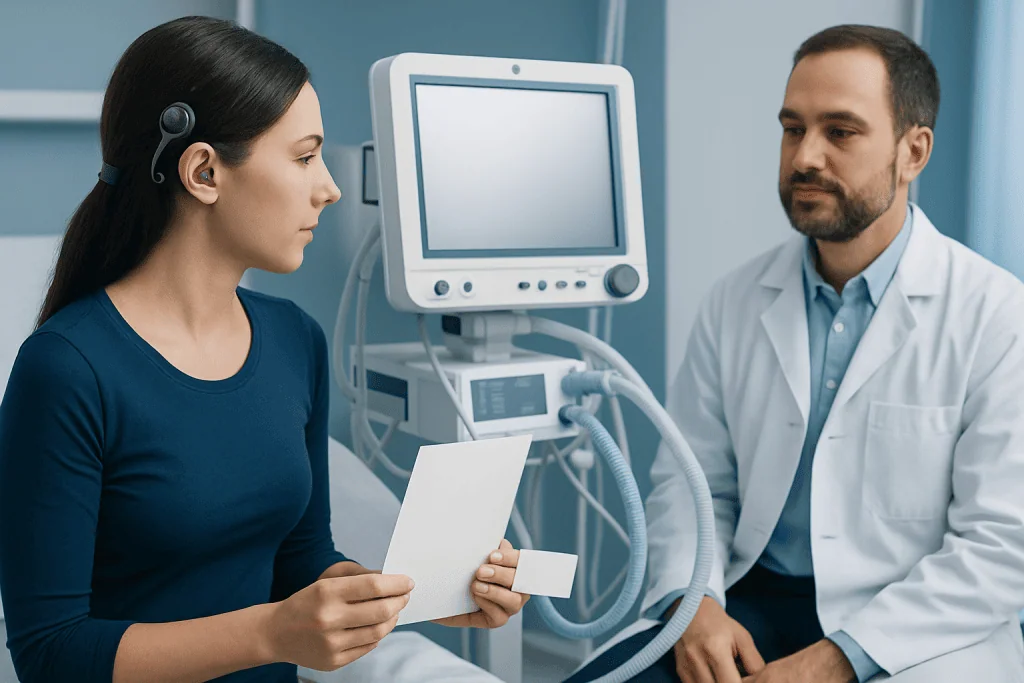
The single most useful document is an implant identification card or a short letter from your doctor stating what device you have, when and where it was placed, and whether any precautions apply. Many device manufacturers issue cards at implantation; if you never received one, or lost it, ask the implanting hospital for a summary letter, in English if possible. Keep a paper copy in your hand luggage and a photograph or PDF on your phone. Paper does not run out of battery; phones do not get coffee spilled on them. Carry both.
Second is a current medication list: brand names, generic names, doses, and the reason for each medicine. This matters most when the implant is linked to ongoing treatment, anticoagulants after cardiac procedures, pain medication after orthopaedic surgery, seizure medication alongside neurostimulation devices. A clear list lets any clinician who sees you understand your situation quickly, and it supports conversations at customs if anyone asks about the contents of your medicine bag.
Third is a small, relevant medical file. Operation notes, discharge summaries, imaging reports, device model and serial information, and recent specialist letters are the documents most often useful. A well-organised ten-page folder is worth more than a carrier bag of everything since 2009. Our medical records checklist before traveling to Turkey walks through what to include and what to leave out.
- Passport and travel insurance details
- Implant card or medical letter, paper and digital
- Medication list, plus prescriptions or original packaging
- Recent clinic summaries or discharge notes
- Relevant imaging reports and, if requested, the actual scan files
- Device model, serial number and manufacturer information for electronic implants
Do you need to bring scans, CDs or reports?
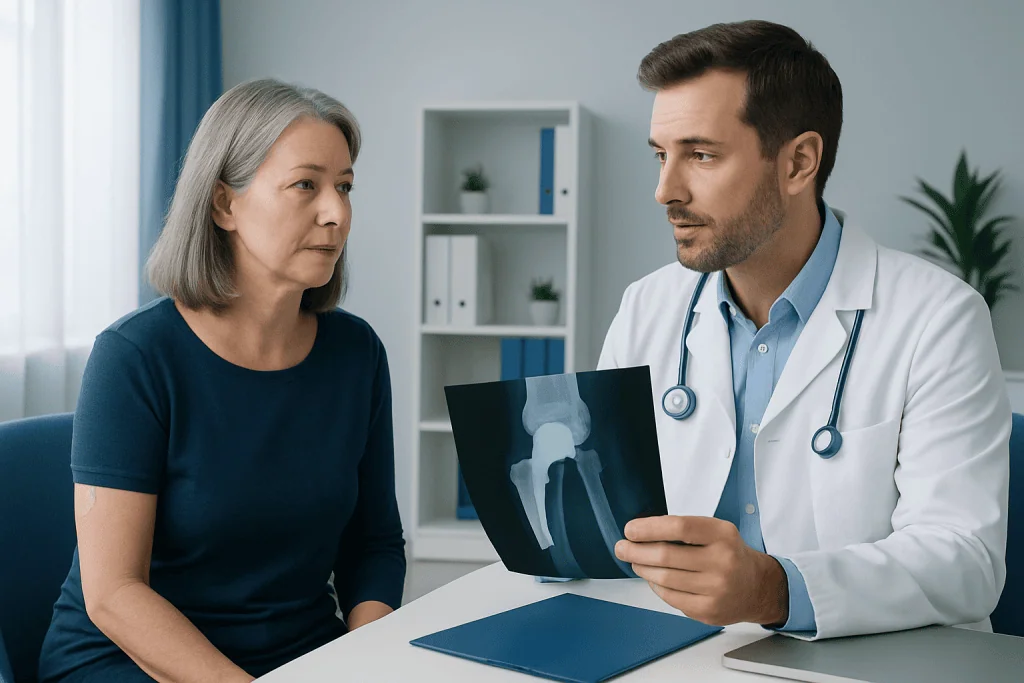
Bring imaging if your treating team asked for it, if the implant is part of the reason you are seeking care, or if you had surgery recently and follow-up decisions may depend on what the images show. In many cases a written radiology report is enough for a first review; for planning revision surgery or assessing hardware, specialists often want the original images on CD, USB or a secure link. The reliable way to know is to ask before you fly: it is a two-line email, and it spares you carrying discs nobody opens.
What matters varies by implant type. For orthopaedic hardware, recent X-rays are usually the most useful item. For cardiac and neurological devices, device summaries, cardiology reports or programming information often matter more than standard image copies. For dental implants, a recent panoramic X-ray or cone beam CT is relevant if you are coming for revision, repair or additional work in the same jaw.
Where possible, carry both a paper report and a digital copy of the images. Discs fail, files refuse to open, and hospital systems abroad may not read every format on the first try. For the practical detail, formats, DICOM files, what to do when your home hospital only offers a patient portal, see traveling to Turkey with X-rays, MRI and CT scans. Sending records ahead of arrival also lets the receiving team check what is missing and avoid repeating tests unnecessarily.
Airport security and screening: how to handle it calmly
Implants can trigger walk-through metal detectors, but many modern devices do not: it depends on the material, the size and the sensitivity of the equipment on the day. Either way, the same approach works: tell security staff before screening begins, particularly if you have a pacemaker, defibrillator, neurostimulator, insulin pump, pain pump or any device with specific screening guidance. A calm, single sentence is enough: you have a medical implant, and you have documentation with you.
Then follow instructions. Procedures vary by country, airport and equipment; you may be directed through the standard detector, through a body scanner, or offered a hand search. Your implant card or letter supports the conversation and speeds it up, but it is not an exemption from screening anywhere in the world, and arguing at a checkpoint never shortens it. Officers at large international airports see implanted devices many times a day.
Two preparations are worth making in advance. If your device manufacturer advises against certain scanner types or against prolonged handheld wanding directly over the device, carry that written guidance and show it rather than paraphrasing it from memory. And if your mobility is limited by the implant or recent surgery, book airline assistance when you buy your ticket: it covers queues, gates and connections, not just boarding. If your device includes external components, our guide to traveling to Turkey with medical devices covers screening of pumps, monitors and controllers in more depth.
Customs: what you can and cannot bring into Turkey
A common worry among medical travelers is whether their medication bag will cause a problem at the border. For most people it will not, provided the medicines are clearly for personal use, carried in original packaging, and matched by prescriptions or a doctor’s letter. Loose pills in an unlabelled container invite questions that labelled boxes do not.
Turkey, like most countries, restricts narcotic and psychotropic medicines, strong painkillers, some sedatives and similar controlled substances. Traveling with these is generally possible when they are prescribed to you and documented, but the documentation is not optional. Ask your prescriber for a letter naming the medicine, the dose and the medical reason, and carry quantities that plausibly match the length of your trip. Beyond medicines, the usual categories apply: weapons, drugs without documentation and certain restricted goods cannot be brought in. Rules change, so check the current official travel advice for Turkey shortly before you fly rather than relying on forum posts.
Sharps deserve a mention. If your implant or related treatment involves injections, carry needles and syringes in original packaging with the prescription that explains them, and keep them in hand luggage with the rest of your medical kit.
Packing, medication and comfort during the journey
Everything essential travels in the cabin with you: medication, implant card, prescriptions, chargers for external device components, spare batteries where the airline permits them, and key documents. Checked baggage is delayed or misrouted often enough that nothing medically important should ever depend on it. If you have had recent surgery, add a change of basic clothing to the cabin bag as well.
Comfort on a long flight is partly planning. Loose clothing over surgical sites, water after security, and a realistic plan for how you will manage stairs, long walks between gates and lifting bags. If your doctor gave you instructions on movement exercises, compression, wound care or limits on bending and lifting, those instructions apply in airports and aeroplanes exactly as they do at home.
Medication timing across time zones is a genuine question, especially for anticoagulants and pain relief, and it is a question for your treating doctor before departure, not something to improvise in transit. Do not adjust doses or schedules on your own because of a time difference or an airport delay. If you use an external controller or monitor for an implanted device, board with it charged, labelled and reachable, since airline or security staff may ask about it.
Arriving in Turkey and preparing for your hospital visit
After landing, keep the medical folder accessible rather than buried in a suitcase. You may need it at your first consultation, an imaging appointment or the admission desk. A simple habit helps: travel documents in one place, medical documents in another, so you can produce either without unpacking in a public hall.
If a hospital transfer is arranged, the handover at the airport is usually simple: a named driver, a short wait, a direct journey. It is still worth knowing how the process works before you land, especially after an overnight flight; airport transfer for medical travelers in Turkey describes the typical sequence. At Acibadem, international patient services can coordinate transfers, interpreters and appointment timing, which helps most when you are tired, moving slowly or managing more than one appointment on arrival day.
Plan the small practicalities: leave generous time between landing and any hospital appointment, wear clothing that makes the area around your implant easy to examine, and keep your insurance details with the medical folder rather than separately. The smoother your paperwork, the more of the first consultation is spent on you rather than on reconstruction of your history.
Dental implants and treatment travel: visits, timing, planning
Many people asking about implants and Turkey are not carrying a device: they are traveling to receive one. Turkey is a large destination for planned treatment, most commonly dental work, orthopaedic surgery such as joint replacement, eye surgery, plastic and reconstructive procedures, and bariatric surgery, alongside cardiology and oncology care at major hospital groups.
For dental implants specifically, the biology sets the schedule. A titanium implant placed in the jaw needs time to integrate with the bone before the final crown or bridge is fitted, typically a matter of months, decided case by case. That is why dental implant treatment is very often planned as at least two visits: one for assessment and implant placement, and a later one for the final restoration. Some patients need more visits, for example when bone grafting or extractions come first, and some cases qualify for faster protocols. The honest answer to “how many visits” is: it depends on your jaw, your scan and your treatment plan, and a reputable clinic will tell you the number before you book flights, not after.
Is it safe to travel for dental implants? Safety is a property of the clinic, the clinician, the planning and the follow-up, not of a country. The useful questions are the same anywhere: who assesses you and on what imaging, how complications between visits are handled, what written records you take home, and who your own dentist should contact with questions. A provider that answers those plainly is telling you something; one that answers only with package descriptions is telling you something too. Preparation before treatment also mattershow to prepare for blood tests, scans and pre-op checks explains what typically happens before a procedure day.
When travel timing needs a closer look
Some situations deserve extra planning before you book. Recent implant surgery, recent complications, pending device checks, dependence on external equipment linked to the implant, or standing instructions to avoid certain movements or prolonged sitting all affect whether a given travel date is sensible. None of these automatically rules out flying, but the timing of travel after surgery or device placement is individual, and the assessment belongs to the doctor who knows your case, not to general internet advice.
The same logic applies to the return leg. Flying home after treatment involving a new implant or prosthesis has its own considerations, fresh documentation, screening with a device you have never flown with before, and comfort after a procedure. Our guide to flying home with medical implants or prostheses after treatment covers that journey separately.
Step by step
- Confirm your implant details. A few weeks before travel, check exactly what implant or device you have, when it was placed, and whether any screening or travel precautions apply. If you are unsure, ask the implanting hospital for a short written summary.
- Build a small medical folder. Implant card or letter, medication list, prescriptions, and the most relevant recent reports. Printed copies in hand luggage, digital backups on your phone and in email.
- Ask whether images are needed. If you are traveling for consultation or treatment, confirm with the receiving hospital whether reports alone are enough or original images are wanted, and in what format.
- Check medication rules. Keep medicines in original packaging with prescriptions. For controlled medicines such as strong painkillers, get a doctor’s letter and check current Turkish entry rules through official travel advice.
- Arrange airport support early. Book mobility assistance through the airline when you buy tickets if you need it, and keep any device-specific screening guidance where you can show it at security.
- Pack for access, not just arrival. Medicines, device accessories, chargers and key papers go in the cabin bag. The important items are the ones you can reach without opening checked luggage.
- Allow extra time on travel day. Arrive earlier than usual, especially if you expect additional screening or move more slowly after surgery. Time is the cheapest stress reducer available.
- Keep the folder ready after landing. Separate medical documents from travel and hotel paperwork so registration, consultations and any imaging review move without a search through your suitcase.
Your checklist
- Passport and travel documents
- Implant card or doctor’s letter, in English if possible
- Current medication list with doses and reasons
- Prescriptions, with medicines in original packaging
- Doctor’s letter for any controlled medicines
- Recent reports and any scans the hospital requested
- Medical travel insurance details
- Chargers, permitted spare batteries, and external controllers for any device
- Device manufacturer’s screening guidance, if it exists
- Comfort items: loose clothing, and water bought after security
Key takeaways
- Most people traveling to Turkey with medical implants pass airport security without difficulty when they declare the device early and carry documentation.
- An implant card or doctor’s letter, a medication list and a small file of relevant recent records cover most travel and hospital situations.
- Bring scans only when relevant or requested, and confirm the format with the receiving hospital before you fly.
- Medicines travel in original packaging with prescriptions; controlled medicines need a doctor’s letter and a check of current entry rules.
- Whether you are fit to fly after recent surgery or device placement is an individual clinical question for your treating doctor.
Frequently asked questions
Will my implant definitely set off airport metal detectors?
Not necessarily. Some implants trigger detectors and others do not, depending on the material, the size and the sensitivity of the equipment on the day. Even when an alarm sounds, security staff handle implanted devices routinely. Declaring the implant before screening and staying calm makes the process short.
Is an implant card enough at airport security?
It helps, but it does not replace screening. Staff still follow the airport’s procedures, which may include a body scanner or a hand search. Treat the card as supporting information that speeds the conversation, not as a pass that overrides the rules.
What is not allowed to bring into Turkey?
The usual categories apply: weapons, illegal drugs and certain restricted goods. For medical travelers, the practical point is controlled medicines, strong painkillers, some sedatives and similar substances need prescriptions and ideally a doctor’s letter to cross the border legally. Keep all medicines in original packaging, carry quantities matching your trip, and check current official travel advice before flying, as rules change.
How many visits to Turkey do dental implants take?
Very often at least two: one visit for assessment and implant placement, and a later visit for the final crown or bridge once the implant has integrated with the bone, which takes months. Cases involving bone grafting or extractions may need more visits, and some qualify for faster protocols. Your treatment plan should state the number of visits before you book travel.
Is it safe to travel to Turkey to get dental implants?
Safety depends on the specific clinic and clinician, the quality of assessment and imaging, and how follow-up is handled between visits, not on the destination itself. Ask any provider how you will be assessed, what happens if something needs attention between visits, and what written records you will take home. Clear answers to those questions matter more than any marketing claim.
What if I have a pacemaker or another electronic implanted device?
Declare it before screening begins and carry the device identification information with you. Some devices come with manufacturer guidance about scanner types or prolonged handheld wanding directly over the device; carry that guidance in writing and show it rather than describing it from memory. Keep any external controller or monitor charged and accessible in your cabin bag.
Should I keep my medicines in checked luggage?
No. Essential medicines stay in hand luggage, always. Delayed and misrouted bags are common enough that nothing time-sensitive or medically important should depend on checked baggage. Original packaging and a prescription copy also make any customs or security conversation quicker.
Can I fly to Turkey soon after implant surgery?
That depends on the type of implant, how recent the procedure was and how your recovery is going. Fitness to fly, wound care, clot prevention and movement restrictions are individual questions that your treating doctor answers for your specific case. General timelines from the internet are not a substitute for that assessment.
Add us as a Preferred Source to see more of our trusted health content across Google Search, AI Overviews and Discover.

Update history
- PublishedJuly 6, 2026
- Medical review approvedSeptember 13, 2026
- Last content updateSeptember 12, 2026
References3
More Patient Guides

GHIC and EHIC in Turkey: Why They Do Not Cover You
The blue card that quietly covers you across Europe stops working at the Turkish border, and every summer, travelers discover this…

Do You Need Vaccinations for Turkey?
Here is the answer travel clinics give every day: no vaccinations are required to enter Turkey from anywhere in the normal course…

Flying With a Broken Leg or Cast: Airline Rules and Comfort
A broken leg does not cancel a flight, airlines carry passengers in casts every single day. What surprises travelers is that…
Travel Insurance After Cancer: What Patients Should Know
A cancer diagnosis changes how insurers read your name, but it does not end your traveling life. Thousands of people with…