

Traveling to Turkey with Medical Devices

Yes, you can usually travel to Turkey with medical devices, but planning matters. List every device, carry a doctor's letter and battery specifications, confirm your airline's rules in writing, and keep essential equipment in cabin baggage. Turkey uses 230V power with Type C and F plugs. Tell your Acibadem coordinator about each device before arrival so transfers, appointments and interpreter support can be arranged around your needs.
Will they let your machine through security? Where will you plug it in overnight? Will the airline count it against your baggage allowance? These are the questions that keep people awake before a flight, and they are easier to answer than they feel right now.
If you rely on a medical device, traveling to Turkey with medical devices comes down to three things: documentation, airline confirmation, and telling the right people early. This guide walks through each of them, what to arrange before departure, how to handle airport screening and batteries, what Turkish customs expects with restricted medicines, and how the Acibadem International team can support you once you land.
At a glance
- Best first step: Send your care coordinator a written list of every device you use, before you book flights.
- Carry-on rule: Essential devices, medicines, chargers and documents stay in cabin baggage whenever airline rules allow. Never rely on checked luggage for anything you cannot be without.
- Key documents: A doctor’s letter in English, device prescription or report, implant card if relevant, manufacturer details, and lithium battery specifications in watt-hours.
- Airline notice: Oxygen concentrators, PAP machines, mobility aids and large batteries often need advance approval, ask in writing and keep the reply.
- Power in Turkey: 230V standard, Type C and Type F sockets. Check your charger is dual voltage and bring the correct adapter.
- Hospital arrival: Share device details with your Acibadem team so appointments, room needs, transfers and interpreter support can be planned around them.
Traveling to Turkey with medical devices: start with an inventory
Almost every problem people report: a battery refused at the gate, a charger that does not fit the socket, a hotel room without a bedside outlet, traces back to one missing step: nobody wrote the devices down. So start there. Before you book anything, list every item you depend on. That might include a CPAP or BiPAP machine, an insulin pump, a continuous glucose monitor, a portable oxygen concentrator, a wheelchair or walker, an implanted device and its card, an external stimulator, a feeding pump, a nebuliser, hearing aids, ostomy supplies, or wound care equipment.
For each item, answer four questions. Do you need it during the flight itself? Does it contain or use batteries, and what kind? Does it need mains electricity overnight? Does it depend on sterile, single-use or temperature-sensitive supplies? A device that only matters at your destination can be packed differently from one that must run at 35,000 feet. This inventory becomes the document you share with your airline, your hotel and your hospital, and it prevents the last-minute conversations at check-in desks that make medical travel stressful.
If you are coming to Acibadem International for treatment, send this list to your international patient representative as early as possible. They can route questions to the relevant hospital department, flag mobility or interpreter needs before you arrive, and tell you what to bring to your first appointment. They do not replace guidance from your own doctor or the device manufacturer: those two remain your primary sources for anything clinical or technical about the device itself.
Documents to carry with your device
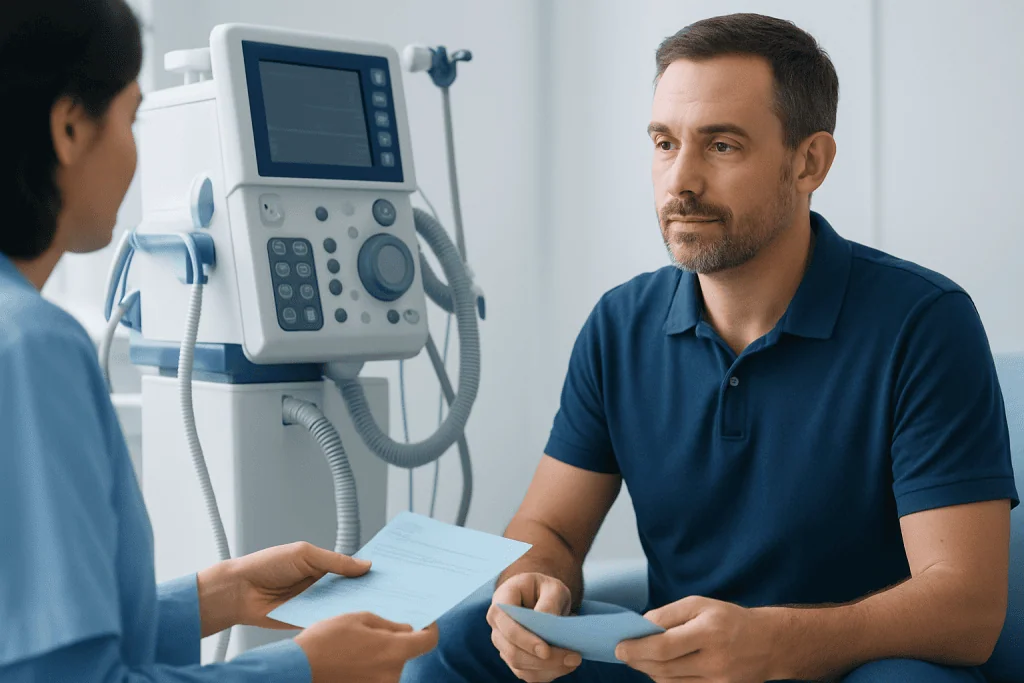
Good paperwork does most of the work at check-in counters, security lanes, customs desks, hotel receptions and hospital admissions. Ask your treating doctor at home for a signed letter, in English if possible. It should describe your diagnosis in general terms, name the device, explain why it is medically necessary, and state whether it must stay with you throughout the journey. A letter that says “this equipment must remain in the cabin with the patient” resolves most airport conversations before they begin.
Alongside the letter, carry copies of your prescriptions, a recent medical summary, any implant cards, the device model and serial numbers, the manufacturer’s quick reference sheet, and emergency contact details for your home clinic. If the device uses lithium batteries, bring the specification sheet showing watt-hours or lithium content, airlines are entitled to ask for this and some will refuse batteries whose rating cannot be verified.
Keep the originals in your hand luggage, a printed copy with the device itself, and another with your passport. Store digital copies securely on your phone and in a cloud account you can reach from any device. If you do not speak Turkish, English documentation works well in international medical settings here, and your Acibadem interpreter will help during hospital conversations. For a fuller picture of which clinical papers to bring, scans, reports, referral letters, see our guide on traveling to Turkey with medical records.
Flying with batteries, chargers, and electrical equipment
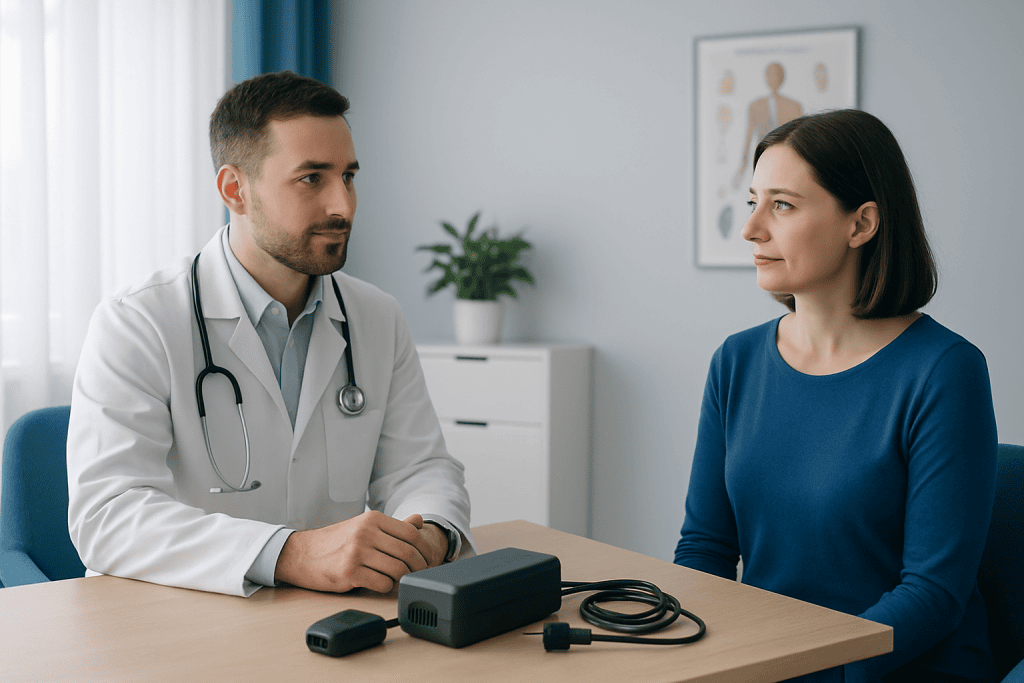
Batteries are the part of traveling to Turkey with medical devices that airlines police most strictly, and the rules change by carrier, battery size and route. As a general principle, spare lithium batteries belong in the cabin, never in checked baggage, with their terminals protected, taped over, or kept in original packaging or a dedicated case. Larger batteries, typically those above certain watt-hour thresholds, need explicit airline approval and may be limited in number. Do not guess at the thresholds: email your airline with the exact battery specifications and keep their written reply with your travel documents. Never fly with a damaged or swollen battery.
Check the device itself, too. Some airlines want in-flight medical equipment switched to flight-safe modes or want notice that it will run during the flight. Portable oxygen concentrators are the strictest category: most carriers publish a list of approved models and require battery capacity for a set proportion of the flight time, plus advance paperwork. Start that process weeks before departure, not days.
On the ground in Turkey, the standard voltage is 230V and sockets are Type C and Type F: the two round-pin European styles. Most modern medical device power supplies are dual voltage, but check the label rather than assuming; it should say something like “100–240V”. Bring the correct plug adapter, and if your device must run overnight, a spare. Avoid cheap voltage converters and overloaded extension leads. For a deeper walkthrough of watt-hour rules, charging on board and packing spares, read our dedicated guide to using battery-powered medical devices during travel to Turkey.
Airport security, screening, and mobility support
Screening goes more smoothly when you speak first. Before you reach the scanner, tell security staff calmly that you carry a medical device and show your letter or implant card if asked. Some devices should not go through X-ray belts or body scanners, depending on the manufacturer’s guidance, insulin pumps and some continuous glucose monitors are common examples, and staff can arrange a hand inspection instead. You are allowed to ask for one.
If you have an implanted device such as a pacemaker, defibrillator or neurostimulator, follow the instructions your physician and the device manufacturer have given you about metal detectors, body scanners and handheld wands. Do not disconnect, silence or modify any medical device for the convenience of screening unless your own healthcare professional has specifically shown you how and when to do so. Our guide to traveling to Turkey with medical implants covers the letters and cards worth carrying for each implant type.
Request assistance early if you walk slowly, use a wheelchair, travel with oxygen, or need extra time to board. Airlines can arrange wheelchair service, priority boarding and help between gates, but usually only when notified at least 48 hours in advance, sooner is better. Istanbul’s main airport is large, and connections can involve long distances; on arrival, keep essential supplies in a bag you can reach, because baggage claim, passport control and ground transfers can take longer than you expect.
Medicines and Turkish customs: what needs extra care
Devices rarely travel alone, most come with medicines, and this is where border rules matter most. Turkey, like most countries, regulates narcotic and psychotropic medicines: strong painkillers, certain sleep and anxiety medicines, some ADHD medicines and similar controlled substances. These are not automatically forbidden for travellers, but they are the category most likely to be questioned, so carry them in original packaging with the pharmacy label, alongside your prescription and doctor’s letter naming the medicine, the dose and why you take it.
Bring quantities that match the length of your stay plus a sensible reserve, rather than large stockpiles, and keep everything in your hand luggage. If you take a controlled medicine, check the current rules before you fly: your airline, the Turkish embassy or consulate in your country, or your Acibadem coordinator can point you to the right channel. Do not stop, skip or reduce any medicine to simplify travel; any change to your medication is a decision for your treating doctor, not a packing strategy. Our companion guide on traveling to Turkey with regular prescriptions covers documentation, refrigerated medicines and sharps in detail.
Packing essentials for a safer journey
Treat your carry-on as a medical safety kit. The device, power supply, chargers, adapters, batteries, consumables, medicines, prescriptions and troubleshooting sheet travel together, in the cabin, where you can reach them. If the device has removable parts, label them and use protective cases, hard cases for anything fragile, clear pouches for anything security may want to see.
Bring more consumables than the trip should need. Treatment schedules shift: a test result can extend your stay, a recovery can take an extra week, a follow-up can be added. Depending on your device, that reserve may mean PAP masks, tubing and filters; infusion sets and reservoirs; glucose sensors; ostomy supplies; dressings; electrodes; or sterile accessories. Exact brands and device-compatible parts are not always available locally at short notice, so your own reserve is the most reliable one. Check airline and border rules for sharps, liquids, gels and temperature-controlled items before you fly, medical liquids are generally exempt from standard cabin limits when declared with documentation, but declare them rather than hoping they pass unnoticed.
- Keep one full day of essential supplies in a small personal bag under the seat in front of you.
- Split backup supplies between bags so one delayed or damaged case does not take everything.
- Label clearly, but avoid displaying private medical details on the outside of bags.
- Carry the manufacturer’s contact details and your home clinic’s after-hours number.
For a device-by-device packing method, what goes in which bag, and how to protect equipment from rough handling, see how to pack medical devices and supplies for treatment travel to Turkey.
Coordinating your arrival, hotel, and hospital visit
Your device needs continue past the airport. Your accommodation should know in advance if you need a step-free entrance, a lift, a refrigerator for medical supplies, reliable bedside outlets, space for mobility equipment, or a stable overnight surface for a machine. Ask these questions in writing before arrival and keep the confirmation, “yes, of course” at booking is worth less than an email you can show at reception.
Acibadem International’s patient services team helps international patients think through exactly these practicalities: airport transfer coordination, accommodation guidance, interpreter arrangements and appointment timing. If you travel with bulky equipment or limited mobility, say so before arrival, so your transfer vehicle and hospital check-in can be planned to suit. Whether that support matters even more when you are travelling alone is covered in our guide to traveling to Turkey for surgery alone.
At your first hospital visit, tell the nursing and physician team about every device you use, even ones that seem unrelated to your appointment. Insulin pumps, implants and external devices can affect imaging, monitoring, anaesthesia planning, infection precautions and medication timing. Mentioning them early does not create delays; it removes them, because the team plans around your normal routine instead of discovering it mid-procedure.
Is it safe to come to Turkey for medical treatment with a device?
This is one of the most searched questions, and it deserves a straight answer rather than a reassuring one. Turkey has a large, well-developed hospital sector that treats substantial numbers of international patients each year, and traveling with a medical device does not by itself make treatment abroad unsafe. What determines how your trip goes is preparation: whether your full medical history and device list reach the treating team before you arrive, whether your travel plan protects the equipment you depend on, and whether you have realistic arrangements for follow-up after you return home.
No hospital anywhere can promise a particular outcome, and you should be cautious of any provider that does. What a well-organised hospital can do is assess your case honestly before you commit to travel, tell you if your condition or device makes flying inadvisable right now, and plan your admission around the equipment you use. Sharing complete information early, including your device inventory and current medicines, is the single biggest thing you control. For country-level travel guidance, consult your own government’s travel advice before booking; the references at the end of this guide point to the official sources.
What to do if something goes wrong
Even careful plans meet delayed luggage, damaged cables and devices that behave oddly after a long flight. Before you leave home, ask your device provider what to do if the device alarms, stops charging, loses its settings, or needs replacement parts abroad. Get those instructions in plain language and keep them with the device.
If a device problem occurs during your stay, match your response to the stakes. For a non-urgent fault, a cracked case, a lost adapter, a low supply of consumables, contact your Acibadem care coordinator or treating team and they will help you work out next steps within the hospital setting. Do not attempt repairs beyond the manufacturer’s instructions, and do not keep using damaged cables, batteries or accessories.
If a device that supports your breathing, heart rhythm, insulin delivery, nutrition or medication infusion fails, or you develop symptoms such as difficulty breathing, chest pain or severe confusion, call your local emergency number or go to the nearest emergency department now. In Turkey, the emergency number is 112. The international patient team can help you communicate at the hospital, but they cannot source replacement parts for every device brand, which is why your own backups, spare consumables and manufacturer contact details remain your strongest protection.
Step by step
- List every device and supply. Write an inventory of devices, accessories, batteries and consumables. Include brand, model, serial number where relevant, and whether each item is needed in flight or only at your destination.
- Ask your doctor for a travel letter. Request a signed letter explaining why each device is necessary and whether it must stay with you. In English if possible; printed and digital copies both.
- Confirm airline rules before booking. Ask about medical equipment, battery watt-hour limits, oxygen concentrator policies, mobility assistance and whether devices count against baggage allowance. Get approvals in writing.
- Check restricted-medicine rules. If you take controlled medicines, verify current Turkish entry rules through your airline, the Turkish embassy or your coordinator, and never adjust your medicines for travel without your doctor’s instruction.
- Share details with your Acibadem coordinator. Send your device list and travel needs before you fly, so interpreters, transfers, hospital access and appointment timing can be planned around them.
- Pack essentials in carry-on baggage. Device, medicines, chargers, documents and a reserve of supplies stay with you. Checked baggage carries only what you can afford to lose for a day or two.
- Prepare for airport screening. Arrive early, declare your device before screening begins, and follow your doctor’s and the manufacturer’s guidance on scanners, detectors and hand inspection.
- Confirm hotel and transfer arrangements. Verify lifts, step-free access, refrigeration, bedside power and space for equipment in writing. Arrange wheelchair-friendly transfers before your flight.
- Report device use at every appointment. Tell the hospital team about all your devices at check-in and consultation, especially before imaging, sedation, surgery or any medication changes.
Your checklist
- Medical letter in English, if possible
- Device prescription, implant card, or recent medical report
- Manufacturer manual or quick reference sheet
- Battery specifications in watt-hours and any written airline approvals
- Chargers, adapters for Type C or Type F outlets, and approved spare batteries with protected terminals
- Extra consumables to cover delays or an extended stay
- Medicines in original packaging with prescriptions, controlled medicines documented
- Emergency contacts for your home doctor and device provider
- Travel insurance documents and the insurer’s assistance number
- Accommodation confirmation noting accessibility, power and refrigeration needs
- Acibadem appointment details and international patient contact information
Key takeaways
- Start early: airlines may need days or weeks of notice for oxygen equipment, large batteries and mobility assistance.
- Carry a doctor’s letter, device details, prescriptions and battery specifications, paperwork settles most airport questions before they start.
- Keep devices, medicines, chargers and a supply reserve in your carry-on whenever rules permit; checked luggage is for replaceable items only.
- Declare your device before security screening, and follow manufacturer guidance on scanners rather than guessing.
- Turkey runs on 230V with Type C and Type F sockets, check your charger and bring adapters.
- Tell your Acibadem coordinator about every device before arrival so transfers, interpreters, accommodation and hospital planning fit around your equipment.
Frequently asked questions
Do medical devices count as carry-on luggage?
Many airlines allow essential medical equipment in the cabin in addition to your standard allowance, but policies differ by carrier and route. Ask your airline in writing before booking, name the device and its dimensions, and keep the reply. A doctor’s letter stating the device must remain with you strengthens your position at check-in and the gate.
What medications can I not take into Turkey?
Turkey regulates narcotic and psychotropic medicines, such as strong painkillers and certain sleep, anxiety or ADHD medicines, most strictly. These are not automatically banned for travellers, but they typically require original packaging, a prescription and a doctor’s letter, and quantities should match your stay. Check current rules with your airline or the Turkish embassy before flying, and never change your medicines without your doctor’s instruction.
Can I bring my CPAP or BiPAP machine on a flight to Turkey?
PAP machines are among the most commonly carried medical devices, and many airlines accept them in the cabin. Confirm whether the device counts against your baggage allowance, whether in-flight use is permitted, and whether a medical letter is required. Bring the machine, mask, tubing, power supply, plug adapter and enough filters and accessories for your whole stay plus a reserve.
What should I do if I use a portable oxygen concentrator?
Portable oxygen concentrators need careful airline approval, and not every model is accepted on every route. Contact the airline well in advance to confirm permitted models, required battery capacity for the flight duration, paperwork, and whether use is allowed during boarding and landing. Tell your Acibadem coordinator too, so arrival transfers can be planned around the equipment.
Can I pass through airport scanners with an implanted device?
It depends on the device type and the manufacturer’s instructions. Carry your implant card and medical letter, and tell security staff before screening begins: you can request a hand inspection where the manufacturer advises against scanners. Follow the specific guidance from your cardiologist, neurologist or device clinic rather than general assumptions.
Should I pack spare batteries in checked luggage?
No, spare lithium batteries are generally restricted from checked baggage and must travel in the cabin with terminals protected by tape, original packaging or a battery case. Limits vary by watt-hour rating and airline policy, and larger batteries may need written approval. Carry the specification sheet, and never travel with a damaged or swollen battery.
Will my medical device work with Turkish electrical outlets?
Turkey uses 230V electricity with Type C and Type F plugs. Many modern medical device power supplies are dual voltage, check the label for a marking such as 100–240V, or ask the manufacturer. Bring the correct plug adapter, and avoid unapproved voltage converters or overloaded extension leads for overnight equipment.
Is it safe to go to Turkey for medical procedures if I depend on a device?
Depending on a device does not by itself make treatment abroad unsafe, but it raises the value of preparation. Share your complete medical history and device list with the hospital before committing to travel, ask whether your condition makes flying inadvisable right now, and plan follow-up at home. Be cautious of any provider that promises specific outcomes: a credible team will assess your case honestly first.
Add us as a Preferred Source to see more of our trusted health content across Google Search, AI Overviews and Discover.

Update history
- PublishedJune 9, 2026
- Medical review approvedSeptember 13, 2026
- Last content updateSeptember 12, 2026
References2
More Patient Guides

GHIC and EHIC in Turkey: Why They Do Not Cover You
The blue card that quietly covers you across Europe stops working at the Turkish border, and every summer, travelers discover this…

Do You Need Vaccinations for Turkey?
Here is the answer travel clinics give every day: no vaccinations are required to enter Turkey from anywhere in the normal course…

Flying With a Broken Leg or Cast: Airline Rules and Comfort
A broken leg does not cancel a flight, airlines carry passengers in casts every single day. What surprises travelers is that…

Travel Insurance After Cancer: What Patients Should Know
A cancer diagnosis changes how insurers read your name, but it does not end your traveling life. Thousands of people with…