

Traveling to Turkey for Surgery Alone: How to Plan Safely

Many international patients travel to Turkey for surgery alone, and for suitable procedures it can work well. The essentials are confirming with your medical team that solo travel fits your operation, arranging transfers and interpreter support before you fly, staying close to the hospital, planning the first 72 hours in writing, and setting up daily check-ins with someone at home.
Who will meet you at the airport? Who will help you read the discharge instructions when you are still groggy? These are the questions that keep solo patients awake, and they are usually easier to solve than they feel.
If you are traveling to Turkey for surgery alone, careful planning does most of the work. This guide walks through each stage of a solo patient journey, deciding whether it suits your procedure, choosing the right kind of support, managing arrival and the first 72 hours, handling consent and discharge without a companion, and building a safety net for recovery and the flight home.
At a glance
- Best for: Patients coming to Turkey for planned surgery without a companion
- Main priority: Practical support for arrival, discharge, and the first days of recovery
- Key risks to reduce: Travel fatigue, language gaps, being alone after anaesthesia, and weak logistics
- Helpful support: International patient coordinators, interpreters, pre-arranged transfers, and written discharge instructions
- When to plan extra help: Mobility limits, anxiety, complex surgery, chronic conditions, or no local contact
Can you travel to Turkey for surgery alone?
Yes. Many people travel to Turkey for surgery alone, particularly for planned procedures with a clear timeline and a structured hospital pathway. The useful question is not whether you can come alone, but whether you will have enough support at three points: before admission, on the day of treatment, and during the first days of recovery. If all three are covered, being alone becomes a logistical detail rather than a risk.
When you travel by yourself, small practical issues carry more weight. Who collects you from the airport? How do you reach the hospital if you feel tired or unwell? Who helps you understand discharge instructions when anaesthesia has left you foggy? None of these problems is difficult on its own. The mistake solo patients make is leaving them unsolved until arrival, then trying to work them out while jet-lagged, fasting, or sore.
A well-organised hospital should make traveling to Turkey for surgery alone more manageable, not more complicated. At Acibadem International, international patient services coordinate appointments, interpreter support, and transfer planning: the kind of work a companion would otherwise do for you. That coordination does not replace personal company, but it removes most of the practical friction of a solo trip.
Decide whether solo travel is realistic for your situation
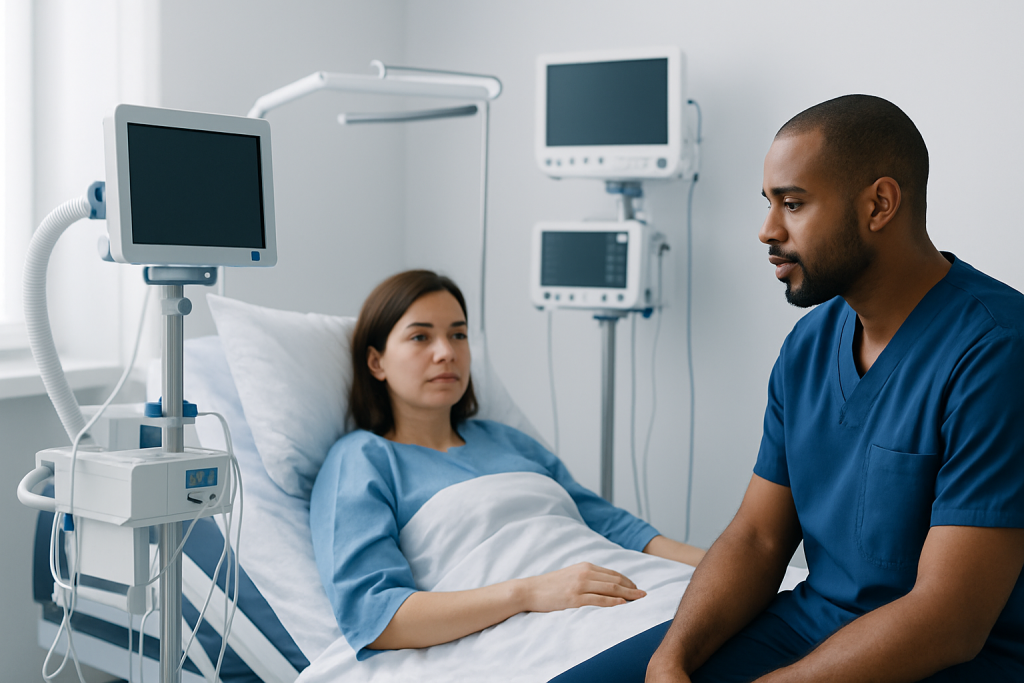
Before booking flights, ask your treating team whether being alone is medically appropriate for your specific procedure. Some operations are straightforward to manage independently. Others may need someone nearby for the first 24 to 72 hours because of anaesthesia effects, restricted movement, drains, dressings, or a higher need for monitoring. Only the team planning your surgery can tell you which category yours falls into, so treat their answer as the foundation of the whole trip.
Be honest about your personal needs, not just the procedure. If you become anxious in unfamiliar environments, struggle with long walks, take several medicines, or live with a condition that can change quickly, solo travel may still be possible, but it needs a more formal support plan, agreed before you travel rather than improvised on the ward.
It helps to think in three phases and test each one against the question: could I do this alone while tired?
- Before surgery: forms, pre-operative tests, check-in, fasting rules, and communication with the team
- Immediately after surgery: transport back to your accommodation, prescriptions, meals, and moving around safely
- Early recovery: showering, stairs, laundry, follow-up visits, and knowing whom to reach if something changes
If any phase looks difficult alone, raise it early during planning. A realistic plan agreed in advance is far safer than assuming you will manage somehow once you land.
The type of surgery changes the plan
Solo travel looks very different depending on the procedure. Day-case and short-stay treatments: a hair transplant, for example, or many plastic, reconstructive and aesthetic proceduresusually involve shorter hospital time but still restrict what you can carry, how you sleep, and how far you can comfortably walk in the first days. Larger operations, such as bariatric and metabolic surgery, typically mean a longer inpatient stay followed by specific eating and activity rules that shape your whole week. Ask your team what the first three days after your particular operation usually look like, then plan for that reality rather than a generic one.
Chronic conditions need their own layer of planning
If you manage a long-term condition alongside your operation, the solo plan needs an extra layer. Patients with diabetes, for instance, have to think about medication timing across time zones, fasting instructions, and meals around theatre schedules: our guide on traveling to Turkey for surgery with diabetes covers this in detail. Similarly, patients who travel with a stoma face specific questions about supplies and airport screening, covered in our guide to traveling to Turkey with a stoma. The principle is the same in every case: whatever you manage daily at home, plan how you will manage it in a hotel room, alone, while recovering.
Choose support that covers more than the operation itself

When you compare hospitals or make arrangements, look beyond the operating theatre. Solo patients rarely struggle with the surgery itself; they struggle with coordination. The tasks that matter most are confirming medical documents in advance, arranging airport pickup, scheduling pre-operative tests efficiently, organising prescriptions, and making sure there is a clear, written discharge plan.
International patient departments exist precisely for this. In a large hospital group such as Acibadem International, multilingual coordinators and interpreters handle scheduling, and staff can assist with accommodation and local transport arrangements. For someone traveling to Turkey for surgery alone, that infrastructure effectively stands in for the practical role a companion would play.
Ask direct questions before you commit, and expect direct answers:
- Will someone explain my daily schedule, and in which language?
- Is interpreter support available during consultations, consent, and discharge, not just at reception?
- Can the hospital help me find accommodation within a short distance?
- Is there a number I can reach after discharge, during and outside office hours?
- How are follow-up appointments arranged, and what happens if my recovery needs more time?
The clearer these answers are before travel, the calmer your stay is likely to be. Vague answers to logistical questions are a warning sign in themselves.
Get your documents in order: you are your own record-keeper
A companion often acts as an unofficial secretary: holding passports, remembering dates, taking notes. Alone, that job is yours, so make it easy. Build a simple medical folder before you leave home, in two forms, paper and phone. Include:
- Your passport and visa or e-visa confirmation, if your nationality requires one
- Recent medical reports, imaging, and test results relevant to your surgery
- A complete medication list with doses, plus a list of allergies
- Insurance details if relevant, and any pre-approval correspondence
- Your coordinator’s contact details, the hospital address in Turkish and English, and your accommodation address
- Emergency contacts at home, written out, not only stored in your phone
Check your passport validity and entry requirements for your nationality well before booking, and keep copies of everything separate from the originals. If your phone dies, is lost, or simply runs out of battery on a long day, the paper folder keeps you functional. It also saves you repeating your history from memory at every desk you pass.
Plan your arrival, accommodation, and first 72 hours carefully
The most vulnerable part of a solo medical trip is usually not the surgery: it is the transitions around it. After a long flight, even simple tasks like checking into a hotel, finding food, or locating the hospital entrance can feel exhausting. Try to arrive at least a day or two before your pre-operative appointments, so you are rested rather than rushing while jet-lagged.
Choose accommodation that supports recovery, not sightseeing. The practical priorities are:
- Distance: close to the hospital, ideally a short, flat journey
- Access: a lift, minimal stairs, no steep hills between you and food or transport
- The room itself: a private bathroom, a comfortable bed, reliable Wi-Fi, and somewhere to store medicines
- Services: nearby food options, a pharmacy within easy reach, and staff who can call a taxi
Your first 72 hours deserve a written plan. Know who is collecting you from the airport, how you will reach the hospital, where your medicines will come from, and how you will eat on days when leaving your room feels like too much. Save every contact in your phone and keep the printed copies in your folder. If you are staying in Istanbul, allow generous time for traffic on appointment days: a shorter distance to the hospital is worth more than a nicer hotel further away.
Eating alone during recovery
Food is easy to overlook and hard to improvise while sore. Before surgery, work out how you will eat afterwards: room service, delivery apps, a nearby market, or simple supplies bought in advance. Some procedures come with specific dietary instructions from your team, and following them is easier when the logistics are already solved. Our guide on planning meals around surgery and recovery in Turkey covers this in practical detail.
Prepare for communication, consent, and discharge while alone
The moments that worry solo patients most are the ones where understanding matters: describing symptoms, signing consent forms, hearing medication instructions, or absorbing discharge details while tired or emotional. If English is not your first language, or you simply prefer another language, request interpreter support in advance rather than on the day. Consent, in particular, is a conversation you should have in a language you think in.
Discharge deserves special attention when no one is taking notes for you. Before you leave the ward:
- Ask for written instructions, not only verbal ones
- Make sure you understand your medicines as your treating doctor has prescribed them, including timing
- Confirm the rules for wound care, showering, and activity limits
- Ask what your team wants you to watch for during recovery, and get it in writing
- Confirm the exact date, time, and location of your next review
- Confirm whom to contact with questions, during office hours and outside them
Ask the team to go through the instructions slowly before you leave, and ask again if anything is unclear. Repeating a question at the nurses’ station costs nothing; puzzling over instructions alone in a hotel room costs sleep. At Acibadem International, international patient teams help bridge the practical gap between clinical care and travel logistics: the gap a companion would normally fill.
Create a safety net for recovery and unexpected changes
Even when everything goes smoothly, recovery can feel lonely in another country. Build the safety net before you leave home. Share your itinerary, hospital details, and accommodation address with a trusted person. Agree set check-in times by message or video call, morning and evening works well, so someone notices quickly if you are not responding as expected. This costs nothing and is the single most effective safety measure available to a solo patient.
Plan for the schedule bending. You may need to stay longer than expected, move your return flight, or rest more than planned before any onward travel. Flexible bookings, a few days’ extra supply of your regular medicines, and a modest buffer in your budget make these changes an inconvenience rather than a crisis. Turkey’s general emergency number, 112, is worth saving alongside your hospital contacts, not because you expect to need it, but because looking it up is not something to do in a difficult moment.
Finally, be honest with yourself about the emotional side of solo medical travel. It is normal to feel capable one hour and vulnerable the next. Preparation does not remove every worry, but it gives you structure, and structure is what carries you through the hours when confidence dips.
Think about the journey home before you fly out
The return trip is part of the surgery plan, not an afterthought. Fitness to fly depends on the procedure, your recovery, and your treating team’s assessment, so keep your return date flexible until the team confirms travel is appropriate. When you do book, consider the practicalities of flying alone soon after surgery: an aisle seat if you need to move regularly, assistance through the airport if walking long distances is hard, lightweight luggage you can actually lift, and your medicines and documents in hand luggage rather than the hold.
Ask before discharge how follow-up will work once you are home, whether reviews happen remotely, what records you should carry with you, and what your own doctor at home will need. Leaving with a complete written record of your treatment makes continuity of care far simpler, wherever your recovery continues.
Step by step
- Check if solo travel is medically suitable. Ask your surgeon or coordinator whether your procedure is appropriate without a companion. Clarify how long you may need supervision after anaesthesia and whether discharge to a hotel alone is acceptable for your operation.
- Choose a hospital with international coordination. Look for a provider that helps with more than surgery dates. Interpreter support, transfer planning, and clear follow-up communication matter most when you are managing the trip alone.
- Book recovery-friendly accommodation nearby. Stay close to the hospital and make recovery easier than commuting. Prioritise lift access, a quiet room, a private bathroom, and simple food options over location for tourism.
- Organise arrival and discharge transport in advance. Do not rely on finding transport while tired, fasting, or recovering. Pre-arranged airport and hospital transfers reduce stress and spare you unnecessary walking and confusion.
- Prepare a written medical and contact file. Keep your passport, reports, medication list, allergies, and emergency contacts together. Store them on your phone and carry paper copies in case you need help quickly.
- Plan daily check-ins with someone you trust. Ask a friend or relative at home to check in at set times each day. This routine gives you emotional support and creates an extra safety layer if your condition changes.
- Understand your recovery plan before leaving hospital. Get written instructions covering medicines, wound care, activity limits, what to watch for, and your next appointment. If anything is unclear, ask again before discharge rather than working it out alone later.
Your checklist
- Confirm with the medical team that coming alone is suitable for your procedure
- Check passport validity and visa requirements for your nationality
- Arrive at least 1-2 days before pre-operative assessments if possible
- Book accommodation close to the hospital with lift access
- Arrange airport pickup and hospital transport before you travel
- Carry a full medication list, allergy list, and recent medical reports, on paper and on your phone
- Save your coordinator, hospital, accommodation, and 112 emergency contacts in your phone
- Set daily check-in times with a trusted person at home
- Plan how you will eat during the first days of recovery
- Pack easy clothing, slip-on shoes, chargers, and luggage you can lift alone
- Ask for written discharge instructions and follow-up details
- Keep flights and bookings flexible in case recovery takes more time
Key takeaways
- Traveling to Turkey for surgery alone can work well when the procedure and recovery plan suit solo travel, confirm this with your medical team first.
- Your biggest needs are usually logistical: transport, communication, accommodation, documents, and discharge support.
- Choose a hospital with strong international patient services, interpreter access, and clear follow-up pathways.
- Stay close to the hospital and plan the first 72 hours, including meals, in writing before you travel.
- Build a remote support system with daily check-ins, saved emergency contacts, and flexible bookings.
- Treat the journey home as part of the plan: keep return dates flexible and leave with complete written records.
Frequently asked questions
Is it safe to travel to Turkey for surgery alone?
It can be, provided your procedure is appropriate for solo travel and you plan carefully. The reliable approach is to confirm suitability with your treating team, then arrange support for arrival, discharge, and early recovery before you fly rather than after you land.
Do I need someone with me after surgery in Turkey?
That depends on the type of surgery, the anaesthesia used, your mobility, and your overall health. Some patients manage independently; others should have someone nearby for the first day or two, or need more structured hospital coordination in place of a companion. Your surgical team can tell you which applies to your operation.
What kind of help should I ask the hospital for if I am alone?
Ask about airport transfers, interpreter services, appointment scheduling, discharge guidance, and how contact works after hours. It is also reasonable to ask whether the hospital can advise on nearby accommodation and local transport arrangements before you book anything.
How long should I stay in Turkey if I am traveling alone for surgery?
Your stay depends on the procedure, your follow-up schedule, and how your recovery progresses. Build in extra time and keep return bookings flexible, so you are not pressured to travel home before your team confirms it is appropriate.
Where is the best place to stay after surgery in Istanbul?
Somewhere close to the hospital, quiet, clean, and easy to access with minimal stairs. For solo recovery, a short and simple journey to appointments matters more than proximity to tourist attractions, and Istanbul traffic makes distance count double.
How can I manage language barriers if I come to Turkey alone?
Request interpreter support before you travel, especially for consultations, consent, and discharge instructions. Large international hospitals, including Acibadem International, coordinate multilingual support for overseas patients, but it works best when arranged in advance rather than on the day.
What happens if I feel unwell after discharge and I am alone?
Your written discharge instructions should name a contact route for questions and concerns, both during and outside office hours, confirm this before you leave the ward. Turkey’s general emergency number is 112, and it applies to anyone in the country, just as emergency services do at home.
What documents should I carry as a solo patient?
Your passport and any visa confirmation, recent medical reports, a full medication and allergy list, insurance details if relevant, and the contact details for your coordinator, hospital, and accommodation. Keep everything in two forms, on your phone and on paper, stored separately from each other.
Add us as a Preferred Source to see more of our trusted health content across Google Search, AI Overviews and Discover.

Update history
- PublishedAugust 4, 2026
- Medical review approvedSeptember 13, 2026
- Last content updateSeptember 12, 2026
References2
- CDC Yellow Book: Medical Tourism wwwnc.cdc.gov
- GOV.UK: Foreign travel advice: Turkey gov.uk
More Patient Guides
Medical Travel with a Companion: Who Should Come and Why
Medical travel with a companion can make treatment in Turkey easier by providing practical help, communication support and reassurance before and after…

How Family Members Can Help Without Disrupting Recovery
Family support during recovery helps when you listen, organize practical tasks and follow the care plan without taking over, in Turkey or…
Need a Family Member to Travel With You? A Companion Decision Guide
A companion travel guide for treatment in Turkey: decide who should travel with you, plan practical support, and prepare for Istanbul care.

Unexpected Overnight Stay in Turkey: What Patients and Companions Should Be Ready For
Unexpected overnight stay in Turkey? Here is what patients and companions should prepare for, from essentials and updates to hospital logistics in…