

Traveling to Turkey for Surgery with Diabetes: What to Plan Ahead

Plan in three layers: your diabetes information, your supplies, and your schedule. Ask your usual clinician for a written medical summary and a travel-day plan, pack all diabetes supplies in hand luggage with extras, and confirm fasting and medication-timing instructions directly with the surgical team in Turkey. Start three to six weeks before you fly, and build your accommodation and transport around recovery, not the other way round.
How will you time your insulin on a long travel day? What happens to your blood sugar if your operation slips by a few hours? Where does your glucose meter go when your bag is checked in? These are the questions that matter most when you are traveling to Turkey for surgery with diabetes, and every one of them can be answered before you leave home.
This guide walks through the whole journey in order: what information to gather, what to pack, how to handle the flight, how fasting fits around your medication, and what to arrange for recovery. None of it replaces the specific instructions of your own diabetes clinician or the surgical team treating you. It exists so you know which questions to ask them, and when.
At a glance
- When to start planning: Three to six weeks before travel, earlier if you use a pump or CGM
- Main priority: Keeping blood sugar as stable as possible around flights, fasting and surgery
- In your hand luggage: All diabetes medicines and supplies, prescriptions, quick-acting glucose, a medical summary
- Tell the surgical team: Your diabetes type, usual readings, full medication list, devices, and any recent lows or highs
- Never decide alone: Insulin and tablet adjustments for travel days and fasting come from your clinicians, not from this or any other guide
Why traveling to Turkey for surgery with diabetes needs extra planning
Any surgical trip abroad involves logistics. Diabetes adds a layer that most travel checklists ignore: your condition responds to almost everything a journey changes. Time zones shift when you eat. Airport queues delay meals. Stress raises glucose in some people. Fasting instructions before anaesthesia interrupt your normal medication rhythm. None of this makes the trip unwise: it makes the trip something to plan deliberately rather than improvise.
The surgical team needs a clear picture of your diabetes well before the operation. That means the type, type 1, type 2, gestational or another form, the medicines you take and when, how you monitor glucose, and whether you have had recent episodes of significant highs or lows. It also means any diabetes-related conditions involving your kidneys, eyes, nerves or heart, because these can influence how anaesthesia and recovery are planned.
One distinction is worth making early, because search results blur it. Traveling to Turkey for surgery with diabetes is not the same topic as travelling to Turkey for diabetes surgery. Some patients come specifically for bariatric and metabolic surgery, where type 2 diabetes is part of the reason for the operation itself. This guide is about the broader situation: you have diabetes, and you are having any kind of surgery abroad, orthopaedic, dental, aesthetic, general or otherwise. The planning principles below apply in both cases, but if metabolic surgery is your goal, the assessment process is more specific and your treating team will explain it.
Sharing your records with the hospital well before you travel matters more for patients with diabetes than for most others, because fasting windows, anaesthesia planning and medication timing all depend on details that are far easier to sort out weeks ahead than at admission.
What medical information to gather before you travel
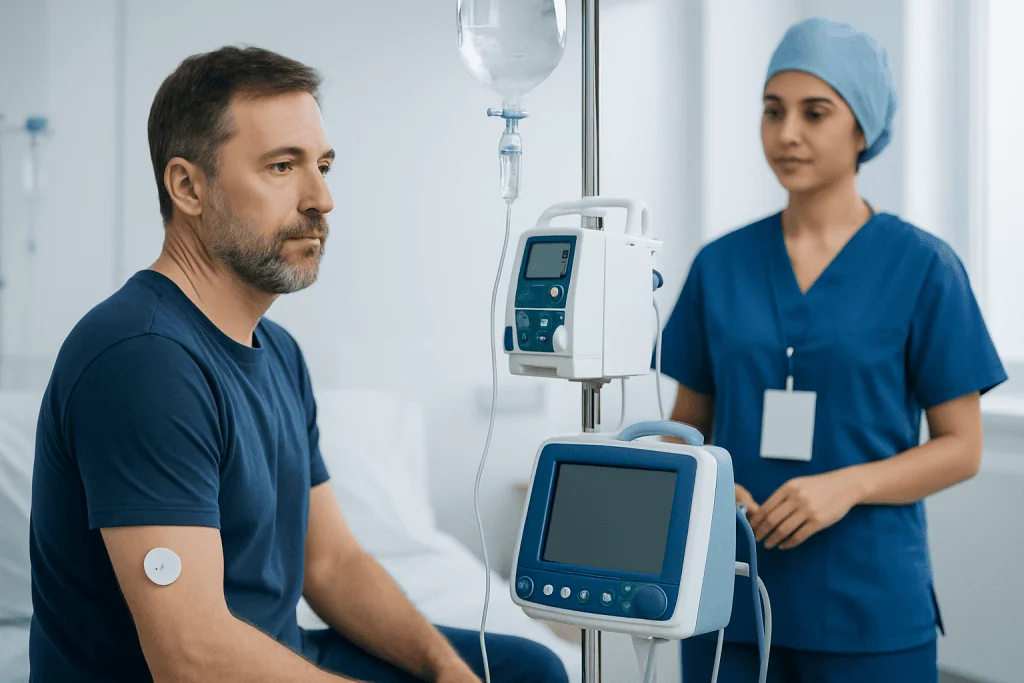
Start with your regular doctor or diabetes clinician. Ask for a concise written summary covering your diagnosis, current medicines with exact doses and timings, allergies, recent glucose control, other health conditions, and any previous problems with surgery or anaesthesia. If you use an insulin pump or a continuous glucose monitor, include the device model and, where appropriate, your usual settings.
Carry copies of recent test results your surgeon or anaesthetist may want. Depending on your case, this can include recent blood work, HbA1c information if available, ECG results, and specialist notes. Keep digital copies on your phone and printed copies in your hand luggage, hospital Wi-Fi and roaming data are not things to depend on for essential documents.
Be specific about your day-to-day routine when the hospital gathers your history. What time do you normally take insulin or tablets? Do you tend towards hypoglycaemia when meals are delayed or skipped? Does illness or stress push your readings up? These details sound minor and are not: they shape how the team schedules your operation within the day and how they handle your fasting window. If your care will happen in a language that is not your own, ask about interpreter support early, details like these are exactly what should not get lost in translation.
If you want a deeper dive into the record-gathering stage specifically, the pre-procedure planning guide for medical travel with diabetes covers it in more detail.
How to prepare your medications, devices, and travel bag
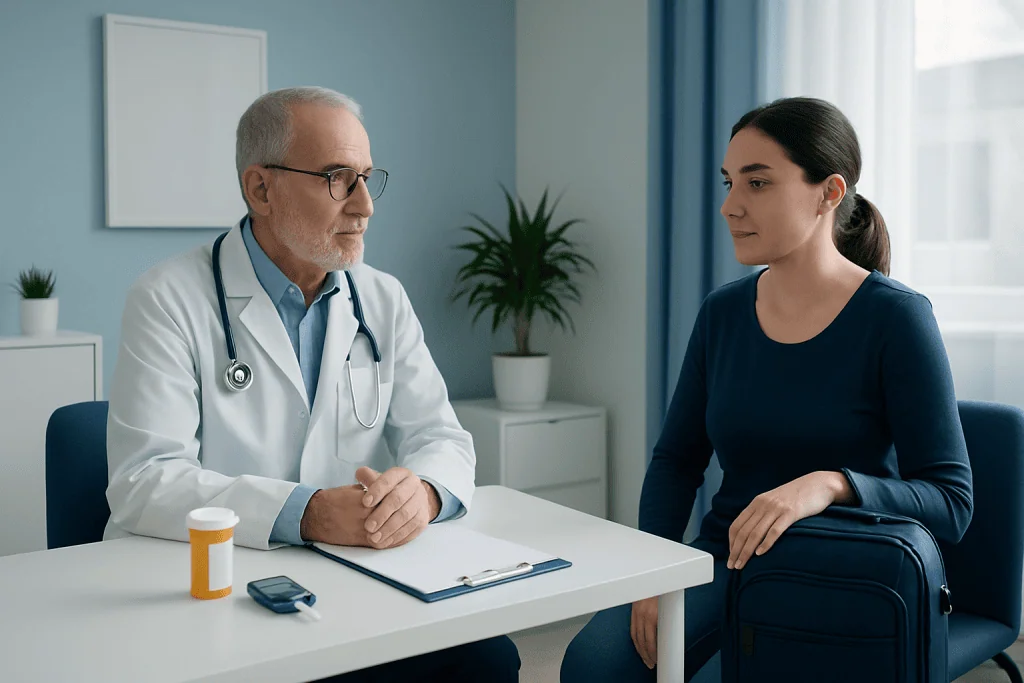
The single most important packing rule: everything diabetes-related travels in your cabin bag, never in the hold. Checked luggage gets delayed and lost, and cargo holds can reach temperatures that damage insulin. Pack noticeably more than you expect to use, surgery dates can shift by a day or two, flights get cancelled, and recovery sometimes takes longer than the itinerary assumed. Many patients pack for half again as long as the planned trip.
Keep medicines in their original packaging with the pharmacy label, and carry prescriptions or a doctor’s letter naming each medicine and device. This smooths airport security and makes replacement far easier if something is lost or fails. A few practical points for the airport itself:
- Insulin, needles, pens, pumps and glucose supplies are permitted in cabin baggage; declare them at security along with any liquid glucose treatment over the standard liquid limit, which is generally allowed for medical use when declared.
- Some pump and CGM manufacturers advise against putting their devices through X-ray machines or full-body scanners. Check your device’s guidance before you fly and ask for a manual check if needed, security staff at major airports handle this routinely.
- Insulin in use generally tolerates room temperature for a limited period, but Turkish summers are hot. A small insulated pouch protects it in transit, and you can check the manufacturer’s storage guidance for specifics.
Organise your kit into three reachable groups: everyday medication, monitoring supplies, and treatment for low blood sugar. A workable list looks like this:
- Your full supply of diabetes medicines, plus a generous surplus
- Glucose meter, strips and lancets, or CGM sensors and transmitter
- Insulin pens, needles and pump consumables, including backup pens if you use a pump, in case the device fails
- Batteries, chargers and cables for every device
- Quick-acting glucose such as tablets, gels or juice
- A longer-lasting carbohydrate snack
- Prescriptions, medical summary, device documentation and insurance papers
- A written list of emergency contacts and your usual doctors
The flight: time zones, timing, and the so-called three-hour rule
You may see references online to a “3-hour rule” for diabetics. The phrase gets used loosely for two different ideas. The first concerns time zones: as a rough rule of thumb, time differences of under about three hours usually require little or no change to injection or tablet timing, while larger shifts need a deliberate plan. The second is a habit some people follow of eating or checking glucose at regular intervals of a few hours. Neither version is a medical instruction, and neither replaces a plan from your own clinician: your medicines, your diabetes type and your flight times all change the answer.
Here is the useful practical point for this particular trip: Turkey sits at UTC+3 year-round. From the UK the difference is two to three hours depending on the season; from most of Western Europe it is one to two; from the Gulf it is zero to one. For many international patients, then, the time-zone element of traveling to Turkey for surgery with diabetes is genuinely small. From North America the shift is substantial, around eight hours from the US East Coast, and that is exactly the situation where a written travel-day medication plan from your clinician matters most.
During the flight itself, keep your monitoring supplies and quick-acting glucose in the seat pocket or under-seat bag, not the overhead locker. Airline meal timing is unpredictable, so treat your own snacks as the plan and the airline meal as a bonus. Move and hydrate on long flights as your doctor advises, and if you feel unwell, check your glucose rather than guessing, cabin fatigue and low blood sugar can feel similar.
Meals, fasting, and blood sugar around the surgical schedule
The biggest disruption when traveling to Turkey for surgery with diabetes is rarely the surgery itself: it is the change in routine around it. Transfers, admission paperwork and pre-operative tests all shift when you would normally eat and take medication. Confirm your appointment schedule in advance, and ask exactly when you must stop eating and drinking before the operation, because the fasting window directly shapes your diabetes plan for that day.
Do not guess how to adjust insulin or tablets for travel days or fasting, and do not borrow another patient’s plan from a forum. Some medicines are reduced, delayed or paused on the day of surgery; others are handled differently depending on when in the day your procedure falls and how your glucose has been running. The right sequence is simple: get a plan from your usual diabetes clinician before you leave, then confirm it with the anaesthesia team in Turkey, who will adapt it to the actual operating schedule. Where those two conversations happen, most surgery-day confusion disappears.
Once you arrive, tell the team plainly if travel has disrupted things, if your readings have been running high or low, if you missed doses, or if you have not eaten normally. This is routine information for them, not a complication, and it helps them time your glucose checks and your return to food and medication after the operation. For the eating side of the trip more broadly, see the guide on planning meals around surgery and recovery in Turkey.
What to arrange for your stay and immediate recovery
Treat accommodation and transport as part of your diabetes plan rather than as separate travel admin. After surgery you may be tired, sore and less able to manage supplies than usual. A hotel close to the hospital, with a reliable transfer arrangement, makes glucose monitoring and medication timing far easier than a cheaper room across the city.
Ask the practical questions before you arrive. Is there a refrigerator in the room if your insulin needs one? Can you get suitable food nearby after discharge, including at odd hours? How long is the transfer from the airport, and who arranges it? Many large international hospitals have patient coordinators who handle transfers, accommodation guidance and interpreters, find out what is already arranged before you book anything yourself, so nothing is duplicated or missed.
If someone is travelling with you, walk them through your routine before the trip: where your supplies live, what your usual readings look like, and how you recognise a low. If you are coming on your own, extra structure helps, phone alarms for medication, meals and glucose checks, and hospital and accommodation staff aware that you have diabetes. The guide on planning a safe solo patient journey covers the alone-travel scenario in full.
After surgery and before you fly home
Recovery affects blood sugar even in people whose diabetes is normally steady. Pain, reduced appetite, limited movement and a disrupted routine can all push readings outside your usual pattern for a while. This is expected, and it is why the discharge conversation matters as much as the pre-operative one.
Before you leave the hospital, make sure you understand four things: how often to check your glucose in the days ahead, when and how to restart your usual medicines, what to eat and drink as you recover, and which signs your team wants you to treat as needing prompt medical attention. Ask for these instructions in writing, in English, especially if your medication schedule changes temporarily after the operation: a printed page beats a remembered conversation every time.
Plan the return flight with the same honesty you planned the outbound one. Long travel days after surgery mean fatigue, less movement and irregular meals, so keep every medicine and supply in your hand luggage, carry snacks and glucose treatment within reach, and build in more time than you think you need at the airport. Confirm before departure exactly how follow-up questions will reach your team once you are home, questions after discharge are normal rather than exceptional, and a known contact route beats searching for one when you need it. A companion guide, how to prepare safely for surgery in Turkey with diabetes, covers the preparation stage from a slightly different angle if you want a second pass through it.
Step by step
- See your usual diabetes clinician early. Book a review three to six weeks before travel. Discuss fitness for surgery, recent glucose control, and how to handle medication on flight days and around fasting. Leave with a written medical summary and a written travel-day plan.
- Get your records to the hospital in advance. The team treating you will want your medication list, recent results, allergy history and device details before you fly. Advance review gives both sides time to resolve questions while you are still at home.
- Pack a complete diabetes kit in hand luggage. More supplies than the trip should need, original packaging, prescriptions, backup options if a device fails, and quick-acting glucose within arm’s reach for the whole journey.
- Confirm fasting and surgery-day medication instructions. Not from the internet, not from other patients, from your own clinician first, then confirmed with the anaesthesia team against the actual operating schedule.
- Build accommodation and transport around recovery. Short transfers, food access, refrigeration if you need it, and a location that makes follow-up appointments easy rather than exhausting.
- Leave the hospital with a written plan. Glucose check frequency, medication restart timing, eating and drinking guidance, warning signs your team wants flagged, and a named follow-up contact route.
Your checklist
- Written medical summary from your regular doctor
- Full medication list with doses and timings
- Extra diabetes medication and monitoring supplies, more than the trip should need
- Prescriptions and device documentation in hand luggage
- Quick-acting glucose and travel snacks within reach
- Written fasting and surgery-day medication instructions
- Insulated pouch if your insulin needs temperature protection
- Accommodation with refrigeration confirmed, plus a transport plan
- Emergency contact list and insurance documents
Key takeaways
- Diabetes changes the planning around surgery abroad, fasting, medication timing, flights and recovery all need to be thought through together, not separately.
- All diabetes supplies travel in your cabin bag, in original packaging, with prescriptions and a doctor’s letter, and in larger quantities than the itinerary suggests.
- The time-zone shift to Turkey is small from Europe and the Gulf, larger from the Americas, either way, travel-day medication plans come from your clinician, never from rules of thumb.
- Fasting and surgery-day medication instructions are confirmed twice: with your own clinician before travel, and with the team in Turkey once the schedule is fixed.
- Ask for written discharge instructions in English and know exactly how follow-up questions reach your team after you fly home.
Frequently asked questions
Is Turkey OK for a diabetic?
Turkey presents no particular problem for travellers with diabetes. Major cities have well-stocked pharmacies and large hospitals, food suitable for a diabetic diet is easy to find, and the time-zone shift from Europe and the Middle East is small. The practical challenges are the same as for any trip: keeping supplies with you, protecting insulin from summer heat, and planning around irregular meal timing on travel days.
Is it safe to go to Turkey for surgery?
Safety depends on the specific hospital, the procedure, your overall health and the quality of planning, not on the country as a category. Turkey has large international hospitals with experienced surgical and anaesthesia teams alongside smaller clinics of varying standards, so the sensible approach is to assess the individual institution, share your full medical picture in advance, and have your suitability for surgery confirmed by clinicians who have actually reviewed your records.
What is the 3-hour rule for diabetics?
The phrase is used loosely for two ideas: that time-zone changes of under about three hours usually need little adjustment to medication timing, and that eating or checking glucose at regular few-hour intervals keeps readings steadier. Neither is a formal medical rule, and neither should guide your dosing. Your own travel-day plan needs to come from your diabetes clinician, based on your medicines and your actual flight times.
Do type 1 diabetics get priority boarding?
There is no automatic priority boarding for diabetes. Most airlines will provide special assistance on request, and you are entitled to carry insulin, needles, devices and glucose supplies in the cabin, usually with supporting documentation such as a doctor’s letter. Contact your airline before flying to confirm its policy on medical equipment and any assistance it offers.
Should I change my insulin or diabetes tablets for the flight or surgery day?
Not on your own. Travel days, time differences and pre-operative fasting can all affect how medicines should be handled, but the adjustments differ between drugs and between patients. Get a personalised plan from your usual diabetes clinician before travelling, then confirm it with the surgical and anaesthesia team once your operation time is fixed.
What documents should I bring if I have diabetes?
A written medical summary, prescriptions, a current medication list with doses, allergy information, and recent relevant test results if available. Include documentation for any insulin pump or glucose monitor you use. Keep printed copies in your hand luggage and digital copies on your phone.
Do I need to tell the hospital about my diabetes even if it is well controlled?
Yes, always. Fasting, anaesthesia, stress, pain and changed eating patterns after surgery can affect even very stable diabetes, and the team plans your fasting window, glucose monitoring and medication timing around this information. Well-controlled diabetes is easier to manage around surgery, but only if the team knows about it.
What should I ask before I am discharged after surgery?
Four things: how often to check your glucose in the days ahead, when and how to restart your usual medicines, what to eat and drink during early recovery, and which signs your team wants treated as needing prompt medical attention. Ask for the answers in writing, in English, along with a clear follow-up contact route for after you fly home.
Add us as a Preferred Source to see more of our trusted health content across Google Search, AI Overviews and Discover.

Update history
- PublishedAugust 6, 2026
- Medical review approvedSeptember 13, 2026
- Last content updateSeptember 12, 2026
References3
- CDC Travelers' Health: Travelers with Chronic Illnesses wwwnc.cdc.gov
- MedlinePlus: Diabetes medlineplus.gov
- NHS: Type 2 diabetes nhs.uk
More Patient Guides

Flying With Medication: Airline Rules, Documents and Packing
Every day, travelers hold up security lines worrying about a bag full of tablets that nobody actually wants to confiscate. The rules…
How to Send Your Medical Files Securely Before Treatment in Turkey
Send medical files securely before treatment in Turkey by using approved channels, clear file names and a complete health summary.
Pain Control After Treatment in Turkey: What Patients Should Expect and Ask About
Pain control after treatment in Turkey usually includes a tailored medicine plan, clear warning signs, and follow-up support before you leave Istanbul.
Managing Medicines Across Borders After Treatment in Turkey
Managing medicines across borders after treatment in Turkey means carrying clear documents, checking import rules, and planning refills before you fly.