

Medical Travel to Turkey with Diabetes: Pre-Procedure Planning Guide

Medical travel to Turkey with diabetes works best when you prepare two to four weeks ahead. Tell the hospital your diabetes type, medicines and devices early, request written fasting and medication instructions, and keep all insulin, tablets and glucose supplies in hand luggage with prescriptions. Plan flight-day meals and dose timing before departure, declare diabetes to your travel insurer, and monitor more closely during transit and recovery.
Who do you tell about your insulin, and when? What happens if your flight is delayed and you are meant to be fasting the next morning? These are the questions most patients with diabetes ask before flying to Turkey for a procedure, and every one of them has a practical answer. The trip is manageable. It simply rewards preparation.
This guide covers medical travel to Turkey with diabetes from the first inquiry to the flight home: what to share with the hospital, how to pack medicines and devices, how to handle airports and fasting instructions, and how to keep your glucose routine steady when everything around it is changing.
At a glance
- Best time to prepare: Start 2-4 weeks before travel if possible
- Top priority: Keep glucose, medication, meals and timing as steady as your treatment schedule allows
- Bring with you: All medicines in original packaging, prescriptions, glucose supplies, quick-acting sugar, snacks and a medical summary in English
- Share before arrival: Your diabetes type, medicines and doses, devices, allergies and recent results
- Ask your hospital about: Written fasting instructions, what to do with each medication, interpreter support and expected meal timing
Why medical travel to Turkey with diabetes needs extra planning
Any medical trip involves flights, appointments, unfamiliar food and disrupted sleep. When you also live with diabetes, each of those small disruptions can move your glucose. A delayed meal on a travel day, a fasting instruction the night before a procedure, a time-zone shift of an hour or two, none of these is dramatic on its own, but together they can unsettle a routine that works perfectly well at home.
The goal of planning medical travel to Turkey with diabetes is therefore simple: decide as much as possible before you fly, so that on the days that matter you are following a plan rather than improvising. That means thinking through medication timing, airport delays, fasting rules, hydration, meals, and how you will monitor your glucose in transit and at the hospital.
It also means being honest about what you cannot decide alone. Fasting rules, dose adjustments around a procedure and any change to your regimen belong to your treating clinicians, not to a general guide. What you can do, and what this guide focuses on, is organise the information, supplies and timing so those clinical decisions are made early, written down and easy to follow. For the broader trip logistics beyond diabetes, the step-by-step medical travel planning guide covers visas, scheduling and accommodation in detail.
What to organise before you confirm dates
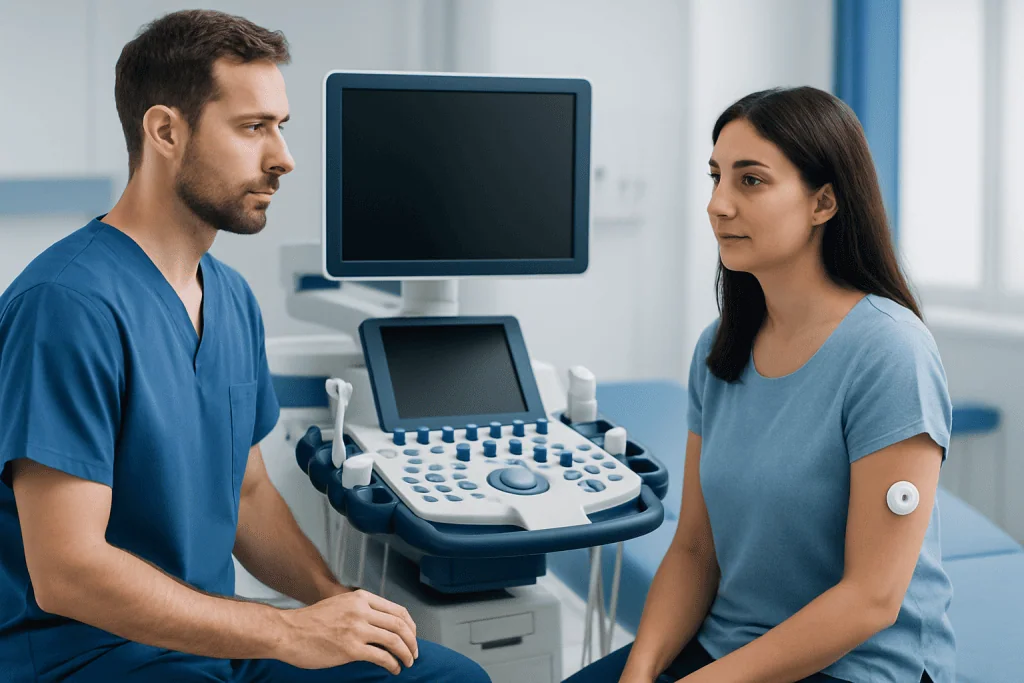
Before travel dates are fixed, the hospital in Turkey needs to know that you have diabetes and what that looks like in practice. State plainly whether you have type 1, type 2 or gestational diabetes; whether you use insulin, tablets or both; whether you wear an insulin pump or a continuous glucose monitor; and whether you have a history of severe hypoglycaemia or ketosis. Mention related conditions too, kidney problems, heart disease, foot issues or recent infections, because they can affect how a procedure is scheduled and prepared.
Then ask for the things that matter most on the day: clear, written instructions on fasting, on what to do with each diabetes medication before the procedure, and on when you can expect to eat afterwards. Fasting guidance is not one-size-fits-all. It depends on the procedure, the anaesthesia plan and your specific regimen, which is why written, procedure-specific instructions are worth insisting on. General advice from the internet is not a substitute.
Sending recent records ahead of travel makes this easier for everyone. Useful items include a current medication list with doses, your allergies, a recent HbA1c if you have one, recent glucose logs or CGM reports, any discharge summaries, and the contact details of your regular diabetes doctor. Hospitals that regularly receive overseas patients, including Acibadem, review this material in advance so the care team understands your baseline before you arrive rather than reconstructing it at admission.
Finally, think about timing. If your dates are flexible, be aware that flights and accommodation are harder to arrange around public holidays, so check availability early. And if you have another condition that affects flying, ask your doctor early whether you need fitness-to-fly clearance; sorting this out weeks ahead is far easier than at the check-in desk.
Packing medicines, devices and documents the smart way
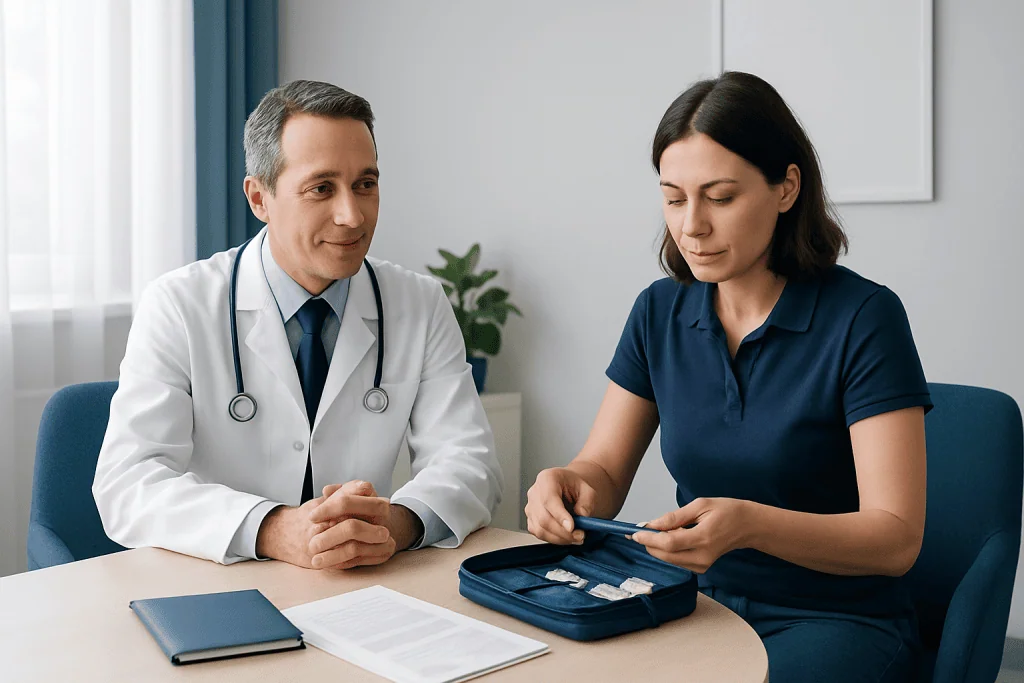
The single most important packing rule: everything related to your diabetes travels in your hand luggage, never in the hold. Checked bags get delayed, lost and exposed to temperature extremes. Your insulin, tablets, meter, strips, sensors, pump supplies and hypo treatment should be within arm’s reach for the entire journey.
Bring more than the trip requires. A sensible rule of thumb is enough supplies for your planned stay plus a comfortable margin for delays, a longer recovery or a damaged sensor. Keep medicines in their original packaging with the pharmacy labels visible, and carry copies of your prescriptions. If your insulin needs to stay cool, a small insulated pouch or cooling wallet works for the journey; the detailed guide on packing medical devices and supplies for treatment travel covers temperature, batteries and spares in depth.
Your travel kit should include:
- All medicines in original packaging, plus copies of prescriptions
- Glucose meter, strips, lancets, spare batteries and charger cables
- Pump or CGM supplies, including spares, and a fallback plan if a device fails
- Quick-acting carbohydrate, glucose tablets, gels or small juice cartons, where you can reach it in seconds
- Longer-lasting snacks such as crackers or nuts for delayed meals
- Alcohol swabs and, if practical, a small sharps container
Documents deserve the same care as supplies. Carry a concise medical summary in English listing your diagnosis, current doses, allergies, devices, recent relevant results and emergency contacts. A short letter from your doctor confirming that you carry insulin, needles and devices for medical reasons smooths airport conversations. Keeping doses on schedule while you travel takes some thought too: the guide on keeping regular medicines on schedule during medical travel walks through timing across a journey.
Flights, airports and airline assistance
Travel days are the least predictable part of the trip. Check-in queues, security, delayed boarding and unfamiliar food can shift your normal routine by hours. Build slack into your airport plan, and eat strategically, before you feel low, not after.
A few airport specifics are worth knowing in advance:
- Security screening and devices. Insulin pumps and CGMs have manufacturer-specific guidance about X-ray machines and full-body scanners. Check with your device manufacturer before you fly and tell security staff you are wearing a medical device. Carrying your doctor’s letter makes these conversations quicker.
- Liquids and needles. Insulin, other liquid medicines and needles are permitted in cabin baggage for medical use, but expect to show them separately at screening along with your prescriptions or letter.
- Priority boarding. Diabetes on its own does not usually entitle you to automatic priority boarding: this is a common misunderstanding. Policies vary by airline, and most will arrange special assistance if you request it when booking. Many airlines also allow extra cabin allowance for medical supplies with a doctor’s letter, but confirm the specific airline’s policy rather than assuming.
If you cross time zones, ask your usual diabetes clinician before departure how to handle dose timing, particularly if you use insulin on a fixed schedule. The time difference between the UK or much of Europe and Turkey is modest, but even a small shift matters when doses are timed precisely. Have the plan written down before you leave so you are not making dosing decisions while tired in an airport.
During the flight itself: stay hydrated, keep your monitoring device accessible rather than in an overhead bin, and check your glucose more often than usual. Stress, irregular meals and sitting for long periods all change how your numbers behave.
Travel insurance and paperwork: declare your diabetes
Yes, you have to tell your travel insurer about diabetes. It counts as a pre-existing medical condition, and failing to declare it can invalidate a claim, including claims that have nothing obvious to do with glucose. Declare your diabetes type, your medicines and any related conditions honestly when you take out the policy, and check whether the policy covers complications of pre-existing conditions while abroad.
Be aware that standard travel insurance and cover for planned treatment abroad are different things. Most ordinary policies exclude complications of a procedure you travelled specifically to have. What a policy should cover for a medical trip, and where the gaps usually sit, is explained in the guide on travel insurance for medical treatment in Turkey. Read the exclusions before you buy, not after.
Fasting, procedure day and hospital routines
For many patients with diabetes, the riskiest window of the whole trip is the period just before a procedure, when fasting and medication changes intersect. The safe approach has three parts.
First, get specifics in writing before the day. Confirm exactly when to stop eating, whether clear fluids are allowed and until when, and what to do with each individual diabetes medicine. The right plan differs depending on whether you take insulin, sulfonylureas, metformin or other glucose-lowering medicines, and on the procedure and anaesthesia planned. If any instruction is unclear, ask again. Arriving fasted but over-medicated, or taking a dose that later causes hypoglycaemia, are both avoidable with clear instructions.
Second, repeat yourself on the day. When you arrive, tell every relevant team member that you have diabetes, even though it is already in your record, admissions staff, nurses, the anaesthetic team and the ward team afterwards. State your current medicines, when you last took them and when you last ate. Repetition is not rudeness; it is how safety systems work. If you prefer to discuss instructions in your own language, interpreter support is one of the things international patient services at hospitals such as Acibadem coordinate as standard.
Third, know the meal plan. Ask when you will be able to eat and drink again after the procedure, and say early if meal delays are a concern because of your medication schedule. If you follow a particular eating pattern for glucose control, mention it at admission so the ward kitchen can plan around it. If your procedure also involves specific dietary preparation, the guide on pre-surgery nutrition planning covers what typically changes in the days beforehand.
Eating in Turkey with diabetes: what to expect
Turkey is a workable destination for a diabetic traveller, and in some ways an easy one. Turkish food is built around grilled meat and fish, vegetables, pulses, salads and yoghurt, so lower-carbohydrate choices are available at almost every meal. The carbohydrate-heavy elements, bread served generously with everything, rice, and famously sweet desserts and teas, are easy to identify and portion, but they arrive by default unless you say otherwise.
Practical points that help: bottled water is inexpensive and widely available; large hospitals and city restaurants are used to dietary requests; and pharmacies (look for “Eczane” signs) are common in every city, though you should not count on finding your exact insulin brand or sensor model locally, hence packing spares. If your glucose runs differently than at home during the first days, that is usually the combined effect of travel, different food, heat and disrupted sleep, and it is a reason to monitor more often rather than to change anything on your own.
Recovery, discharge and the journey home
After a procedure, expect your glucose to behave differently for a few days. Some people eat less because of nausea or reduced appetite; others run higher because of the stress response, reduced movement or temporary medication changes. Neither pattern means something has gone wrong, but both mean you should monitor more closely than usual and mention what you see to the team caring for you.
Before discharge, make sure you leave with three things clearly understood: any temporary changes to your diabetes medicines and when your usual regimen resumes, the specific things the team wants you to watch during recovery, and who your point of contact is while you remain in Turkey. If any of this is verbal only, ask for it in writing.
If you are recovering in a hotel or apartment before flying home, set the room up on day one: monitoring kit, hypo treatment, water and snacks within reach of the bed, so nothing requires searching when you are tired. For the trip back, which may involve new restrictions on lifting, sitting or activity, the guide on returning home with new medical restrictions covers how to plan the journey. And once home, book a follow-up with your regular diabetes clinician so any temporary changes made in Turkey are reviewed and your long-term plan is confirmed.
One more honest note: if your treatment is complex, your glucose has been unstable recently, or you simply feel anxious about managing a procedure abroad, travelling with a companion is a genuinely good idea. Someone to handle transport, timing, supplies and communication on procedure day frees your attention for the things only you can manage.
Step by step
- Tell the hospital about your diabetes early. As soon as you inquire or receive a proposed treatment date, share your diabetes type and routine, insulin, pump, CGM or tablets, and mention any past episodes of severe hypo- or hyperglycaemia.
- Request written fasting and medication instructions. Ask for procedure-specific guidance on when to stop eating and drinking and what to do with each medicine. Written instructions are easier to follow while travelling and reduce mistakes on the day.
- Prepare your medical summary and recent records. Gather a concise English summary with diagnoses, doses, allergies, devices, recent results and your usual glucose pattern. Send copies ahead and carry a printed version.
- Declare your diabetes to your travel insurer. Do this when you buy the policy, and check what the policy actually covers for pre-existing conditions and for planned treatment abroad.
- Pack a dedicated diabetes travel kit in hand luggage. Medicines in original packaging, prescriptions, a doctor’s letter, testing equipment, chargers, spares, and fast-acting sugar within immediate reach.
- Plan your flight-day routine. Decide when you will eat, test and take medicines during the journey. Confirm any time-zone dose adjustments with your usual clinician before departure, in writing.
- Confirm arrival-day logistics. Know who meets you, how long the transfer takes, and whether you can eat before any tests. Save the hospital and coordinator contact details on your phone.
- Reconfirm the plan on procedure day. Remind the clinical team you have diabetes, state your current medicines and last food intake, and ask for clarification if anything differs from the written plan you were given.
Your checklist
- Medication list with doses and timing
- Original prescriptions and a doctor’s letter in English
- Extra insulin, tablets, strips, sensors and batteries beyond the planned stay
- Glucose meter or CGM supplies in hand luggage, never checked
- Quick-acting sugar and longer-lasting snacks
- Recent test results, glucose logs and discharge summaries
- Travel insurance documents with diabetes declared
- Emergency contacts and your treating doctor’s details
- Written fasting and medication instructions from the hospital
Key takeaways
- Share your diabetes history, medicines and devices with the hospital as early as possible.
- Keep every medicine, glucose supply and snack in your hand luggage, with prescriptions and a doctor’s letter.
- Get personalised written instructions for fasting and medication changes, never rely on general rules.
- Declare diabetes to your travel insurer and check what the policy actually covers.
- Monitor more closely during flights, schedule changes and early recovery, and put temporary medication changes in writing before discharge.
Frequently asked questions
Is Turkey a good destination for a diabetic person?
Turkey is generally a workable destination. Large cities have well-equipped hospitals, pharmacies are widespread, and Turkish food offers plenty of grilled meat, fish, vegetable and pulse-based dishes alongside its carbohydrate-heavy staples. The main adjustments are portioning bread, rice and sweets, staying hydrated in warm months, and packing all your own supplies rather than relying on finding your exact insulin brand or sensor model locally.
Do type 1 diabetics get priority boarding?
Not automatically. Diabetes on its own does not usually entitle you to priority boarding, and policies vary by airline. Most airlines will arrange special assistance if you request it when booking, and many allow additional cabin baggage for medical supplies when you carry a doctor’s letter. Check your specific airline’s policy before you fly rather than assuming.
How much does a full medical check-up in Turkey cost?
There is no single figure, because the price depends on the scope of the package: which blood tests are included, whether imaging such as ultrasound or cardiac tests is part of it, which specialist consultations are bundled in, and the hospital itself. Hospitals issue itemised quotes based on the check-up programme you choose, so compare what each package actually contains rather than headline names like “full check-up”.
Do you have to tell travel insurance about diabetes?
Yes. Diabetes is a pre-existing medical condition, and not declaring it can invalidate a claim, sometimes even a claim unrelated to glucose. Declare your diabetes type, medicines and related conditions when you take out the policy, and check whether complications of pre-existing conditions and planned treatment abroad are covered, as many standard policies exclude them.
Can I travel to Turkey for treatment if I use insulin?
Yes, people who use insulin travel for treatment routinely when they plan carefully. The essentials are carrying insulin and all supplies in hand luggage with prescriptions and a doctor’s letter, getting written medication instructions from the hospital, and confirming with your usual clinician how fasting or time-zone changes affect your dose timing before you depart.
Should I change my diabetes medication before flying?
Not on your own. Any adjustment to dose or timing belongs to your treating clinicians, because the right plan depends on your flight schedule, your procedure date, fasting instructions and your specific regimen. Ask before travel, and get the answer in writing so you are following a plan rather than deciding under pressure.
What should I tell the hospital before I arrive?
Your diabetes type, every medicine and device you use with doses, any recent low or high glucose episodes, allergies, other medical conditions and recent test results. Sending this before travel lets the team understand your baseline and plan fasting, medication timing and meals around it before you arrive.
What if my procedure requires fasting?
Ask for exact written instructions covering when to stop eating, whether clear fluids are allowed, and what to do with each diabetes medicine individually. Fasting plans differ by procedure, anaesthesia and regimen, so the only instructions worth following are the ones written for your specific case. If anything is unclear, ask again before the day.
Add us as a Preferred Source to see more of our trusted health content across Google Search, AI Overviews and Discover.

Update history
- PublishedAugust 14, 2026
- Medical review approvedSeptember 13, 2026
- Last content updateSeptember 12, 2026
References2
- Travelers with Chronic Illnesses: CDC Travelers' Health wwwnc.cdc.gov
- Diabetes: MedlinePlus medlineplus.gov
More Patient Guides

Flying With Medication: Airline Rules, Documents and Packing
Every day, travelers hold up security lines worrying about a bag full of tablets that nobody actually wants to confiscate. The rules…
How to Send Your Medical Files Securely Before Treatment in Turkey
Send medical files securely before treatment in Turkey by using approved channels, clear file names and a complete health summary.
Pain Control After Treatment in Turkey: What Patients Should Expect and Ask About
Pain control after treatment in Turkey usually includes a tailored medicine plan, clear warning signs, and follow-up support before you leave Istanbul.

Managing Medicines Across Borders After Treatment in Turkey
Managing medicines across borders after treatment in Turkey means carrying clear documents, checking import rules, and planning refills before you fly.