

Traveling to Turkey for Surgery with Diabetes: How to Prepare Safely

Most people with diabetes can travel to Turkey for surgery, provided their treating clinicians agree the timing is right. The work happens before you fly: a written medication and fasting plan, double your usual supplies in hand luggage, records sent to the hospital in advance, and a return date that leaves room for post-operative review. Start planning three to six weeks ahead.
How do you manage insulin on a long flight? What happens to your usual routine when you must fast before an operation in another country? If you have diabetes and are planning surgery in Turkey, these are the right questions to ask early. None of them has a complicated answer, but each one needs an answer in writing before you board.
This guide walks through everything traveling to Turkey for surgery with diabetes involves: what to sort out with your doctors before you book, how to organise medicines and documents, how to handle the travel day itself, and how to plan the hospital stay and the first days of recovery so that your diabetes is managed alongside your surgery rather than around it.
At a glance
- When to start planning: ideally three to six weeks before travel
- Main priority: stable glucose control and a written medication plan for travel, fasting and surgery day
- What to carry: all medicines and supplies in hand luggage, at roughly double the quantity you expect to use
- Key travel variables: meal timing, time zones, delays and insulin storage temperature
- Hospital side: records reviewed before arrival, interpreter support, and coordination between surgical and anaesthesia teams
Why traveling to Turkey for surgery with diabetes takes a more structured plan
Any surgical trip abroad involves logistics. Diabetes adds a layer on top, because the trip itself works against your routine: early starts, meals at odd hours, long periods of sitting, airport stress, time zone shifts and, closest to the operation, pre-surgical fasting. Each of these can move your glucose in a direction you did not plan for. None of them makes travel unwise. They simply mean that traveling to Turkey for surgery with diabetes should be organised more tightly than an ordinary holiday, with less left to improvisation.
The single most useful thing you can do is make sure both sides know your full picture before anything is booked. Your local diabetes clinician needs to know you are planning surgery abroad. The surgical team in Turkey needs to know how your diabetes is treated: insulin or tablets, injections or a pump, whether you use a continuous glucose monitor (CGM), and whether you carry emergency treatment for low blood sugar. They also need the history that shapes perioperative care, past severe hypoglycaemia, diabetic ketoacidosis, slow wound healing, kidney involvement, nerve symptoms or heart disease. Diabetes and cardiovascular risk often travel together, which is one reason pre-operative assessment for people with diabetes is usually broader than for other patients; the same logic applies whether your operation sits within general surgery, cardiovascular surgery or bariatric and metabolic surgery.
When a hospital receives this information early, it can plan admission, anaesthesia review and glucose monitoring properly instead of reconstructing your history on the day you arrive. At Acibadem, international patient teams collect reports before travel, arrange translation of documents where needed, and make sure the surgical team has reviewed your diabetes history before you land. The guide on how we help you prepare for surgery from abroad explains what that process looks like in practice.
What to discuss with your doctor before you book

Your first question is not about flights. It is whether this is the right time for surgery at all. If your glucose has been running high or swinging unpredictably, your clinician may recommend a period of tighter control first. Better control before an operation is generally associated with fewer problems around infection, dehydration and healing, and it makes the anaesthesia team’s job more predictable. It is far easier to adjust your plan at home, over weeks, than in a hotel room the night before admission.
Ask for a written summary of your diabetes care. A useful summary covers your diagnosis and type of diabetes, every current medicine with dose and timing, allergies, your most recent HbA1c if available, any complications, and what you personally do when glucose runs low or high. If you use a pump or CGM, ask how to handle the device during long travel, around imaging, and in theatre, practices vary, and the answer should come from your clinicians rather than a forum.
Review your non-diabetes medicines at the same appointment. Some blood pressure drugs, blood thinners, steroids, and newer injectable diabetes or weight-management medicines may need specific timing before an operation. Never pause or change anything on your own initiative. Ask your treating doctor for a written plan covering four moments: the days before travel, travel day, the night before surgery, and the morning of surgery. If any of those four is blank, the plan is not finished.
- Ask whether you need blood tests before departure and whether your current control is acceptable for the planned procedure
- Request a travel letter naming your medicines, devices and needles for airport security
- Clarify exactly which medicines to take, adjust or pause around surgery, in writing
- Ask how time zone changes should affect your dose timing on travel day
How to organise medication, supplies and documents
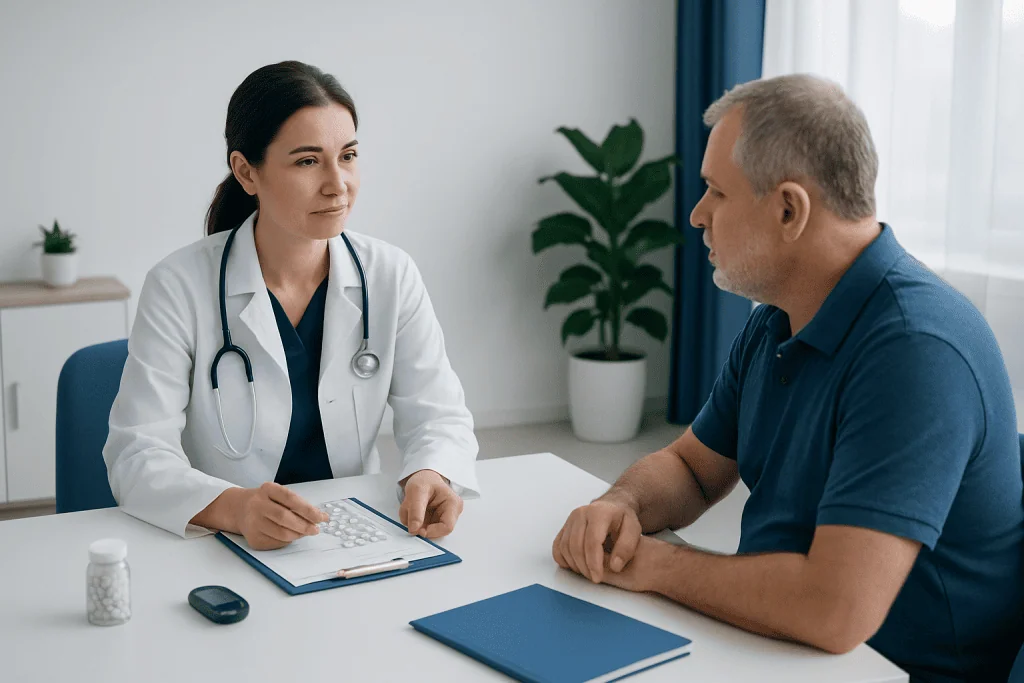
Pack more than you think you need. A sensible rule is double the quantity your planned stay requires, ideally split between two bags in case one goes missing. Delays happen, discharge dates move, and sourcing an unfamiliar brand of test strip in another country is an errand you do not want during recovery.
Hand luggage, not the hold
Every essential item travels in your carry-on: insulin, tablets, test strips, CGM sensors, pump consumables, lancets, glucagon if prescribed, spare batteries or chargers for devices, and fast-acting sugar for hypoglycaemia. Checked baggage is the wrong place for two reasons: it can be lost, and hold temperatures can fall low enough to damage insulin. Store insulin according to the manufacturer’s guidance and protect it from both heat and freezing; a small insulated pouch is usually enough for the journey itself.
Documents to carry and documents to send
Bring printed and digital copies of the essentials: passport, visa paperwork if required, hospital confirmation, prescriptions, a full medication list, recent laboratory results, ECG or specialist letters where relevant, and your travel insurance details. Check that your insurance actually covers a trip taken for planned treatment, many standard policies exclude it, and you may need a policy written for medical travel. If you wear a medical alert bracelet or carry a diabetes card, keep it accessible during the flight and at admission.
Some of this material is more useful to the hospital before you travel than in your hand on arrival. Acibadem’s international teams routinely advise patients on which records to send ahead and which to carry, so that the clinical review happens before the trip rather than after it. That pre-arrival coordination removes a surprising amount of stress from travel day.
Managing flights, meals and blood sugar on the way
Travel day is usually the least predictable part of the whole journey. You may wake early, eat at strange times, sit for hours, walk fast through terminals, and absorb a delay or two. Any of these can shift your glucose pattern, so the working rule is simple: check more often than you would at home, especially whenever your routine is being disrupted.
Keep snacks and fast-acting carbohydrate on your person at all times, not in the overhead locker, not dependent on the meal trolley. If you use insulin, ask your clinician before departure how doses should be timed around meals that may arrive late or not at all, airline meals arrive when they arrive, and your written plan should assume that.
Time zones
Turkey may be several hours ahead of or behind your home. For short shifts, many people simply keep their usual schedule; for longer ones, dose timing may need a deliberate adjustment. This is a conversation for your diabetes clinician before departure, not a decision to make mid-flight while tired. Write the agreed plan down in both time zones and, once you land, run your medication schedule on local time so there is no ambiguity between you and the hospital.
Hydration and movement
Cabin air is dry, and dehydration can push glucose higher. Drink water regularly unless your doctor has told you to restrict fluids. On longer flights, stand and walk when you can, and follow any advice your clinician has given you about compression stockings if circulation or clotting risk has been raised in your case.
- Carry glucose tablets, juice or another quick sugar source within arm’s reach
- Set phone alarms for glucose checks and medication times, in the correct time zone
- Keep supplies accessible during boarding, transit and arrival, not buried in a bag
- Have a fallback for a delayed or missed meal, and assume at least one will happen
If you are making the trip without a companion, the practical side deserves extra thought, from who watches your bag during a glucose check to how you get from the airport after discharge. Our guide on traveling to Turkey for surgery alone covers that ground in detail. If family will be involved from a distance, a family care plan made before departure keeps everyone working from the same information.
Hospital admission and the day of surgery
As the date approaches, the goal is clarity on three points: when you stop eating and drinking, which diabetes medicines you take the night before, and what you do on the morning of surgery. The correct answers differ by type of diabetes, by procedure and by medication, which is why generic advice is not good enough. Ask for instructions specific to you, in writing, and if anything is unclear a few days out, ask again rather than guessing.
Tell the hospital team about anything that shapes monitoring: hypoglycaemia without warning symptoms, frequent highs, kidney disease, foot ulcers, slow-healing wounds, or a recent infection. These details influence how closely you are watched and how recovery is planned. If you use a pump or CGM, confirm in advance whether the device stays in place during the operation or whether a temporary change is needed, do not wait for the anaesthesia interview to raise it for the first time.
People traveling to Turkey for surgery with diabetes often worry most about this handover moment: a new team, a new language, a routine that suddenly is not yours to run. In practice, this is where advance preparation pays off. At Acibadem hospitals, international patient services coordinate communication between surgeons, anaesthesiologists and nursing staff, and interpreter support is available if you want instructions explained slowly to you or your companion. If someone is traveling with you, it helps for them to understand your diabetes plan too; a companion who knows your medication schedule and your low-sugar routine is a genuine safety asset, not just moral support.
Recovery planning: wounds, meals and when not to fly home
Safe preparation covers the days after the operation, not just the operation. Surgery, pain, reduced appetite, antibiotics, stress and lower activity can all move glucose in ways your usual routine will not predict. Before you travel, ask how often your glucose will be checked in hospital, when your usual medicines are expected to restart, and what the typical meal progression looks like after your specific procedure.
Diabetes tends to demand extra attention to wound care, hydration and infection awareness after surgery. Before discharge, ask your team what is normal for your procedure and what would call for medical review, so you know the difference before you are managing dressings in a hotel room. If you will need help with mobility, nutrition or dressings in the first days, arrange it before you leave home rather than improvising after discharge, and think about the home end too, since your first days back matter as much as your first days in Turkey. There is a separate guide on preparing your home before traveling for treatment.
Do not book an aggressive return flight. Leave room for the post-operative review, for any medication adjustment, and for the ordinary slowness of early recovery. Before you fly home, you want a discharge summary in English, a clear follow-up route, and instructions your doctor at home can act on. At Acibadem, aftercare coordination and practical matters such as accommodation timing or airport transfers are handled by the same international teams, which matters if your mobility is limited after surgery.
Step by step
- Get medical clearance early. Speak to your diabetes clinician and the surgical team before booking flights. Confirm your control is stable enough for travel and surgery, and ask for written guidance tailored to your medicines and procedure.
- Send your records in advance. Share recent reports, medication lists, allergies and any diabetes complications before you travel, so the hospital reviews your case before arrival rather than after it.
- Build a medication timing plan. Write down exactly what you take the day before travel, on travel day, the night before surgery and the morning of surgery, with time zone adjustments already worked in, so no dosing decision is made tired or rushed.
- Pack a full diabetes travel kit. Double the supplies you expect to need, essentials in hand luggage, plus snacks for low blood sugar, spare device batteries or chargers, and copies of prescriptions.
- Confirm fasting and admission instructions. A few days before surgery, re-check when you stop eating and drinking and which medicines continue or pause. If anything is unclear, ask again rather than guessing.
- Plan the first days after surgery. Arrange accommodation, meals, mobility support and transport with recovery in mind, and know who on your care team to contact about glucose or wound questions after discharge.
Your checklist
- Passport, travel documents and hospital confirmation
- Written diabetes summary from your doctor
- Full medication list with doses and timing, in local time
- Extra insulin, tablets, test strips, sensors or pump supplies, roughly double your expected need
- Quick sugar snacks for low blood glucose, carried on your person
- Recent lab results and specialist letters where relevant
- Medical alert ID or diabetes card
- Travel letter for airport security covering medicines, needles and devices
- Insurance documents that cover planned treatment abroad
- Comfortable shoes and easy-access hand luggage
Key takeaways
- Diabetes does not rule out surgery abroad, but it does demand earlier and more detailed planning than most trips.
- Coordinate your diabetes clinician, the surgeon and the hospital before booking anything.
- All essential medicines and monitoring supplies travel in hand luggage, with extras for delays.
- Fasting, delays, stress and time zone shifts all move glucose, check more often than usual and follow the written plan your clinician gave you for disrupted meals.
- Leave enough time in Turkey for post-operative review, wound checks and medication adjustment before flying home.
Frequently asked questions
Can I travel to Turkey for surgery if I have diabetes?
In many cases, yes, provided your condition is reasonably stable and your treating clinicians agree that travel and surgery are appropriate at this point. The deciding factor is usually preparation rather than the diagnosis itself: a clear medication plan, fasting instructions, monitoring routine and recovery arrangements, all settled before you leave.
Should I tell the hospital about my diabetes even if it is well controlled?
Yes, always. Even well-controlled diabetes affects fasting instructions, medication timing, wound healing and glucose management around anaesthesia. Share your full treatment plan, your devices, and any past complications in advance so the team can plan monitoring properly.
How much diabetes medication should I bring?
More than you expect to use, roughly double your planned stay is a sensible rule, to cover delays or a longer recovery. Keep essential medicines and supplies in your carry-on luggage together with prescriptions and a doctor’s letter, and never place insulin in checked baggage.
Can I keep my insulin pump or CGM during surgery?
Practice varies by hospital, device and procedure, so confirm in advance rather than on the day. Tell both your local diabetes team and the surgical team exactly which devices you use, and ask whether the pump or CGM stays in place during the operation or needs a temporary change, and how to manage sensors and supplies while traveling.
Will fasting before surgery affect my blood sugar?
It can, which is why you need a personalised plan. Some diabetes medicines require adjusted timing or a temporary pause before surgery, but the specifics depend on your treatment and the procedure. Follow written instructions from your treating team, and never change doses on your own.
How do I handle insulin timing across time zones?
Ask your diabetes clinician before departure: the right approach depends on the size of the time shift and your regimen. Agree the plan in writing with times noted in both zones, then switch your schedule to Turkish local time on arrival so your timings match the hospital’s.
Is it safe to fly home soon after surgery if I have diabetes?
That depends on the procedure, your mobility, your wound status and how your glucose behaves afterwards. It is generally wiser not to schedule a very early return. Allow time for a post-operative review, and make sure you understand how to manage meals, medicines and wound care during the journey home before you book the flight.
How does Acibadem support patients with diabetes before surgery?
International patient teams at Acibadem help organise pre-arrival record review, explain practical steps before admission, and coordinate communication between surgeons, anaesthesiologists and nursing staff. Interpreter support is available, and the teams can also assist with practical matters such as accommodation timing and transfers around your recovery.
Add us as a Preferred Source to see more of our trusted health content across Google Search, AI Overviews and Discover.

Update history
- PublishedJuly 8, 2026
- Medical review approvedSeptember 13, 2026
- Last content updateSeptember 12, 2026
References3
- CDC Travelers' Health: Travelers with Chronic Illnesses wwwnc.cdc.gov
- MedlinePlus: Diabetes medlineplus.gov
- NHS: Type 2 diabetes nhs.uk
More Patient Guides

How Long Does Anesthesia Last? Wear-Off Times by Type
Coming round from an operation, almost everyone asks the same two questions: when will my head feel normal, and how long is…

Flying to Turkey After a Recent Illness: When Is It Safe to Travel?
Flying to Turkey after a recent illness may be safe once you are medically stable and cleared to travel; plan airline support…
Braces, Retainers, and Dental Work Before Surgery in Turkey: What to Tell Your Team
Braces, retainers and dental work before surgery in Turkey should be shared with your care team early to plan safe anaesthesia and…

When to Stop Eating, Drinking, or Smoking Before a Procedure in Turkey
When to stop eating before a procedure in Turkey depends on your anesthesia plan; follow your care team’s exact fasting instructions for…