

Braces, Retainers, and Dental Work Before Surgery in Turkey: What to Tell Your Team
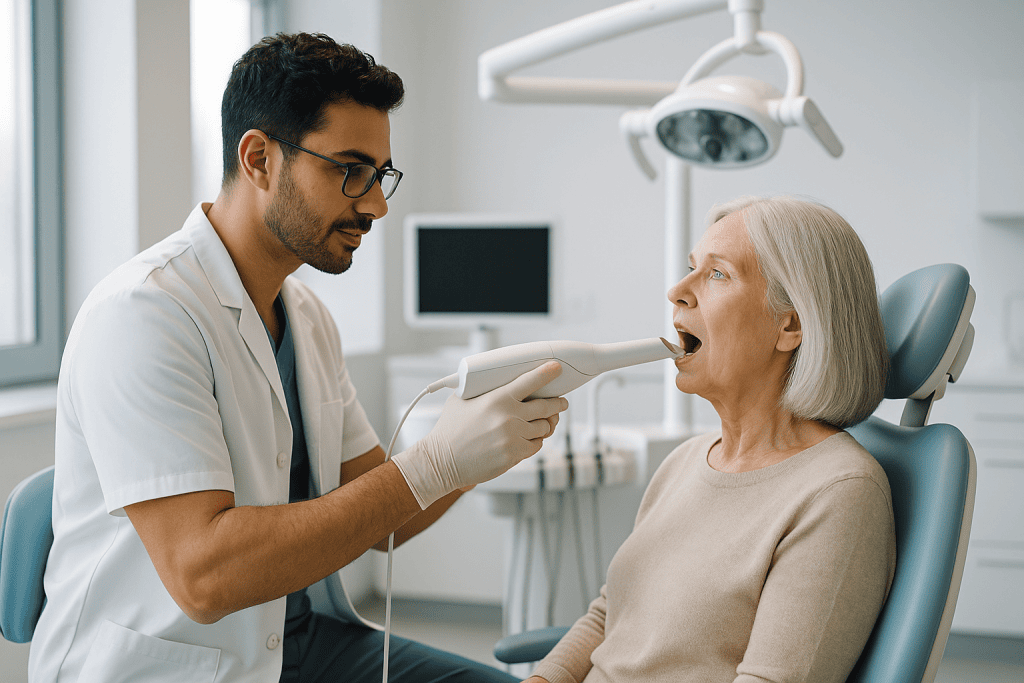
Braces, retainers, and dental work before surgery in Turkey all belong in your pre-operative history. Fixed braces and bonded retainers usually stay in place; removable retainers, aligners and dentures usually come out before anaesthesia. Recent extractions, implants or an active dental infection can affect the timing of an elective operation, so declare every appliance and every recent treatment early and in full.
Wondering whether your braces have to come off before an operation, or if the retainer you wear at night is even worth mentioning? It is. Braces, retainers, and dental work before surgery in Turkey are part of the anaesthesia team’s planning, because your mouth is the route through which airway equipment passes. Small details, a loose bracket, a healing extraction site, a denture you forgot to declare, change how that planning is done.
This guide explains what surgical teams need to know about your teeth and oral appliances, what usually happens to braces and retainers on the day of surgery, and how recent dental treatment can affect the timing of an elective procedure. It does not replace the advice of your treating clinicians; it tells you what to have ready so their advice is based on complete information.
At a glance
- When to declare it: On your medical questionnaire when you book, and again at pre-operative assessment
- What to declare: Braces, retainers, aligners, dentures, crowns, bridges, veneers, implants, loose teeth, recent dental treatment
- Fixed braces and bonded retainers: Usually left in place, do not remove them yourself
- Removable appliances: Usually taken out before general anaesthesia; bring a rigid, labelled case
- Recent dental care: Infections, extractions and healing implant sites can affect elective surgery timing
Why braces, retainers and dental work matter before surgery
Under general anaesthesia, and during many forms of sedation, the anaesthesia team manages your airway. That may involve a breathing tube, a laryngoscope or another device placed through your mouth. Anything in that space, brackets, wires, bonded retainers, crowns, bridges, veneers, implants, dentures, loose or fragile teeth, affects the choice of equipment and technique. Dental injury during airway management is uncommon, but it is a recognised risk, and it is more likely when teeth or restorations are already loose and the team does not know about them.
Dental information also affects timing. A tooth infection, gum abscess, recent extraction or a healing implant site may need assessment before an elective operation goes ahead. That does not automatically mean postponement. It means the surgeon, the anaesthetist and, where relevant, a dentist weigh the state of your mouth against the urgency of the procedure and decide the order of events. This is the same logic behind formal dental clearance before major surgery in Turkey, which some procedures, particularly cardiac and implant surgery, commonly require.
For international patients there is one extra factor: distance. Your orthodontist and your surgeon are usually in different countries. Declaring braces, retainers, and dental work before surgery in Turkey early gives the team time to ask follow-up questions while you are still at home, where your own dentist can repair a loose bracket or supply a treatment summary far more easily than after you have flown.
What to tell your care team

Be specific rather than writing “some dental work” on a form. The useful version reads more like an inventory. State whether your braces are fixed or removable, whether you wear a retainer at night, and whether there is a bonded wire behind your front teeth, many people forget bonded retainers entirely because they have had them for years. Mention aligners, full or partial dentures, mouthguards and any oral device you use for sleep.
Then cover the teeth themselves: crowns, bridges, veneers, implants, root canal treatment, loose or chipped teeth, sensitive teeth, jaw pain, limited mouth opening, past dental trauma and any history of difficult dental treatment. If an appliance is loose, damaged or likely to come off, that belongs in your pre-operative history, not in a remark made on the trolley outside the operating theatre.
- The date and type of your most recent dental treatment
- Any current toothache, swelling, bleeding, discharge or persistent bad taste
- Extractions, implant placement or oral surgery that is still healing
- Your dentist’s or orthodontist’s contact details, if you have them
- Any instructions you have already been given about wearing or removing an appliance
Photographs of your braces or appliance are a reasonable substitute if you have no written records. If your dental documents are in another language, submit them with your other pre-travel paperwork; interpreter support is part of how international patient services normally operate, and translated records are far more useful reviewed in advance than produced on arrival.
Braces and fixed retainers: what usually happens

Fixed braces and bonded retainers are generally not removed just because you are having surgery. Taking them off without orthodontic guidance can interrupt months of treatment and damage tooth enamel, so the default is to leave them in place, document them, and work around them. The anaesthesia team notes their presence and adjusts airway technique accordingly, for example, taking particular care to protect your lips and the brackets during instrumentation.
The exception is a component that is already failing. A loose bracket, a protruding wire or a partly detached bonded retainer is a different situation from intact orthodontics, because a loose part can detach during airway management. If anything in your mouth feels loose, sharp or mobile, it should ideally be checked and repaired by your own orthodontist before you travel, and it must be recorded in your pre-operative history either way. Do not cut, bend or remove orthodontic wires yourself unless your own orthodontic professional has given you clear instructions to do so.
Expect the anaesthetist to ask how widely you can open your mouth and to look at your teeth during the pre-operative assessment. This is routine airway evaluation, not a comment on your dental hygiene. Fragile front teeth, extensive crown work and fixed orthodontics all feed into the choice of equipment, and an accurate picture is the single most effective protection you can offer your own teeth.
Removable retainers, aligners and dentures
Removable retainers, clear aligners, full dentures, partial dentures and similar appliances are usually taken out before general anaesthesia and before many sedated procedures. A removable appliance can shift, break or obstruct the airway once you are unconscious, so the standard practice is removal beforehand. Your nurse or anaesthetist will tell you exactly when to take the appliance out and when it is safe to put it back; do not wear a retainer or aligner into the operating room unless the clinical team has specifically said you may.
Practicalities matter more than most people expect. Bring a rigid, clearly labelled case for every removable appliance and keep it in your hand luggage. Appliances wrapped in tissue on a hospital tray are routinely mistaken for rubbish and discarded: a mundane loss at home, and a genuinely awkward one when your orthodontist is several countries away. If you travel with a companion, make sure they know where the case is kept.
If you use a nightguard or splint for tooth grinding, mention it, but expect that it will not be worn during the procedure itself. After surgery, you may need to wait before reinserting an appliance if you are drowsy or nauseated, if your face or mouth is swollen, or if you are not yet allowed to eat and drink normally. The ward team can tell you when reinsertion is appropriate for your situation, so ask before discharge rather than guessing at your hotel.
Recent dental treatment, infections and surgery timing
Tell your surgical team what dental work you have had recently and when, fillings, root canal treatment, crowns, periodontal treatment, extractions, implant placement, wisdom tooth removal, treatment for infection. Routine, completed dental care often has no effect on a planned operation. Healing sites and active problems are different: an extraction socket that has not closed, an implant placed weeks ago, or a tooth that has started aching since you booked are all details the team assesses individually. Whether antibiotics have been prescribed does not settle the question on its own; whether an infection is truly resolved is a clinical judgement, made by the dentist and the surgical team together, not an assumption.
Two timing principles are worth stating plainly. First, elective dental work booked close to a surgery date is a scheduling question for your surgeon and pre-operative team, not a decision to make alone, fresh dental wounds and general anaesthesia are a combination clinicians prefer to plan deliberately. Second, genuinely necessary dental treatment should not be silently postponed just because an operation is coming; hiding a dental problem to protect a surgery date tends to produce a worse outcome for both. The right order depends on your procedure, your medical history and the clinicians responsible for your care.
One related point: if a dentist has recently changed anything about your medication, or you take anticoagulants that were paused for a dental procedure, that history matters too. The guide on blood thinners before treatment in Turkey covers what the team needs to know; the decision about any medicine always belongs to your treating doctor.
Combining dental treatment with a trip for surgery
Some international patients hope to combine an operation with dental treatment in the same trip. Sometimes this is workable; often the arithmetic of healing time defeats it. Orthodontic treatment in particular, braces or aligners, runs over months and needs repeated adjustment visits, so it rarely suits a single short stay. Individual restorations, extractions or implant stages fit a shorter window, but each still carries its own healing period, and stacking dental work against a surgery date compresses exactly the recovery time both need.
Costs for dental and orthodontic work are individual rather than fixed. A quote depends on the type of appliance or restoration, the number of teeth involved, the materials used, how many visits the plan requires and whether imaging or laboratory work is needed, which is why serious quotes follow an examination rather than precede it. In hospital settings, a dental and oral health department and the surgical team plan from the same records, and the surgical team has the final word on sequencing. Length of stay follows the same logic: it is set by the treatment plan, not the other way round. The general guide on when to arrive before surgery in Turkey explains how arrival and departure windows are usually built around a procedure.
Before you travel and at pre-operative assessment
Include your full dental and orthodontic history in the medical questionnaire you complete before travelling. If your history is complex, recent treatment, active symptoms, elaborate orthodontics, submit the details early enough for the team to review them and, if needed, request clarification from your dentist while you are still at home. Vague forms generate questions on arrival; complete ones generate a plan.
At the pre-operative assessment itself, repeat the information even if you already wrote it down. Repetition is not bureaucracy: it is how hospitals verify that nothing changed between booking and admission. Bring your appliance case, any mouth rinses or dental medications you use, and whatever reports you have. Where it helps planning, the team may bring dentistry or oral health colleagues into the discussion alongside anaesthesia and surgery. What happens on the assessment day more broadly, admission, paperwork, pre-op checks, is covered in the guide to arrival day for surgery in Turkey.
On the day of surgery and afterwards
Follow your fasting instructions exactly. Unless told otherwise, do not chew gum, suck sweets or use mints in the fasting window, as these count against fasting requirements. You can normally brush your teeth as directed without swallowing water; the specifics are in your own instructions and in the guide to fasting before surgery in Turkey.
When you arrive on the ward, remind your nurse and anaesthetist about braces, retainers, dentures and recent dental work, even though it is already in your notes. Remove removable appliances only when instructed, place them in their labelled case and confirm where the case will be stored during the procedure.
Afterwards, some throat dryness, lip soreness or mild jaw discomfort can occur following anaesthesia and airway management, and it usually settles. Before you leave the hospital, check your appliances and teeth: a loose bracket, a broken retainer or a new chip is far easier for the team to document and address while you are still on site than after you have flown home.
Step by step
- List every dental and orthodontic device. Write down fixed braces, bonded retainers, removable retainers, aligners, dentures, implants, crowns, bridges and veneers. Note anything loose, painful or recently repaired so nothing is missing from your pre-operative history.
- Put it in your pre-travel questionnaire early. Complete the dental sections fully when you book, and update the information if anything changes: a new crown, a lost retainer, fresh tooth pain. Early, complete answers give the team time to plan while you are still at home.
- See your own dentist or orthodontist before travel if something is wrong. A loose bracket, wire, crown or denture is easiest to repair at home. Ask for a short treatment summary or records if the hospital requests them.
- Treat dental scheduling as part of surgical scheduling. Elective dental work near a surgery date is a question for your surgeon and pre-operative team; necessary dental treatment should be declared, not deferred in silence.
- Pack removable appliances safely. Use a rigid, labelled case for each retainer, aligner or denture and keep it in your hand luggage, never wrapped in tissue or loose in a bag.
- Repeat everything at pre-operative assessment. Tell the nurse and anaesthetist about all appliances and recent dental work again, even if the forms were complete. Mention anything that has changed since you submitted them.
- Follow removal and storage instructions on the day. Take appliances out only when directed, confirm where they are stored, and ask when it is safe to reinsert them after the procedure.
Your checklist
- List braces, fixed and removable retainers, aligners, dentures and other oral appliances.
- Report crowns, bridges, veneers, implants and any loose teeth or restorations.
- Declare dental pain, swelling, infection, bleeding or recent dental trauma.
- Give dates and details of recent extractions, implants, root canal treatment or oral surgery.
- Pack a labelled hard case for every removable appliance, kept in hand luggage.
- Bring dental records and your dentist’s or orthodontist’s contact details if available.
- Treat elective dental work near your surgery date as a decision for the surgical team.
- Repeat the full dental history at pre-operative assessment and on the day of surgery.
- Check your teeth and appliances before discharge and report any damage while still in hospital.
Key takeaways
- Braces, retainers, and dental work before surgery in Turkey all belong in your pre-operative history, declared early and repeated at assessment.
- Fixed braces and bonded retainers usually stay in place; loose components are the exception and need reporting.
- Removable retainers, aligners and dentures usually come out before anaesthesia and travel in a rigid, labelled case.
- Dental infections, healing extraction sites and recent implants can affect elective surgery timing and are assessed individually.
- Combining orthodontic or dental treatment with a surgical trip depends on healing timelines, and quotes and stay lengths follow the treatment plan.
- An accurate dental history is the best protection your teeth have during airway management.
Frequently asked questions
Do fixed braces have to come off before surgery?
Usually not. Fixed braces and bonded retainers are generally left in place, documented by the anaesthesia team, and worked around during airway management. Removal without orthodontic guidance can damage teeth and interrupt treatment. The exception is a loose or broken component, which should be reported and, where possible, repaired by your own orthodontist before travel.
Should I remove my retainer before surgery?
Removable retainers are usually taken out before general anaesthesia and many sedated procedures, but only when your nurse or anaesthetist tells you to. Store it in a rigid, labelled case, not tissue. A fixed bonded retainer behind your teeth is different: it stays in place unless your orthodontist advises otherwise.
Is it safe to have dental surgery in Turkey?
Safety depends on the specific provider, not the country as a label. Sensible measures apply anywhere: check the qualifications of the treating dentist or surgeon, ask how complications and follow-up are handled, confirm you will receive full written records, and prefer settings where dental and medical teams can coordinate if you also have an operation planned. No treatment, anywhere, is entirely without risk.
Is it a good idea to travel to Turkey for dental work?
It suits some situations and not others. Single-stage treatments fit a defined trip better than treatments needing months of repeated visits, and any dental plan combined with surgery must respect both healing timelines. Weigh the quality of the specific provider, the realistic number of visits, and how follow-up or repairs would be handled once you are home.
How much do teeth braces cost in Turkey?
There is no single figure, and any fixed number quoted before an examination should be treated cautiously. Orthodontic pricing depends on the appliance type, the complexity of the correction, the materials, the number of adjustment visits over the treatment period, and any imaging or laboratory work. A meaningful quote follows a clinical assessment and comes as an itemised plan.
How long do you have to stay in Turkey to get your teeth done?
It depends entirely on the treatment plan. Some restorative work fits a short stay of days; implant treatment is often staged across separate visits months apart; braces and aligners need supervision over many months and rarely suit a single trip. Ask for the visit schedule in writing before booking travel, and plan flights around the plan rather than the reverse.
Can braces be damaged during anaesthesia?
Anaesthesia teams take precautions to protect teeth and appliances, but dental or orthodontic damage remains a recognised, uncommon risk of airway management, more likely when teeth, crowns or brackets are already loose. A complete, honest dental history lets the team choose the most suitable technique and document your dental status accurately beforehand.
Can I wear my retainer straight after surgery?
Not always. You may be asked to wait if you are drowsy or nauseated, if there is facial or mouth swelling, if you have had oral or facial treatment, or if you are not yet allowed to eat and drink normally. Ask the ward team when reinsertion is appropriate before you are discharged.
Add us as a Preferred Source to see more of our trusted health content across Google Search, AI Overviews and Discover.

Update history
- PublishedAugust 22, 2026
- Medical review approvedSeptember 13, 2026
- Last content updateSeptember 12, 2026
References3
More Patient Guides

How Long Does Anesthesia Last? Wear-Off Times by Type
Coming round from an operation, almost everyone asks the same two questions: when will my head feel normal, and how long is…

Flying to Turkey After a Recent Illness: When Is It Safe to Travel?
Flying to Turkey after a recent illness may be safe once you are medically stable and cleared to travel; plan airline support…

When to Stop Eating, Drinking, or Smoking Before a Procedure in Turkey
When to stop eating before a procedure in Turkey depends on your anesthesia plan; follow your care team’s exact fasting instructions for…

Arrival Day for Surgery in Turkey: Admission, Paperwork, and Pre-Op Checks
Arrival day for surgery in Turkey usually includes admission, paperwork, pre-op checks and meeting your care team. Plan for ID, records and…