

How to Plan Meals After Surgery During Your Stay in Turkey

To plan meals after surgery during your stay in Turkey, start with the diet instructions your surgical team gives you, then build a simple routine around them: small portions of soft, mild food, regular fluids, and a first-day backup of approved basics in your hotel or apartment. Keep a written note of allergies and restrictions, and progress to heavier food only when your care team agrees.
Wondering what you will actually eat the day after your operation, when you are tired, far from home, and unsure what your stomach will accept? It is one of the most practical worries international patients have. A little preparation makes those first recovery days calmer, and it is easier than you might expect to plan meals after surgery during your stay in Turkey once you know what to organise and in what order.
This guide explains how post-surgical eating usually progresses, which foods tend to be easiest early on, what to avoid, and how to handle the logistics, hospital trays, hotel room service, supermarket runs, and language differences, without adding stress to your recovery.
At a glance
- Best for: International patients recovering in hospital, a hotel, or a serviced apartment during their stay in Turkey
- Main goal: Keep meals simple, easy to tolerate, and aligned with your care team’s instructions for your specific procedure
- Most important step: Get your eating and drinking instructions from your surgeon or nurse before making any meal plans of your own
- What to prepare: A written note of allergies and dietary needs, a short list of tolerated soft foods, hydration options, and a first-day food backup
- Extra support: Hospital dietitians, interpreters, and international patient coordinators can help communicate dietary needs during your stay
To plan meals after surgery during your stay in Turkey, start with your instructions, not your appetite
There is no single post-surgery diet. What you should eat, and when, depends on the procedure you had, the anaesthetic used, your medical history, and how your body responds in the first hours and days. Some patients return to ordinary food quickly. Others follow a phased approach: clear fluids first, then thicker liquids or purées, then soft foods, and only later a normal diet. Your surgeon, nurse, or dietitian sets that sequence, and their instructions override anything you read online, including this guide.
Ask for those instructions before your operation, not after it, and ask for them in writing if possible. When you are groggy from anaesthesia, verbal instructions are easy to forget or misremember. A written note also lets your companion order or shop on your behalf without guessing.
It is normal for appetite to be low at first. Anaesthesia, pain medication, nausea, bloating, constipation, and plain fatigue all reduce the desire to eat. Rather than aiming for full meals, most patients do better thinking in terms of small portions, gentle textures, and steady fluids. Tolerance is the early goal, not volume.
If you are being treated at an Acibadem hospital, dietitians plan inpatient meals around your medical orders, and interpreters and international patient coordinators are available to help make sure dietary information, allergies, religious requirements, texture limits, is understood by everyone involved in your stay.
What kinds of foods are usually easiest after surgery
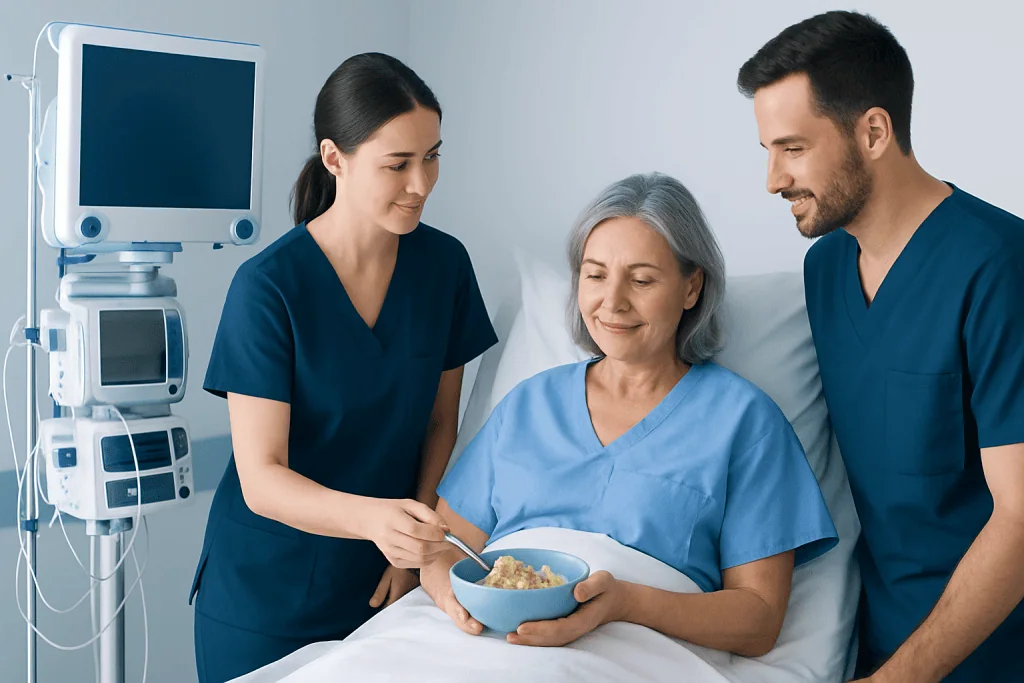
In the early recovery period, most patients manage best with food that is mild, soft, moist, and easy to digest. The exact choice matters less than three things: whether you tolerate it, whether it fits your procedure-specific instructions, and whether you are also drinking enough.
Practical meal ideas for the first recovery days
- Soups: Turkish kitchens are excellent here. Plain lentil soup (mercimek çorbası), chicken soup, and vegetable soups are widely available, inexpensive, and usually gentle, ask for them without heavy spice or chilli.
- Dairy, if permitted: plain yoghurt is a staple in Turkey and a common early-recovery food. Note that some dental teams advise avoiding dairy for a period after implant work; the reasoning is explained in our guide on why some patients are told to skip dairy after dental implant surgery.
- Soft carbohydrates: plain rice, mashed potato, well-cooked pasta, oatmeal, semolina, plain bread or toast.
- Gentle proteins: scrambled or soft-boiled eggs, poached or grilled chicken cut small, white fish, blended legume dishes, if these are allowed for your procedure.
- Soft fruit and vegetables: bananas, stewed apple or pear, fruit compote (komposto), mashed or well-cooked vegetables.
If your operation was dental or oral, texture matters even more than flavour. Our guides on soft foods after dental implant surgery and the day-by-day dental implant diet go into much more detail for that specific situation.
What to avoid in the early days
Even if you normally enjoy rich food, your stomach and energy level may not welcome it straight after surgery. Foods that commonly cause trouble early in recovery include:
- Very spicy, oily, or fried dishesharder to digest and more likely to trigger nausea or reflux
- Very large portionssmall, frequent meals are almost always easier to manage
- Strong-smelling food when you feel nauseateddry, lukewarm, plain items usually sit better
- Gas-forming foods in excessbeans, cabbage, onions, and fizzy drinks can make post-operative bloating worse for some patients
- Alcoholit can interact with medication and affect healing; your own team’s advice applies to your procedure and its timing
- Anything your team has specifically restrictedsome procedures come with rules that would not apply to anyone else, such as texture limits, straw restrictions, or temperature limits
Do not assume every “healthy” food is appropriate immediately. High-fibre foods, raw salads, and nuts are excellent later in recovery for many people but can feel uncomfortable, or be genuinely unsuitable, too early, particularly after gastrointestinal or bariatric procedures.
A typical phased structure, and why yours may differ
Many surgical teams describe recovery eating in stages. The table below shows the general shape of that progression. Treat it as a map of the terrain, not a schedule: your team decides which stages apply to you, how long each lasts, and whether you skip some entirely.
| Stage | What it usually includes | What it is for |
|---|---|---|
| Clear fluids | Water, clear broth, diluted juice without pulp, herbal tea | Rehydrating gently and testing that your digestive system is working after anaesthesia |
| Full liquids / purées | Blended soups, yoghurt drinks, smooth porridge, purées | Adding nutrition while textures stay effortless to swallow and digest |
| Soft foods | Eggs, mashed vegetables, soft rice and pasta, tender proteins | Rebuilding normal eating without chewing strain or digestive load |
| Regular diet | Your usual food, reintroduced gradually | Returning to normal once your team confirms you are ready |
Some patients move through all four stages in a couple of days. Others, bariatric patients in particular, follow a much longer, procedure-specific version supervised by a dietitian. If you are having a gastric procedure, the eating plan is central to the treatment itself, and our guide on how long to stay in Turkey after gastric sleeve surgery explains how the early diet phases fit into the travel timeline.
Planning meals in hospital, a hotel, or an apartment

In hospital, meals are coordinated with your treatment schedule, medication times, and medical orders, which makes this the simplest phase. It is still worth speaking up if you are struggling with taste, texture, portion size, or timing, kitchens can usually adjust, but only if they know. If someone is staying with you, our guide to companion meals during a hospital stay in Turkey covers how their food works.
In a hotel, think practically about the first day or two after discharge. You may not feel like reading unfamiliar menus, waiting for delivery, or walking to find food. Before you book, ask whether breakfast can be adjusted, whether room service offers plain or mild dishes, and whether outside delivery is straightforward. A minibar fridge and a kettle make a real difference.
In a serviced apartment, you gain a kitchen but lose room service. That trade works well if a companion can cook or shop; it works badly if you are alone and exhausted. Stock the essentials before your procedure, not after it.
Wherever you stay, the same principle applies when you plan meals after surgery during your stay in Turkey: assume your worst day, not your best. If you feel better than expected, unused backup food costs you nothing. If you feel worse, it saves the day.
Hydration, digestion, and common recovery complaints
Fluids can matter as much as food, especially after pre-surgical fasting, if you feel weak, or if you are taking medicines with drying effects. Water is the mainstay for most people; your team may suggest other tolerated fluids depending on your condition. Sipping steadily through the day usually works better than drinking large amounts at once, and some procedures come with specific rules, no straws after oral surgery, for example, or paced sipping after bariatric surgery.
Constipation is common after operations, particularly when opioid pain medicines slow the bowel. If your doctor confirms it is appropriate for you, fluids, gentle movement, and a gradual return to fibre-containing foods often help. Do not add large amounts of fibre abruptly, and never adjust your medication on your own account, how you take pain relief and any laxatives is a decision for your treating doctor.
Nausea, bloating, reflux, and altered taste also happen. Small dry meals, lukewarm rather than hot food, and avoiding strong smells help many patients. What food choices cannot fix, they should not be asked to fix, persistent vomiting or an inability to keep fluids down is a clinical matter, not a menu problem.
Shopping, ordering, and communicating your food needs in Turkey
You do not need a complicated strategy: you need a realistic one. Before your procedure, list the foods and drinks you usually tolerate when unwell, plus allergies, religious dietary requirements, and firm dislikes. Save the note on your phone, ideally with a Turkish translation, so you or your companion can show it anywhere.
Some practical points about food logistics in Turkish cities:
- Supermarkets are everywhere. Chains such as Migros, A101, and BİM stock yoghurt, soup, bread, fruit, bottled water, and other basics, and small local grocers (bakkal) fill the gaps.
- Food delivery apps are widely used in larger cities and cover everything from soup to groceries, which helps enormously on days you do not want to leave your room.
- Turkish restaurant culture suits recovery eating better than many patients expect: soups, rice, grilled chicken, yoghurt, and cooked vegetable dishes are standard fare, not special requests.
- Keep orders simple and specific. “Plain, not spicy” and “no nuts” travel well through a translation app; complicated modifications do not.
- Check ingredients that matter to younuts, dairy, gluten, and pepper paste appear in many Turkish dishes where visitors do not expect them.
If language is a concern, a translation app plus your written note covers most everyday situations, allergies, texture limits, and meal-timing needs travel well as short, specific phrases that a waiter, hotel kitchen, or delivery driver can act on without discussion.
How your procedure changes the plan
People travel to Turkey for a wide range of operations, dental treatment, bariatric and metabolic surgery, plastic and reconstructive surgery, orthopaedic procedures, eye surgery, and complex work in fields such as cardiovascular and general surgery. Each of these shapes the meal plan differently.
- Dental and oral surgery: texture and temperature rules dominate; nutrition itself is rarely the problem.
- Bariatric surgery: the diet is part of the treatment, follows a strict staged plan, and is supervised by a dietitian, never improvise it.
- Abdominal and general surgery: digestion needs time; the phased approach above tends to apply most literally.
- Orthopaedic and cosmetic procedures: the digestive system is usually untouched, but appetite, nausea from medication, and constipation still call for gentle, small meals early on.
Timing also interacts with travel. Eating well in the days before departure, and planning what you will eat in transit, is part of the same picture: our guide on planning your return flight after surgery in Turkey covers that leg of the journey.
Step by step
- Ask for diet instructions before your procedure. Find out what you will be allowed to eat and drink afterwards and how your diet is expected to progress. Get it in writing so you and your companion can refer to it when you are tired.
- List your dietary needs and preferences. Note allergies, medical diets, religious requirements, intolerances, and foods you tolerate when unwell. Share the list with the hospital team and keep a translated copy on your phone.
- Choose accommodation with practical food access. A fridge, a kettle, adjustable breakfast, mild room-service options, and easy delivery matter far more than a fancy restaurant downstairs when you plan meals after surgery during your stay in Turkey.
- Stock a first-day backup before the operation. Water, plain crackers, yoghurt, soup, bananas, whatever your team approves. Assume you will not feel like shopping straight after discharge.
- Eat small and build gradually. Start with the textures your care team recommends. Smaller, more frequent meals beat forcing a full plate while tired or nauseated.
- Track symptoms, not just appetite. Notice how you feel after eating, nausea, bloating, reflux, constipation, pain, swallowing difficulty. Persistent or worsening problems are a matter for your clinical team, not for trial and error.
- Use the support around you. Hospital dietitians, interpreters, and your companion can all help translate restrictions into actual meals. Clear communication prevents unsuitable orders and reduces stress for everyone.
Your checklist
- Written post-surgery eating and drinking instructions from your care team
- List of allergies, intolerances, and special diet requirements, with a Turkish translation saved on your phone
- A few approved soft or bland options stocked for your first recovery day
- Bottled water or other permitted hydration choices within reach
- Accommodation with a fridge, kettle, or easy access to simple meals
- Delivery app installed and tested, or room-service menu checked in advance
- Companion briefed on what you can and cannot eat
- Contact details for your hospital team saved and accessible
Key takeaways
- Your procedure and your surgeon’s written instructions guide every meal decision, no generic list replaces them.
- Small, mild, easy-to-digest foods usually beat full meals in the first recovery days, and Turkish soup-and-yoghurt food culture makes them easy to find.
- Hydration matters as much as food, especially with nausea, constipation, or low appetite in the picture.
- Plan for your worst day, not your best: stock a first-day backup before the operation, wherever you are staying.
- Different operations mean genuinely different diets, dental, bariatric, abdominal, and orthopaedic recoveries do not eat the same way.
Frequently asked questions
What are some good meal ideas for post-surgery?
Common early-recovery choices include plain soups, yoghurt, scrambled eggs, oatmeal, rice, mashed potato, bananas, stewed fruit, soft pasta, and tender chicken or fish, provided your care team allows them for your procedure. Small, frequent meals of soft, mild food tend to work better than large plates.
What should I not eat while recovering from surgery?
Early in recovery, most patients do better avoiding very spicy, fried, or oily dishes, very large portions, excess gas-forming foods, alcohol, and anything specifically restricted for their procedure. High-fibre or raw foods may also be uncomfortable at first, so reintroduce them gradually as your team advises.
What is a good diet plan for post-surgery?
A typical structure moves from clear fluids to thicker liquids or purées, then soft foods, then a normal diet, but the right plan is procedure-specific. Bariatric patients, for example, follow a much longer, supervised staged plan. Your surgeon or dietitian sets the version that applies to you.
What surgeries do people travel to Turkey for?
International patients commonly travel to Turkey for dental treatment, bariatric and metabolic surgery, plastic and reconstructive procedures, orthopaedic operations, eye surgery, and more complex care such as cardiovascular, general, and neurosurgical treatment. Each type of operation shapes the recovery diet differently.
Can I eat normal Turkish food during recovery?
Often yes, though not always right away. Turkish cuisine includes many recovery-friendly options, soups, yoghurt, rice, grilled chicken, cooked vegetables, so choose plain, mildly seasoned versions first and return to richer dishes gradually if your care team agrees.
How can I manage food if I have allergies or a special diet?
Tell the hospital about allergies, intolerances, and dietary rules before you arrive and again at admission. Keep a written note on your phone, ideally translated into Turkish, for ordering food outside the hospital, and check ingredients such as nuts, dairy, and pepper paste, which appear in many local dishes.
What if I feel too nauseated to eat?
Low appetite is common after surgery. Focus on approved fluids and small amounts of dry, lukewarm, plain food, eaten slowly and without strong smells nearby. For most patients, appetite returns gradually as the effects of anaesthesia and medication fade.
Should I bring snacks from home?
You can bring a few simple, travel-safe items if they fit your medical instructions and customs rules, and they can be comforting on the first day. In practice, most patients find that Turkish supermarkets and delivery services cover recovery basics easily, so a small backup is enough.
Add us as a Preferred Source to see more of our trusted health content across Google Search, AI Overviews and Discover.

Update history
- PublishedJuly 8, 2026
- Medical review approvedSeptember 1, 2026
- Last content updateSeptember 1, 2026
References3
- MedlinePlus: Clear liquid diet medlineplus.gov
- MedlinePlus: Full liquid diet medlineplus.gov
- NHS: Constipation nhs.uk
More Patient Guides

When a Hospital Stay in Turkey Becomes Longer Than Planned: What to Arrange
If your hospital stay in Turkey is longer than planned, arrange medical updates, accommodation, travel changes, insurance and support for your companion.

Waiting for Test Results in Turkey: How to Use Time Between Appointments
Waiting for test results in Turkey is easier with a clear plan for appointments, rest, records, questions and support in Istanbul.

Unexpected ICU Stay in Turkey: What Patients and Families Should Expect
Unexpected ICU stay in Turkey: learn what patients and families can expect, from communication and visiting to care updates and travel support.

How to Manage Special Diets During Medical Travel in Turkey
Special diets during medical travel in Turkey are easier to manage when you share your needs early, confirm meals and carry safe…