

Why No Dairy After Dental Implant Surgery?
Some surgeons ask you to avoid dairy for the first 24–48 hours after implant surgery. The reasons are practical: dairy can leave residue near the wound while rinsing is restricted, rich foods can worsen medication-related nausea, and a few antibiotics absorb less well with dairy. It is not a universal rule: your own surgeon's written instructions decide what applies to you.
You have just had implant surgery, you are hungry, and the discharge sheet says no dairy. Is that a strict rule or a cautious suggestion? Here is what actually sits behind it, and what to eat while it applies.
The short version: the instruction to avoid milk, yoghurt and cheese after implant surgery is a short-term, surgeon-specific measure, not a universal medical prohibition. Some clinics use it, some do not. When it is given, it usually lasts a day or two and exists for practical reasons, residue around a fresh wound, nausea from medicines, and in some cases the way certain antibiotics interact with calcium. Your surgeon’s written aftercare plan always takes priority over anything you read here.
At a glance
- Typical dairy restriction: often 24–48 hours, but it varies by surgeon and procedure, and some surgeons do not restrict dairy at all
- First-day food texture: cool or lukewarm, soft, smooth foods eaten slowly with a spoon
- Avoid initially: hot foods and drinks, hard or crunchy foods, straws, alcohol and smoking
- Coffee: usually paused for the first day or two, mainly because of heat
- Rest time: plan a quiet 24–72 hours; avoid strenuous exercise as your surgeon advises
Why no dairy after dental implant surgery?
If your discharge sheet says no dairy after dental implant surgery, there are usually three practical reasons behind it, and none of them is that dairy damages implants.
First, residue. Milk, yoghurt and soft cheese leave a film in the mouth. Normally that is harmless: you rinse, you brush, it is gone. But in the first day or two after implant placement you are typically told not to rinse vigorously, not to spit forcefully and not to brush the surgical site. A coating you cannot clear away can sit against a fresh wound and feel unpleasant. Smooth, water-based foods are simply easier to manage while your cleaning routine is restricted.
Second, nausea. Pain medicines, antibiotics and any sedation used during the procedure can unsettle the stomach. Rich, fatty foods, and full-fat dairy qualifies, tend to make an unsettled stomach worse. Vomiting shortly after oral surgery is something every surgeon wants to avoid, because retching disturbs the surgical site and the blood clot protecting it.
Third, medication. A small number of antibiotics are absorbed less effectively when taken close in time to dairy, because calcium can bind to the drug in the gut. Whether this applies to you depends entirely on what was prescribed. If it matters in your case, the instruction will be on the medicine label or in your discharge notes: it is a question for the prescriber, not something to adjust on your own.
So when patients ask why no dairy after dental implant surgery, the honest answer is: it is a brief, precautionary aftercare measure that some surgeons use and others skip. It depends on their protocol, the medicines you were given, and whether your procedure involved grafting, sinus work, multiple implants or sedation. The one thing it is not is a permanent dietary rule.
Is the dairy rule actually backed by evidence?
It is worth being straightforward here, because the internet is not. You will find articles claiming that dairy triggers inflammation after oral surgery or interferes with healing in some general way. The evidence for those claims is weak. There is no strong research showing that a spoonful of yoghurt harms an implant site, and plenty of surgeons allow dairy from day one, some even recommend cool, plain yoghurt as an easy soft food.
What is well established is narrower: certain antibiotics genuinely interact with calcium, rich foods genuinely aggravate medication-related nausea, and food residue genuinely lingers when rinsing is restricted. Those are the defensible reasons, and they explain why the advice varies so much between clinics. If your surgeon restricted dairy, follow the instruction for the short window given. If they did not, you have not been given careless advice: you have been given advice matched to your medicines and procedure.
Your food timeline after dental implant surgery
How quickly you return to normal food depends on your comfort and the complexity of your treatment. A single implant with no grafting recovers on a shorter food timeline than a full-arch case with bone augmentation. The table below is a general pattern, not a replacement for your surgeon’s plan. Throughout, chew away from the implant area, take small bites, and do not test the implant with firm food before you are cleared to.
| Time after surgery | What usually works best | What to avoid |
|---|---|---|
| Day 0 | Cool water, smooth non-dairy soups once lukewarm, puréed vegetables, soft fruit purée, spoonable non-dairy smoothies | Hot foods and drinks, straws, alcohol, smoking, crunchy foods, vigorous rinsing |
| Days 1–2 | Soft, cool or lukewarm meals: scrambled eggs, mashed vegetables, oatmeal cooled to lukewarm, soft pasta; dairy only if your surgeon permits it | Hard, spicy, acidic, sticky or crumbly foods; chewing on the treated side |
| Days 3–7 | Soft protein-rich meals: flaky fish, tender rice, soft-cooked vegetables, well-cooked pasta, mashed beans | Nuts, seeds, crusty bread, chips, popcorn, tough meat, very hot foods |
| Week 2 onward | Gradual return to a balanced diet as comfort allows and your surgeon advises | Forcing hard foods near the implant site before follow-up clearance |
For a fuller plan with meal-by-meal detail, see the day-by-day diet guide after dental implant surgery, and for variety in the soft-food stage there is a separate list of 50 soft food ideas after implant surgery. When you can expect to chew normally again is covered in how long after dental implants you can eat normally.
How many days should you rest after a dental implant?
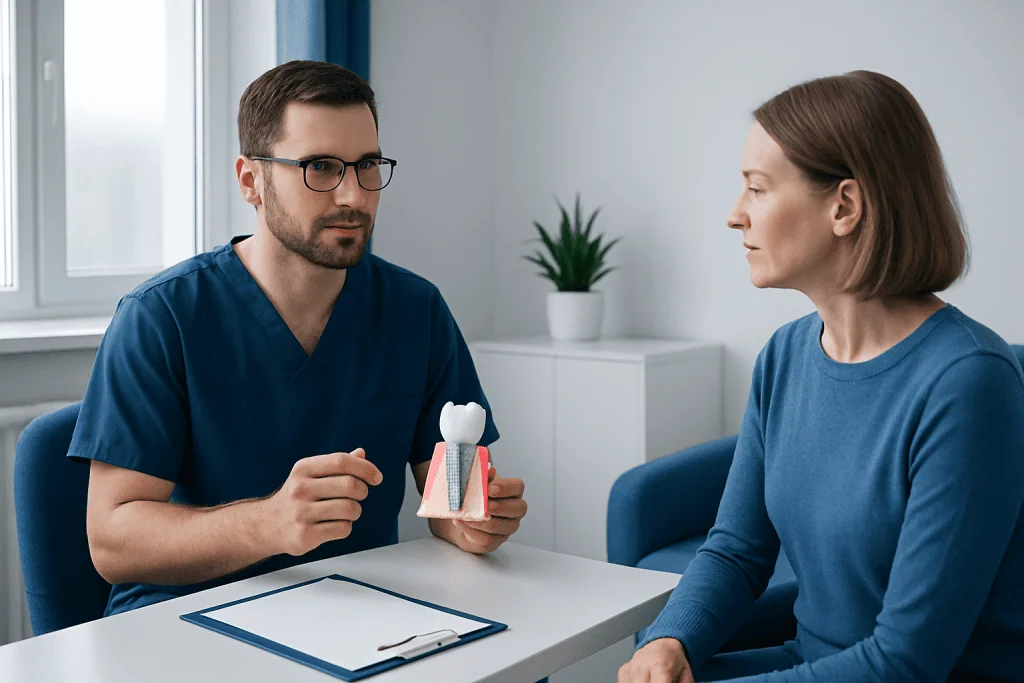
Plan a quiet 24 to 72 hours. Rest with your head slightly elevated, use a cold compress if one was recommended, and avoid heavy lifting, intense exercise, repeated bending and anything else that raises your blood pressure. These measures help limit bleeding and swelling during the earliest healing phase, when the tissues around the implant are most fragile.
Light daily activity is often fine within a day or two if you feel well. Returning to work depends on what your work involves: a desk job is different from a physically demanding one, and extensive grafting, multiple implants or sedation can all extend the sensible downtime. Your surgeon can give the most realistic timeframe for your specific case.
One caution: feeling better is not the same as being healed. Swelling typically peaks around days two and three, so a good first evening does not mean you are ready for the gym. Discomfort that gradually eases day by day is the expected pattern; the separate guide on pain after a dental implant explains what a normal course looks like in more detail.
Can I eat mac and cheese after dental implant surgery?
Eventually, yes, but not on day one, and not if you have been told to avoid dairy. Mac and cheese fails the early-recovery test on two counts: it is dairy-based, and it is usually served hot. It also tends to be sticky, which means it clings around the mouth at exactly the time your cleaning routine is restricted.
Once any dairy restriction has ended and you are into the soft-food stage, a small portion can work if it is very soft, lukewarm rather than hot, and eaten on the opposite side of the mouth from the implant. Skip baked versions with browned cheese, breadcrumb crusts or firm pasta edges. Afterwards, do not swish aggressively to clear it, follow whatever gentle mouth-care routine your surgeon set out, which may include a prescribed rinse or saltwater rinsing after a specified time.
If you are unsure whether you are there yet, choose a simpler option for a few more days: mashed potato, smooth vegetable purée, scrambled egg, or well-cooked pasta with a mild non-dairy sauce. Nutrition matters, but protecting the wound comes first.
Can I eat ice cream after a dental implant?
Ice cream sits in a strange position: cold enough to feel soothing, but dairy-based and sugary. It is not automatically forbidden, and some patients find the cold genuinely comfortable once numbness has fully worn off. But if your surgeon has restricted dairy for the first day or two, ice cream is included in that restriction, and the sugar can leave a coating around the surgical area that you cannot rinse away properly yet.
If dairy is permitted, a small amount of plain, smooth ice cream is generally acceptable, no nuts, cookie pieces, chocolate chunks or other hard mix-ins, and no milkshakes through a straw. Suction is the real enemy here: it can disturb the blood clot protecting the site. If cold triggers sharp sensitivity, stop; that is your signal, not a challenge.
A smooth non-dairy frozen dessert is a reasonable substitute during a dairy restriction, provided it contains no seeds, crunchy pieces or acidic fruit. For hydration and healing, though, water and nourishing soft foods do more for you than any dessert.
Why no coffee after dental implant surgery?
The coffee restriction confuses people almost as much as the dairy one, so here is the reasoning. The main issue is temperature: hot liquids increase blood flow at the surgical site and can encourage bleeding or dissolve the early clot, so hot drinks of any kind, coffee, tea, soup straight off the stove, are usually paused for the first day or two. Caffeine itself is a secondary concern; it can slightly raise blood pressure, which is unhelpful when the goal is to keep the site calm, and it is mildly dehydrating at a time when fluids matter.
In practice, most surgeons ask you to skip coffee for roughly the first 24–48 hours and then reintroduce it lukewarm rather than hot. If you take your coffee with milk, note that a dairy restriction and a coffee restriction often overlap anyway, which simplifies the decision. Alcohol is a different matter with its own timeline: the guide on alcohol after dental implant surgery covers why the wait is usually longer.
What foods should you avoid, and what works best?
The foods to avoid after implant surgery are the ones that are hard, sharp, sticky, crumbly, spicy or very hot. Concretely, that means chips, popcorn, nuts, seeds, crusty bread, tough meat, chewy sweets, heavily spiced dishes and anything served steaming. Small hard fragments, a popcorn husk, a seed, can lodge around the surgical site, and crusty or tough foods demand exactly the chewing forces you are trying to keep away from the implant.
The best early foods are soft, nourishing and easy to swallow, with enough protein to support normal healing:
- Smooth starters: blended vegetable soup served lukewarm, unsweetened fruit purée, spoonable smoothies without seeds
- Easy protein: soft scrambled eggs, tender flaky fish, soft tofu, mashed beans and lentils
- Comfortable carbohydrates: mashed potato or sweet potato, oatmeal once cooled, well-cooked pasta and rice
- During a dairy restriction: non-dairy yoghurt, oat or soy milk in smoothies, avocado for calories and texture
Plan several small meals if soreness makes a full plate difficult, and drink water regularly, from a glass, never a straw. If you have diabetes, allergies, kidney disease or another condition that shapes your diet, your surgeon or usual clinician should tailor this general advice before you change how you eat. Broader habits matter too: rest, hydration and avoiding tobacco all feed into the same goal, covered in the guide on how to heal faster after dental implant surgery.
Practical aftercare when travelling home from Turkey
International treatment adds a logistical layer to a food question. Before you leave the clinic, make sure you understand five things in writing: your medication schedule, when to begin gentle oral hygiene, which foods and drinks to avoid and for how long, how follow-up will work once you are home, and how after-hours questions are handled. Keep your prescriptions, discharge summary and any recommended mouth rinse in your hand luggage rather than checked baggage.
At Acibadem, international patient services include interpreter support, so discharge instructions, medication labels and follow-up plans can be explained in a language you are comfortable with before you fly.
A final word on online research. Forum threads on this topic are full of individual experiences, and individual experiences cannot account for your implant position, grafting, medicines or healing progress. Where general internet advice conflicts with your own surgeon’s written instructions, the written instructions win: they were composed for your mouth, not for an average one.
Step by step
- Read your discharge instructions first. Check whether dairy is specifically restricted and for how long. Instructions differ after a single implant, multiple implants, bone grafting or sedation, so your own written plan is the priority over any general guide.
- Choose cool, soft foods on the first day. Start with foods that need little or no chewing and are not hot enough to encourage bleeding. Eat slowly with a spoon and skip straws entirely, suction is what disturbs the clot.
- Keep the surgical area undisturbed. No poking with your tongue, fingers or cutlery, no chewing directly on the site, and no forceful spitting or rinsing until your surgeon says the time is right.
- Take medicines exactly as prescribed. If any of your medicines should be separated from dairy, that instruction will be on the label or in your notes. Any adjustment is the prescriber’s call, never a self-made one.
- Build nutrition back gradually. Add soft, protein-rich foods over the following days as comfort improves. Several small meals beat one large one while the area is tender.
- Resume activity carefully. Rest for the first 24–72 hours and avoid strenuous exercise as directed, then return to normal activity in stages rather than all at once.
- Keep your follow-up plan visible. Note the date of your review, how the clinic handles questions between appointments, and where your discharge documents are, especially if you are travelling home between the surgery and the next stage of treatment.
Your checklist
- Written dietary instructions, including whether and how long to avoid dairy
- Soft foods and easy protein options stocked for the first several days
- Water bottle and a spoon; no straws in the house for a week
- Prescribed medicines with a clear dosing schedule
- Cold pack or compress, if your surgeon recommended one
- Contact details for your dental team and their after-hours arrangement
- Discharge summary and prescriptions in hand luggage, not checked bags
- A realistic plan to avoid strenuous activity for the first 24–72 hours
- Follow-up appointment details written down before you travel
Key takeaways
- Dairy restrictions after implant surgery are short, precautionary and surgeon-specific, not a universal medical rule, and not permanent.
- The defensible reasons are residue you cannot rinse away, medication-related nausea, and calcium interactions with certain antibiotics; claims about dairy “causing inflammation” are not well supported.
- For the first day or two, choose cool or lukewarm soft foods and avoid straws, hot drinks, alcohol and forceful chewing.
- Mac and cheese and ice cream can return later, soft, smooth, lukewarm or gently cold, and only once any dairy restriction has ended.
- Coffee is usually paused briefly because of heat rather than caffeine alone; reintroduce it lukewarm when cleared.
- Most people need 24–72 hours of relative rest, longer after grafting, multiple implants or sedation.
Frequently asked questions
Why no dairy after dental implant surgery?
Some surgeons recommend avoiding dairy for the first 24–48 hours because it leaves residue near a fresh wound while rinsing is restricted, rich foods can worsen medication-related nausea, and certain antibiotics absorb less well when taken close to dairy. Not every surgeon uses this restriction. Follow the written instructions given for your specific treatment.
Is the no-dairy rule after oral surgery based on strong evidence?
Only partly. The antibiotic–calcium interaction is well documented for specific drugs, and nausea and residue are practical realities. Claims that dairy generally inflames surgical sites or slows healing lack strong research support, which is why many surgeons allow dairy from day one. The variation between clinics reflects protocol and prescriptions, not carelessness.
Can I eat mac and cheese after dental implant surgery?
Yes, later in the soft-food stage, if your surgeon has permitted dairy, the dish is very soft and lukewarm rather than hot, and you chew away from the implant. Avoid baked versions with crispy toppings or firm edges. During a 24–48 hour dairy restriction, choose a non-dairy soft alternative instead.
Can I eat ice cream after a dental implant?
A small amount of plain, smooth ice cream may be acceptable once numbness has fully worn off, provided your surgeon has not restricted dairy. Avoid hard mix-ins such as nuts or chocolate chunks, and never drink milkshakes through a straw: the suction can disturb the healing site. Smooth non-dairy frozen desserts are a reasonable substitute during a restriction.
Why no coffee after dental implant surgery?
Mainly temperature: hot liquids increase blood flow at the surgical site and can encourage bleeding or disturb the early clot. Caffeine’s effect on blood pressure and hydration is a secondary concern. Most surgeons suggest pausing coffee for roughly the first day or two, then reintroducing it lukewarm.
What foods should I not eat after dental implants?
Avoid hard, sharp, crunchy, sticky and crumbly foods, chips, popcorn, nuts, seeds, crusty bread, tough meat and chewy sweets, plus very hot or heavily spiced dishes. Also avoid straws, alcohol and smoking in the early period, and do not chew on the implant side until your surgeon confirms it is safe.
How many days should I rest after a dental implant?
Plan relative rest for 24–72 hours, with no heavy exercise or lifting during that window unless your surgeon advises otherwise. More extensive treatment, bone grafting or sedation can extend the sensible downtime. Swelling often peaks around days two and three, so resume activity gradually rather than after the first good evening.
When can I return to normal eating after a dental implant?
Most people move from smooth foods to soft meals over several days, then gradually back toward a normal diet over one to two weeks. Grafting, multiple implants or other procedures can lengthen this. Wait for your surgeon’s clearance before biting or chewing hard foods near the implant site.
Add us as a Preferred Source to see more of our trusted health content across Google Search, AI Overviews and Discover.

Update history
- PublishedAugust 17, 2026
- Medical review approvedSeptember 13, 2026
- Last content updateSeptember 12, 2026
References2
- Dental Implants: Cleveland Clinic my.clevelandclinic.org
- Dental Health: MedlinePlus medlineplus.gov
More Patient Guides

Septoplasty Recovery: Week by Week
Learn what to expect after deviated septum surgery: a week-by-week septoplasty recovery timeline, when it is usually safe to fly home, and…

Gallbladder Surgery Recovery: Week by Week
Learn what to expect after gallbladder surgery: a week-by-week recovery timeline, pain, diet, wound care, when it is safe to fly home…
Robotic Hysterectomy Recovery: Week by Week
Recovery from robotic hysterectomy week by week: pain, lifting, wounds, driving, flying home safely, warning signs and questions to ask before you…

Breast Reconstruction Recovery: Week by Week
DIEP flap recovery week by week: hospital stay, drains, pain, walking, showering, driving, when it is usually safe to fly home, and…