

Companion Meals During a Hospital Stay in Turkey

Companion meals during a hospital stay in Turkey depend on the hospital, the room type, and the ward. Some arrangements include meals for the person staying with the patient; others ask you to order and pay separately or use a hospital café. Confirm details with your international patient coordinator before admission, share allergies or dietary needs in writing, and never give the patient outside food without asking the nurse.
Will you get fed too? It is a small question, but it matters when you are the one sleeping in the chair beside the bed. If you are staying with a loved one in hospital in Turkey, knowing how your own meals work makes the days calmer and more predictable, and it frees your attention for the person you came to support.
This guide explains how companion meals during a hospital stay in Turkey usually work, what to ask before admission, how dietary needs and allergies are handled, and how to plan snacks, breaks, and longer stays without guesswork.
At a glance
- Who this is for: Family members or companions staying with a patient in hospital in Turkey
- Common arrangement: Companion meals may be served in the room, ordered through the ward, or bought at a hospital café: it varies by hospital and room type
- Best time to ask: Before admission, in writing, with your international patient coordinator; confirm again at check-in
- Dietary needs: State allergies, religious requirements, and vegetarian or other preferences clearly, staff cannot act on what they do not know
- One firm rule: The patient’s meal plan is part of their care; never give the patient outside food or drink without asking the nurse first
- Helpful support: Interpreters and international patient teams can explain menus, ordering deadlines, and where companions may eat
What companion meals mean in a Turkish hospital
In Turkey, the person who stays with a patient is called a companion, in Turkish, a refakatçi. The role is widely recognised. Hospital staff expect a companion to be present in the room, and many wards are set up for it, with a fold-out bed or armchair beside the patient. If you take this role, you may spend long hours at the bedside, help communicate preferences, and provide steady emotional support. Your meals are a practical part of that job, and they are handled quite separately from the patient’s food.
That separation matters. The patient’s tray is part of a clinical plan: it may follow fasting instructions before a procedure, a texture-modified diet, a fluid limit, or a specific post-operative progression. Companion meals during a hospital stay in Turkey have nothing to do with that plan: they are a hospitality service for you, shaped by hospital policy, room type, and what the ward can provide. Depending on the hospital, a companion meal may be delivered to the room near patient meal times, ordered through a food service desk, or purchased at a café or cafeteria in the building.
Some arrangements include a basic companion meal with certain rooms; others charge per meal or ask you to order by a set deadline each day. Because the details genuinely vary between hospitals and even between wards, the most reliable approach is to ask direct questions before admission rather than assuming anything. Room choice can affect what is available, so if you have not yet finalised the room, it is worth reading about choosing a hospital room in Turkey before you decide.
At Acibadem, international patient services can explain the usual meal routines at the hospital where your loved one will be admitted. If you are not comfortable in Turkish, ask for interpreter support early so that instructions about meal times, menus, and restrictions are clear from the first day rather than pieced together as you go.
How to ask about meal arrangements before admission
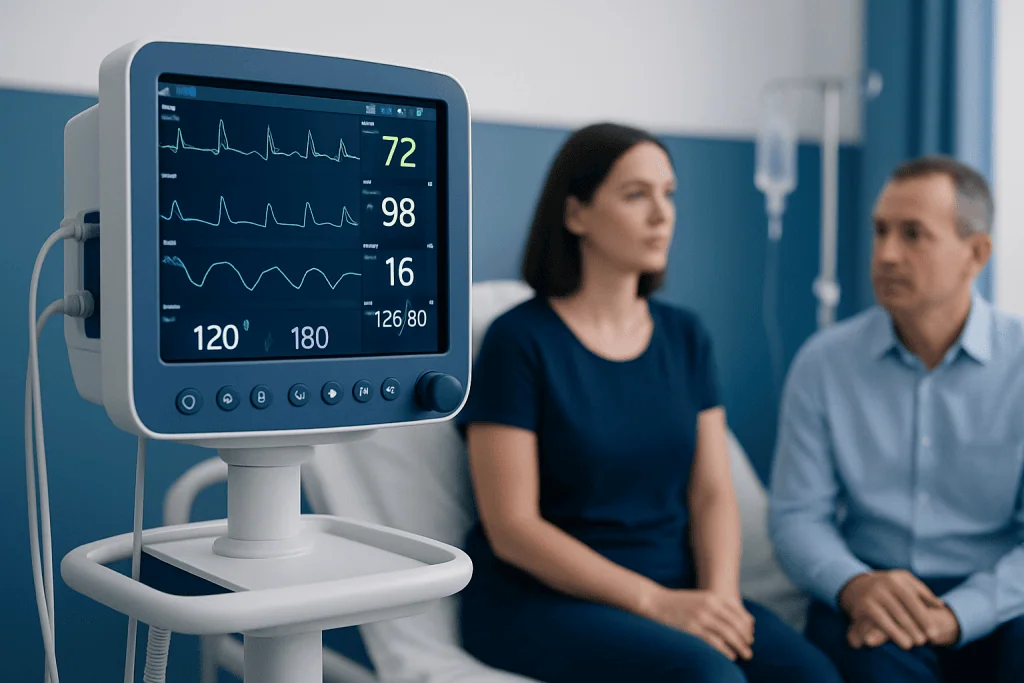
The easiest time to sort out companion meals is before the stay begins. When you receive your admission details, add meal questions to the same checklist you use for travel and accommodation. This is especially useful if you will arrive after a long flight, at a weekend, or late in the evening, when you will not want to go searching for food in an unfamiliar neighbourhood.
Ask practical, direct questions. Useful ones include:
- Can a companion receive meals in the room, and which meals?
- Is breakfast included with the room arrangement, or ordered separately?
- Is there a daily menu, and does it rotate during the week?
- Can meals be adapted for vegetarian, halal, low-salt, gluten-free, or allergy-related needs?
- Is there an ordering deadline for each meal, and what happens if you miss it?
- How is payment handled, added to the account, or paid at a café?
Send these questions in writing to your international patient coordinator where you can. Written answers reduce misunderstandings, survive tiredness and language gaps, and give you something concrete to refer to at check-in. On payment specifically, ask how companion meals appear in the overall account rather than trying to guess; the structure varies, and the guide on budgeting for companion costs in Turkey explains what typically drives those decisions.
If your plans change, for example, if a different family member takes over as companion partway through the stay, tell the care team promptly. Meal access is often linked to the registered companion, and updating the record keeps the handover smooth for everyone.
What to expect from hospital food and daily timing
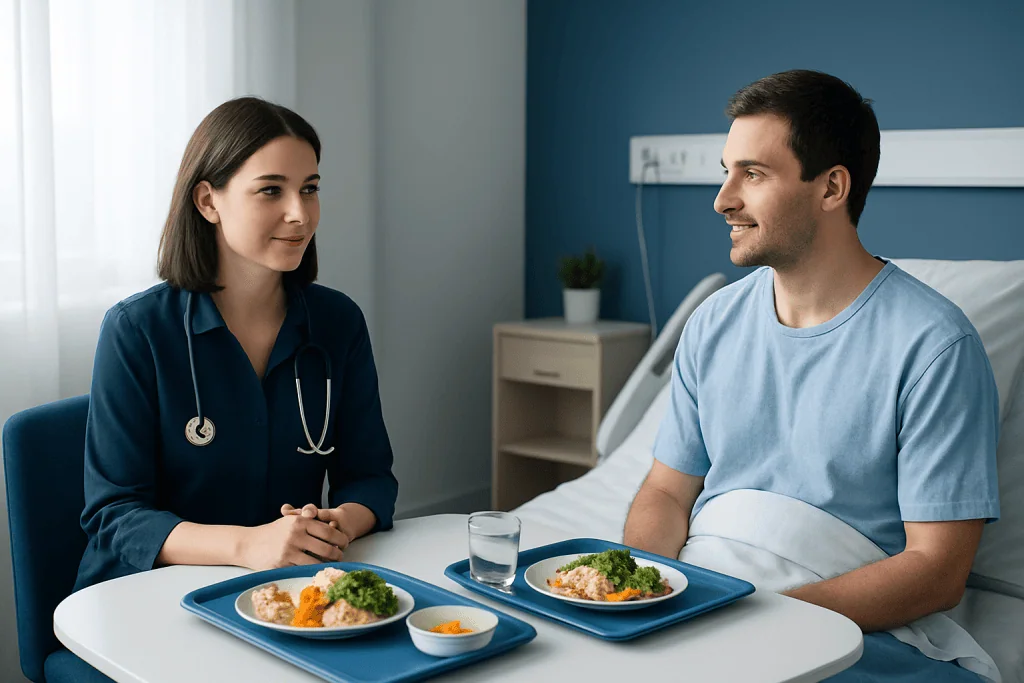
Hospital meal times in Turkey follow a familiar rhythm: breakfast in the morning, lunch around midday, dinner in the early evening. Exact timing depends on the hospital, the ward, and the service schedule, so treat any times you are given as that hospital’s routine rather than a national rule. Where companion meals are delivered to the room, they usually arrive close to the patient’s meal times, but the contents are not necessarily identical to the patient’s tray, because the patient may be on a medical diet.
A Turkish breakfast commonly includes bread, cheese, olives, eggs, tomatoes, cucumbers, jam, honey, and tea. Lunch and dinner often feature soup, a cooked main dish, rice or bulgur, vegetables, salad, yoghurt, and fruit. Menus vary widely between hospitals, and international hospitals in larger cities are used to visitors from many food cultures. If you want a fuller picture of how food services run for the patient as well, the guide to meal services during a hospital stay in Turkey covers the patient side in detail.
One quiet advantage of understanding the meal schedule: it gives shape to long hospital days. Knowing when trays arrive helps you plan when to step out, when to make calls home, and when to be at the bedside. Companion meals during a hospital stay in Turkey work best when you treat them as fixed points in the day rather than something to improvise around.
Dietary needs, allergies, and religious requirements
Do not assume staff will know your restrictions unless you state them. This sounds obvious, but tired travellers skip it constantly. Allergies deserve the most care: explain them clearly, put them in writing, and repeat them when a new shift or a new food service person is involved. Common triggers worth naming explicitly include nuts, dairy, eggs, gluten, sesame, seafood, and particular spices. A short written card, in English, ideally with a Turkish translation your coordinator can help prepare, removes the risk of a misheard word.
For religious and personal preferences, ask what can realistically be provided rather than assuming either way. Halal food is generally common in Turkey, so that requirement is rarely difficult, but vegetarian, vegan, low-salt, or gluten-free requests depend on the hospital’s kitchen and may need advance notice. If the kitchen can only partially meet a preference, plan supplementary snacks so you are not left hungry on a difficult day.
Two honest limits to keep in mind. First, a hospital kitchen serving hundreds of trays cannot always match the flexibility of a restaurant; asking early gets better results than asking at the trolley. Second, if your allergy is severe, do not rely on verbal reassurance alone, confirm the process with the ward team, check labels on packaged items yourself, and keep whatever you normally carry for your own safety with you as usual.
Bringing your own food, snacks, and drinks
Most companions keep small snacks and drinks nearby, and that is sensible, waiting periods can be long and unpredictable. Before bringing food into the room, though, ask the nursing team or patient services what is allowed. Hospitals must protect patient safety, infection control, and cleanliness, so there may be rules about strong-smelling foods, reheating, storage, or eating in certain clinical areas. These rules exist for good reasons; asking first is easier than being asked to stop.
Choose simple, low-mess items that store easily and can be eaten quietly: sealed crackers, plain biscuits, nuts if there are no allergy concerns on the ward, dried fruit, individually wrapped snacks, tea bags, or instant soup cups if hot water is available. A refillable water bottle is genuinely useful, but check where drinking water is provided and whether the hospital prefers bottled water. Pack a first-night supply in your hand luggage so an evening arrival does not become a food hunt.
Now the firm rule. Be cautious about bringing food for the patient. Even if your loved one asks for something familiar and comforting, their team may have set fasting requirements, swallowing precautions, fluid limits, or a specific diet as part of treatment: this is particularly true around operations, where eating is carefully staged. Always ask the nurse before giving the patient any outside food or drink, and treat their meal plan as part of their care, not a preference to negotiate. If your loved one is having an operation, the guide on planning meals after surgery during your stay in Turkey explains why that staging matters.
Using cafés, nearby restaurants, and delivery apps
Large hospitals in Turkey often have cafés, cafeterias, or kiosks, with restaurants nearby. These give you more choice, a proper coffee, and food outside standard meal hours. If the area is unfamiliar, ask patient services where companions usually eat and which options are quickest, so you are not away from the ward longer than you intended.
Food delivery apps are widely used in Turkish cities, but hospital delivery rules vary. Some facilities allow couriers to a main entrance or reception desk; others restrict deliveries to protect security and patient privacy. Before ordering, ask three things: where the courier should arrive, whether you must collect the order yourself, and whether there are designated areas where outside food should be eaten. Getting this wrong is not a disaster, but it wastes time and can leave food waiting at a door nobody told you about.
When you do leave the room for a meal, tell the nurse or another family member where you are going and roughly how long you will be. Companions often feel they must stay at the bedside without pause. In practice, short breaks for meals, water, and fresh air are part of doing the job well: a nourished, rested companion supports the patient better than an exhausted one. Timing breaks around ward rounds also means you do not miss the doctor: the guide on the companion’s role during doctor consultations in Turkey covers how to plan for those moments.
Culture, language, and comfort during meals
Meals can feel more emotional when you are far from home. You may be tired, worried, and adjusting to a new language and food culture all at once. Hospitality matters in Turkey, and staff will generally try to guide you kindly, but hospital routines still have to be followed, and early, polite questions prevent most of the friction later.
If language is a barrier, do not rely on guessing from a menu. Ask for interpreter support or contact the international patient team; at Acibadem, multilingual coordination can help with practical details such as ordering, meal times, room services, and where family members can eat. Asking is always better than guessing, especially if you have allergies or restrictions.
A few small habits make mealtimes easier for everyone on the ward: keep the room tidy, dispose of packaging promptly, avoid strong-smelling foods in shared or sensitive areas, and follow staff instructions on cleanliness. If other relatives visit, confirm whether they may eat in the room or should use designated dining areas, visiting rules and companion rules are not always the same thing.
Planning for longer stays and companion wellbeing
If the stay lasts more than a few days, your own meals stop being an afterthought and become part of your wellbeing. Most companions start by managing on snacks and coffee; almost nobody sustains that well. Build a routine with proper meals, water, short walks, and rest, especially if you are also handling translation, paperwork, and updates to relatives at home. Companion meals during a hospital stay in Turkey are easiest to manage when they anchor a routine rather than interrupt one, and the guide on staying comfortable during a multi-day hospital stay in Turkey covers the rest of that routine.
For longer stays, ask whether there is a companion accommodation arrangement, nearby hotel support, or somewhere to store personal items. Acibadem’s international teams can often guide families on travel, accommodation, and hospital logistics, depending on the hospital and the patient’s care plan. Knowing where you can eat, wash, rest, and recharge makes a long stay feel much less overwhelming.
Plan handovers, too. If another relative will replace you as companion, leave a short written note covering meal arrangements, café locations, ordering deadlines, allergy details, and useful contact numbers. It takes ten minutes and saves the next person a difficult first day.
Step by step
- Ask before admission. Contact your international patient coordinator and ask whether companion meals are available, included, or paid separately. Request meal times, menu options, and how ordering works.
- Share dietary needs early. Tell the hospital about allergies, religious requirements, vegetarian or vegan preferences, and anything you cannot eat. Put allergy information in writing so staff can confirm it easily.
- Confirm the rules at check-in. Ask the ward team how companion meals work on that floor: where food is delivered, where you can eat, and whether outside food is allowed.
- Pack sensible snacks. Bring sealed, simple snacks for the first day, especially after travel. Avoid messy or strong-smelling foods, and ask before storing anything in the room.
- Separate your meals from the patient’s diet. Your food is not the patient’s food. Never give the patient outside food or drink without checking with the nurse or care team.
- Use breaks wisely. Plan short meal breaks so you do not become exhausted, and tell staff or another family member before leaving the room, especially around ward rounds or care times.
- Review the plan for longer stays. If the stay extends, update your meal routine, budget, and accommodation plan, and ask patient services about nearby cafés, delivery rules, and companion support.
Your checklist
- Ask whether companion meals are available at the hospital and on your ward
- Confirm whether meals are included, ordered separately, or paid per meal
- Share allergy and dietary information in writing, ideally before admission
- Ask for meal times and any ordering deadlines
- Pack sealed snacks and a refillable water bottle for the first day
- Check rules for outside food, delivery apps, and eating in the room
- Keep patient food separate from companion food unless staff approve otherwise
- Save contact details for your international patient coordinator
- Plan meal breaks, rest, and handovers with other family members
- Leave a written handover note if another relative takes over as companion
Key takeaways
- Companion meal arrangements in Turkey vary by hospital, room type, and ward, confirm the details before admission, in writing where possible.
- The patient’s medical diet is separate from your meals; always ask the nurse before giving the patient outside food or drink.
- State allergies and dietary requirements clearly and repeat them when staff change; written notes work better than memory.
- International patient teams and interpreters can explain menus, ordering deadlines, delivery rules, and where companions may eat.
- For longer stays, build a routine of proper meals, water, and rest, and plan clear handovers with other family members.
Frequently asked questions
Are companion meals usually included during a hospital stay in Turkey?
It depends on the hospital, the room type, and the service arrangement. Some hospitals provide certain companion meals with the room; others ask you to order and pay separately or direct companions to a café or cafeteria. Ask before admission so you know exactly what is included and what is handled separately.
Can I request vegetarian, halal, or allergy-friendly companion meals?
You can and should ask, but availability depends on the hospital’s food service. Halal food is generally common in Turkey; vegetarian, vegan, and allergy-related requests may need advance notice. For serious allergies, provide written details, confirm the process with staff, and check packaged labels yourself.
Can I bring food from outside the hospital?
Often you can bring simple food for yourself, but each hospital has rules about storage, hygiene, and where eating is allowed. Ask the ward team before bringing cooked food, strong-smelling meals, or delivery orders into the room. Never offer outside food to the patient unless the nurse confirms it is allowed.
What if I do not speak Turkish and cannot understand the menu?
Ask for interpreter support or contact your international patient coordinator. Acibadem’s international patient services can help explain meal times, menu choices, ordering deadlines, and where companions can eat. Asking is always better than guessing, especially if you have allergies or restrictions.
Can more than one family member receive companion meals?
Hospitals usually register one official companion, and meal access is often linked to that person or to the room arrangement. Additional visitors normally use hospital cafés or nearby restaurants. If several relatives will rotate during the stay, confirm the visitor and meal policies in advance and update the care team when the companion changes.
Is it acceptable to order food delivery to the hospital?
Delivery apps work in many Turkish cities, but hospital security and hygiene rules decide where orders can be received. You may need to collect the food from an entrance or reception area rather than have it brought to the ward. Check the hospital’s delivery policy before you order, and ask where outside food may be eaten.
How can I manage meals if I am staying in the hospital overnight?
Ask whether overnight companions receive breakfast and whether there are after-hours options for water, tea, or snacks. Pack a small first-night kit with sealed snacks and basic toiletries. If the stay becomes longer, ask patient services about companion accommodation and nearby food options so you can build a sustainable routine.
Add us as a Preferred Source to see more of our trusted health content across Google Search, AI Overviews and Discover.

Update history
- PublishedJune 8, 2026
- Medical review approvedSeptember 13, 2026
- Last content updateSeptember 12, 2026
More Patient Guides
Medical Travel with a Companion: Who Should Come and Why
Medical travel with a companion can make treatment in Turkey easier by providing practical help, communication support and reassurance before and after…

How Family Members Can Help Without Disrupting Recovery
Family support during recovery helps when you listen, organize practical tasks and follow the care plan without taking over, in Turkey or…

Need a Family Member to Travel With You? A Companion Decision Guide
A companion travel guide for treatment in Turkey: decide who should travel with you, plan practical support, and prepare for Istanbul care.

Unexpected Overnight Stay in Turkey: What Patients and Companions Should Be Ready For
Unexpected overnight stay in Turkey? Here is what patients and companions should prepare for, from essentials and updates to hospital logistics in…