

Meal Services During a Hospital Stay in Turkey
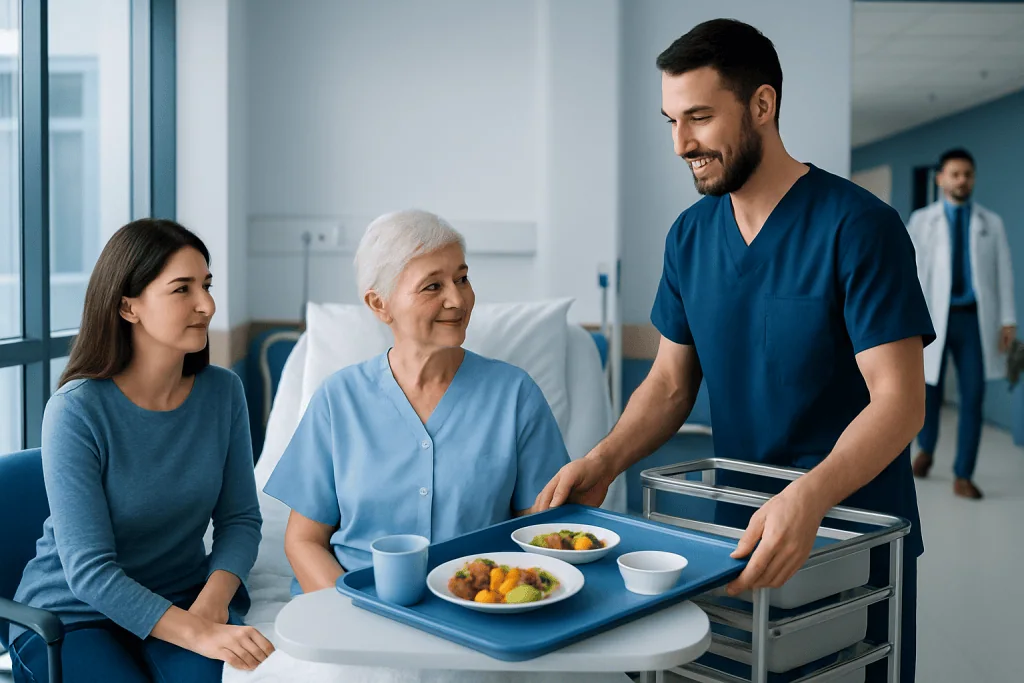
Patient meals are part of inpatient care in Turkish hospitals, served at set times and matched to the diet your doctor orders. Share allergies, halal, vegetarian or medical diet needs before admission. Patient meals are normally included in your inpatient arrangement, while companion meals vary by hospital and room type. Always ask your nurse before eating anything from outside.
Will you be able to eat food you recognise during your hospital stay? Will your companion have to leave the ward for every meal? Both are fair questions, and both have practical answers. This guide explains how meal services during a hospital stay in Turkey actually work, day by day.
Hospital meals are not a side detail. They are part of your treatment plan, timed around procedures, medication and recovery. Understanding how the system works before you arrive means fewer surprises, fewer missed instructions, and a calmer stay for you and anyone travelling with you.
At a glance
- Who arranges meals: Your doctor, nursing team and dietitian coordinate what you eat and when, based on your medical plan.
- Patient meals: Normally provided as part of your inpatient care; companion meals are arranged separately and vary by hospital and room type.
- Special diets: Allergies, medical diets, halal, vegetarian and other needs should be shared before admission and repeated on arrival.
- Fasting rules: Procedure-specific and can change; always follow the latest instruction from your clinical team.
- Outside food: Ask your nurse before eating anything brought in or delivered: it may conflict with your diet order.
- Language support: International patient coordinators and interpreters can help you explain dietary needs clearly.
How Meal Services During a Hospital Stay in Turkey Work
Hospital meals in Turkey follow a fixed rhythm: breakfast, lunch and dinner at set ward times, with water available and light snacks arranged where your medical plan allows. What arrives on your tray is determined by a diet order: an instruction written by your doctor that tells the kitchen what you may eat. Depending on your condition, procedure schedule or test results, that order might be a regular diet, a restricted diet, or a temporary fasting period with no food at all.
It helps to think of meal services during a hospital stay in Turkey as a clinical service, not a hotel menu. Some patients on a regular diet can choose between available options. Others receive meals prepared strictly to a medical specification, with no substitutions. Neither situation means anything has gone wrong; it reflects what your team has judged safe for that day.
At internationally oriented hospitals such as Acibadem, meal arrangements are coordinated between nursing teams, dietitians and international patient services where needed. You do not have to manage every detail alone, but the system works best when you give it clear information early. If a meal looks different from what you expected, ask your nurse or coordinator before eating it or topping it up with outside food. There is usually a reason, and it is usually written in your diet order.
How Medical Diets and Fasting Instructions Are Managed
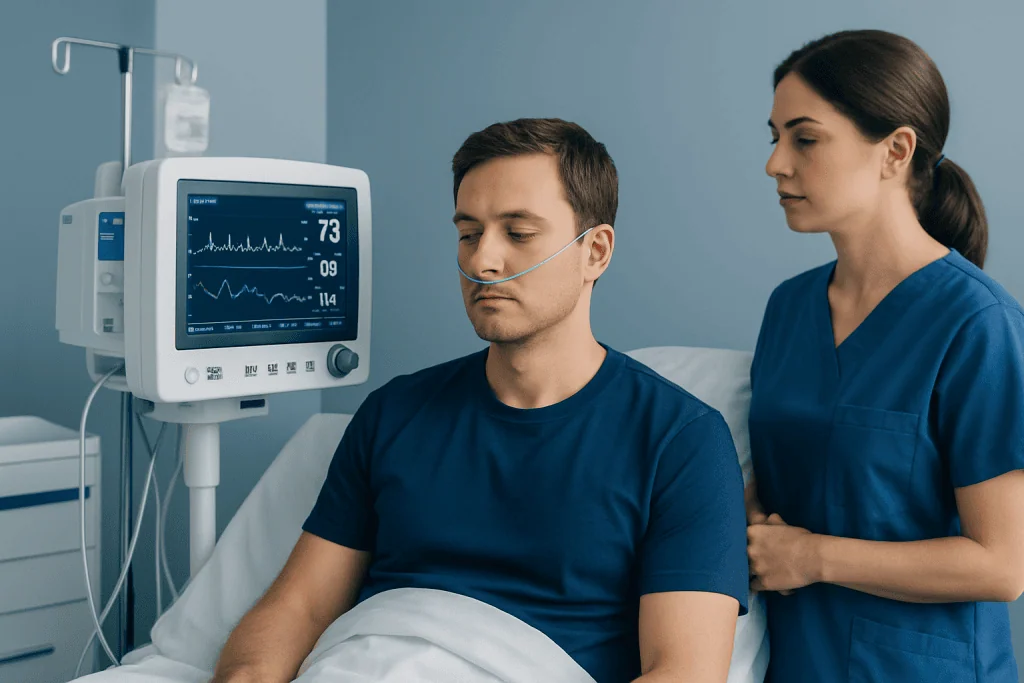
Before surgery, imaging, endoscopy and certain blood tests, you may be asked not to eat or drink for a set period. The exact rules depend on the timing of your procedure, the type of anaesthesia or sedation planned, and your medical history. They can also change at short notice if the schedule moves. Always follow the most recent instruction from your own clinical team, even when it differs from general guidance you have read online: the team is working from your file, not a generic checklist.
After a procedure, eating usually restarts in stages. You might begin with clear liquids, move to soft foods, and return to a regular diet once your doctor approves. This staged approach is a routine safety step to confirm your body is ready to digest food comfortably; it does not by itself mean something is wrong. If you are planning what happens after discharge as well, the guide on how to plan meals after surgery during your stay in Turkey picks up where the hospital tray leaves off.
Common diet orders you may encounter include:
| Diet order | What it usually means | Typical reason |
|---|---|---|
| Nil by mouth | No food or drink, sometimes not even water | Before anaesthesia, sedation or certain tests |
| Clear liquids | Broth, water, clear juices without pulp | First stage after surgery or a digestive procedure |
| Soft or texture-modified | Easily chewed or pureed foods | Swallowing difficulty, dental work, gradual recovery |
| Diabetic | Controlled carbohydrate content and timing | Blood sugar management alongside medication |
| Low-salt or cardiac | Reduced sodium, adapted fats | Heart, blood pressure or fluid-balance conditions |
| Renal | Adjusted protein, potassium and phosphorus | Kidney conditions or dialysis |
If you feel hungry, dislike a meal, or notice the food does not match the medical diet you follow at home, tell your nurse rather than adjusting things yourself. The team can review the order and involve a dietitian. Never change how you take medication around meals on your own: that decision always belongs to your treating doctor.
Sharing Allergies, Preferences and Cultural Needs
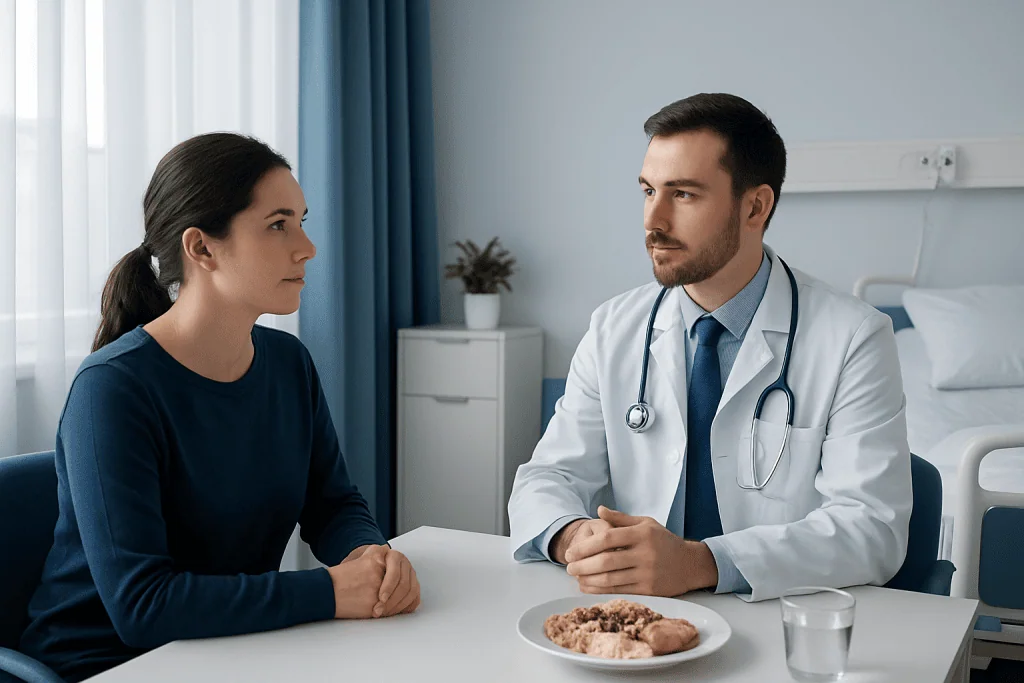
Clear communication is the single most useful thing you can do for your own mealtimes. Tell the hospital about allergies, intolerances and dietary rules as early as possible, ideally during pre-admission planning, in writing. Be specific: name the food (shellfish, nuts, dairy, gluten, eggs, soy, sesame), describe the reaction you have had, and mention any food restrictions linked to your medication. “No nuts, previous severe reaction, I carry an adrenaline auto-injector” is far more useful to a kitchen than “some allergies”.
Share preferences connected to religion, culture or lifestyle too: halal, vegetarian, vegan, pork-free, beef-free, alcohol-free, or fasting-related needs. In Turkey, halal-friendly and pork-free meals are generally easier to arrange than in many destinations, but confirm your needs rather than assuming. Vegan and other highly specific diets deserve a pre-admission conversation so the team can tell you honestly what the kitchen can and cannot do.
If you follow a strict diet, bring a written list in English and, if possible, in Turkish. Repeat the most important restrictions at three moments: on admission, before any procedure, and when the first meal arrives. That repetition is not rudeness; it is how you make sure the pre-arrival team, the ward team and the kitchen are all working from the same information. If explaining a restriction feels difficult across languages, ask for helpinterpreter services during hospital visits in Turkey exist for exactly this kind of conversation, and clear language is safer than guessing.
What Typical Hospital Meals in Turkey Look Like
Many international patients ask what will actually be on the tray. Turkish breakfasts commonly include cheese, olives, eggs, tomatoes, cucumber, bread and tea, hospital versions are adapted to patient needs, so expect a simpler, lighter take on that pattern. Lunch and dinner often follow a familiar local structure: a soup, a main dish built around chicken, fish or another protein, cooked vegetables, rice or bulgur, yogurt, and fruit or a light dessert, all filtered through whatever diet order applies to you.
Seasoning tends to be moderate. If you are used to very spicy, very sweet or very salty food, hospital meals may taste plain, often deliberately, because salt, sugar and spice are frequently limited for medical reasons. Portions are set to clinical needs rather than restaurant expectations. If you are still hungry after a meal and your diet is not restricted, say so; the team can often arrange something appropriate rather than leaving you to fill the gap with vending-machine snacks.
Jet lag complicates appetite. If you have arrived from a distant time zone, you may feel hungry at midnight and queasy at lunch. Tell your care team if you feel weak, nauseated or unable to eat. They can advise whether this is expected, whether a lighter option is possible, or whether your symptoms need a medical review.
Meals for Companions and Family Members
Most international patients travel with someone, and that person needs to eat too. Companion meal arrangements vary by hospital, room type, admission details and length of stay. In some settings companion meals are included with the room; in others they are ordered and paid separately, or the companion simply uses the hospital cafeteria, cafes or nearby restaurants. There is no single rule, which is exactly why you should ask before travel rather than discovering the answer on day one. The dedicated guide to companion meals during a hospital stay in Turkey covers the options in more depth.
If your companion will stay overnight in your room, useful questions include: is breakfast included for them, can hot meals be delivered to the room, how is payment handled, and can their own dietary needsdiabetes, allergies, halal, vegetarian, be accommodated? Companions with mobility limitations should also ask how far the cafeteria is from the ward and what its opening hours are.
One quiet courtesy matters more than people expect. If you are fasting before a procedure, nauseated, or recovering from anaesthesia, the smell and sight of someone else’s meal can be genuinely unpleasant. A small plan, the companion eats in the cafeteria during your fasting window, keeps the room comfortable for both of you.
Do Hospitals Charge for Meals? How the Costs Work
For inpatients, meals are normally provided as part of the inpatient service rather than billed tray by tray. When you receive a treatment quote as an international patient, the daily inpatient arrangement generally covers your meals within your diet order; you would not usually pay separately for the standard patient tray. What sits outside that arrangement, companion meals, cafeteria purchases, extra snacks, delivery orders, is paid separately. If you want certainty, ask your patient coordinator to confirm in writing what your specific arrangement includes for you and for your companion.
A related question comes up often: is hospital treatment free in Turkey? Turkey’s public health system serves residents and people covered by Turkish social security. As an international patient travelling for treatment, you will normally be treated privately and pay for your care under an agreed quote, or through your insurer if your policy covers planned treatment abroad. Meal services during a hospital stay in Turkey sit inside that same structure: patient meals travel with the inpatient service, everything else is an extra you control. This guide deliberately gives no figures, because they depend entirely on your hospital, room category and treatment plan: the honest answer is always a written quote for your specific case.
Outside Food, Delivery Apps and Snacks
Turkey has a lively food delivery culture, and in larger cities ordering a restaurant meal to a hospital lobby can feel effortless. During a hospital stay, though, outside food is not always appropriate. Your doctor may have limited your salt, sugar, fat, spice, fibre or fluid intake for medical reasons, and a delivered meal answers to none of those limits. Ingredient transparency, temperature control and food safety also matter more in a hospital setting than they do at home.
The rule is simple: before eating food brought by family, bought from a cafe, or ordered through an app, ask your nurse whether it is allowed. This matters most after surgery, during cancer treatment, when your immune system is weakened, when certain medications interact with foods, or if you have any swallowing difficulty. If you are unsure who to ask or when, the guide to using the nurse call system during a hospital stay in Turkey explains how to reach your nurse without leaving your bed.
Once your diet is open, some simple personal snacks may be fine, discuss options such as plain crackers, sealed yogurt, bananas, unsweetened applesauce, protein drinks, or familiar sealed foods from home. Avoid large quantities, strong-smelling dishes, alcohol, unlabelled homemade items, and anything needing complex storage unless the hospital explicitly confirms it is acceptable.
Practical Tips for International Patients
Pack for mealtimes the way you pack for the flight: a few small items prevent most problems. Bring your written allergy list, a translation card for critical restrictions, any nutrition products you rely on (declare them, do not use them without asking), lip balm for fasting periods, and your glasses or dentures if you use them. Adaptive cutlery is worth packing if you normally need it.
Expect your appetite to be unreliable for the first day or two, especially around anaesthesia and time-zone changes. Eat what you can, report what you cannot, and let the team adjust. Skipping meals silently is the one habit to avoid: it hides information your team needs, particularly if you have diabetes or are recovering from treatment.
If Acibadem is supporting your trip, ask your coordinator before travel how to communicate dietary needs, what your companion can expect, and whether any documentation would help. Mealtimes are one thread in a longer stay; the guide on how to stay comfortable during a multi-day hospital stay in Turkey covers the rest of the picture.
Step by step
- Share your dietary needs before admission. Send allergies, medical diets, religious restrictions and strong preferences to your patient coordinator early. Give details, not labels: “no peanuts, severe allergy” or “low-salt diet for a heart condition” beats “special diet”.
- Confirm fasting instructions in writing. Before any procedure, ask exactly when you should stop food, water, gum and coffee, and what to do about your regular medicines, then follow your doctor’s answer, not general advice. If the procedure time moves, ask whether the fasting time moves too.
- Repeat key restrictions when you arrive. Tell your admitting nurse your most important food restrictions again, even if you sent them in advance. Repetition closes the gap between the pre-arrival team and the ward team.
- Ask before eating outside food. Even familiar food can conflict with a diet order or recovery plan. Check with your nurse before eating anything brought in or delivered, especially after surgery or during treatment.
- Plan meals for your companion. Ask whether companion meals are included, ordered separately or available from the cafeteria, and how payment works. Share the companion’s own dietary needs too.
- Use interpreter support when needed. If you cannot explain an allergy, fasting question or preference confidently, ask for an interpreter or international patient staff. Precise language around food is a safety issue, not a luxury.
- Speak up if meals are difficult. Tell the nurse if you cannot chew, swallow, tolerate smells, manage nausea, or understand why a certain meal arrived. The team can review the diet order and involve a dietitian.
Your checklist
- List of food allergies and the reaction you have to each one
- Current medical diet instructions from your home doctor, if any
- Religious or cultural dietary requirements written clearly
- Names of nutrition supplements you regularly use
- Translation card for critical restrictions, especially severe allergies
- Comfort items such as dentures, glasses or adaptive cutlery if needed
- Small sealed snacks only if your hospital and doctor allow them
- Questions about companion meals, cafeteria access and payment
- Contact details for your international patient coordinator
Key takeaways
- Meal services during a hospital stay in Turkey follow your medical plan first and personal preference second.
- Patient meals normally come with the inpatient service; companion meals and outside purchases sit outside it.
- Share allergies, religious needs and medical diets before admission, and repeat them on arrival.
- Fasting instructions are procedure-specific; always follow the latest word from your own team.
- Ask before eating anything from visitors, cafes or delivery apps.
- Interpreters and international patient staff make mealtime communication safer; use them freely.
Frequently asked questions
Do hospitals in Turkey charge patients for meals?
For inpatients, standard patient meals are normally part of the inpatient service rather than billed separately. Companion meals, cafeteria purchases and delivery orders are usually paid separately. Because arrangements differ by hospital and room type, ask your patient coordinator to confirm in writing what your specific admission includes.
Is hospital treatment free in Turkey for international patients?
No. Turkey’s public system covers residents and people insured under Turkish social security. As an international patient travelling for planned treatment, you will normally be treated privately under an agreed quote, or through an insurer if your policy covers treatment abroad. Your patient meals sit within that inpatient arrangement.
What are the typical meals served in hospitals in Turkey?
Breakfast often draws on the Turkish pattern of cheese, olives, eggs, tomatoes, cucumber, bread and tea, simplified for patients. Lunch and dinner commonly include soup, a protein such as chicken or fish, cooked vegetables, rice or bulgur, yogurt and fruit, all adapted to your diet order, so seasoning and portions may be more restrained than restaurant food.
What if I have a severe food allergy?
Tell the hospital as early as possible: name the food, describe the reaction, and say whether you carry emergency medication. Bring written information in English and, if possible, Turkish, and confirm with your nurse when each meal arrives. In hospital, use the nurse call button immediately if you feel a reaction starting. If a severe reaction ever happens outside the hospital, call your local emergency number or go to the nearest emergency department now.
Are halal, vegetarian or pork-free meals available?
Halal-friendly and pork-free meals are generally common in Turkey, but confirm your needs with the hospital rather than assuming. Vegetarian meals are often available, though options depend on your diet order. Vegan or highly specific diets should be discussed before admission so the team can tell you honestly what the kitchen can provide.
Can my family bring homemade food to the hospital?
Do not assume it is allowed. Your care team may restrict outside food because of surgery, infection risk, swallowing issues, medication interactions or a special diet. Ask your nurse first, and if permission is given, follow the hospital’s guidance on storage and food safety.
What happens if I do not like the food served?
Tell your nurse and name the specific issue, taste, texture, smell, portion size or an ingredient you cannot eat. The team may offer an alternative within your diet order. Do not skip meals silently, especially if you have diabetes or are recovering from treatment; your team needs to know what you are and are not eating.
Will my companion receive meals during my stay?
It depends on the hospital, room type and your admission details. Some room arrangements include certain companion meals; in other cases companions order separately or use the cafeteria. Ask your international patient coordinator or ward staff before travel so your companion can plan ahead, including for any dietary needs of their own.
Add us as a Preferred Source to see more of our trusted health content across Google Search, AI Overviews and Discover.

Update history
- PublishedJune 8, 2026
- Medical review approvedSeptember 13, 2026
- Last content updateSeptember 12, 2026
References2
- Food allergy: NHS nhs.uk
- Food Allergy: MedlinePlus medlineplus.gov
More Patient Guides

When a Hospital Stay in Turkey Becomes Longer Than Planned: What to Arrange
If your hospital stay in Turkey is longer than planned, arrange medical updates, accommodation, travel changes, insurance and support for your companion.

Waiting for Test Results in Turkey: How to Use Time Between Appointments
Waiting for test results in Turkey is easier with a clear plan for appointments, rest, records, questions and support in Istanbul.

Unexpected ICU Stay in Turkey: What Patients and Families Should Expect
Unexpected ICU stay in Turkey: learn what patients and families can expect, from communication and visiting to care updates and travel support.

How to Manage Special Diets During Medical Travel in Turkey
Special diets during medical travel in Turkey are easier to manage when you share your needs early, confirm meals and carry safe…