

Traveling to Turkey with a CPAP Machine: What Patients Should Arrange Before Flying

Carry your CPAP in the cabin, never in checked baggage. Confirm your airline's medical device policy and battery rules before you fly, and carry your prescription plus a short doctor's letter. Turkey uses 230-volt mains with Type F plugs, so check your power supply label and bring an adapter. If you are coming for treatment, tell the hospital team in advance that you use CPAP.
Traveling to Turkey with a CPAP machine is usually straightforward. Most problems that patients run into are small and avoidable: an airline that wanted advance notice, a plug that does not fit the wall socket, a mask cushion left at home. This guide covers what to arrange before you fly, what to expect at security, and how to keep your therapy running in a Turkish hotel room or hospital.
The essentials come down to four things: confirm your airline’s rules, pack the machine in cabin baggage with the right paperwork, plan for power and water in Turkey, and make sure your treating team knows you use CPAP for sleep apnoea before you arrive.
At a glance
- When to start preparing: One to two weeks before your flight, earlier if you need airline approval for in-flight use
- Key documents: CPAP prescription, a short medical letter, the machine’s model and serial number, your treatment itinerary
- How to pack it: In cabin baggage, in its travel case, never in a checked suitcase
- Power in Turkey: 230 volts, 50 Hz, Type F (two round pin) sockets, most modern machines accept this voltage but still need a plug adapter
- Who needs to know: Your airline, your treating doctor at home, and the hospital team in Turkey
- Most common mistakes: Checking the machine into the hold, forgetting the adapter, and having no plan for humidifier water
Why advance planning matters
A CPAP machine is not ordinary luggage. It is prescribed medical equipment that you use every night, and it is difficult to replace at short notice in a country where you do not know the suppliers, the language or the prescription requirements. That is the real reason to plan ahead, not because airlines or airports make it hard, but because the machine matters too much to leave to chance.
When something does go wrong for a patient traveling to Turkey with a CPAP machine, it is almost never dramatic. The typical problems are a power brick with no compatible plug, a humidifier chamber with no water plan, a machine damaged or delayed in checked baggage, or a missing cable discovered at midnight. Each of these is trivial at home and stressful abroad, particularly if you are tired, jet-lagged and preparing for a procedure the next morning.
It helps to think of the whole journey as one connected chain: the flight, arrival and transfer, the first night in your accommodation, and any hospital stay. Each link has one or two CPAP questions attached to it, and all of them can be answered before you leave home. If your trip includes treatment, the broader planning steps in what to arrange at home before traveling to Turkey for treatment sit alongside the device-specific points below.
Documents and airline arrangements to sort out before flying
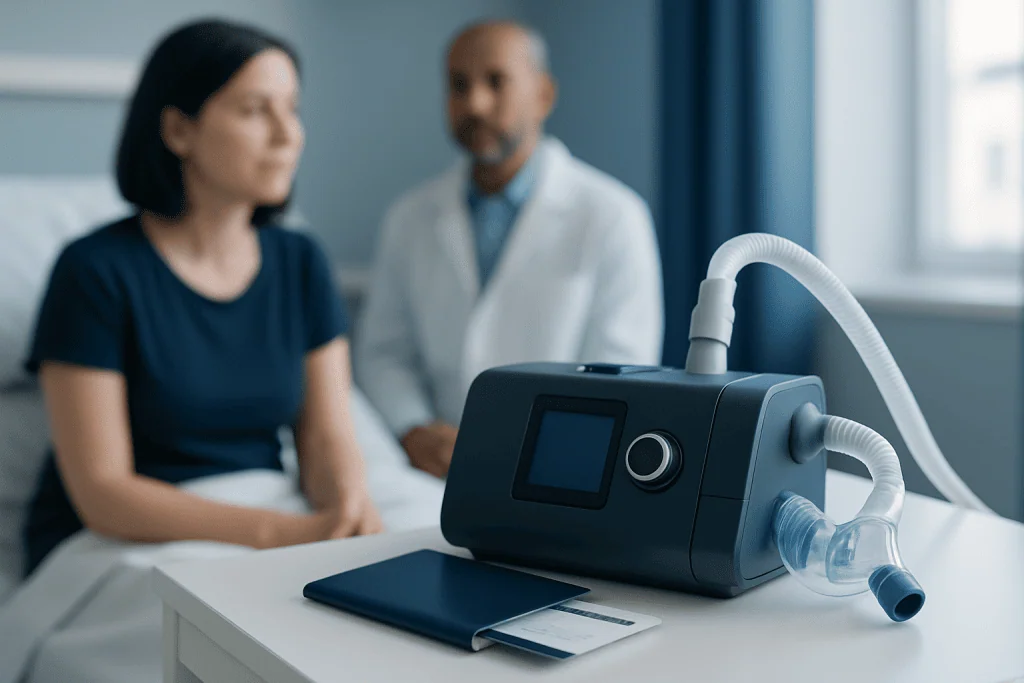
Contact your airline before you book, or as soon as possible afterwards, and ask two separate questions. First: does a CPAP machine count as medical equipment carried in addition to your normal cabin allowance? Many airlines say yes, but this is a policy, not a right, and policies differ between carriers and sometimes between fare types. Second: do you intend to use the machine during the flight? Carrying a CPAP and using one on board are treated differently. In-flight use often requires advance notice, sometimes a medical information form, and a seat with power or an approved battery, because you cannot rely on seat power being available or working.
Keep a small document set together, both printed and on your phone:
- Your CPAP prescription
- A short letter from your doctor stating that you use CPAP for sleep apnoea
- The machine’s make, model and serial number
- Your treating doctor’s contact details
- Your appointment letters and hospital contact numbers, if the trip is for treatment
Is the letter mandatory? Usually not for simply carrying the machine, but it is strongly worth having. It answers questions quickly at check-in and security, it supports any request to treat the device as extra medical baggage, and it becomes genuinely useful if you need help from a pharmacy, an equipment supplier or a hospital during your stay. A few lines on letterhead are enough; you do not need a detailed medical report.
Batteries and lithium rules
If you are carrying a portable CPAP battery, treat it as a separate item to research. Lithium batteries above certain watt-hour ratings need airline approval, and spare lithium batteries generally must travel in the cabin, not the hold, with terminals protected against short circuit. The watt-hour rating is printed on the battery itself; if you cannot find it, your equipment supplier can tell you. Ask the airline about their specific limits rather than relying on general rules, because carriers apply the international standards slightly differently.
How to pack your CPAP safely for the journey
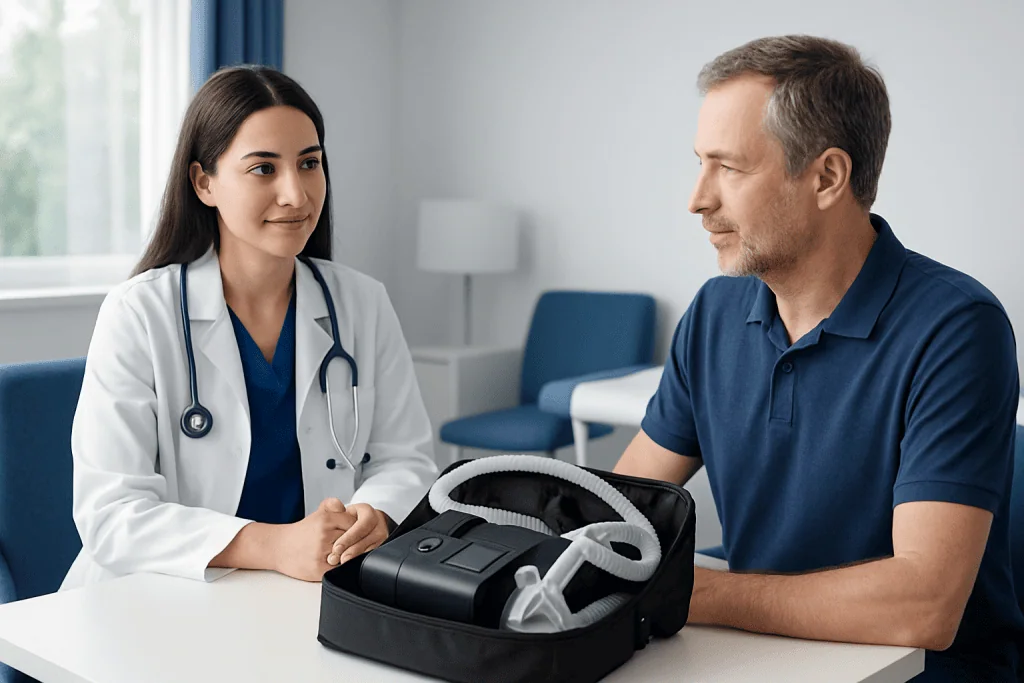
Pack the machine in your hand luggage. This is the single most important packing decision. Checked baggage can be delayed, lost, crushed or exposed to temperature extremes, and none of those risks is worth taking with a device you need on your first night. Use the original travel case if you have one, and keep the machine, mask, headgear, tubing and power supply together in it: a machine that arrives without its cable is no more useful than no machine at all.
Bring backups for the parts most likely to fail or go missing: a spare mask cushion, spare filters, a second length of tubing if you can, and any small model-specific connectors. Before you drain the humidifier chamber for travel, dry it thoroughly; a damp chamber sealed in a case for a full day of travel is an avoidable hygiene problem. If you want a fuller packing list built around a hospital trip, the sleep apnoea checklist for hospital patients traveling to Turkey with CPAP goes through it item by item.
What happens at airport security
Security screening with a CPAP is routine, and the process is broadly similar whether you are passing through a US checkpoint under TSA rules, a European airport or a Turkish one. Expect to remove the machine from its case and place it in a tray, like a laptop. Officers may inspect it separately or swab it for trace testing; this is normal and takes a few minutes. Two things make it easier: keep the machine in a clear plastic bag inside its case so it stays clean during handling, and keep your doctor’s letter in the same case in case anyone asks. The mask and tubing can usually stay packed. You do not need to declare the device in advance for security purposes, only the airline needs advance notice, and only if you plan to use it on board.
Power, adapters and hotel room setup in Turkey
Turkey uses 230-volt, 50 Hz mains electricity with Type F sockets: the round two-pin “Schuko” standard used across much of continental Europe. Most modern CPAP power supplies accept a range of 100 to 240 volts, which covers Turkey, but do not assume: read the label on your power brick or check the manufacturer’s documentation. If the label says 100–240V, you need only a plug adapter. If it lists a single voltage that is not 230V, you need a proper voltage converter, and it is worth discussing options with your equipment supplier before you travel.
Bring the adapter from home rather than planning to buy one after landing. Adapters are sold in Turkish airports and shops, but hunting for one at 11pm on arrival night is exactly the situation this guide exists to prevent. A short extension lead is also worth its weight: hotel sockets are not always near the bed, and an extension lead solves that problem in every room you will stay in. If your recovery accommodation is part of your treatment plan, the practical checks in booking recovery accommodation in Turkey include the bedside details that matter to CPAP users.
Set the machine up on your first evening, before you are exhausted. Plug it in, confirm it powers on, check the tubing for kinks from packing, and fill the humidifier if you use one. Solving a small problem at 8pm is easy; discovering it at 1am is not. This is also the moment to decide where the machine sits, stable, below or level with your head if the manufacturer advises it, and away from anywhere it could be knocked to the floor.
Cleaning, water and hygiene while you are away
Bring your normal cleaning routine with you: unscented wipes, mild soap if your device guidance allows it, and a clean drying cloth. Travel is not the time to experiment with new cleaning products or shortcuts, particularly if you are attending a hospital or recovering from a procedure, when clean equipment matters most for comfort and skin irritation.
If you use humidification, sort out your water plan before you fly. Check what water your manufacturer recommends, many specify distilled water for routine use. Distilled or purified water can generally be found in Turkish pharmacies and larger supermarkets, but availability varies by location and you may not want to spend your first day searching. Practical options include carrying a small sealed bottle of distilled water for the first night, asking your accommodation in advance whether they can source it, or checking your device guidance on short-term alternatives. If you are unsure what your machine tolerates, ask your sleep medicine provider before you travel rather than improvising once you arrive.
Dry the humidifier chamber and tubing each morning if you can. Warm, damp equipment left sealed in a hotel room all day is the main hygiene pitfall of CPAP travel, and five minutes of air-drying prevents it.
Coordinating your CPAP use with treatment in Turkey
If your trip includes medical care, tell the hospital in advance that you have sleep apnoea and use CPAP, even if your treatment seems completely unrelated to sleep. This information feeds into pre-assessment, anaesthesia planning, pain management and how you are monitored overnight. Anaesthetists in particular plan differently for patients with sleep apnoea, and they plan best when they know early; the guide on preparing for general anaesthesia in Turkey explains why this disclosure matters.
Bring a brief written summary of your sleep apnoea care: your diagnosis, your pressure settings if you know them, whether you use humidification, and any recent changes in your symptoms or therapy. This does not need to be a dossier, one page is enough, and it can travel in the same folder as your other hospital admission documents. If you are admitted overnight, bring your own machine with you to the ward; hospitals generally prefer patients to continue their usual therapy on their usual equipment, coordinated with the nursing team.
The goal is simple continuity: you sleep as normally as possible, and the team treating you understands your usual routine. If English is not your first language, put your CPAP summary in writing so nothing depends on a verbal handover.
If plans change during travel
Delays, rerouted flights and unplanned overnight stops happen. The protection is the same in every scenario: the machine, mask, power supply and documents travel in your cabin bag, alongside a small kit that would get you through one or two unplanned nights. If you followed the packing advice above, a disrupted itinerary costs you inconvenience, not therapy.
If the machine itself fails during your stay, your first call is usually the manufacturer or your home equipment supplier, most major CPAP brands have distributors in Turkey, and your model and serial number (which you recorded before travelling) make that conversation faster. Hospitals and accommodation providers can often help with the practical side, such as identifying a local supplier or translating a conversation. For orientation on how out-of-hours help works in Turkey generally, see after-hours medical help in Turkey.
Step by step
- Confirm your airline’s CPAP policy. Ask whether the machine travels as medical equipment in addition to your cabin allowance, and, separately, what is required if you want to use it in flight. Get the answer in writing if you can.
- Check battery rules if you carry one. Find the watt-hour rating on the battery, confirm it against the airline’s lithium limits, and plan to carry it in the cabin with terminals protected.
- Assemble your paperwork. Prescription, a short doctor’s letter, the machine’s model and serial number, and your treatment itinerary, printed and on your phone.
- Verify power compatibility for Turkey. Read the voltage range on your power brick. If it covers 230V, pack a Type F plug adapter and a short extension lead; if it does not, arrange a converter before you fly.
- Pack the machine in cabin baggage. Machine, mask, tubing, filters, cable and spares all together in the travel case, with the humidifier chamber dried before packing.
- Sort your water and cleaning plan. Check what water your manufacturer specifies, decide how you will source it in Turkey, and pack your usual cleaning supplies.
- Tell your treatment team you use CPAP. Do this before arrival, not at admission, so pre-assessment and any overnight arrangements can account for it.
- Set up on your first evening. Power the machine on, check the tubing, position it by the bed and solve any problem hours before you need to sleep.
Your checklist
- CPAP machine in its travel case, in cabin baggage
- Mask, headgear and tubing, plus a spare cushion and filters
- Power supply, Type F plug adapter and short extension lead
- Compliant battery with terminals protected, if you use one
- Prescription and short medical letter
- Model and serial number recorded
- Cleaning wipes or your usual approved supplies
- Humidifier chamber, dried, and a water plan for the first night
- Airline confirmation for the device and any in-flight use
- Hospital contact details and appointment letters
Key takeaways
- Traveling to Turkey with a CPAP machine goes smoothly when the airline, power and paperwork questions are settled before departure.
- The machine belongs in cabin baggage, together with your prescription and a short doctor’s letter.
- Carrying a CPAP and using it in flight are different requests: the second usually needs advance airline approval.
- Turkey runs on 230V with Type F sockets; check your power brick’s label and bring an adapter and extension lead.
- Pack spares, keep your cleaning routine, and plan humidifier water for at least the first night.
- Tell the hospital team in advance that you use CPAP, because it affects anaesthesia and overnight planning.
Frequently asked questions
Do I need a letter to fly with a CPAP machine?
Usually not just to carry it, but a short doctor’s letter is strongly recommended. It speeds up airline and security questions, supports treating the device as additional medical baggage, and helps if you need equipment support or hospital care during your stay. Some airlines do require a medical form if you want to use the machine on board.
Does a CPAP count as a carry-on for international flights?
Many airlines treat a CPAP as medical equipment carried in addition to your standard cabin allowance, so it does not use up your carry-on bag. This varies by carrier and is a policy rather than a universal rule, so confirm directly with your airline before you fly and keep the confirmation with your travel documents.
What is the 4-hour rule for CPAP?
It is an adherence benchmark, not a travel regulation. Prescribers and insurers commonly define regular CPAP use as at least four hours per night across a set proportion of nights, and many machines record usage data against that threshold. It has no bearing on airports or airlines, but it is one more reason to keep your therapy running while abroad.
How do I get through TSA or airport security with a CPAP machine?
Take the machine out of its case and place it in a screening tray, like a laptop. Officers may inspect it separately or swab it; this is routine. Keeping the machine in a clear plastic bag inside its case keeps it clean during handling, and having your doctor’s letter in the same case answers any questions quickly. The process is similar at US, European and Turkish airports.
Will my CPAP work with Turkish electricity?
Turkey uses 230 volts at 50 Hz with Type F sockets. Most modern CPAP power supplies accept 100–240 volts, in which case you only need a plug adapter, but check the label on your power brick rather than assuming. If it lists a single incompatible voltage, you need a converter arranged before travel.
Should I pack my CPAP in checked luggage?
No. Checked baggage can be delayed, lost or damaged, and a CPAP is too important and too hard to replace abroad to take that risk. Carry it in the cabin in its travel case, with the mask, tubing, power supply and documents packed together.
What should I tell the hospital in Turkey if I use CPAP?
That you have sleep apnoea and use CPAP, plus your pressure settings if you know them, whether you use humidification, and any recent changes to your therapy. Share this before arrival rather than at admission, because it feeds into pre-assessment, anaesthesia planning and overnight monitoring, even for treatment unrelated to sleep.
What if my machine stops working while I am in Turkey?
Contact the manufacturer or your home equipment supplier first; most major CPAP brands have distributors in Turkey, and having your model and serial number recorded makes this faster. Hospital and accommodation staff can often help with practical steps such as identifying a local supplier or translating. Carrying spare small parts in your cabin bag prevents most disruptions in the first place.
Add us as a Preferred Source to see more of our trusted health content across Google Search, AI Overviews and Discover.

Update history
- PublishedJuly 8, 2026
- Medical review approvedSeptember 13, 2026
- Last content updateSeptember 12, 2026
References2
- Sleep apnoea: NHS nhs.uk
- CPAP Machine: Cleveland Clinic my.clevelandclinic.org
More Patient Guides

Flying With Medication: Airline Rules, Documents and Packing
Every day, travelers hold up security lines worrying about a bag full of tablets that nobody actually wants to confiscate. The rules…
How to Send Your Medical Files Securely Before Treatment in Turkey
Send medical files securely before treatment in Turkey by using approved channels, clear file names and a complete health summary.
Pain Control After Treatment in Turkey: What Patients Should Expect and Ask About
Pain control after treatment in Turkey usually includes a tailored medicine plan, clear warning signs, and follow-up support before you leave Istanbul.

Managing Medicines Across Borders After Treatment in Turkey
Managing medicines across borders after treatment in Turkey means carrying clear documents, checking import rules, and planning refills before you fly.