How Long Does Eye Dilation Last? Causes, Explanations, and Next Steps

Most dilating eye drops wear off within 4 to 24 hours. Blurred near vision and sensitivity to light are common while the pupils stay enlarged.
Key Takeaways
- Most dilating eye drops wear off within 4 to 24 hours.
- Blurred near vision and sensitivity to light are common while the pupils stay enlarged.
- Children, people with lighter-colored eyes, and those given stronger or longer-acting drops may notice effects for longer.
- Sudden eye pain, headache, nausea, halos around lights, or vision loss need prompt medical assessment.
- An eye doctor can determine whether prolonged dilation is a normal response or a sign of another eye problem.
Medically reviewed by the Acıbadem International Medical Board — July 23, 2026
Eye dilation is usually temporary and harmless. For most people, the effects last from several hours to about a day, although the exact timing depends on the drops used, the person’s eyes, and why the pupils were dilated.
Overview: How Long Does Eye Dilation Last?
In most cases, eye dilation lasts between 4 and 24 hours. Many people notice the strongest effects for a few hours after an eye exam, then gradually return to normal by later the same day. For some, especially after stronger drops or in children, the pupils may stay large and vision may remain affected until the next day.
Eye dilation happens when medicated drops make the pupil wider. This helps an eye specialist examine the back of the eye more clearly and may also be used during evaluation of certain symptoms or conditions. While the pupils are enlarged, more light enters the eye, which often causes light sensitivity and difficulty focusing up close.
Most prolonged dilation is not dangerous. Still, the context matters. If enlarged pupils follow a planned eye examination and improve steadily, that is usually expected. If dilation appears suddenly without eye drops, affects only one eye unexpectedly, or comes with pain or major vision changes, medical review is important.
What Eye Dilation Feels Like and Why It Happens
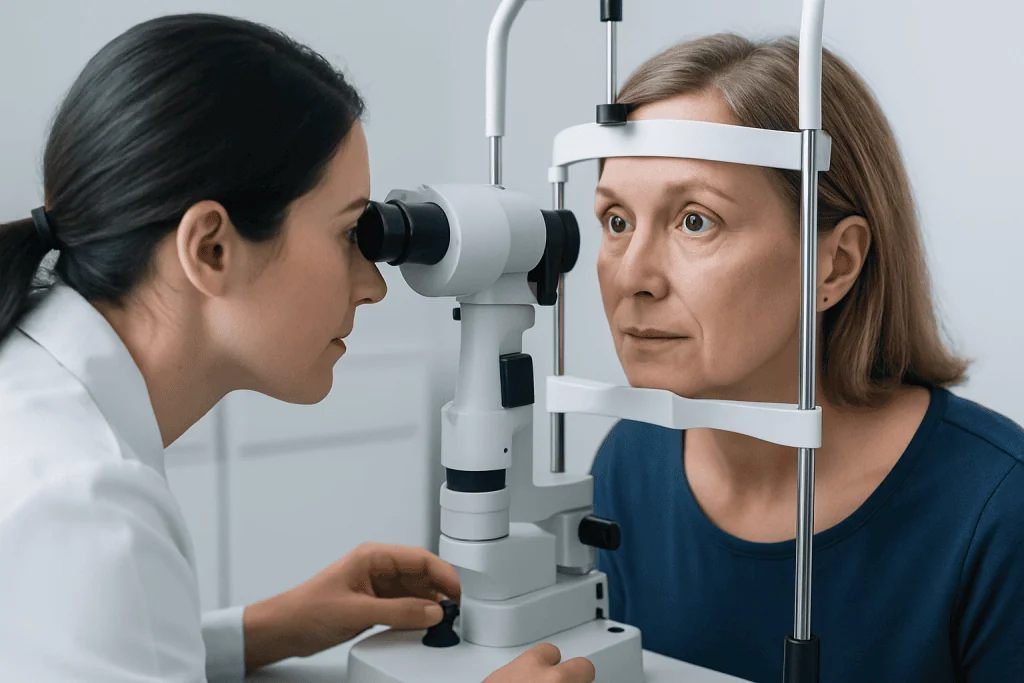
The pupil is the dark opening in the center of the eye. It normally becomes smaller in bright light and larger in dim light. Dilating drops temporarily relax the muscles that control the pupil, so it stays open longer than usual.
People often describe a few common effects after dilation. Bright light may feel uncomfortable, reading can become harder, and nearby objects may look blurred. Distance vision may stay fairly clear for some people, but others notice a more general haziness until the drops wear off.
These effects are common because the same drops may also affect the eye’s focusing system. This is why someone may be able to walk around normally but still struggle with texting, computer work, or reading small print for several hours.
- Light sensitivity outdoors or under bright indoor lighting
- Blurred near vision, especially when reading
- Larger-looking pupils in the mirror
- Mild stinging when the drops are placed
What Affects How Long Eye Dilation Lasts?
The biggest factor is the type of eye drops used. Some drops are designed to wear off relatively quickly, while others last longer because they are used for a more detailed examination or for children, whose eyes can focus very strongly. The exact reason for the exam also matters, since doctors choose drops based on what they need to assess.
Age can influence duration. Children often have longer-lasting effects, especially if stronger drops are used. Older adults may also respond differently depending on their overall eye health and medications. Eye color may play a role as well; some people with lighter-colored eyes report that the effects seem to last longer, although individual response varies.
Other factors include the drop concentration, the number of drops given, and a person’s sensitivity to the medication. Rarely, a person may simply metabolize or respond to the drops more slowly than average. If someone has an underlying eye condition, the doctor may also use additional medications during the visit that affect comfort or focusing.
If blurred vision or pupil enlargement continues longer than expected, it does not always mean something is wrong. However, it is reasonable to contact the prescribing eye clinic if symptoms are not improving after a day or if they are becoming more uncomfortable rather than better.
Common Causes of Dilated Pupils Besides an Eye Exam
Not all pupil dilation is caused by routine eye drops. Pupils can enlarge naturally in dim light, during stress, or in response to certain medicines. Some cold medicines, motion sickness treatments, antidepressants, and other drugs can affect the pupil. In these situations, the timing and associated symptoms help guide the next steps.
A dilated pupil can also occur with some eye and nerve-related conditions. These include injury to the eye, inflammation inside the eye, or problems involving the nerves that control the pupil. Sometimes one pupil may appear larger than the other. A small difference in pupil size can be harmless in some people, but new asymmetry should be assessed if it appears suddenly.
Doctors may also consider conditions such as glaucoma if dilation comes with pain, headache, nausea, halos around lights, or sudden blurred vision. Rarely, a pupil problem may relate to a neurological issue, especially when accompanied by drooping eyelid, double vision, weakness, or severe headache. This is why sudden unexplained dilation deserves attention even though most cases after planned exams are benign.
Red Flags: When to Seek Medical Care
After a routine dilated eye exam, temporary sensitivity to light and blurred near vision are usually expected. However, some symptoms should not be ignored. Prompt medical care is important if a person develops severe eye pain, significant redness, nausea, vomiting, halos around lights, sudden vision loss, or a bad headache after dilation.
It is also wise to seek evaluation if one pupil suddenly becomes much larger than the other without an obvious reason, or if dilation is accompanied by drooping of the eyelid, confusion, weakness, trouble speaking, or double vision. These symptoms may point to a problem beyond the eye itself.
Medical review is especially important when symptoms are worsening instead of gradually improving. If someone is unsure whether what they are experiencing is normal, contacting an eye doctor the same day is a sensible step. In urgent situations, emergency care may be needed.
How Doctors Evaluate Prolonged or Unexplained Dilation
When a patient asks how long does eye dilation last because the effect seems unusually long, the first step is a careful history. The doctor will ask when the dilation started, whether eye drops were used, whether one or both eyes are affected, and what other symptoms are present. Medication use, recent illness, eye trauma, and neurological symptoms are also important clues.
The eye examination may include checking visual acuity, pupil size and reaction to light, eye pressure, eye movements, and the appearance of the cornea and retina. Depending on the findings, the clinician may perform a slit-lamp examination or a dilated retinal exam to look for inflammation, injury, or structural eye disease such as retinal detachment when flashes, floaters, or a curtain-like shadow are present.
Additional testing is guided by the situation. In some cases, doctors measure eye pressure to assess for angle-closure glaucoma, or arrange imaging if a neurological cause is suspected. If treatment is needed, it may range from observation and reassurance to more specific care such as glaucoma treatment or retinal treatment, depending on the diagnosis.
What to Do While Waiting for the Drops to Wear Off
Simple self-care can make the temporary effects of dilation easier to manage. Sunglasses are often the most helpful tool because they reduce discomfort from bright light. Many people also find it useful to limit close-up tasks, such as reading or prolonged phone use, until focusing improves.
Whether it is safe to drive depends on the person, the type of drops used, and how much vision is affected. Some people can drive safely after dilation, while others cannot. If vision is blurry, glare feels distracting, or the doctor has advised against driving, it is best to arrange transportation home.
A few practical steps can help during recovery:
- Wear sunglasses outdoors
- Use brighter but comfortable indoor lighting if reading is necessary
- Take breaks from screens and close-up work
- Follow the eye clinic’s instructions after the exam
- Call the clinic if symptoms last longer than expected or feel severe
People being treated for other eye problems may receive additional advice. For example, if another condition is identified, care may involve cataract surgery or other ophthalmic treatment plans tailored to the cause rather than the dilation itself.
The Outlook and When to Follow Up
For routine examinations, the outlook is reassuring. The enlarged pupils gradually return to their usual size, and focusing improves on its own. Most people feel back to normal within the same day, while others may need closer to 24 hours.
If symptoms persist beyond what the doctor predicted, follow-up is appropriate. This is especially true if only one eye remains unusually dilated, vision is not returning to baseline, or new symptoms appear. A follow-up visit can confirm whether the response is still within the normal range or whether another issue needs attention.
For international patients who need further assessment, Acibadem International’s multidisciplinary specialists and JCI-accredited hospitals evaluate eye symptoms and related conditions with coordinated care. Reassurance is often all that is needed, but it is always best to let a qualified doctor decide when symptoms are prolonged or atypical.
Frequently asked questions
How long does eye dilation last after an exam?
For most people, the effects last about 4 to 24 hours. The exact timing depends on the type of drops used, the reason for the exam, and individual factors such as age and eye response.
Why is my vision blurry after my eyes were dilated?
Dilating drops can temporarily affect the eye’s ability to focus, especially for near tasks like reading. This is common and usually improves as the medication wears off.
Can one eye stay dilated longer than the other?
It can happen, especially if one eye received a slightly different amount of medication or responds differently. However, if one pupil becomes suddenly much larger without a recent eye exam, or if there are other symptoms, it should be checked by a doctor.
Is it safe to drive after eye dilation?
Some people can drive after dilation, but others should not because of glare, blurred vision, or reduced comfort in bright light. It is safest to follow the eye doctor’s advice and arrange a ride if vision does not feel normal.
What helps eye dilation wear off faster?
There is usually no recommended home method to make standard dilating drops wear off faster. The safest approach is to wait, protect the eyes from bright light, and contact the clinic if the effect lasts longer than expected.
When should dilated pupils be considered an emergency?
Emergency assessment is important if dilation comes with severe eye pain, sudden vision loss, halos around lights, nausea, vomiting, severe headache, weakness, confusion, or double vision. These symptoms may signal a serious eye or neurological problem.
References
- American Academy of Ophthalmology
- National Eye Institute
- Mayo Clinic
- MedlinePlus
- Merck Manual Consumer Version
This article is for general information only and is not a substitute for professional medical advice. Please consult a qualified doctor about your individual situation.
Explore treatments in Turkey — costs, top hospitals & a free quote
JCI-accredited · board-certified surgeons · reply within 24h