Eye Trauma
Eye Trauma is any injury to the eye or surrounding area. Learn symptoms, causes, diagnosis, treatment options and when to seek urgent care.
Quick answer
Eye trauma is any injury to the eye or surrounding tissues, ranging from surface scratches and chemical burns to internal damage that can threaten vision. Treatment depends on the type and severity of injury and may include urgent examination, imaging, medications, wound repair, or surgery to protect the eye and support recovery.
Eye trauma is any injury to the eye, eyelids, eye socket or surrounding tissues caused by a blow, cut, burn, chemical exposure or foreign object. Because some eye injuries can affect vision even when symptoms seem mild, prompt assessment by an eye specialist is important.
Overview
Eye trauma is an injury that affects the eyeball itself or nearby structures such as the eyelids, tear ducts, muscles, nerves and bony eye socket. It may happen after a blunt impact, a sharp object, a chemical splash, a burn, a fall, a traffic accident, a sports injury or exposure to flying particles. The medical term ocular trauma is often used for injuries involving the eye.
Some eye injuries are superficial and heal well with simple care, while others can threaten sight if treatment is delayed. A small scratch on the cornea, for example, can be very painful but often heals quickly with proper management. By contrast, a penetrating injury, chemical burn, retinal injury or internal bleeding may require urgent specialist treatment.
Eye trauma should be taken seriously because the eye is delicate and symptoms do not always show the full extent of damage. A person may still be able to see after a significant injury, or pain may be limited at first. For this reason, any injury with vision changes, severe pain, bleeding, chemical exposure or suspicion of a foreign object inside the eye should be assessed without delay.
Symptoms
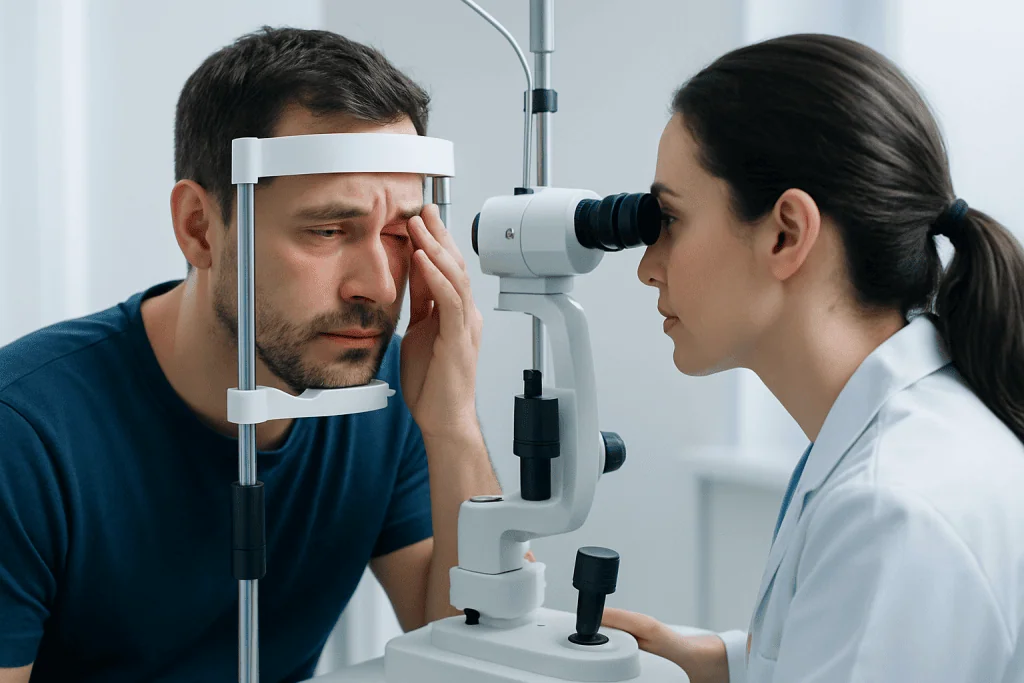
Eye trauma symptoms vary depending on the injured structure and the cause of injury. Common symptoms include eye pain, redness, watering, swelling, bruising around the eye, blurred vision, sensitivity to light and a feeling that something is in the eye. The eyelids may be cut or swollen, and the eye may be difficult to open.
More concerning symptoms include sudden loss of vision, double vision, new floaters or flashes, bleeding inside or around the eye, a pupil that looks irregular, severe headache with eye injury, nausea, or pain with eye movement. A person may also notice that the eye looks displaced, the eyelid has a deep cut, or clear fluid or blood is coming from the eye.
Symptoms that suggest urgent medical attention include:
- Chemical exposure to the eye, including cleaning products, acids or alkalis
- A sharp object injury or possible puncture of the eyeball
- Metal, glass, wood or high-speed particles entering the eye
- Reduced vision, severe pain or worsening light sensitivity
- Blood visible inside the eye or a sudden change in pupil shape
- Double vision after a blow to the face or eye socket
Children may not be able to describe symptoms clearly. Parents and caregivers should seek medical advice if a child has persistent crying after an eye injury, keeps the eye closed, rubs the eye repeatedly, has visible redness or swelling, or appears to have any change in vision or eye movement.
Causes & Risk Factors
Eye trauma can be caused by blunt force, sharp objects, heat, radiation, chemicals or foreign bodies. Blunt injuries may occur during sports, falls, assaults or motor vehicle accidents. Sharp trauma can result from glass, metal, tools, knives, pens, branches or other objects that cut or penetrate eye tissues.
Foreign bodies are common in work and home settings, especially when drilling, grinding, hammering, gardening or using power tools. Tiny particles can lodge on the surface of the eye, under the eyelid or, in more serious cases, inside the eye. Chemical injuries may occur from household cleaners, industrial chemicals, fertilizers, solvents, lime, cement or beauty products.
Risk factors include working in construction, manufacturing, agriculture or laboratory environments; playing contact or projectile sports; using fireworks or high-speed tools; not wearing protective eyewear; and having previous eye surgery or eye disease. Children are at risk from toys, pencils, sticks, sports equipment and household chemicals if these are not used or stored safely.
Prevention is especially important because many eye injuries are avoidable. Safety glasses, face shields, helmets with visors and sport-specific protective eyewear can reduce risk. Chemical containers should be handled carefully, and emergency eyewash access is important in workplaces where chemicals are used.
Diagnosis
Diagnosis of eye trauma begins with a careful history of what happened, when it occurred and what object or chemical was involved. The doctor may ask whether the injury was high-speed, whether protective eyewear was worn, whether vision changed immediately, and whether there is a history of eye disease, surgery or contact lens use. In chemical injuries, knowing the substance involved helps guide care.
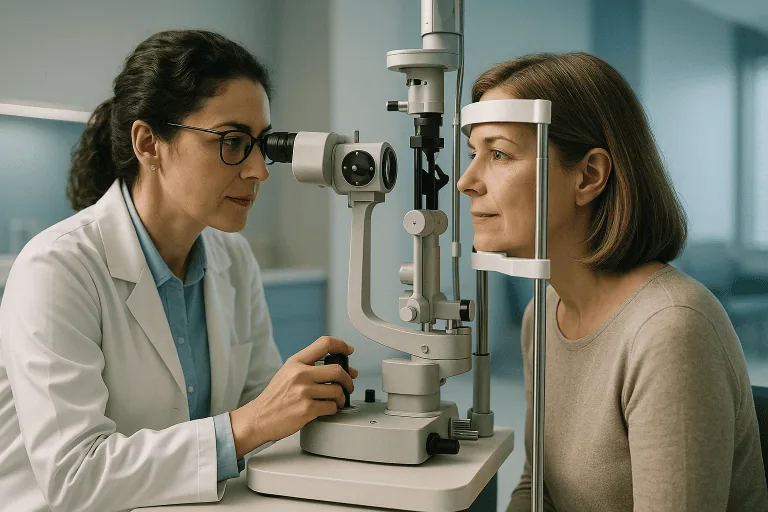
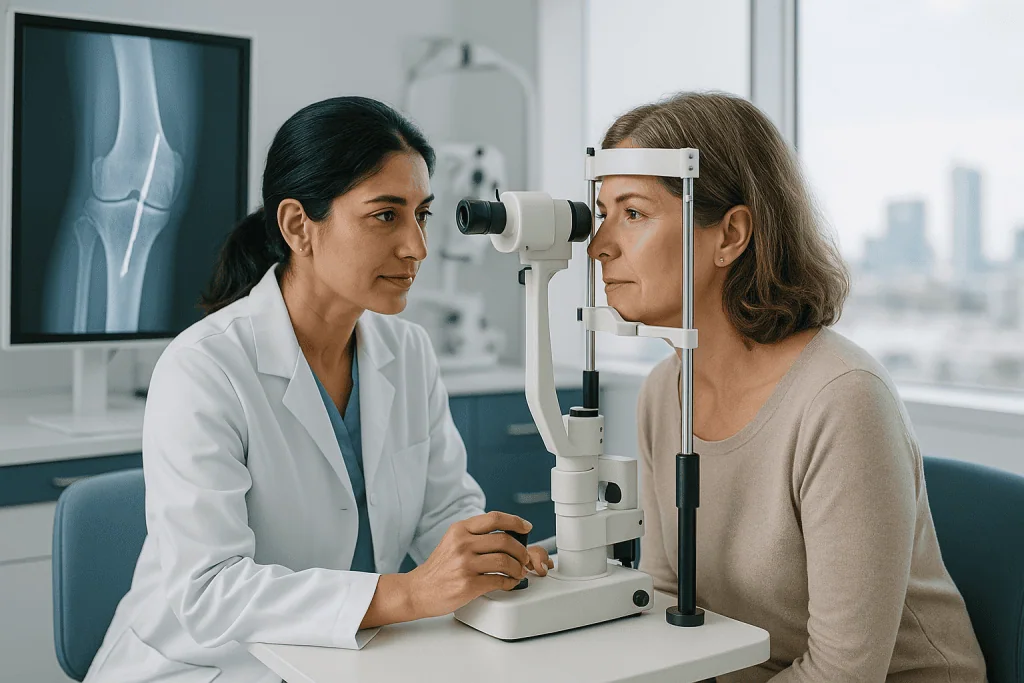
An eye examination usually includes checking visual acuity, pupil reactions, eye movements and the appearance of the eyelids and eye surface. A slit-lamp microscope allows the ophthalmologist to examine the cornea, conjunctiva, iris, lens and front chamber of the eye in detail. Fluorescein dye may be used to identify corneal scratches or surface defects.
If internal injury is suspected, the specialist may measure eye pressure when it is safe to do so and examine the retina after dilating the pupil. Imaging tests such as ultrasound, X-ray or computed tomography may be used to look for fractures, hidden foreign bodies or deeper damage. Magnetic resonance imaging is generally avoided when a metallic foreign body is possible, because metal can move in a magnetic field.
Accurate diagnosis helps determine whether the injury is superficial, penetrating, chemical, blunt, thermal or related to the eye socket. This distinction is important because the treatment and urgency differ greatly between a minor surface abrasion and an injury involving the retina, optic nerve or inside of the eyeball.
Treatment Options
Treatment for eye trauma depends on the cause, severity, location and timing of the injury. The right approach is decided by an ophthalmologist or emergency specialist after examination. A person should not try to remove an embedded object, press on an injured eye, apply unapproved drops or delay care when vision is affected.
For minor surface injuries, treatment may include cleaning the eye, removing a superficial foreign body, lubricating drops, protective measures and medicines to reduce infection risk or inflammation when appropriate. Contact lenses are usually avoided until the eye has healed and a doctor confirms it is safe. Follow-up may be needed to ensure the cornea heals properly.
Chemical eye trauma requires immediate flushing with clean running water or sterile saline if available, continuing until medical help is reached or as instructed by emergency services. The priority is to dilute and remove the chemical as quickly as possible. In the hospital, the medical team may continue irrigation, check the eye’s surface and pH, manage pain and monitor for complications.
More serious injuries may require procedures or surgery. Examples include repair of eyelid cuts, treatment of eye socket fractures, removal of intraocular foreign bodies, repair of an open globe injury, management of bleeding inside the eye, laser treatment for retinal tears or surgery for retinal detachment. Rehabilitation, low-vision support or additional procedures may be recommended if the injury affects long-term visual function.
Living With / Prognosis
The prognosis after eye trauma depends on the type of injury, how quickly treatment is received and which parts of the eye are affected. Many minor corneal scratches and small surface injuries heal well with appropriate care. Injuries involving the retina, optic nerve, lens or a penetrating wound may have a more complex recovery and require ongoing monitoring.
After treatment, patients may be advised to rest the eye, avoid rubbing it, use prescribed medicines correctly and attend follow-up appointments. It is important to report new pain, worsening redness, discharge, reduced vision, flashes, floaters or a curtain-like shadow in vision. These symptoms can indicate complications that need prompt reassessment.
Daily life may need temporary adjustments after eye trauma. Driving, sports, swimming, heavy lifting or contact lens wear may be restricted until a doctor confirms it is safe. People who work with tools, chemicals or machinery should ask about returning to work and the most suitable protective eyewear for their role.
Emotional stress is understandable after an eye injury, especially when vision is affected. Clear explanations, realistic expectations and coordinated care can help patients feel more confident during recovery. Acibadem International’s multidisciplinary specialists and JCI-accredited hospitals diagnose and treat eye trauma for international patients, with care planned according to each person’s examination findings.
When to See a Doctor
Medical care should be sought urgently for any eye trauma with reduced vision, severe pain, bleeding, a cut on the eyelid, an irregular pupil, double vision, a chemical splash or suspicion that a foreign body entered the eye. A penetrating injury or object stuck in the eye is an emergency. The eye should be protected without pressure, and the person should go to an emergency department or eye specialist immediately.
For chemical exposure, the eye should be rinsed immediately with clean water or saline while arranging urgent medical care. Contact lenses should be removed if they come out easily during irrigation, but the person should not delay rinsing to search for them. Rapid irrigation is one of the most important first steps for chemical injury.
A doctor should also assess symptoms that seem mild but do not improve, such as persistent foreign body sensation, light sensitivity, redness, watering or blurred vision. People who wear contact lenses, have had eye surgery, have only one seeing eye, or have known eye disease should be especially cautious and seek professional advice promptly.
Frequently asked questions
What is eye trauma?
Eye trauma is an injury to the eye or surrounding structures such as the eyelids, eye socket, tear ducts or muscles. It can be caused by impact, cuts, chemicals, burns or foreign objects. Even injuries that look minor may need medical assessment if pain, redness or vision changes are present.
Is eye trauma always an emergency?
Not every eye injury is an emergency, but some require immediate care. Chemical splashes, sharp object injuries, suspected punctures, severe pain, bleeding, double vision or reduced vision should be treated as urgent. When in doubt, it is safest to contact an eye specialist or emergency service.
What should someone do first after a chemical splash in the eye?
The eye should be rinsed immediately with clean running water or sterile saline if available. Irrigation should start right away and continue while urgent medical help is arranged. The person should not wait to identify the chemical before beginning to rinse.
Can a scratched cornea heal on its own?
Many small corneal scratches heal within a short time with proper care, but they should still be assessed if pain, light sensitivity, redness or blurred vision persists. A doctor may check for infection risk, a retained foreign body or deeper injury. Contact lenses should not be worn again until a clinician confirms it is safe.
What should not be done after an eye injury?
A person should not rub the eye, press on it, attempt to remove an embedded object or use random eye drops without medical advice. If an object is stuck in the eye, it should be left in place and the eye protected without pressure. Medical assessment is the safest next step.
How is eye trauma treated?
Treatment depends on the exact injury and may include rinsing, medicines, protective care, removal of a superficial foreign body, laser treatment or surgery. Serious injuries may require emergency ophthalmic surgery or follow-up with retina, cornea or oculoplastic specialists. The appropriate plan is chosen after a detailed examination.
Can eye trauma cause permanent vision problems?
Some eye injuries heal fully, while others can affect vision long term, especially if the retina, optic nerve or inside of the eye is damaged. Early diagnosis and appropriate treatment improve the chance of protecting eye health. Follow-up appointments are important because some complications develop after the initial injury.
This article is for general information only and is not a substitute for professional medical advice. Please consult a qualified doctor about your individual situation.
Medically reviewed by the Acıbadem International Medical Board June 20, 2026
See our medical review board →
Update history
- PublishedJune 8, 2026
- Medical review approvedJune 20, 2026
- Last content updateJune 12, 2026