Paramedic: What Patients Need to Know
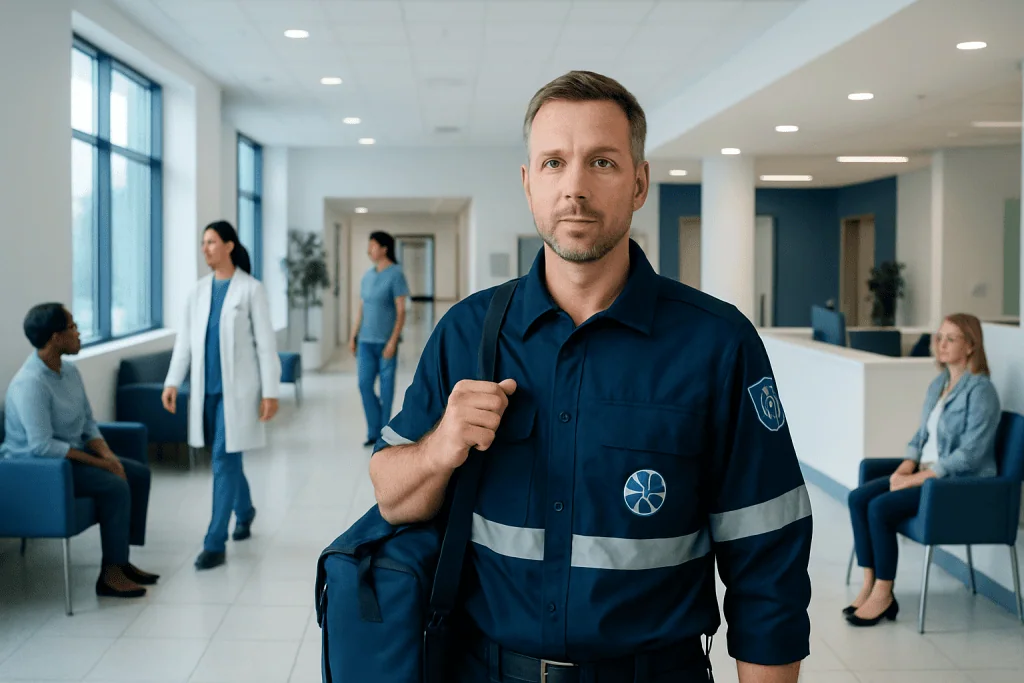
A paramedic provides advanced emergency care before and during transport to a hospital. Paramedics assess symptoms, support breathing and circulation, give selected medications, and monitor patients closely.
Key Takeaways
- A paramedic provides advanced emergency care before and during transport to a hospital.
- Paramedics assess symptoms, support breathing and circulation, give selected medications, and monitor patients closely.
- They work within emergency medical services and coordinate with emergency departments and other clinicians.
- People should call emergency services for symptoms such as chest pain, severe breathing trouble, stroke signs, major injury, or loss of consciousness.
- A paramedic is not the same as an EMT; paramedics usually have broader training and can perform more advanced procedures.
Medically reviewed by the Acıbadem International Medical Board — July 24, 2026
A paramedic is a trained emergency medical professional who assesses urgent illness or injury, provides life-saving treatment, and helps patients reach the right level of care safely. Understanding what paramedics do can help patients and families respond more confidently during a medical emergency.
Overview: what a paramedic does
A paramedic is a licensed healthcare professional who delivers urgent medical care outside the hospital, often in ambulances or at the scene of an emergency. Their role is to assess the patient quickly, begin treatment right away, and support safe transport to the most appropriate medical facility. In many emergencies, this early care can help stabilize breathing, circulation, pain, and other immediate risks before a patient reaches the hospital.
Patients often meet a paramedic during sudden situations such as chest pain, severe shortness of breath, collapse, a road traffic injury, or a suspected stroke. Paramedics also respond to falls, allergic reactions, seizures, serious infections, and other time-sensitive problems. They work as part of emergency medical services and communicate with dispatchers, emergency physicians, nurses, and other first responders.
Although the public may think of ambulances mainly as transport, the ambulance is also a mobile treatment space. A paramedic can monitor vital signs, give oxygen, start intravenous access when needed, administer certain emergency medicines, support the airway, and use devices such as a defibrillator. Their main aim is not only to move the patient, but to begin appropriate care as early as possible.
Paramedic vs EMT: what is the difference?
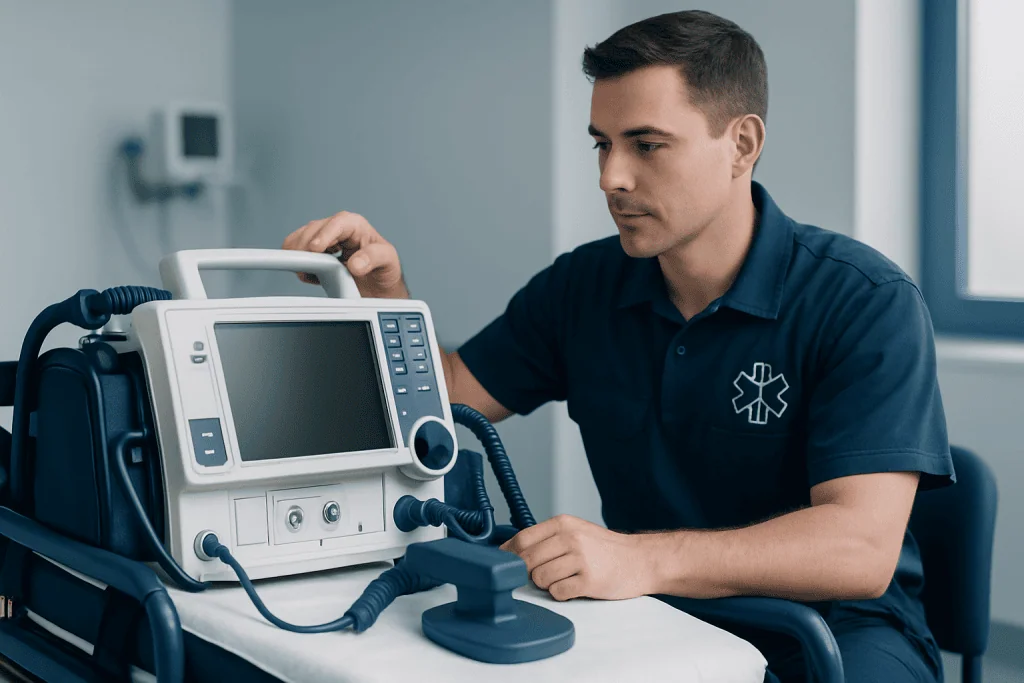
People often use the terms paramedic and EMT interchangeably, but they are not always the same. An emergency medical technician, or EMT, is trained to provide essential emergency care such as basic assessment, cardiopulmonary resuscitation, bleeding control, and safe patient transport. A paramedic usually has more advanced education and a broader clinical scope of practice.
Depending on the country or regional system, paramedics may be trained to interpret heart rhythms, manage a more complex airway, give a wider range of medications, and perform advanced procedures under established protocols. EMTs and paramedics work closely together, and both are important members of emergency care teams. The exact titles, responsibilities, and licensing rules can vary by location.
For patients, the practical difference is simple: both are there to help, but a paramedic generally has more advanced tools and training for critical situations. Whether the responding team includes EMTs, paramedics, or both, the immediate goal remains the same: rapid assessment, treatment, and transfer to the right level of care.
What patients can expect when a paramedic arrives
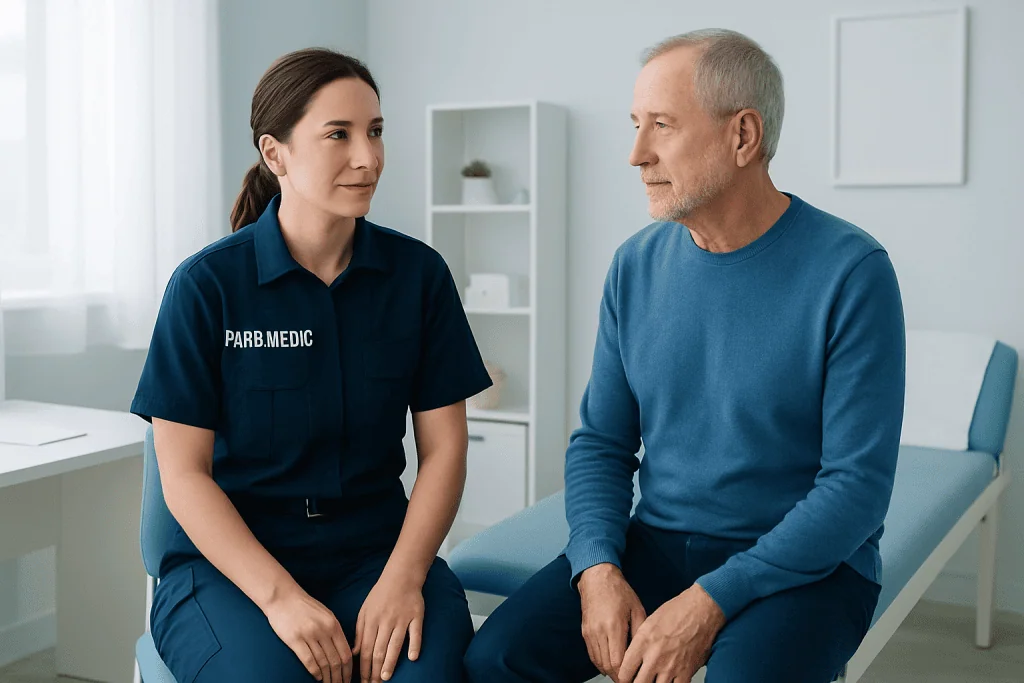
When a paramedic arrives, the first step is usually a quick safety and medical assessment. The team may ask what happened, when symptoms started, what medicines the patient takes, and whether there are allergies or known medical conditions. At the same time, they check vital signs such as pulse, blood pressure, breathing rate, oxygen level, temperature, and level of consciousness.
Patients may notice several actions happening at once. One clinician may speak to the patient or family, another may attach monitoring equipment, and another may prepare treatment. This can feel fast-paced, but it reflects a structured approach designed to identify immediate threats to life or function. Paramedics are trained to prioritize problems with the airway, breathing, circulation, and neurological status first.
Treatment may include oxygen, medications, wound care, fluid support, heart monitoring, spinal precautions when needed, or help with severe pain or nausea. In some cases, paramedics also perform an electrocardiogram if heart symptoms are suspected, which can help hospitals prepare for urgent treatment such as angiography or other cardiac care. If stroke signs are present, early recognition and transport can speed access to stroke rehabilitation after emergency treatment.
Patients and family members can help by answering questions calmly, bringing a medication list if available, and sharing details such as recent illnesses, pregnancy, implanted devices, or previous surgeries. If the patient cannot speak, family history and a timeline of events are especially valuable.
Common emergencies where a paramedic may be needed
Paramedics respond to a wide range of urgent medical problems. Some are dramatic, such as major trauma, loss of consciousness, or a severe allergic reaction. Others may begin with symptoms that are less obvious but still time-sensitive, including sudden weakness on one side, confusion, new chest pressure, or rapidly worsening shortness of breath.
Common reasons to call emergency medical services include suspected heart attack, severe breathing difficulty, choking, stroke symptoms, seizures, significant bleeding, serious burns, poisoning, fainting, and injuries from falls or motor vehicle crashes. They may also be needed when a person with a chronic illness suddenly becomes much worse, such as during an asthma attack or diabetic emergency.
Some conditions are especially time-critical. For example, prompt emergency response is important in possible stroke and heart attack, because early treatment can reduce complications. Sudden severe breathing problems may also reflect a serious issue such as pulmonary embolism, which requires urgent medical evaluation.
- Chest pain, pressure, or discomfort that does not quickly go away
- Trouble breathing, bluish lips, or noisy breathing
- Face drooping, arm weakness, speech difficulty, or sudden confusion
- Severe bleeding, deep wounds, or suspected broken bones after major injury
- Collapse, seizure, or inability to wake the person
- Signs of shock, such as pale clammy skin, weakness, and altered awareness
Training, skills, and limits of a paramedic
Paramedics complete formal education, supervised clinical training, and licensing or certification requirements set by their region. Their training usually includes anatomy, physiology, emergency assessment, trauma care, heart and breathing emergencies, medication safety, resuscitation, and communication skills. They also train repeatedly in teamwork and decision-making under pressure.
Because they care for patients in homes, workplaces, roadsides, and public spaces, paramedics learn to adapt quickly to changing conditions. They must be able to make rapid judgments based on limited information, while maintaining patient dignity and safety. This includes recognizing when a patient can be stabilized on site for a short time and when immediate transport is the higher priority.
At the same time, paramedics have defined limits. They do not replace a full hospital evaluation, imaging, laboratory testing, or specialist treatment. If they suspect a serious condition, they focus on stabilization and timely transfer. Once in hospital, patients may need additional testing or procedures such as MRI or surgery depending on the cause of the emergency.
How paramedics work with hospitals and specialists
Modern emergency care depends on coordination. A paramedic does not work in isolation; they are part of a larger system that includes dispatch centers, emergency departments, intensive care teams, trauma services, cardiology, neurology, and rehabilitation. During transport, the paramedic often shares the patient’s symptoms, vital signs, treatment given, and estimated arrival time with the receiving hospital.
This handover can make care more efficient. For example, if a patient has signs of a heart rhythm problem, severe infection, or a suspected stroke, the hospital can prepare equipment, staff, and protocols in advance. Early communication may shorten the time to imaging, specialist review, or urgent procedures.
After arrival, hospital teams continue the evaluation with blood tests, scans, and specialist treatment as needed. In more complex cases, care may continue across several departments. Acibadem International’s multidisciplinary specialists and JCI-accredited hospitals diagnose and treat emergency-related conditions for international patients, with coordinated care from emergency assessment through recovery when required.
When to seek medical care
Emergency medical help should be sought when symptoms are severe, sudden, rapidly worsening, or potentially life-threatening. A good rule is to call emergency services rather than trying to drive if the person has chest pain, severe trouble breathing, stroke symptoms, uncontrolled bleeding, a seizure lasting several minutes, major trauma, or reduced consciousness. Waiting can delay treatment and may increase risk.
It is also reasonable to seek urgent care if a person seems unusually confused, has a high fever with extreme weakness, develops signs of a severe allergic reaction, or has a sudden severe headache unlike previous headaches. If a child, older adult, or pregnant person appears seriously unwell, caution is especially important because deterioration may happen more quickly or symptoms may be harder to interpret.
Not every health concern needs an ambulance. Mild, stable symptoms without breathing trouble, chest pain, severe dehydration, or neurological changes can often be discussed first with a doctor or urgent care service. When in doubt, however, calling emergency services or a local health advice line is the safest option.
How patients and families can prepare for emergencies
Most emergencies are unexpected, but a little preparation can make communication and treatment easier. Keeping an up-to-date list of medications, allergies, major diagnoses, previous operations, and emergency contacts can help a paramedic act quickly. For people with chronic heart, lung, neurological, or metabolic conditions, carrying a summary of important medical information may be especially useful.
Families can also prepare by learning basic first aid and CPR, knowing their local emergency number, and discussing emergency plans with older relatives or people with complex medical needs. In a real event, practical steps matter: unlocking the door, moving pets away, turning on lights at night, and making a clear path to the patient can save valuable time.
During the event, it helps to stay as calm as possible and avoid giving food, drink, or extra medicines unless instructed by a healthcare professional. If the person becomes unresponsive and is not breathing normally, bystander CPR may be needed while waiting for the ambulance. Following dispatcher instructions can make a meaningful difference before the paramedic team arrives.
Frequently asked questions
What is a paramedic in simple terms?
A paramedic is a healthcare professional trained to give urgent medical treatment outside the hospital. They assess the patient, provide emergency care, and help transport the person safely to the right facility.
Is a paramedic the same as an EMT?
Not exactly. Both provide emergency care, but a paramedic usually has more advanced training and can perform a wider range of medical procedures and give more medications, depending on local regulations.
Should someone call a paramedic for chest pain?
Yes, especially if chest pain is new, severe, persistent, or comes with sweating, shortness of breath, nausea, or fainting. Emergency services are safer than self-transport because treatment can begin on the way to the hospital.
Can paramedics treat a patient at home without taking them to hospital?
Sometimes, depending on the situation and local emergency care protocols. However, if the patient may have a serious or worsening condition, paramedics usually recommend hospital evaluation for further tests and treatment.
What information should patients give a paramedic?
Helpful information includes symptoms, when they began, existing medical conditions, medications, allergies, and any recent illness or injury. If available, an ID card and medication list can make assessment faster and more accurate.
Do paramedics only respond to accidents?
No. They also respond to medical emergencies such as breathing problems, strokes, seizures, infections, fainting, allergic reactions, and severe pain. Many ambulance calls are for illness rather than trauma.
References
- World Health Organization
- American College of Emergency Physicians
- National Highway Traffic Safety Administration
- National Institute of Neurological Disorders and Stroke
- American Heart Association
This article is for general information only and is not a substitute for professional medical advice. Please consult a qualified doctor about your individual situation.
Explore treatments in Turkey — costs, top hospitals & a free quote
JCI-accredited · board-certified surgeons · reply within 24h