C Section Scar — Explained by Medical Evidence, Not Myths

Most c section scars heal in stages and improve in appearance over several months. Some tenderness, itching, numbness, and firmness can be normal during recovery.
Key Takeaways
- Most c section scars heal in stages and improve in appearance over several months.
- Some tenderness, itching, numbness, and firmness can be normal during recovery.
- Warning signs include spreading redness, pus, fever, opening of the wound, or worsening pain.
- Long-term issues can include thickened scars, adhesions, chronic discomfort, or an incisional hernia.
- Gentle wound care, avoiding strain, and attending follow-up visits support safer healing.
Medically reviewed by the Acıbadem International Medical Board — July 24, 2026
A c section scar is the mark left after a cesarean birth incision heals, and in most people it gradually becomes flatter, softer, and less noticeable over months. While mild pain, numbness, tightness, and itching can be part of normal healing, increasing redness, drainage, fever, severe pain, or a new bulge should be assessed by a doctor.
What a c section scar means and what to expect
A c section scar is the healed result of the skin and deeper tissue incision made during a cesarean birth. In most cases, the visible scar lies low on the abdomen, often just above the pubic hairline, and it commonly fades with time. The deeper healing process takes longer than the skin surface suggests, so even when the incision looks closed, internal tissues may still be recovering.
Medical evidence shows that scar healing is a process rather than a single event. Early on, the area may look pink or red and feel tender, firm, numb, itchy, or slightly raised. Over the following months, it often softens and becomes paler. The final appearance depends on many factors, including skin type, genetics, surgical technique, infection risk, smoking, diabetes, and how the wound is cared for after birth.
It can also help to separate myths from normal recovery. A c section scar does not always stay thick or painful forever, and not every scar problem means something serious is wrong internally. At the same time, persistent symptoms should not be dismissed as “just part of childbirth.” A doctor can help distinguish normal healing from infection, excessive scar tissue, adhesions, or a hernia.
How a c section scar normally heals

Healing usually happens in overlapping stages. In the first days and weeks, the body closes the wound and builds new tissue. During this phase, mild swelling, bruising, tightness, and soreness are common. The scar may feel warmer than nearby skin at first, but it should gradually improve rather than worsen.
Over the next several weeks, collagen is laid down and reorganized. This can make the scar feel firm, lumpy, or slightly raised. Some people notice numbness around the scar because small skin nerves were cut during surgery. Sensation often improves over time, but a small area of altered feeling can persist long term without meaning the healing has failed.
Scar remodeling continues for many months. During this period, the line may become flatter and less noticeable. Itching can occur as tissues repair. Light movement, good nutrition, not smoking, and protecting the area from friction can support recovery. If symptoms become progressively worse instead of slowly improving, medical review is important.
Symptoms that are common versus symptoms that may signal a problem
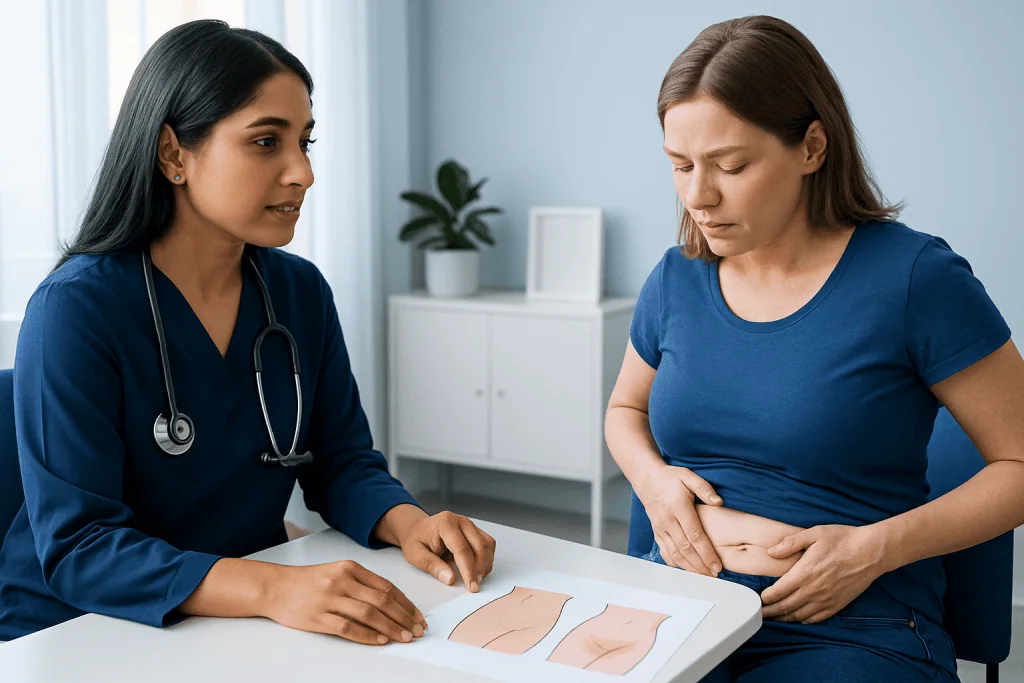
Many symptoms around a c section scar are expected during recovery. These include mild pain when moving, a pulling sensation when standing upright, temporary numbness, itching, and a feeling of tightness. The scar may look slightly raised or darker than the surrounding skin for some time. These changes often improve gradually.
Some symptoms deserve closer attention because they can suggest infection or poor wound healing. These include increasing redness, warmth that spreads, foul-smelling drainage, pus, bleeding that does not settle, the incision opening, fever, or pain that becomes more intense rather than easing. Swelling on one side, severe tenderness, or sudden worsening should also be checked.
Longer-term concerns can appear weeks to months later. A thick, itchy, or enlarging scar may represent hypertrophic scarring or a keloid. Ongoing pain can sometimes relate to entrapped nerves or scar sensitivity. A bulge near the scar, especially when coughing or straining, can point to an incisional hernia. In some cases, people with chronic pelvic symptoms may need evaluation for related conditions such as endometriosis, although this is separate from routine scar healing.
- Usually normal: mild soreness, itching, firmness, numbness, pink or darker color
- Concerning: fever, increasing redness, pus, bad odor, wound opening, worsening pain
- Needs assessment: persistent lump, growing thick scar, ongoing sharp pain, new bulge
Why c section scars can become painful, thickened, or slow to heal
Scar healing varies widely from person to person. Some factors are related to the body’s natural healing response, including genetics, skin tone, and a tendency to form thicker scars. People who have had keloids or raised scars before may be more likely to develop them again. Hormonal shifts, stress, and sleep disruption after childbirth can also affect how recovery feels, even when the incision is healing appropriately.
Medical conditions and lifestyle factors matter as well. Diabetes, obesity, anemia, smoking, poor nutrition, and immune-related conditions can make healing slower or increase infection risk. Repeated strain on the abdominal wall, heavy lifting too soon, or frequent friction from clothing may add to discomfort. In some cases, deeper scar tissue bands called adhesions can form after abdominal surgery and may contribute to pulling sensations or chronic pelvic discomfort.
Scar-related problems can also develop for reasons unrelated to visible skin healing. For example, a person may have a well-healed outer scar but still experience pain from nerve irritation, adhesions, or weakness in the abdominal wall. Rarely, people later develop a hernia in the area of a surgical incision, which may require evaluation by specialists in hernia surgery if confirmed.
How doctors assess a c section scar
Evaluation begins with a physical examination and a review of symptoms. A doctor will usually ask when the cesarean was performed, how the wound looked at first, whether there was any drainage or fever, and whether symptoms are improving or worsening. They may also ask about prior scars, medical conditions such as diabetes, smoking, or problems with wound healing after earlier surgeries.
On examination, the scar is checked for redness, swelling, tenderness, opening of the wound, signs of infection, thickening, and any bulge. If a patient reports persistent or deep pain, the doctor may assess the abdominal wall and pelvis more broadly. Imaging is not always needed, but ultrasound or other studies may be used when there is concern about a fluid collection, abscess, hernia, or other postoperative issue. Ultrasound can be a helpful, noninvasive way to evaluate a lump or swelling near the scar.
When symptoms point beyond the skin itself, further evaluation may be advised. Chronic pelvic pain, abnormal bleeding, or symptoms linked to the uterine scar may prompt referral to a gynecologist. In selected cases, doctors may use advanced imaging such as MRI to better understand deeper soft tissues, especially if the cause of pain is unclear.
Treatment options for c section scar concerns
Treatment depends on the specific issue. For routine healing, supportive care is often enough: keeping the incision clean and dry, wearing comfortable clothing, and using pain relief recommended by a doctor. If there is an infection, treatment may include wound care and antibiotics. If part of the incision opens, clinicians decide management based on the depth, drainage, and overall healing of the wound.
Raised or thickened scars may improve with time, but some people benefit from silicone-based products, pressure therapy, or referral to a dermatologist or plastic surgeon for scar-focused treatment. Persistent pain may be addressed with desensitization strategies, physical therapy, evaluation for nerve-related pain, or treatment of any underlying condition. When scar tissue contributes to ongoing symptoms, a tailored plan is more useful than assuming every case needs surgery.
If the problem involves a hernia, chronic wound complication, or another structural issue, procedural treatment may be considered. Patients with symptoms involving the uterus, pelvis, or abdominal cavity may need input from specialists in obstetrics and gynecology. Near the end of the care pathway, some international patients seek multidisciplinary assessment at Acibadem International, where JCI-accredited hospitals evaluate and treat postoperative and women’s health concerns in a coordinated way.
Self-care, scar support, and prevention tips
Practical self-care can make recovery more comfortable and may reduce avoidable complications. The incision should be kept clean and gently dried according to the surgical team’s instructions. Heavy lifting, intense abdominal strain, and high-impact activity are usually limited in the early recovery period. Good hydration, balanced meals with adequate protein, and enough rest support tissue repair.
Comfort measures can also help. Supporting the abdomen with a pillow when coughing or laughing may ease pulling sensations. Loose clothing can reduce rubbing on the scar. Once the wound is fully closed and a doctor agrees, some people begin gentle scar massage or silicone-based scar care, but these should not be started over an open or infected incision. Sun protection matters too, because new scars can darken more easily with ultraviolet exposure.
Prevention is not always fully under a patient’s control, but certain steps lower risk. Not smoking, managing blood sugar well, attending postpartum follow-up, and reporting early signs of infection can all support better healing. If there is a known history of thick scars or keloids, discussing this with the obstetric team may help shape postoperative scar management.
When to seek medical care
Prompt medical advice is appropriate if the c section scar becomes more painful instead of less painful, or if there is spreading redness, warmth, swelling, pus, bad odor, or bleeding. Fever, chills, feeling unwell, or the incision opening should be assessed without delay. These can be signs of infection or wound breakdown and are safer to evaluate early.
Medical review is also important for symptoms that develop later, such as a new bulge near the scar, persistent numbness with burning or sharp pain, or a scar that becomes very raised, itchy, or continues to enlarge. Ongoing pelvic pain, unusual bleeding, or symptoms that interfere with caring for the baby or daily function also deserve attention. Even when the cause is not serious, an examination can provide reassurance and a clear treatment plan.
Anyone who is uncertain about whether a symptom is normal should contact a qualified doctor, midwife, or surgical team. It is always reasonable to ask for review if recovery does not seem to be moving in the right direction.
Frequently asked questions
How long does a c section scar take to heal?
The skin surface often closes within days to weeks, but deeper healing continues for several months. The scar may keep changing in color, firmness, and sensitivity for up to a year or longer. This gradual remodeling is normal.
Is numbness around a c section scar normal?
Yes, a numb or altered-feeling area near the scar is common because small skin nerves are cut during surgery. Sensation often improves with time, but some reduced feeling may remain long term. Persistent burning or sharp nerve-like pain should be discussed with a doctor.
Why does a c section scar feel hard or lumpy?
A firm or slightly lumpy texture can happen as collagen builds during healing. This often softens over the following months. If the lump grows, becomes very painful, or is associated with redness or a bulge, it should be examined.
Can a c section scar cause pain months later?
It can. Ongoing discomfort may relate to scar sensitivity, nerve irritation, adhesions, or less commonly a hernia. Persistent pain deserves medical assessment so the cause can be identified and treated appropriately.
What does an infected c section scar look like?
Signs of infection can include increasing redness, warmth, swelling, pus or foul-smelling drainage, and worsening pain. Some people also develop fever or feel generally unwell. These symptoms should be assessed promptly.
Can a c section scar be improved if it becomes raised or thick?
Yes, several approaches may help depending on the type of scar. Options can include silicone-based treatments, scar massage after full closure, pressure therapy, or referral for specialist scar care. A doctor can advise which method is safest and most suitable.
References
- American College of Obstetricians and Gynecologists
- Royal College of Obstetricians and Gynaecologists
- National Health Service
- Mayo Clinic
- World Health Organization
This article is for general information only and is not a substitute for professional medical advice. Please consult a qualified doctor about your individual situation.
Explore treatments in Turkey — costs, top hospitals & a free quote
JCI-accredited · board-certified surgeons · reply within 24h