Quick answer
A keloid is a raised scar that grows beyond the original skin injury because of excess collagen production during healing. It is typically managed with a combination of methods such as corticosteroid injections, silicone therapy, pressure treatment, laser procedures, cryotherapy, or carefully planned surgical removal, depending on its size, location, and risk of recurrence.
What is keloid?
A keloid is a raised, thickened area of scar tissue that grows larger than the original wound that caused it. When the skin is injured, by a cut, burn, piercing, surgery, acne, or even a minor scratch, the body normally repairs the damage by producing collagen, a protein that gives skin its structure. In a keloid, this repair process does not switch off properly. The skin keeps producing collagen long after the wound has closed, and the scar spreads beyond the edges of the original injury. This overgrowth is what separates a keloid from an ordinary scar or from a hypertrophic scar, which is also raised but stays within the boundaries of the wound.
Understanding what is keloid and what it is not can be reassuring: a keloid is a benign (non-cancerous) growth of scar tissue. It does not spread to other organs and it is not contagious. However, keloids can be uncomfortable, itchy, or painful, and many people find them distressing because of their appearance, especially when they develop on visible areas such as the earlobes, chest, shoulders, or jawline.
Keloids can affect anyone, but they are more common in people with darker skin tones, including people of African, Asian, and Hispanic descent. They most often appear between the ages of 10 and 30, and they frequently run in families. Common trigger sites include the earlobes (often after piercing), the chest, the upper back, the shoulders, and the jaw. In the international classification of diseases, keloids are coded as L91.0, under hypertrophic disorders of the skin.
Symptoms of keloid
Keloid symptoms usually develop gradually, often weeks to months after the skin injury has healed. Some keloids appear within a few months of the injury, while others take a year or longer to become noticeable. In some cases, people do not remember any injury at all, because the trigger was as minor as an insect bite or a small acne spot.
Common keloid symptoms include:
- A raised, firm lump of scar tissue that extends beyond the borders of the original wound.
- Slow, progressive growth over months or years, sometimes continuing long after the injury.
- Color changes: keloids often start pink, red, or purple and may darken over time, becoming brown or noticeably darker than the surrounding skin.
- Itching in and around the scar, which can be persistent and bothersome.
- Pain or tenderness, especially when the keloid is pressed or rubbed by clothing or jewelry.
- A hard, rubbery, or smooth and shiny surface, usually without hair, because normal skin structures such as hair follicles are replaced by scar tissue.
- Restricted movement in some cases, if a large keloid forms over or near a joint and the tight scar tissue limits stretching.
Symptoms can differ depending on the stage of the keloid. Early, actively growing keloids tend to be redder, softer, itchier, and more tender. Older, mature keloids are often darker, firmer, and less symptomatic, although they may still itch or ache from time to time. Size and shape also vary: earlobe keloids are often round or lobe-shaped nodules, while keloids on the chest or shoulders may spread outward in irregular, claw-like extensions, in fact, the word keloid comes from a Greek term meaning “crab’s claw.”
It is worth repeating that a keloid is not a sign of skin cancer. However, because other skin growths can occasionally look similar, any lump that changes rapidly, bleeds, ulcerates, or behaves unusually should be examined by a doctor rather than assumed to be a keloid.
Causes and risk factors
The exact keloid causes are not fully understood, but the central problem is an exaggerated wound-healing response. After an injury, specialized cells called fibroblasts produce collagen to rebuild the skin. In people prone to keloids, these fibroblasts remain overactive, producing excessive amounts of thick, disorganized collagen that piles up into a raised scar and keeps expanding beyond the wound.
Almost any form of skin injury or inflammation can trigger a keloid in a susceptible person, including:
- Cuts, scrapes, and surgical incisions
- Burns, including minor ones
- Ear or body piercings and tattoos
- Acne, chickenpox, or other inflammatory skin conditions
- Insect bites and vaccination or injection sites
- In rare cases, no identifiable injury at all (so-called spontaneous keloids, which may follow unnoticed minor trauma)
Several factors increase the risk of developing keloids:
- Skin tone: keloids occur in all skin types but are considerably more common in people with darker skin.
- Family history: keloids often run in families, which points to a genetic tendency. If one or both of your parents form keloids, your own risk is higher.
- Age: the condition most often begins between the ages of 10 and 30. Children before puberty and older adults develop new keloids less often.
- Location of injury: areas under skin tension or with certain tissue characteristics, the chest, upper back, shoulders, jawline, and earlobes, are especially prone.
- Hormonal factors: keloids sometimes enlarge or become more symptomatic during puberty or pregnancy, suggesting that hormones may play a role.
- Previous keloids: a person who has formed one keloid is more likely to form others after future skin injuries.
Importantly, keloids are not caused by poor wound care alone, and developing one does not mean you did anything wrong. The tendency is largely determined by biology. That said, in people known to be keloid-prone, avoiding unnecessary skin trauma, such as elective piercings, tattoos, or non-essential cosmetic procedures, can reduce the chance of new keloids forming.
Diagnosis
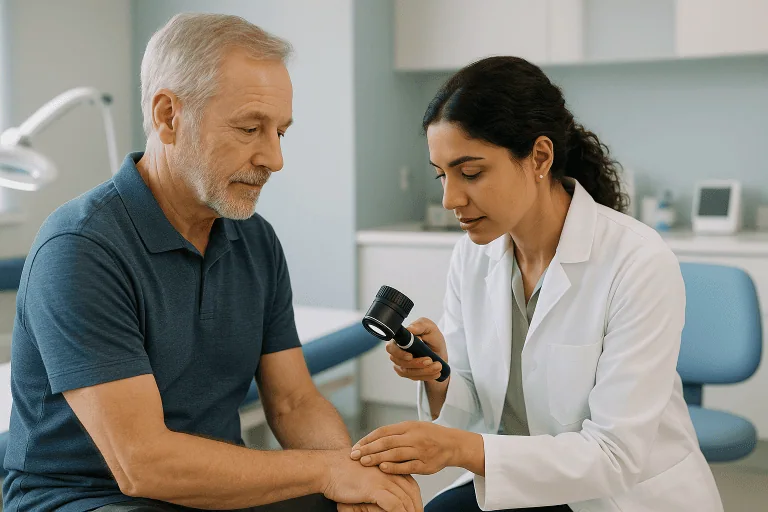
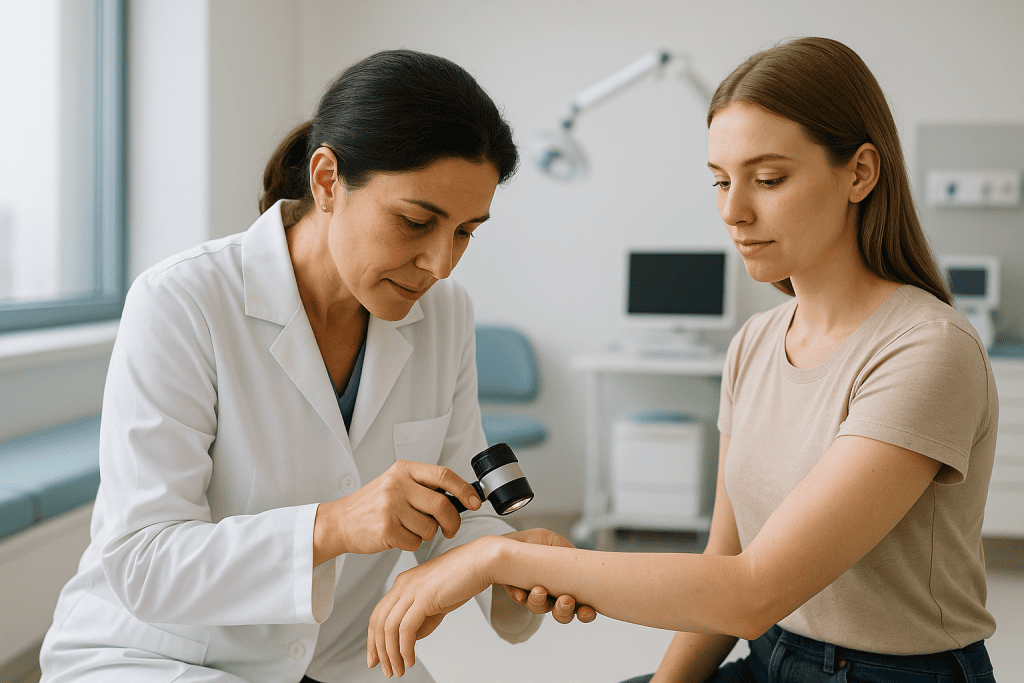
Keloid diagnosis is usually straightforward and made clinically, meaning the doctor can identify the condition by examining the skin and asking about your history. There is no blood test for keloids, and imaging scans are not normally needed.
During the assessment, your doctor, typically a dermatologist, a specialist in skin conditions, will usually:
- Take a history: when the growth appeared, whether there was an injury, piercing, surgery, or acne at that site, how the lesion has changed over time, and whether you or family members have had similar scars before.
- Examine the lesion: checking whether the scar extends beyond the borders of the original wound (the key feature that distinguishes a keloid from a hypertrophic scar), and assessing its color, firmness, tenderness, and location.
- Look for typical sites: earlobes, chest, shoulders, upper back, and jawline are classic keloid locations, which supports the diagnosis.
In most cases, no further testing is required. However, if the growth looks unusual, for example, if it appeared without any known injury, is growing very quickly, bleeds, ulcerates, or has an atypical appearance: the doctor may recommend a skin biopsy. A biopsy is a minor procedure in which a small sample of tissue is removed and examined under a microscope. This is done to rule out other conditions that can occasionally resemble a keloid, such as certain benign or, rarely, malignant skin tumors. It is worth knowing that a biopsy on a keloid-prone person is itself a skin injury and can potentially enlarge the lesion, so doctors weigh this decision carefully and only biopsy when there is genuine diagnostic doubt.
Part of the diagnosis is also distinguishing a keloid from a hypertrophic scar, because the two are managed somewhat differently. Hypertrophic scars stay within the wound boundaries, often improve on their own over one to two years, and respond more predictably to treatment. Keloids extend beyond the wound, rarely shrink without treatment, and have a well-known tendency to come back after removal.
Treatment options
There is no single keloid treatment that works for everyone, and honesty matters here: keloids are notoriously difficult to eliminate completely, and recurrence after treatment is common. The goals of treatment are usually to flatten and soften the scar, relieve itching and pain, improve appearance, and reduce the chance of regrowth. Doctors often combine several approaches, because combination therapy tends to give better results than any single method alone. Conditions such as keloids are typically managed within a hospital’s dermatology department; at institutions such as Acibadem, dermatologists coordinate this care and may involve plastic surgeons for selected cases.
Watchful waiting
Not every keloid needs active treatment. If a keloid is small, stable, and not causing symptoms, your doctor may suggest simply monitoring it. Because every treatment carries some risk, including, paradoxically, the risk of stimulating further scar growth, leaving a quiet keloid alone is sometimes the most sensible option.
Corticosteroid injections
Injecting a corticosteroid (an anti-inflammatory medication) directly into the keloid is one of the most widely used first-line treatments. The steroid helps calm the overactive scar tissue, which can flatten the keloid, soften it, and reduce itching and pain. Treatment usually involves a series of injections spaced several weeks apart. Injections often improve keloids but rarely make them disappear entirely, and possible side effects include thinning or lightening of the skin at the injection site.
Silicone sheets and pressure therapy
Silicone gel sheets or silicone gels applied over the scar for many hours a day, often for several months, may help flatten and soften keloids and are commonly used to help prevent them after surgery in at-risk people. Pressure therapy, wearing a custom-fitted pressure garment or, for earlobe keloids, special pressure earrings, applies constant gentle compression that can discourage scar regrowth. Both approaches require patience and consistent use over months.
Cryotherapy
Cryotherapy uses extreme cold (usually liquid nitrogen) to freeze and shrink keloid tissue. It tends to work best for smaller keloids and is often combined with steroid injections. A known drawback is that freezing can lighten the treated skin, which is a particular consideration for people with darker skin tones.
Laser therapy
Certain lasers can reduce the redness of a keloid and may help flatten it or ease symptoms, particularly when combined with steroid injections or silicone therapy. Laser treatment usually requires multiple sessions, and results vary from person to person.
Surgical removal
Surgery can remove a keloid, but it is never used alone in most modern practice, because cutting the skin creates a new wound, and in a keloid-prone person, that wound frequently produces a new keloid, sometimes larger than the original. For this reason, surgery is almost always combined with additional measures to reduce recurrence, such as steroid injections into the healing wound, pressure therapy, silicone sheeting, or, in selected cases, a carefully controlled low dose of superficial radiation therapy delivered shortly after the operation. Your doctor will discuss whether surgery is appropriate for your particular keloid and what combination of after-care offers the best chance of keeping it from returning.
Other medications
In some situations, doctors may inject other medications, such as certain chemotherapy agents used in very small, localized doses, either alone or mixed with steroids, to suppress scar-forming cells. These are specialist treatments considered case by case.
Prevention in keloid-prone people
If you know you form keloids, prevention is an important part of management. This may include avoiding elective piercings and tattoos, telling any surgeon about your keloid history before a planned operation, treating acne and skin infections promptly, and using silicone sheeting or pressure on fresh wounds under medical guidance.
Living with keloid / outlook
Keloids are benign and do not threaten your general health, but living with them can still be challenging. Persistent itching or tenderness can be irritating, keloids over joints can occasionally limit movement, and visible keloids may affect self-confidence. It is entirely reasonable to seek treatment for cosmetic or emotional reasons as well as physical ones.
The honest outlook is mixed. Keloids rarely go away completely on their own, although some become less red, softer, and less symptomatic over the years. Treatment can often flatten, soften, and shrink keloids and relieve symptoms, but complete and permanent removal cannot be guaranteed, and recurrence after any treatment, including surgery, is a well-recognized possibility. Managing keloids is often a long-term process involving several treatment sessions and ongoing prevention, rather than a one-time fix.
Practical steps that may help in daily life include protecting keloids from friction (soft clothing, avoiding jewelry that rubs), using sun protection on the scar, because sun exposure can darken keloids and make them more noticeable, and keeping realistic expectations about treatment while working with your doctor on a stepwise plan. If a keloid is affecting your mood or self-image, mentioning this to your doctor is worthwhile; it is a legitimate part of your care.
Frequently asked questions
What is keloid and how is it different from a normal scar?
A keloid is an overgrown scar in which the skin produces too much collagen after an injury, causing the scar to rise above the skin and spread beyond the edges of the original wound. A normal scar stays within the wound boundaries and usually fades and flattens over time, whereas a keloid keeps growing and rarely shrinks without treatment.
Can a keloid go away on its own?
In most cases, no. Keloids rarely disappear without treatment, although they may become flatter, paler, and less itchy over many years. This is different from hypertrophic scars, which often improve on their own within one to two years. If a keloid bothers you, treatment options exist, but spontaneous complete resolution is uncommon.
Is a keloid dangerous or a sign of cancer?
A keloid is a benign growth of scar tissue and is not cancer, nor does it turn into cancer. However, because some other skin growths can look similar, a lesion that grows very rapidly, bleeds, ulcerates, or appeared without any injury should be checked by a doctor, who may recommend a biopsy to confirm the diagnosis.
What is the best keloid treatment?
There is no single best treatment for every keloid. Doctors commonly start with corticosteroid injections, silicone sheeting, or pressure therapy, and may add cryotherapy, laser treatment, or surgery combined with anti-recurrence measures for larger or resistant keloids. Combination approaches usually work better than any single method, and your doctor will tailor the plan to the keloid’s size, location, and your history.
Will a keloid come back after removal?
It can. Recurrence is one of the defining challenges of keloids, and surgical removal on its own has a high chance of the keloid returning, sometimes larger than before. That is why surgery is generally combined with additional treatments such as steroid injections, pressure therapy, silicone sheeting, or radiation in selected cases. Even with combination treatment, no approach can guarantee the keloid will not return.
How can I prevent keloids if they run in my family?
If you are keloid-prone, the most effective strategy is to avoid unnecessary skin trauma: think carefully before getting piercings or tattoos, treat acne and skin infections early, and always tell surgeons and other health professionals about your keloid history before procedures. After any unavoidable wound, your doctor may recommend silicone sheeting, pressure therapy, or early steroid injections to lower the risk of a keloid forming.
Do keloid injections hurt, and how many will I need?
Steroid injections into a keloid can be briefly uncomfortable, because scar tissue is dense, but the discomfort is usually short-lived, and doctors can take steps to reduce it. Most people need a series of injections, typically spaced several weeks apart, and the total number varies depending on how the keloid responds. Improvement is often gradual rather than immediate.
When to see a doctor
Keloids themselves are not medical emergencies, but you should arrange a medical review if a scar keeps growing beyond the original wound, becomes increasingly itchy or painful, restricts your movement, or affects your confidence and quality of life. Early assessment matters because smaller, newer keloids often respond better to treatment than large, long-established ones.
Seek prompt medical attention if you notice any of the following warning signs:
- Rapid growth of the lesion over days or weeks, rather than the slow growth typical of keloids.
- Bleeding, oozing, or an open sore (ulceration) on the surface of the growth.
- Signs of infection around the scar, such as spreading redness, warmth, swelling, pus, or fever.
- A growth with no known injury that looks unusual or does not behave like your previous keloids.
- Severe or worsening pain that is not explained by friction or pressure on the scar.
- Loss of movement in a joint caused by tightening scar tissue.
A dermatologist can confirm whether the growth is truly a keloid, rule out other conditions where needed, and discuss which treatment plan, if any, suits your situation. Bringing information about when the lesion appeared, any triggering injury, previous treatments you have tried, and your family history of scarring will help your doctor assess it accurately.
Medically reviewed by the Acıbadem International Medical Board September 2, 2026
See our medical review board →
Update history
- PublishedJune 14, 2026
- Medical review approvedSeptember 2, 2026
- Last content updateSeptember 2, 2026