Inferior Vena Cava: An Evidence-Based Guide for Patients

The inferior vena cava is the main vein that returns blood from the legs, pelvis, and abdomen to the heart. Common concerns involving the inferior vena cava include blood clots, external compression, and congenital differences in anatomy.
Key Takeaways
- The inferior vena cava is the main vein that returns blood from the legs, pelvis, and abdomen to the heart.
- Common concerns involving the inferior vena cava include blood clots, external compression, and congenital differences in anatomy.
- Symptoms may include leg swelling, pelvic discomfort, abdominal vein enlargement, or signs of reduced blood flow.
- Diagnosis often relies on ultrasound, CT, MRI, and blood vessel imaging when needed.
- Treatment depends on the cause and may include medication, monitoring, or vascular procedures.
- New leg swelling, chest symptoms, or sudden pain should be assessed promptly by a doctor.
Medically reviewed by the Acıbadem International Medical Board — July 25, 2026
The inferior vena cava is the large vein that carries blood from the lower body back to the heart. Most people never notice it, but conditions affecting this vein can cause leg swelling, pain, or circulation problems and may require medical evaluation.
Overview: what the inferior vena cava does
The inferior vena cava is the body’s largest vein below the diaphragm. Its job is to collect oxygen-poor blood from the legs, pelvis, and abdominal organs and carry it back to the right side of the heart, where the blood can then travel to the lungs for oxygen. In simple terms, it is a major return pathway in the circulation system.
This vein runs upward through the abdomen, alongside the spine, and passes through the diaphragm before reaching the heart. It receives blood from several important veins, including the iliac veins from the legs and pelvis, the renal veins from the kidneys, and veins that drain parts of the liver and abdomen. Because of its size and central role, a problem in the inferior vena cava can affect blood flow from a wide part of the body.
Many people learn about the inferior vena cava during imaging tests, pregnancy care, or evaluation of swelling, clotting, or abdominal conditions. In many cases, it is entirely normal and causes no symptoms. When it is affected, however, the issue is usually not the vein itself alone but an underlying condition such as a clot, pressure from a nearby structure, or an anatomical variation present from birth.
How problems of the inferior vena cava can affect health
Conditions involving the inferior vena cava are uncommon compared with more familiar vein problems in the legs, but they are clinically important. Blood may have difficulty returning to the heart if the vein is narrowed, compressed, blocked by a clot, or altered by a congenital difference. When flow slows down, pressure can build in the lower body and lead to swelling or visible enlarged veins.
One important problem is inferior vena cava thrombosis, which means a blood clot forms in or extends into this large vein. This may happen on its own, develop from a deep vein thrombosis, or be linked to cancer, trauma, a clotting disorder, or a medical device such as an IVC filter. Other issues include compression by pregnancy, large abdominal masses, liver disease, or scarring in nearby tissues.
Some people are born with variations in the inferior vena cava, such as duplication, partial absence, or unusual drainage patterns. These differences may never cause symptoms, but in some people they can contribute to venous congestion or a tendency toward clot formation, especially at a younger age. Because symptoms can overlap with other vascular conditions, careful diagnosis is important.
Symptoms and warning signs

Symptoms depend on the location, severity, and cause of the problem. Some people have no symptoms at all, and the condition is found during imaging for another reason. Others develop gradual or sudden symptoms related to poor venous return from the lower body.
Possible symptoms include:
- Swelling in one or both legs
- Leg heaviness, aching, or tightness
- Pelvic, groin, or lower abdominal discomfort
- Visible enlarged veins on the abdomen or flanks
- Skin color changes in the legs
- Reduced exercise tolerance if blood return is significantly affected
If a clot is present, symptoms may resemble DVT but can be more extensive, with swelling involving both legs or the pelvis. Rarely, reduced kidney drainage or liver-related effects can occur depending on the level of blockage. If a clot breaks off and travels to the lungs, it can cause a pulmonary embolism, which may lead to sudden shortness of breath, chest pain, or dizziness and needs urgent medical care.
Pregnant patients may notice dizziness, nausea, or lightheadedness when lying flat later in pregnancy because the enlarged uterus can compress the inferior vena cava. This is often relieved by changing position, especially lying on the left side. While usually temporary, persistent symptoms should still be discussed with a clinician.
Causes and risk factors
Doctors often think about inferior vena cava problems in categories: clotting, compression, injury, and congenital anatomy. A clot may form because blood flow is slowed, the vein wall is affected, or the blood is more likely to clot than usual. These mechanisms are similar to those seen in other venous disorders.
Risk factors for inferior vena cava thrombosis or blockage may include prolonged immobility, recent surgery, trauma, pregnancy and the postpartum period, certain cancers, inherited or acquired clotting disorders, and the presence of venous catheters or filters. Some inflammatory conditions and severe dehydration may also contribute by increasing clot risk in susceptible individuals.
External compression can happen when a nearby structure presses on the vein. Examples include pregnancy, enlarged lymph nodes, abdominal tumors, retroperitoneal fibrosis, or significant liver enlargement. In some situations, the vein becomes narrowed over time, reducing blood return from the lower body.
Congenital variations of the inferior vena cava are usually discovered incidentally on CT or MRI. Although many are harmless, they can matter during surgery, vascular procedures, or the evaluation of unexplained clots in younger adults. Knowing the anatomy helps doctors plan treatment safely and accurately.
Diagnosis and tests
Evaluation begins with the person’s symptoms, medical history, and physical examination. A doctor may ask about leg swelling, prior blood clots, recent surgery, cancer history, pregnancy, prolonged travel, catheter use, or family history of clotting disorders. The exam may look for leg edema, varicose collateral veins, skin changes, abdominal tenderness, or signs of related conditions.
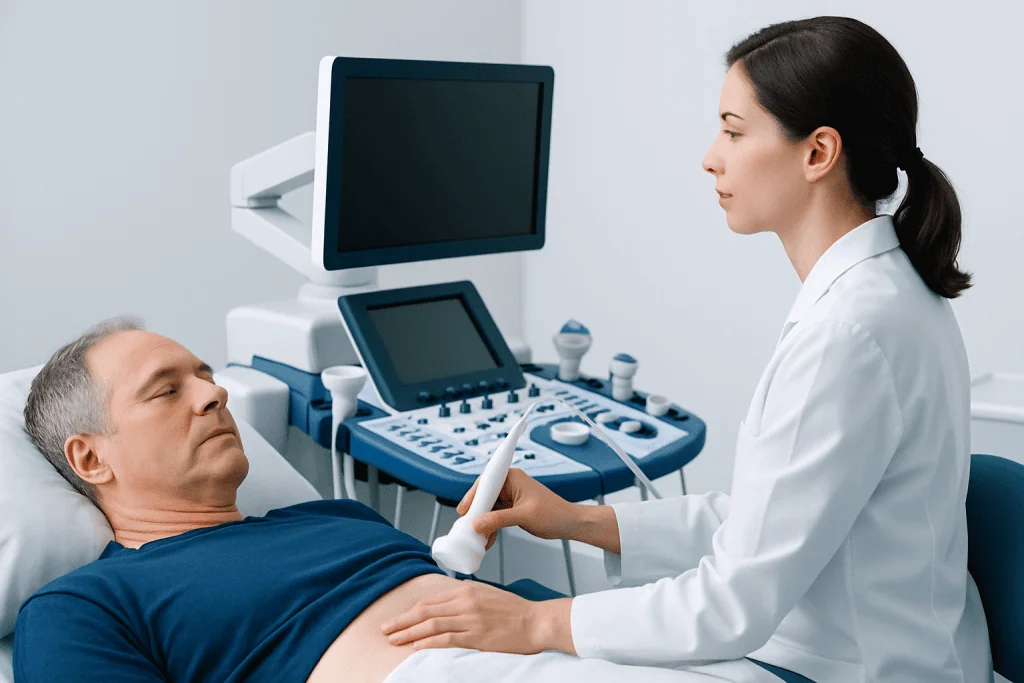
Imaging is often essential because the inferior vena cava lies deep in the body and cannot be assessed by symptoms alone. Ultrasound may help evaluate the leg and pelvic veins and can sometimes identify changes in blood flow. CT or MRI venography is often more informative for visualizing the inferior vena cava itself, showing clots, narrowing, compression, or anatomical differences.
Additional tests may be used based on the situation. Blood tests can help assess clotting risk, kidney function, inflammation, or underlying illness. If chest symptoms are present, doctors may evaluate for complications such as pulmonary embolism. In selected cases, catheter-based venography is used to define the vein in detail and to guide treatment.
Because symptoms can overlap with other vascular conditions, a doctor may also consider issues such as chronic venous insufficiency, heart failure, kidney disease, liver disease, or lymphatic swelling. A clear diagnosis is important before starting treatment, especially if invasive procedures are being considered.
Treatment options
Treatment depends on the underlying cause, how severe the blockage is, whether a clot is present, and whether complications have developed. If the main problem is a blood clot, treatment often includes anticoagulant medication to reduce the risk of clot growth and new clot formation. The exact treatment plan varies from person to person and should be guided by a qualified physician.
When symptoms are significant or blood flow is seriously impaired, specialists may consider catheter-based treatments to remove or break up clot, or procedures to open a narrowed segment. In carefully selected cases, a stent may be placed to support the vein and improve blood flow. These approaches are more likely to be considered when there is major obstruction, ongoing symptoms, or a high risk of long-term complications. Depending on the individual case, care may involve interventional radiology or vascular surgery.
If external compression is the cause, treatment focuses on the condition pressing on the vein. That might mean monitoring during pregnancy, addressing inflammation or fibrosis, or treating a mass if one is present. Supportive measures, such as leg elevation and compression therapy when appropriate, may also help relieve symptoms from venous congestion.
People with complex anatomy, recurrent clotting, or complications may benefit from care coordinated by specialists in vascular medicine, radiology, surgery, and cardiology. Near the end of the care pathway, some international patients may seek evaluation at centers such as Acibadem International, where multidisciplinary specialists and JCI-accredited hospitals diagnose and treat vascular conditions using individualized plans.
Self-care, prevention, and living with an inferior vena cava problem
Not every inferior vena cava issue can be prevented, but general vein-health measures can lower the risk of clotting and improve comfort. Staying active, moving the legs during long travel, maintaining hydration, and following post-surgical mobility advice can support healthy blood flow. People who have known clotting risks should discuss prevention strategies with their doctor before major surgery, pregnancy, or long flights.
For those already diagnosed with venous disease, self-care may include taking prescribed medication exactly as directed, attending follow-up imaging appointments, and using compression garments if recommended. It is important not to start or stop anticoagulants without medical guidance. Because these medicines can increase bleeding risk, patients should ask their clinician about safety precautions, interactions, and what to do if a dose is missed.
Healthy lifestyle choices can also support recovery and long-term vascular health. These may include smoking cessation, weight management, regular walking, and managing chronic conditions such as cancer, kidney disease, or heart disease. Patients with a history of deep vein thrombosis may need longer-term follow-up to monitor for recurrence or post-thrombotic symptoms.
Any new or worsening swelling, pain, shortness of breath, or reduced exercise tolerance should be reported promptly. If a person has persistent venous symptoms despite medication, referral for advanced vascular imaging or cardiovascular surgery assessment may be appropriate in selected cases.
When to seek medical care
Medical review is advisable if there is new swelling in one or both legs, unexplained pelvic or abdominal vein enlargement, ongoing leg heaviness, or discomfort that does not improve. These symptoms do not always mean there is an inferior vena cava problem, but they deserve assessment, especially in someone with clotting risk factors.
Urgent medical care is needed for sudden chest pain, shortness of breath, fainting, coughing up blood, or severe rapid-onset leg swelling. These can be warning signs of a serious clotting complication such as pulmonary embolism. People who are pregnant, have cancer, or recently had surgery should be especially cautious about new swelling or breathing symptoms.
Anyone with a known inferior vena cava condition should seek guidance if symptoms worsen, if there are signs of bleeding while on anticoagulants, or if there are concerns about treatment side effects. Prompt evaluation helps doctors distinguish between routine recovery, chronic symptoms, and a problem that needs urgent attention.
Frequently asked questions
What is the inferior vena cava in simple terms?
The inferior vena cava is a large vein that carries blood from the lower body back to the heart. It collects blood from the legs, pelvis, and abdomen and is an essential part of normal circulation.
Can a person live normally with an inferior vena cava abnormality?
Many people with a mild anatomical variation or a treated inferior vena cava problem live normal lives. The outlook depends on the cause, whether there is a clot or blockage, and how well blood flow is restored or managed.
What symptoms suggest an inferior vena cava blockage?
Possible symptoms include swelling of one or both legs, leg pain or heaviness, visible abdominal veins, and pelvic discomfort. If a clot is involved, symptoms can appear suddenly and may be more severe.
Is inferior vena cava thrombosis the same as deep vein thrombosis?
It is related but not exactly the same. Inferior vena cava thrombosis means a clot is in the large central vein, while deep vein thrombosis usually refers to clots in the deep veins of the legs or pelvis; in some cases, a DVT can extend into the inferior vena cava.
How is an inferior vena cava problem diagnosed?
Doctors usually combine a medical history and examination with imaging tests. Ultrasound, CT, MRI, or venography may be used to show a clot, narrowing, compression, or a congenital variation.
Can pregnancy affect the inferior vena cava?
Yes. In later pregnancy, the uterus can temporarily press on the inferior vena cava, especially when lying flat, which may cause lightheadedness or discomfort. Changing position often helps, but persistent or concerning symptoms should be discussed with a clinician.
References
- National Heart, Lung, and Blood Institute
- Society for Vascular Surgery
- American Heart Association
- National Institute of Diabetes and Digestive and Kidney Diseases
- Radiological Society of North America
This article is for general information only and is not a substitute for professional medical advice. Please consult a qualified doctor about your individual situation.
Explore treatments in Turkey — costs, top hospitals & a free quote
JCI-accredited · board-certified surgeons · reply within 24h

More from the Health Library



Related Specialists

Dr. Mesil Acar
Inpatient Clinic Physicians Clinical Service
Dr. Ali Riza Özdurmuş
Oral and Dental Health
Psk. Duygu Gökyıldırım Uslu
Psychology
Prof. Dr. Kutsal Turhan
Thoracic Surgery