

Ball and Socket Joint — Explained by Medical Evidence, Not Myths

A ball and socket joint allows movement in multiple planes, including rotation. The shoulder is more mobile, while the hip is generally more stable and weight-bearing.
Key Takeaways
- A ball and socket joint allows movement in multiple planes, including rotation.
- The shoulder is more mobile, while the hip is generally more stable and weight-bearing.
- Healthy cartilage, muscles, tendons, and ligaments are all important for smooth joint function.
- Pain, stiffness, weakness, instability, or reduced movement can signal injury or disease.
- Diagnosis may involve physical examination and imaging such as X-ray or MRI.
- Treatment depends on the cause and may include exercise, medication, rehabilitation, or surgery.
A ball and socket joint is a type of synovial joint that allows movement in many directions, including rotation. In the human body, the shoulder and hip are the main examples, and their wide range of motion depends on coordinated support from cartilage, ligaments, muscles, and surrounding tissues.
What Is a Ball and Socket Joint?
A ball and socket joint is a joint in which the rounded head of one bone fits into a cup-like hollow of another bone. This design allows a wide range of movement in several directions at once. In practical terms, it means the joint can bend, straighten, move away from the body, move toward it, and rotate.
In the human body, the two classic examples are the shoulder and the hip. The shoulder joint provides exceptional mobility for reaching, lifting, and rotating the arm. The hip joint also moves in multiple directions, but it is built for greater stability because it supports body weight during standing, walking, and climbing.
Although the phrase may sound simple, a ball and socket joint is more than two bones fitting together. Smooth cartilage covers the bone surfaces, a joint capsule surrounds the area, synovial fluid reduces friction, and muscles, tendons, and ligaments help guide and stabilize movement. When any of these structures are irritated, injured, or worn, symptoms can develop.
How Ball and Socket Joints Work
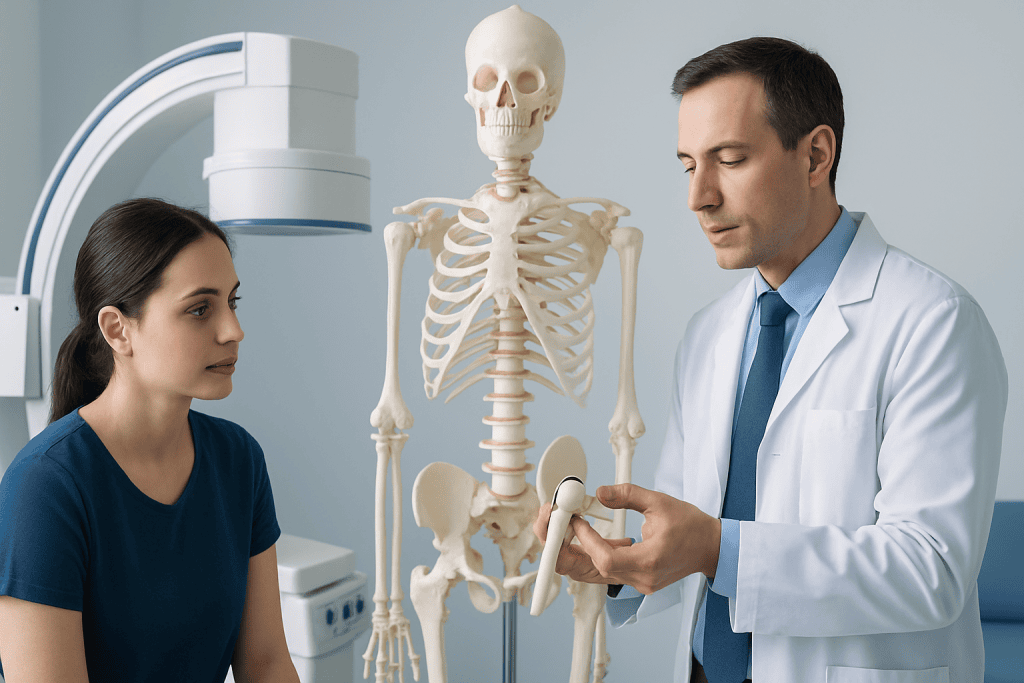
Ball and socket joints are part of the synovial joint family, which means they are enclosed in a capsule and lined with a membrane that produces lubricating fluid. This fluid helps the joint move smoothly and helps nourish cartilage. The cartilage itself acts as a low-friction, shock-absorbing surface.
The rounded “ball” portion moves within the “socket” while surrounding soft tissues keep the joint controlled. Muscles generate movement, tendons connect muscles to bone, and ligaments help limit excessive motion. In the shoulder, the socket is relatively shallow, which favors movement but also increases the need for muscular stability. In the hip, the socket is deeper, which improves containment and steadiness.
These joints allow several key motions:
- Flexion and extension, such as lifting the arm forward and backward
- Abduction and adduction, such as moving the leg out to the side and back in
- Internal and external rotation
- Circumduction, a circular combination of movements
This broad movement pattern is what makes ball and socket joints essential for daily function, sports, and posture. It also explains why problems in these joints can have a noticeable effect on comfort and mobility.
Shoulder and Hip: Similar Design, Different Demands
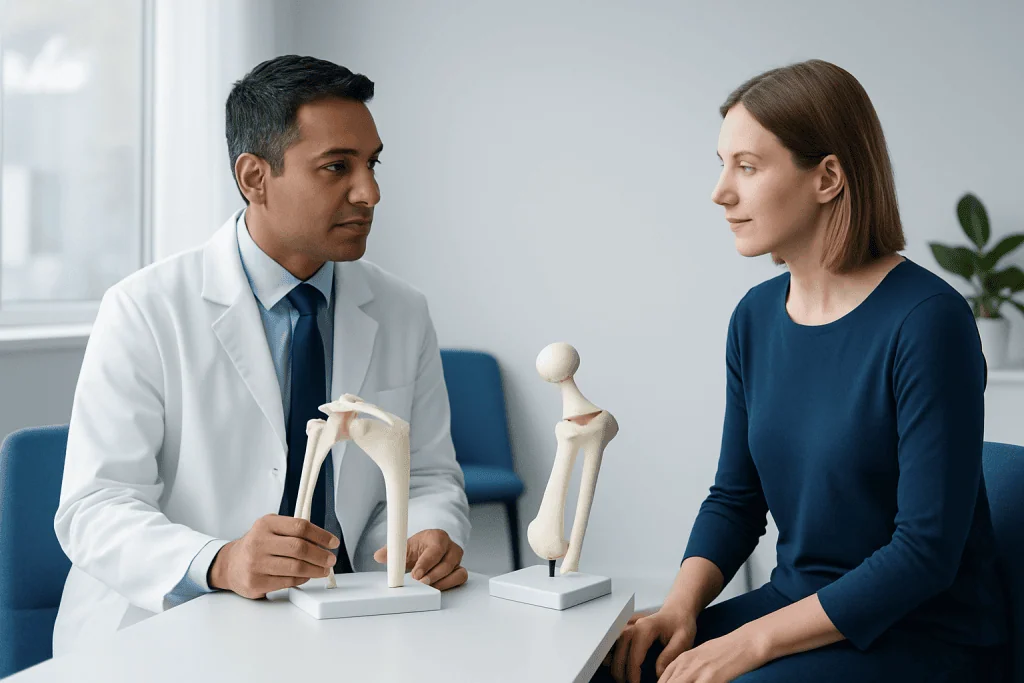
The shoulder and hip are both ball and socket joints, but they do not behave in the same way. The shoulder is optimized for mobility. It allows the hand to reach overhead, behind the back, and across the body. Because the socket is shallow, the joint relies heavily on the rotator cuff muscles and other stabilizing tissues to stay centered during movement.
The hip is optimized for stability and load-bearing. Its deeper socket and strong surrounding ligaments help it tolerate body weight and repeated impact. Even so, it still permits bending, rotation, and side-to-side motion that are necessary for walking, sitting, and athletic activity.
This difference helps explain why shoulder problems often involve instability, tendon irritation, or impingement, while hip problems may relate more to cartilage wear, labral injury, structural shape differences, or arthritis. Conditions affecting these joints can overlap with broader joint pain symptoms, but the underlying cause is not always the same.
Understanding these differences matters because treatment is usually based not only on where the pain is, but also on which structure is involved and how the joint is being used in everyday life.
Common Problems That Affect a Ball and Socket Joint
A ball and socket joint can be affected by injury, overuse, age-related changes, inflammation, or structural differences. Some problems begin suddenly after a fall or twist, while others develop gradually over time. Symptoms vary depending on whether the main issue is in cartilage, tendons, ligaments, bone, or the joint lining.
Common examples include sprains, tendonitis, bursitis, labral tears, dislocation, and osteoarthritis. In the shoulder, rotator cuff disorders are also a frequent cause of pain and weakness. In the hip, cartilage wear and impingement can make movement painful or stiff. Some people may eventually develop osteoarthritis in a ball and socket joint, especially with aging or prior injury.
Typical symptoms can include:
- Pain during movement or at rest
- Stiffness or reduced range of motion
- Clicking, catching, or grinding sensations
- Weakness or a sense that the joint may give way
- Swelling or tenderness around the joint
- Instability after trauma, especially in the shoulder
Not every painful shoulder or hip problem comes from the joint itself. Nerves, muscles, referred pain from the spine, and inflammatory conditions can sometimes mimic a ball and socket joint disorder, which is why a proper evaluation is important.
How Doctors Diagnose Joint Problems
Diagnosis usually starts with a detailed history and physical examination. A doctor may ask when symptoms began, whether there was an injury, which movements trigger discomfort, and whether the person has weakness, locking, or night pain. The examination often includes checking range of motion, strength, tenderness, stability, gait, and functional movement patterns.
Imaging tests are selected based on the suspected problem. X-rays help assess bone alignment, fractures, dislocation, and arthritis changes. Ultrasound may help evaluate some soft tissue issues, especially around the shoulder. MRI is often used when there is concern about cartilage, tendons, labrum, or other internal joint structures. In some cases, CT imaging may help define bone anatomy more clearly.
Laboratory tests are not always needed, but they may be useful if a clinician suspects infection, inflammatory arthritis, or a systemic condition. If symptoms are complex, referral to a specialist in orthopedics, sports medicine, rheumatology, or rehabilitation may be appropriate.
The goal of diagnosis is not only to name the problem, but also to understand its severity and effect on daily life. This helps guide whether rest and rehabilitation are likely to be enough or whether more advanced treatment should be considered.
Treatment Options for Ball and Socket Joint Conditions
Treatment depends on the specific diagnosis, symptom severity, age, activity level, and overall health. Many joint problems improve with conservative care. This may include temporary activity modification, guided exercises, physical therapy, pain-relieving medication, and strategies to improve flexibility and muscle support around the joint.
Rehabilitation is often central to recovery. For shoulder conditions, strengthening the rotator cuff and shoulder blade muscles can improve control and reduce strain. For hip conditions, exercises may focus on the gluteal muscles, mobility, and gait mechanics. In selected cases, injections may be recommended to reduce pain and inflammation, though their role varies depending on the diagnosis.
When symptoms are severe, function is significantly limited, or structural damage is advanced, surgery may be considered. Depending on the condition, options may include arthroscopy to assess and treat certain internal joint problems, hip replacement for advanced hip joint damage, or shoulder surgery for instability, tendon tears, or other structural issues.
Care plans are individualized. Near the end of the treatment pathway, some people may need a combination of rehabilitation, pain management, and lifestyle changes to maintain progress. Acibadem International’s multidisciplinary specialists and JCI-accredited hospitals diagnose and treat shoulder and hip conditions for international patients when advanced evaluation or treatment is needed.
Prevention and Everyday Joint Care
Not every ball and socket joint problem can be prevented, but daily habits can reduce strain and support long-term function. Regular activity helps maintain joint movement and muscle strength, while gradual training helps tissues adapt to increased demand. Sudden increases in intensity, poor technique, and repetitive overload are common contributors to preventable discomfort.
Helpful self-care measures include warming up before exercise, using proper form during lifting or sports, and allowing enough recovery after intense activity. Maintaining a healthy body weight can be especially beneficial for the hip, which carries body weight with every step. Good posture and ergonomic work habits may reduce shoulder strain during desk work and repetitive tasks.
People with mild symptoms may benefit from temporary rest, ice or heat as appropriate, and avoiding movements that sharply worsen pain. However, prolonged immobility is usually not helpful unless a doctor specifically advises it. Gentle, guided movement is often better than complete inactivity.
If symptoms continue despite self-care, it is sensible to seek medical advice rather than repeatedly pushing through pain. Early assessment may help prevent a manageable problem from becoming more limiting over time.
When to Seek Medical Care
Medical review is appropriate if pain lasts more than a few days, keeps returning, limits normal activity, or is associated with weakness or stiffness. A person should also seek care if the joint feels unstable, catches or locks, or if there is visible swelling that does not improve.
Urgent evaluation is important after a major injury, a suspected dislocation, inability to bear weight, marked loss of movement, severe pain, or signs that could suggest infection such as fever, redness, and a hot swollen joint. These situations need prompt professional assessment rather than home treatment alone.
Because shoulder and hip symptoms can come from different structures, a clear diagnosis matters. Timely evaluation can help distinguish a minor strain from problems such as a labral tear, fracture, inflammatory condition, or advanced degeneration.
Frequently asked questions
What is the main function of a ball and socket joint?
Its main function is to allow movement in multiple directions while still providing support. This includes bending, straightening, side-to-side movement, and rotation.
Which joints in the body are ball and socket joints?
The shoulder and the hip are the primary ball and socket joints in the human body. The shoulder is built for greater mobility, while the hip is designed for stability and weight-bearing.
Why does a ball and socket joint become painful?
Pain can develop from injury, overuse, inflammation, tendon problems, cartilage damage, instability, or arthritis. The exact cause often depends on which structure inside or around the joint is affected.
Can a ball and socket joint heal without surgery?
Many problems can improve without surgery, especially strains, mild inflammation, and some overuse injuries. Treatment commonly includes rest, exercise, physical therapy, and other conservative measures guided by a clinician.
What is the difference between the shoulder and hip ball and socket joints?
Both have a rounded bone end fitting into a socket, but the shoulder has a shallower socket and greater range of motion. The hip has a deeper socket, which makes it more stable for supporting body weight.
When should someone worry about shoulder or hip joint symptoms?
Medical advice is recommended if symptoms persist, interfere with daily life, or are linked to weakness, instability, or limited motion. Urgent assessment is needed after major trauma, suspected dislocation, inability to walk, or signs of infection.
References
- American Academy of Orthopaedic Surgeons
- National Institute of Arthritis and Musculoskeletal and Skin Diseases
- MedlinePlus
- Mayo Clinic
- NHS
This article is for general information only and is not a substitute for professional medical advice. Please consult a qualified doctor about your individual situation.
Joint and spine care in Turkey — expert assessment & treatment
JCI-accredited · board-certified surgeons · reply within 24h

More from the Health Library


Related Specialists

Dr. Zühre Esra Kıvanç
Inpatient Clinic Physicians Clinical Service
Dr. Bengü Erten
Anesthesiology
Prof. Dr. Bülent Tıraş
Gynecology & Obstetrics
Dt. Nisa Ildiz Çelebioğlu
Oral & Dental Health