2 Liter Soda: What Patients Need to Know

A 2 liter soda may contain far more sugar and calories than many people realize, especially if consumed over a day or shared unevenly. Frequent soda intake is linked with higher risks of weight gain, tooth decay, and poor blood sugar control.
Key Takeaways
- A 2 liter soda may contain far more sugar and calories than many people realize, especially if consumed over a day or shared unevenly.
- Frequent soda intake is linked with higher risks of weight gain, tooth decay, and poor blood sugar control.
- Diet soda removes sugar but does not automatically make a drink healthy for everyone.
- Children, people with diabetes, kidney concerns, reflux, or obesity may need to limit soda more carefully.
- Water, unsweetened sparkling water, and other low-sugar drinks are usually better everyday choices.
A 2 liter soda is a large-volume soft drink that can deliver substantial amounts of sugar, calories, caffeine, or artificial sweeteners in a short time. For most patients, the main concerns are how often it is consumed, how much is drunk at one time, and whether it contributes to weight gain, blood sugar problems, dental decay, or digestive discomfort.
Overview: what a 2 liter soda means for health
A 2 liter soda is not a diagnosis or a disease, but it matters in health because it represents a very large serving size of a sweetened or artificially sweetened beverage. Even when a bottle is meant for sharing, many people underestimate how much they drink from it. This can lead to higher intake of sugar, calories, caffeine, sodium, or acids that affect teeth and digestion.
From a patient education point of view, the key question is not whether a person ever drinks soda, but how often, how much, and in what health context. A small occasional serving is different from routine intake of a full bottle or multiple glasses each day. Habitual intake may play a role in excess calorie consumption, rising body weight, difficulty managing diabetes, and dental problems.
Not all sodas are identical. Regular soda usually contains added sugars. Diet or zero-sugar versions replace sugar with non-nutritive sweeteners, which lowers calories and reduces direct effects on blood sugar, but may still contribute to cravings, bloating, or caffeine-related symptoms in some people. Carbonation and acidity can also irritate reflux symptoms regardless of whether the drink contains sugar.
Why serving size matters more than many people think
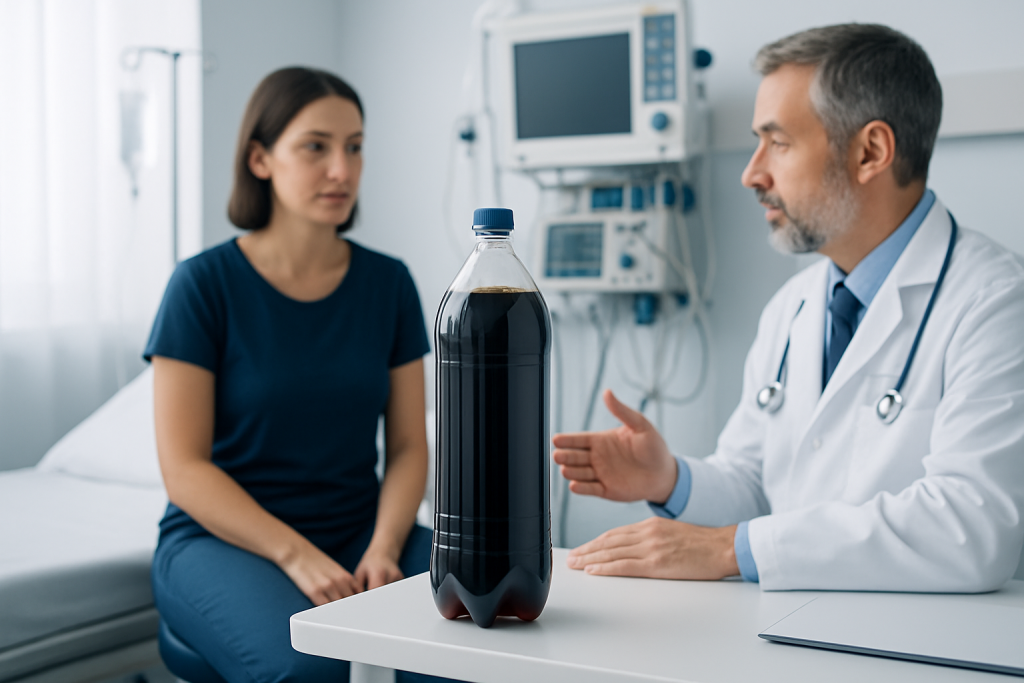
Many patients think in terms of “a soda” rather than total volume. A 2 liter bottle equals several standard servings, so the health impact depends on how much is actually consumed. If one person drinks most or all of the bottle, the intake can be far above recommended limits for added sugar in a single day.
Regular soda often adds energy without creating the same feeling of fullness as solid food. This makes it easier to consume excess calories without noticing. Over time, this pattern may support weight gain and can make healthy eating goals harder to maintain, especially when soda is paired with fast food, salty snacks, or large portions.
Serving size also matters for caffeine. Some cola-type sodas and energy-style soft drinks contain enough caffeine to trigger jitteriness, poor sleep, headaches, palpitations, or anxiety in sensitive individuals. Children, teenagers, pregnant people, and those with certain heart rhythm problems may be more vulnerable to these effects.
- A larger bottle can make portion control more difficult.
- Drinking directly from the bottle may increase intake without awareness.
- Refills and shared bottles can blur how much each person has consumed.
Possible health effects of drinking 2 liter soda regularly

The most widely recognized concern is excess sugar intake. Regular soda can cause rapid rises in blood glucose, followed by a drop that may leave some people feeling tired or hungry again. In patients with diabetes or prediabetes, frequent sugary drink intake can make glucose management more difficult and may worsen long-term metabolic health. Readers interested in abnormal blood sugar may also find it helpful to learn about diabetes.
Weight gain is another common concern. Sugary beverages are associated with increased calorie intake and can contribute to overweight and obesity, especially when consumed often. This matters because obesity is linked with heart disease, high blood pressure, sleep apnea, fatty liver disease, and joint strain.
Dental health is often overlooked. Soda combines sugar and acidity, a combination that can promote tooth decay and enamel erosion. Sipping throughout the day exposes teeth repeatedly, which may be more harmful than drinking it all at once with a meal. Dry mouth, poor oral hygiene, and frequent snacking can add to the risk.
Carbonation and acidity may also trigger digestive symptoms. Some people notice bloating, belching, or worsening heartburn after soda. Those with gastroesophageal reflux disease may find that fizzy drinks aggravate symptoms, and very high intake may contribute to poor sleep if the beverage contains caffeine late in the day.
Regular soda, diet soda, and zero-sugar options
Regular soda usually has the clearest metabolic drawbacks because of its sugar content. For patients trying to reduce calories or improve blood sugar control, replacing regular soda with water or an unsweetened drink is generally the most helpful step. If a person is not ready to stop immediately, moving from regular soda to a smaller portion or a lower-sugar option may still reduce total intake.
Diet or zero-sugar soda does not contain the same sugar load, so it usually has less direct impact on blood glucose and calorie intake. For some patients, this can be a useful transition strategy. However, diet soda is not necessarily an ideal everyday beverage. It may still contain caffeine and acids, and some people report increased cravings for sweet foods, digestive discomfort, or headaches after certain sweeteners.
Fruit-flavored sodas, sports drinks, sweetened iced teas, and many juice drinks can have similar concerns even if they are not labeled as cola. Patients sometimes switch beverages without realizing the sugar content remains high. Reading the nutrition label and checking serving size can make healthier choices easier.
Who should be especially careful
Some groups may need to limit 2 liter soda more strictly than others. People with diabetes, prediabetes, insulin resistance, or metabolic syndrome should be cautious with regular soda because it can quickly raise blood sugar. Those being evaluated for blood glucose concerns may need structured support, including lifestyle counseling and, when appropriate, diabetes treatment.
Children and adolescents are another important group. Frequent sugary drink intake can contribute to excess weight gain, cavities, poor nutrition quality, and caffeine-related sleep disruption. Because children are smaller, the same amount of soda may have a stronger effect on their bodies.
People with reflux, bloating, irritable digestion, kidney stone risk, or migraine may notice symptoms after carbonated or caffeinated drinks. Patients with established cardiovascular risk factors may also benefit from reducing sugary drinks as part of a broader prevention plan. In some cases, soda reduction becomes part of treatment for weight-related conditions, and a doctor may discuss options such as obesity treatment approaches.
Practical ways to cut back without feeling deprived
For many people, stopping soda suddenly is difficult, especially if it is tied to routine, caffeine use, or comfort eating. A gradual plan often works better than an all-or-nothing approach. Starting with smaller bottles, pouring a measured glass instead of drinking from the container, or keeping soda out of daily reach can make change more realistic.
Substitution is often the most effective strategy. Water is the best basic option, but not everyone enjoys plain water at first. Unsweetened sparkling water, chilled water with lemon or cucumber, diluted fruit-infused water, or unsweetened tea may help reduce dependence on soda while keeping flavor and variety.
Behavior cues matter too. Many people drink soda automatically with takeout meals, while driving, or during screen time. Replacing just one of these habits can lower intake significantly over weeks and months. If soda is being used for energy because of fatigue, poor sleep, or headaches, it may be more helpful to address the underlying cause rather than relying on caffeine and sugar.
- Choose a smaller serving rather than a full bottle.
- Drink soda with a meal instead of sipping all day.
- Alternate each glass of soda with water.
- Keep unsweetened beverage options visible and easy to reach.
When to seek medical care
Occasional soda intake does not usually require medical attention. However, a patient should speak with a doctor if regular soda consumption is linked with ongoing thirst, frequent urination, unexplained weight changes, fatigue, or blurred vision, as these may suggest blood sugar problems. Persistent heartburn, bloating, or abdominal discomfort also deserves evaluation if it recurs often.
Dental pain, visible tooth damage, or repeated cavities are additional reasons to seek care. If caffeine-containing soda leads to palpitations, severe anxiety, tremor, or sleep problems, it is sensible to review intake with a clinician. Anyone with known diabetes, kidney disease, heart disease, or obesity may benefit from personalized guidance on drinks and overall nutrition.
In rare situations, urgent care may be needed, such as severe dehydration, chest pain, confusion, or symptoms of very high blood sugar. Near the end of a care journey, some patients also want coordinated specialist support. Acibadem International’s multidisciplinary specialists and JCI-accredited hospitals diagnose and treat metabolic and digestive conditions for international patients, including care related to endocrinology and metabolic disorders when clinically appropriate.
Frequently asked questions
Is drinking a 2 liter soda in one day unhealthy?
For most people, drinking a full 2 liter soda in one day means a very high intake of sugar, calories, and sometimes caffeine. Doing this regularly may increase the risk of weight gain, poor blood sugar control, tooth decay, and digestive discomfort.
How much sugar is usually in a 2 liter soda?
The amount varies by brand and type, but a 2 liter regular soda usually contains a large amount of added sugar spread across several servings. Patients should check the nutrition label carefully, because the serving size on the bottle may be much smaller than what they actually drink.
Is diet soda better than regular soda?
Diet soda is generally lower in calories and does not raise blood sugar the same way regular soda does. Even so, it is not automatically the healthiest choice for everyone, as it may still contain caffeine and acids and may not support long-term healthy drinking habits.
Can soda cause diabetes?
Soda does not directly cause diabetes on its own, but frequent intake of sugary drinks is associated with weight gain and poorer metabolic health. Over time, these factors may increase the risk of type 2 diabetes in some people.
Does soda affect teeth even if it is sugar-free?
Yes. Sugar-free soda may be less harmful than sugary soda in terms of cavities, but acidity can still wear down tooth enamel. Frequent sipping increases contact with teeth and may raise the chance of damage over time.
What can replace soda if someone wants to cut back?
Water, unsweetened sparkling water, herbal tea, and infused water are common alternatives. For some people, gradually reducing soda rather than stopping all at once is more practical and sustainable.
References
- World Health Organization
- Centers for Disease Control and Prevention
- American Heart Association
- American Dental Association
- National Institute of Diabetes and Digestive and Kidney Diseases
This article is for general information only and is not a substitute for professional medical advice. Please consult a qualified doctor about your individual situation.
Medical weight-loss options in Turkey — costs & eligibility
JCI-accredited · board-certified surgeons · reply within 24h
Check your numbers in seconds
BMI, calories, due date, blood pressure and 30+ more clinical calculators — free, instant, doctor-reviewed ranges.