HPV in Mouth: What Patients Need to Know

HPV in mouth often causes no symptoms and may clear on its own. When symptoms occur, they can include oral warts, throat irritation, hoarseness, or a persistent lump or sore.
Key Takeaways
- HPV in mouth often causes no symptoms and may clear on its own.
- When symptoms occur, they can include oral warts, throat irritation, hoarseness, or a persistent lump or sore.
- Diagnosis is based on a clinical examination and sometimes biopsy or HPV-related testing, depending on the finding.
- Treatment focuses on visible lesions, symptom relief, and ruling out more serious conditions rather than eliminating the virus directly.
- HPV vaccination, safer sexual practices, and avoiding tobacco can help lower risk.
HPV in mouth refers to human papillomavirus affecting the lips, tongue, throat, or other oral tissues. Many people have no symptoms, but some develop small growths, persistent throat discomfort, or other changes that should be assessed by a doctor or dentist.
Overview: what HPV in the mouth means
HPV in mouth means that human papillomavirus is present in the tissues of the mouth or throat. This can involve the lips, gums, inner cheeks, tongue, tonsil area, soft palate, or the back of the throat. In many people, oral HPV causes no symptoms at all and is only suspected when a clinician notices a lesion or when a person develops persistent throat-related symptoms.
HPV is a large family of viruses with many different types. Some types are considered low risk and may cause benign warts or small growths. Other types are considered high risk because they are linked to certain cancers, including some cancers of the oropharynx, the area that includes the tonsils and base of the tongue. Having oral HPV does not mean a person has cancer, but unusual or lasting symptoms should be evaluated carefully.
It can help to think of oral HPV as an infection that behaves differently from person to person. Many infections are temporary and are cleared by the immune system over time. Others may persist without causing obvious problems. Because there is no way to tell by symptoms alone what type is present, persistent changes in the mouth or throat deserve professional assessment.
Symptoms and signs to watch for
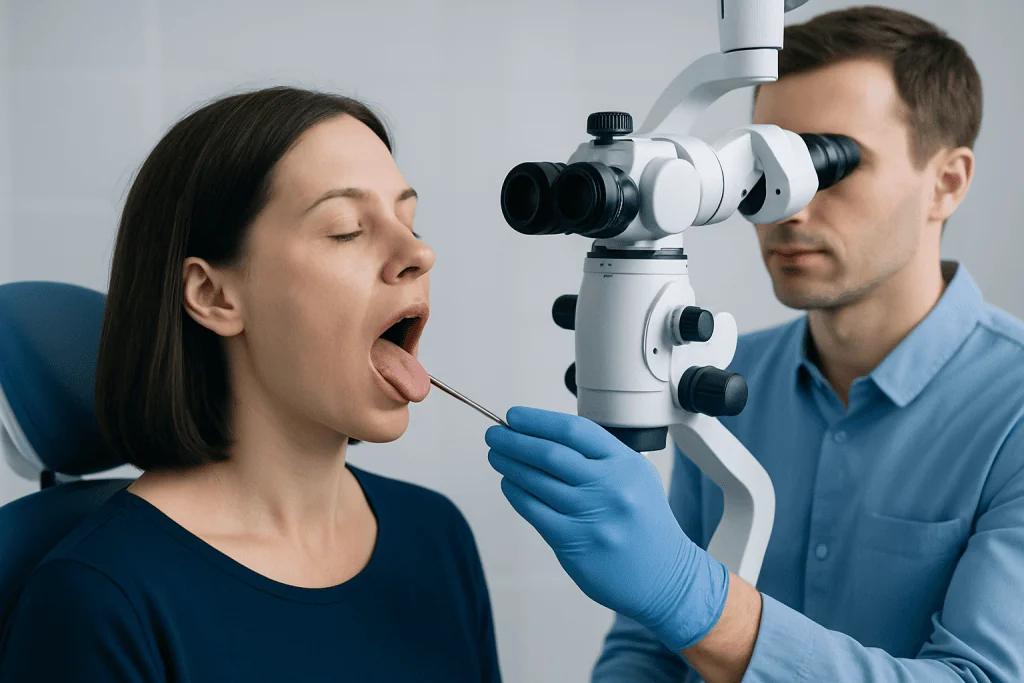
Most people with oral HPV do not notice any symptoms. When symptoms do occur, they may be mild and easy to confuse with common problems such as irritation, allergies, acid reflux, or a minor infection. This is one reason persistent symptoms should not be ignored.
Possible signs of HPV in mouth can include a small wart-like bump, a rough or cauliflower-like growth, a sore that does not heal, a persistent feeling that something is stuck in the throat, hoarseness, pain with swallowing, or ongoing one-sided throat discomfort. Some people may also notice ear pain without a clear ear problem, enlarged lymph nodes in the neck, or unexplained bad breath.
Not every mouth lesion is caused by HPV. Canker sores, dental irritation, fungal infections, trauma from biting, and other benign conditions can look similar. A clinician may also consider related ENT conditions such as throat cancer or tonsil cancer when symptoms are persistent or concerning, especially if a lesion involves the tonsil region or base of tongue.
- Small painless growths or oral warts
- Persistent sore throat or throat irritation
- Hoarseness or voice changes lasting more than a few weeks
- Difficulty or pain when swallowing
- A mouth ulcer or patch that does not heal
- A lump in the neck or unexplained swelling
How oral HPV spreads and who is at higher risk

Oral HPV is thought to spread mainly through close skin-to-skin and mucosal contact, including oral sex and intimate mouth contact. In some cases, the exact source of infection is not known. The virus can be present without visible lesions, so transmission may happen even when no one is aware of an infection.
Several factors can make oral HPV infection more likely to persist or become clinically important. These include smoking, heavy alcohol use, a weakened immune system, poor oral health, and having multiple sexual partners. Age and overall immune function also matter, because the body clears infections differently over time.
It is important to avoid stigma. HPV is very common, and exposure at some point in life is not unusual. A diagnosis of oral HPV does not say anything about a person’s hygiene, character, or relationships. The practical focus is on identifying symptoms early, reducing risk factors where possible, and keeping up with routine medical and dental care.
How doctors diagnose HPV in mouth
Diagnosis begins with a careful medical history and examination of the mouth, throat, and neck. A doctor, dentist, or ENT specialist may ask when the symptoms started, whether they are getting worse, and whether there are risk factors such as tobacco use or a history of recurrent lesions. The appearance, location, texture, and duration of a lesion all help guide the next steps.
If a visible growth, ulcer, or suspicious patch is present, the clinician may recommend a biopsy. A biopsy allows the tissue to be examined under a microscope to determine whether it is a benign wart, another noncancerous lesion, a precancerous change, or a cancer. In selected cases, HPV-related testing may be performed on tissue, especially when evaluating lesions in the oropharynx.
When symptoms involve deeper structures of the throat, further evaluation may include flexible endoscopy or imaging. These tests help examine areas that are hard to see during a standard oral exam. If there is concern about a persistent mass or lesion, procedures such as biopsy or endoscopic evaluation may be part of the diagnostic plan.
There is no single routine screening test for oral HPV in the general population. Instead, diagnosis relies on clinical judgment, symptom history, and targeted testing when something abnormal is found. This is why regular dental checkups and timely assessment of persistent mouth or throat changes are so valuable.
Treatment options and follow-up
Treatment depends on what is found. If a person has a small benign lesion or wart, treatment may involve monitoring, local removal, or destruction of the lesion. If there are no visible abnormalities and symptoms are mild, a clinician may recommend observation and follow-up rather than immediate intervention. There is no medicine that reliably eliminates HPV itself from the mouth, so care is directed at the lesion or its effects.
When a lesion needs to be removed, options may include minor surgical excision, laser treatment, or other local therapies chosen by the specialist. If biopsy results show dysplasia, precancerous changes, or cancer, treatment is tailored to the location and stage of the problem. Depending on the diagnosis, this may involve oral cancer treatment or other ENT and oncology care.
Follow-up is important because some lesions can recur and some symptoms need repeat assessment if they do not improve. People who smoke or drink heavily may be advised to reduce or stop, since these factors can irritate tissues and increase cancer risk. If swallowing trouble, voice changes, or a neck lump continue, specialist review is usually recommended even after initial treatment.
Prevention and self-care
The most effective prevention step for many people is HPV vaccination, which helps protect against several HPV types linked to genital warts and certain cancers. Vaccination is most effective before exposure to the virus, but some older adolescents and adults may also benefit depending on age and individual circumstances. A doctor can advise whether vaccination is appropriate.
Safer sexual practices may lower the chance of transmission, although they do not remove risk completely because HPV can affect areas not fully covered by barriers. Avoiding tobacco and limiting alcohol are also important, since they support better oral health and lower the risk of cancers in the mouth and throat. Good oral hygiene and routine dental visits help with early detection of suspicious changes.
Self-care does not replace medical evaluation, but it can support recovery and comfort. People with mouth irritation may find it helpful to avoid very hot, spicy, or acidic foods until symptoms settle. If a lesion, sore throat, or voice change lasts for more than two to three weeks, it should be checked rather than repeatedly self-treated.
When to seek medical care
Medical care should be sought if there is a mouth sore, patch, bump, or ulcer that does not heal within two to three weeks. The same applies to persistent hoarseness, pain when swallowing, throat discomfort on one side, or a sensation of something being stuck in the throat. A lump in the neck, unexplained bleeding from the mouth, or ongoing ear pain without a clear ear infection should also be assessed promptly.
It is reasonable to start with a primary care doctor, dentist, or ENT specialist. Early evaluation does not mean something serious is expected; it simply helps identify whether the cause is harmless irritation, an infection, a benign growth, or a condition needing treatment. Timely assessment can make care simpler and more reassuring.
For international patients who need further evaluation, Acibadem International’s multidisciplinary specialists and JCI-accredited hospitals diagnose and treat oral and throat conditions, including cases requiring advanced ENT assessment and coordinated oncology care.
Frequently asked questions
Can HPV live in the mouth without causing symptoms?
Yes. Many people with oral HPV have no symptoms at all, and the infection may clear without ever being noticed. This is why persistent mouth or throat changes should be evaluated based on how they look and how long they last, not only on pain or severity.
What does HPV in mouth look like?
It may look like a small wart-like bump, a rough raised growth, or occasionally a persistent sore or patch. However, many other conditions can look similar, so appearance alone is not enough for diagnosis.
Does HPV in the mouth mean cancer?
No. Most oral HPV infections do not lead to cancer, and many are temporary. The concern is mainly with persistent infection by certain high-risk HPV types, especially when there are ongoing symptoms or abnormal tissue changes.
How is HPV in mouth tested?
There is no standard routine screening test for oral HPV in the general population. Doctors usually diagnose it through an examination and, if needed, a biopsy of a lesion; HPV-related testing may be done on tissue in selected cases.
Can HPV in mouth be treated or cured?
Doctors can treat visible lesions, symptoms, and any abnormal tissue changes, but there is no specific treatment that directly removes HPV from the mouth in every case. Many infections are cleared naturally by the immune system over time.
Can the HPV vaccine help prevent oral HPV?
The HPV vaccine helps protect against several HPV types associated with cancers and warts, and it is an important prevention tool. While it does not treat an existing infection, it can reduce the risk of future infection from covered HPV types.
References
- World Health Organization
- Centers for Disease Control and Prevention
- National Cancer Institute
- American Dental Association
- American Academy of Otolaryngology–Head and Neck Surgery
This article is for general information only and is not a substitute for professional medical advice. Please consult a qualified doctor about your individual situation.
Explore treatments in Turkey — costs, top hospitals & a free quote
JCI-accredited · board-certified surgeons · reply within 24h
Add us as a Preferred Source to see more of our trusted health content across Google Search, AI Overviews and Discover.

More from the Health Library

OCD: What Patients Need to Know

Perforated Septum: An Evidence-Based Guide for Patients

Louvring: What Patients Need to Know

Preservative Free Eye Drops: A Complete Medical Overview

Broken Hip: An Evidence-Based Guide for Patients