Hemicrania Continua: A Complete Medical Overview

Hemicrania continua causes ongoing pain on one side of the head that does not switch sides in most people. The headache may flare at times and can be accompanied by tearing, eye redness, nasal congestion, or restlessness.
Key Takeaways
- Hemicrania continua causes ongoing pain on one side of the head that does not switch sides in most people.
- The headache may flare at times and can be accompanied by tearing, eye redness, nasal congestion, or restlessness.
- A complete response to indomethacin is a key clue used to confirm the diagnosis.
- Brain imaging or other tests may be needed to rule out other causes of one-sided headache.
- Treatment focuses on symptom control, medicine tolerance, and long-term follow-up with a qualified doctor.
Hemicrania continua is a rare primary headache disorder that causes a constant headache on one side of the head, often with periods of stronger pain and associated eye or nasal symptoms. It is especially important to recognize because it typically improves completely with a specific anti-inflammatory medicine called indomethacin, helping doctors distinguish it from other headache conditions.
Overview
Hemicrania continua is a primary headache disorder, which means the headache itself is the condition rather than a symptom of another illness. It causes a persistent headache on one side of the head, usually every day and often all day, with occasional flare-ups that become more intense. A defining feature is that it generally responds fully to indomethacin, a nonsteroidal anti-inflammatory medicine, which helps separate it from many other headache types.
Although it is uncommon, hemicrania continua is clinically important because it can be mistaken for migraine, sinus headache, cluster headache, or other one-sided pain disorders. Some people live with symptoms for months or years before receiving the right diagnosis. Careful history-taking is often the first step in recognizing its characteristic pattern.
The pain is typically moderate at baseline but can worsen in episodes. During flares, people may also notice symptoms on the same side as the pain, such as tearing, eyelid drooping, eye redness, nasal congestion, or a runny nose. This places hemicrania continua within a broader group of disorders called trigeminal autonomic cephalalgias, though its continuous nature makes it distinct.
Symptoms and How It Feels
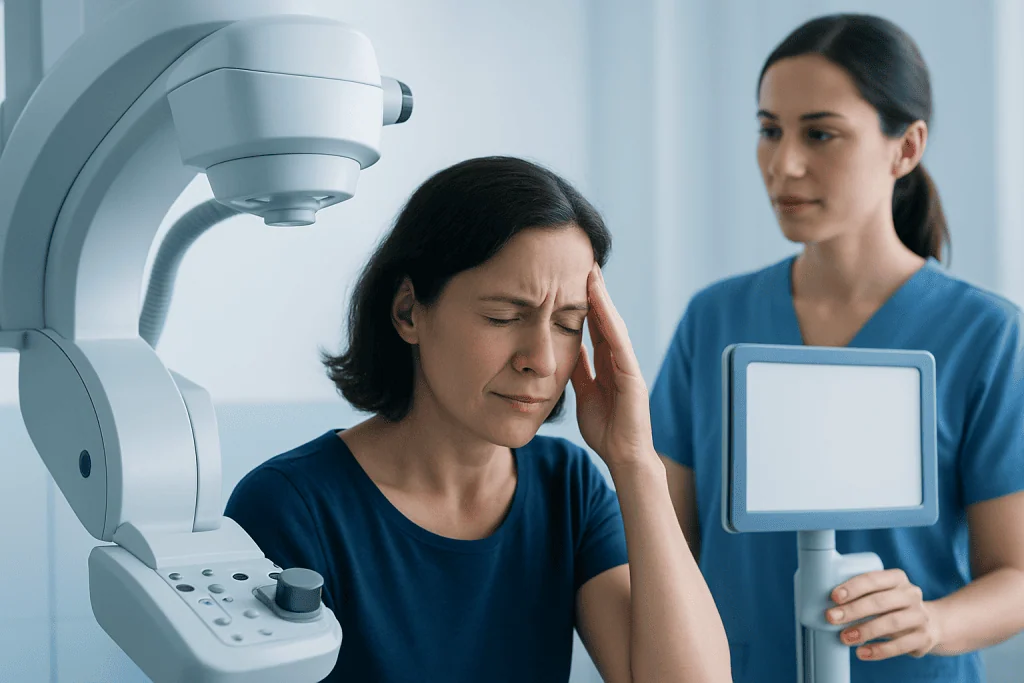
The main symptom of hemicrania continua is a continuous headache affecting one side of the head. The pain may be felt around the eye, temple, forehead, or side of the face, but it can also spread to the scalp, jaw, or neck. In many patients, the side remains fixed rather than alternating.
Most people describe a steady background pain with attacks of stronger discomfort superimposed on top of it. During these more painful periods, the headache may feel throbbing, stabbing, pressure-like, or burning. Physical activity can make symptoms feel worse for some people, and the intensity can interfere with sleep, concentration, and daily routines.
Autonomic symptoms are common during exacerbations. These can include:
- Eye redness or tearing
- Drooping eyelid or a swollen eyelid
- Nasal congestion or runny nose
- Facial sweating or flushing
- A sense of ear fullness
- Restlessness or agitation during severe flares
Some people also experience migraine-like features, including nausea, sensitivity to light, or sensitivity to sound. Because symptoms may overlap with migraine or cluster headache, specialist assessment is often helpful when a headache is persistent, one-sided, or unusual for that person.
Causes and Risk Factors

The exact cause of hemicrania continua is not fully understood. Researchers believe it involves pain pathways related to the trigeminal nerve and autonomic nervous system, which helps explain why people can have both head pain and eye or nasal symptoms at the same time. Brain chemistry and the processing of pain signals may also play a role.
Unlike secondary headaches, hemicrania continua is not usually caused by infection, stroke, tumor, or sinus disease. However, because one-sided continuous headaches can sometimes result from underlying structural or vascular problems, doctors may investigate for these possibilities before confirming the diagnosis. This is one reason it is important not to assume that all persistent headaches are benign.
No single lifestyle factor is known to cause hemicrania continua. It can begin at different ages, and while it may appear without a clear trigger, some people report symptom onset after stress, illness, surgery, or minor head trauma. These associations do not prove cause and effect, but they may help frame the clinical history.
Risk factors are less clearly defined than they are for more common headache disorders. The condition appears to affect adults most often, but it can occur outside typical age ranges. A personal or family history of headaches may coexist, though this does not necessarily increase the chance of developing hemicrania continua.
How Doctors Diagnose Hemicrania Continua
Diagnosis is based mainly on the pattern of symptoms and a medical assessment by a qualified clinician, often a neurologist or headache specialist. The doctor will ask how long the headache has been present, whether it always stays on one side, what symptoms occur during flares, and whether there are any warning signs suggesting another medical problem. A physical and neurological examination is also important.
A hallmark of diagnosis is a complete or near-complete response to indomethacin. In practice, a doctor may recommend a carefully supervised trial of this medication to see whether the headache resolves. This response is so characteristic that it is part of formal diagnostic criteria, but the medicine should only be used under medical guidance because it can cause side effects.
Imaging tests such as MRI may be recommended, especially if the headache is new, atypical, worsening, associated with neurological symptoms, or occurring in someone with other health concerns. These tests do not diagnose hemicrania continua directly, but they can help exclude other causes. In selected cases, blood tests or additional assessments may also be needed.
Since hemicrania continua can resemble other unilateral headache disorders, diagnosis often involves comparing features with conditions such as migraine, paroxysmal hemicrania, cluster headache, cervicogenic headache, and medication-overuse headache. If advanced evaluation is required, comprehensive neurology care and, when needed, MRI imaging may help clarify the diagnosis.
Treatment Options
The first-line treatment for hemicrania continua is indomethacin, which is both therapeutic and diagnostically useful. Many patients experience dramatic relief when the medicine is tolerated and taken as prescribed. Because long-term use can irritate the stomach and may affect the kidneys or blood pressure in some people, treatment should be individualized and monitored by a doctor.
If indomethacin is effective but causes side effects, physicians may adjust the plan by using the lowest effective dose, adding stomach-protective medication when appropriate, or considering other options for selected patients. Alternative treatments may not work as reliably as indomethacin, but they can be useful when standard therapy cannot be continued. These decisions depend on the patient’s overall health, age, other medicines, and response over time.
In difficult cases, headache specialists may consider additional strategies, such as other preventive medicines or procedural approaches. While not suitable for everyone, some people with persistent headache syndromes may benefit from multidisciplinary assessment, especially when overlapping headache types exist. Broader headache treatment planning can be helpful when symptoms are complex or long-standing.
Supportive care matters as well. Regular sleep, hydration, balanced meals, and reducing unnecessary over-the-counter pain medicine can improve overall headache management. Patients should never start or stop prescription treatment on their own; follow-up helps ensure symptom control while watching for medicine-related complications.
Living With the Condition: Self-care and Daily Management
Living with a chronic one-sided headache can be physically and emotionally tiring, even when the condition is treatable. Keeping a headache diary can be useful. Recording the timing of pain, flares, associated symptoms, possible triggers, medication use, and response to treatment gives doctors practical information and may shorten the path to better symptom control.
General self-care does not replace medical treatment, but it can support overall stability. Helpful measures often include:
- Maintaining a regular sleep schedule
- Eating meals consistently and staying hydrated
- Limiting excess caffeine and alcohol if these worsen symptoms
- Managing stress through relaxation techniques, light exercise, or counseling
- Avoiding frequent use of non-prescription pain relievers unless advised by a doctor
People with ongoing headaches sometimes worry that every pain flare signals something dangerous. In hemicrania continua, fluctuations in severity can be part of the disorder itself. Even so, any clear change in pattern, new neurological symptoms, or reduced response to previously effective treatment should prompt re-evaluation.
For international patients who need coordinated assessment, Acibadem International’s multidisciplinary specialists and JCI-accredited hospitals evaluate and treat headache disorders with a personalized approach. This may include consultation across neurosurgery and neurology services when another structural cause must be excluded.
When to Seek Medical Care
Medical evaluation is advisable for any headache that is new, persistent, clearly one-sided, or different from a person’s usual headaches. Hemicrania continua is treatable, but it should be diagnosed properly because other conditions can produce similar symptoms. Early assessment may reduce unnecessary suffering and help avoid incorrect treatment.
Urgent medical care is needed if a headache begins suddenly and severely, follows head injury, or is accompanied by weakness, numbness, confusion, seizures, fever, fainting, vision loss, or trouble speaking. These features are not typical of uncomplicated hemicrania continua and may point to another condition requiring immediate attention.
Patients should also arrange follow-up if they have stomach pain, black stools, swelling, changes in urination, or other possible side effects while taking prescribed anti-inflammatory medicines. Regular review is especially important for older adults and for people with kidney disease, ulcers, cardiovascular disease, or those taking blood thinners.
Frequently asked questions
What is hemicrania continua?
Hemicrania continua is a rare primary headache disorder that causes constant pain on one side of the head. The pain often has periods of worsening and may be accompanied by tearing, nasal congestion, or eye redness on the same side.
How is hemicrania continua different from migraine?
Migraine usually comes in attacks, while hemicrania continua is typically continuous every day. Although the two can share symptoms such as nausea or light sensitivity, hemicrania continua is especially notable for its consistent one-sided pattern and strong response to indomethacin.
Does hemicrania continua always stay on one side?
In most people, the headache remains on the same side of the head. If the pain frequently switches sides or has an unusual pattern, doctors may reconsider the diagnosis or look for another explanation.
Why is indomethacin important in diagnosis?
A complete or near-complete response to indomethacin is one of the defining features of hemicrania continua. Doctors often use a supervised trial of this medicine to help confirm the diagnosis while also assessing for side effects and safety.
Can hemicrania continua be cured?
Many patients achieve excellent symptom control with the right treatment, especially with indomethacin. However, it may behave like a chronic condition, so ongoing follow-up is often needed to balance effectiveness, side effects, and long-term management.
When should someone worry about a one-sided headache?
A one-sided headache should be medically assessed if it is new, persistent, or different from previous headaches. Emergency care is important if it starts suddenly, is extremely severe, or comes with neurological symptoms, fever, confusion, or vision changes.
References
- International Headache Society
- National Institute of Neurological Disorders and Stroke
- American Migraine Foundation
- Mayo Clinic
- National Institute for Health and Care Excellence
This article is for general information only and is not a substitute for professional medical advice. Please consult a qualified doctor about your individual situation.
Explore treatments in Turkey — costs, top hospitals & a free quote
JCI-accredited · board-certified surgeons · reply within 24h