Fat Embolism: An Evidence-Based Guide for Patients

Fat embolism usually occurs after trauma, especially fractures of the femur, pelvis, or other large bones. Fat embolism syndrome is the clinical illness caused by fat droplets triggering inflammation and blocking small blood vessels.
Key Takeaways
- Fat embolism usually occurs after trauma, especially fractures of the femur, pelvis, or other large bones.
- Fat embolism syndrome is the clinical illness caused by fat droplets triggering inflammation and blocking small blood vessels.
- Common warning signs include shortness of breath, confusion, and a pinpoint rash, typically developing within 1 to 3 days after injury.
- Diagnosis is based on symptoms, examination, oxygen levels, and imaging rather than a single definitive test.
- Treatment is mainly supportive and often includes oxygen, close monitoring, and management of the underlying injury.
Fat embolism is a condition in which fat droplets enter the bloodstream, most often after a long-bone fracture, major trauma, or orthopedic surgery. In some people this leads to fat embolism syndrome, a serious but treatable complication that can affect breathing, brain function, and the skin.
Overview: What fat embolism means
Fat embolism means that small droplets of fat enter the bloodstream and travel to blood vessels in different parts of the body. This most often happens after a broken bone, major soft-tissue injury, or orthopedic procedure involving bone marrow. Not every fat embolism causes illness, but when it leads to breathing problems, neurologic changes, and other symptoms, the condition is called fat embolism syndrome.
In practical terms, fat embolism syndrome is a complication doctors watch for after trauma rather than a disease a person catches. It is uncommon, but it matters because the lungs are often affected first, and the brain and skin can also be involved. Early recognition and supportive hospital care are important because symptoms can worsen over hours.
Patients and families often confuse fat embolism with a blood clot. They are different problems. A blood clot is made of clotted blood, while a fat embolism involves fatty material, usually from bone marrow or injured tissue. The symptoms can overlap, so careful medical assessment is needed.
How fat embolism happens in the body
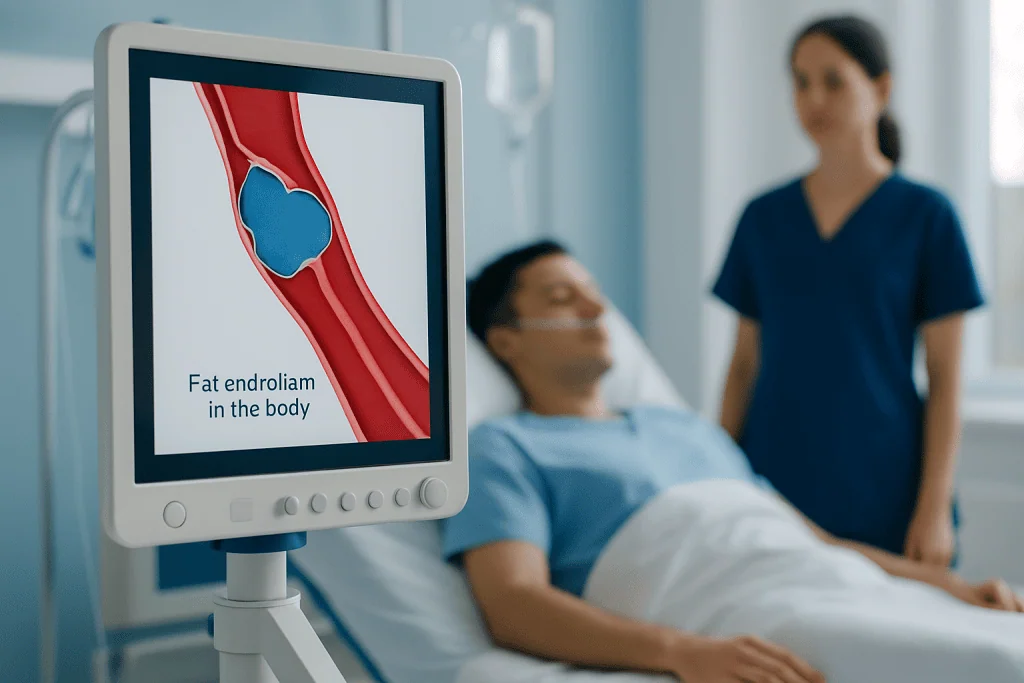
Doctors believe fat embolism develops through both mechanical and inflammatory processes. After a fracture or surgery, especially in large bones, marrow fat can enter torn blood vessels and travel through the circulation. These droplets may lodge in tiny vessels in the lungs and, in some cases, reach the brain, skin, or other organs.
At the same time, the body may react to these fat droplets with inflammation. This inflammatory response can damage the lining of blood vessels and make symptoms more pronounced. That is one reason some people become quite unwell even when the amount of fat entering the bloodstream is small.
This process helps explain why symptoms are often delayed rather than immediate. Many patients appear stable after the original injury, then develop breathing difficulty, confusion, or low oxygen levels 24 to 72 hours later. The delay can make the condition harder for families to recognize without medical guidance.
Symptoms and signs to watch for

The classic features of fat embolism syndrome involve the lungs, brain, and skin. Breathing symptoms are the most common and may include shortness of breath, fast breathing, chest discomfort, and low oxygen levels. Some patients become restless or anxious because they are not getting enough oxygen.
Neurologic symptoms may range from mild confusion and difficulty concentrating to drowsiness, agitation, seizures, or reduced responsiveness. These changes can be subtle at first, especially in someone recovering from trauma or pain medication, so doctors look for the overall pattern rather than one symptom alone.
A small pinpoint rash, called petechiae, can appear on the chest, neck, shoulders, under the arms, or inside the mouth or eyes. This rash does not happen in every case, but when present it can be an important clue. Other possible findings include fever, a fast heart rate, anemia, and low platelet counts.
- Shortness of breath or rapid breathing
- Low oxygen levels
- Confusion, drowsiness, or unusual behavior
- Pinpoint red or purple rash
- Fast heart rate or fever after trauma
Causes and risk factors
The most common cause of fat embolism is trauma involving large bones that contain marrow fat, especially the femur, tibia, and pelvis. Multiple fractures increase the risk, as do crush injuries and severe soft-tissue damage. In these situations, fat can be released into damaged veins and circulated through the body.
Fat embolism can also occur after orthopedic procedures, including surgery to repair fractures or replace joints. It has been described after liposuction, burns, pancreatitis, and rarely in conditions that affect fat metabolism, but these are less common causes. In daily clinical practice, doctors are especially alert for this complication after major accidents and bone surgery.
Risk tends to be higher when injuries are severe, treatment is delayed, or the patient has multiple traumatic injuries. Prompt stabilization of fractures can reduce risk. Patients being treated for fractures or recovering after orthopedic and traumatology care may hear the term used as part of routine monitoring for complications rather than as a sign that it will definitely happen.
How doctors diagnose fat embolism
There is no single test that proves fat embolism syndrome in every patient. Diagnosis is usually based on the clinical picture: a recent injury or procedure followed by breathing problems, neurologic changes, and sometimes a petechial rash. Doctors also consider other possible causes, such as pulmonary embolism, pneumonia, head injury, or medication effects.
Initial assessment usually includes a physical examination, pulse oximetry to check oxygen levels, and blood tests. Chest imaging may show diffuse changes in the lungs, although early scans can sometimes be normal. In selected cases, brain imaging may be used if neurologic symptoms are prominent, especially to rule out other urgent conditions.
Depending on the patient’s condition, the team may use chest X-ray, CT, or other imaging as part of a broader trauma evaluation. Diagnostic imaging helps assess the lungs, brain, and injuries that may have triggered the event. Because the condition can evolve quickly, repeated examinations and monitoring are often as important as the first test results.
Treatment options and hospital care
Treatment for fat embolism syndrome is mainly supportive, which means supporting the body while it recovers and treating the underlying injury. Oxygen is commonly given, and some patients need care in a monitored hospital unit or intensive care setting. If breathing becomes severely impaired, noninvasive or mechanical ventilation may be necessary.
Doctors also focus on stabilizing fractures, managing fluids carefully, controlling pain, and preventing other complications of trauma. In many cases, early fracture fixation is part of the overall plan because it can reduce ongoing release of marrow fat. Patients may also be evaluated by specialists in pulmonology if lung involvement is significant.
There is no universally accepted medication that specifically removes fat emboli from the circulation. Different hospitals may use somewhat different protocols depending on the patient’s injuries and overall condition. Recovery is often good with timely recognition and supportive treatment, but close observation is essential during the acute phase.
Recovery, prevention, and self-care
Recovery depends on how severe the syndrome is, the extent of the original injury, and how quickly treatment begins. Many patients improve over days to weeks once oxygenation is supported and fractures are managed appropriately. Follow-up may include rehabilitation, breathing exercises, and repeat assessment of neurologic or lung symptoms if recovery has been complicated.
For patients and families, prevention mainly relates to prompt treatment of major fractures and good trauma care rather than home measures. Early medical evaluation after a significant accident is important even if the person initially seems stable. This allows doctors to watch for delayed complications, including fat embolism syndrome and pulmonary embolism, which is a different condition that can cause similar shortness of breath.
At home after discharge, patients should follow instructions about mobility, medications, breathing exercises, and follow-up visits. Any worsening shortness of breath, confusion, bluish lips, chest pain, or new rash should be reported urgently. Near the end of recovery planning, some patients may benefit from coordinated assessment in centers where multidisciplinary specialists manage trauma, orthopedic recovery, and respiratory complications; Acibadem International’s JCI-accredited hospitals provide this care for international patients.
When to seek medical care
Immediate medical care is needed after a major injury, especially if there is severe pain, inability to bear weight, visible deformity, or suspected fracture. A person does not need to wait for breathing symptoms to appear before getting help. Early stabilization of injuries may lower the risk of complications.
Urgent reassessment is also important if someone who recently had a fracture, trauma, or orthopedic surgery develops new shortness of breath, fast breathing, confusion, extreme sleepiness, fainting, seizures, or a pinpoint rash on the upper body. These symptoms do not always mean fat embolism syndrome, but they should be treated as a medical priority.
Patients should also contact their doctor if recovery after surgery or trauma is not going as expected, even when symptoms seem mild. Subtle changes in attention, oxygen levels, or exercise tolerance can be early clues that need evaluation. It is always safer to ask for prompt medical advice than to assume the symptoms are part of normal healing.
Frequently asked questions
Is fat embolism the same as a blood clot?
No. Fat embolism involves fat droplets entering the bloodstream, while a blood clot is formed from clotted blood. Both can affect the lungs and cause breathing symptoms, so doctors may need tests to tell them apart.
How soon do fat embolism symptoms appear after an injury?
Symptoms often appear within 24 to 72 hours after trauma or orthopedic surgery. In some cases, signs begin earlier or develop gradually. This delayed pattern is one reason close observation after major fractures is important.
Can fat embolism happen after surgery?
Yes. It can occur after orthopedic procedures, especially those involving long bones or bone marrow. It is less common than after major trauma, but surgeons and hospital teams monitor for it when the risk is present.
Is fat embolism always dangerous?
Not every fat embolism causes severe illness. Some fat droplets may enter the bloodstream without leading to major symptoms. Fat embolism syndrome, however, can be serious and requires prompt hospital assessment and supportive care.
What is the main treatment for fat embolism syndrome?
The main treatment is supportive care. This usually includes oxygen, careful monitoring, treatment of the underlying fracture or injury, and respiratory support if needed. There is no single medication that reliably cures the condition on its own.
Can a person recover fully from fat embolism syndrome?
Many people recover well, especially when the condition is recognized early and managed appropriately in hospital. Recovery time varies depending on the severity of lung or brain involvement and the extent of the original trauma. Follow-up is important if symptoms persist after discharge.
References
- National Institutes of Health
- American Academy of Orthopaedic Surgeons
- Merck Manual Professional Edition
- MedlinePlus
- UpToDate
This article is for general information only and is not a substitute for professional medical advice. Please consult a qualified doctor about your individual situation.
Joint and spine care in Turkey — expert assessment & treatment
JCI-accredited · board-certified surgeons · reply within 24h
Check your numbers in seconds
BMI, calories, due date, blood pressure and 30+ more clinical calculators — free, instant, doctor-reviewed ranges.

More from the Health Library



Related Specialists

Dr. Adnan Abbasoğlu
Orthopedic Surgery & Traumatology
Assoc. Prof. Dr. Hilmi Kodaz
Medical Oncology
Prof. Dr. Kahraman Öztürk
Orthopedic Surgery & Traumatology
Dr. Varlık Doğan
Anesthesiology